

A seeding system for PIAA wrestling
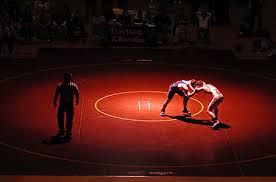
The PIAA has initiated a seeding process for regional champions for its season-ending tournament this wrestling season.
It also declined to slice the 20-man bracket in both classifications to 16 for that same event.
That’s a big thumbs up for the implementation for the seeding process and a demonstrative thumbs down for not slicing the bracket.
The seeding process will be a one-year experiment to stop some of the best wrestlers in the state from meeting before the semifinals. One of the most outlandish examples of this came last season at the 138-pound weight class in Class AAA, where defending champion Luke Pletcher of Latrobe met Nazareth’s Sammy Sasso, a state runnerup the previous season, in the quarterfinals. Pletcher had arguably his hardest bout of the tournament, a 2-1 decision over Sasso, on the way to winning the gold medal.
Sasso dropped into the consolation round and roared through the bracket to take third place with a pin in 2:29 over Colin Cronin of Upper Darby. The seeding system would probably have separated Pletcher and Sasso at least until the semifinals.
The point system for seeds will work this way: 1. Only regional champions will be involved. 2. Points will be acquired based on a wrestler’s total wins divided by the number of matches. 3. Prestige points will given based on where a wrestler finished in the previous year’s regional and PIAA championships.
The seeding process will be used for the 2016-17 season, then evaluated after that to determine whether to continue it into the following season.
The remainder of the bracket will be determined by the existing format: a rotating predetermined slotting system.
Seeding won’t always place returning state champions on opposite sides of the bracket. If a defending state champion does not win his region, he will end up in the predetermined spot for that weight class.
Another change the PIAA chose not to make was cutting the number of qualifiers for each state bracket to 16 from its current 20. This expansion of the bracket, established in 2015, brought more wrestlers into the state tournament but slowed the event. On different occasions, wrestling fans were forced to wait outside the Giant Center because the previous session ran late.
The state tournament last March had 126 more bouts and stretched the already long three-day event by another 6 1/2 hours. Coaches love the expansion because it allows more wrestlers from their district to participate in Hershey. Class AAA in the WPIAL received an extra qualifier with the expansion and would most likely lose it if the bracket goes back to a 16-man format.
This is just common sense to cut it back. The tournament is already too long, putting some weight checks at 7 a.m. While you can make the argument that some of the extra wrestlers who competed in an expanded bracket won one of the eight available medals in each weight class, it’s too weak an argument against this fact: A wrestler can lose six to 10 times throughout the postseason, depending on the district and class, and still win a medal at states.
It dilutes the talent level to add four wrestlers to each weight class. Coaches can argue that wrestling twice in this double-elimination tournament gives their wrestlers valuable experience, but that’s not why the tournament is held.
Assistant sports editor Joe Tuscano can be reached at jtuscano@observer-reporter.com.