

Sammartino, Pittsburgh were a perfect match
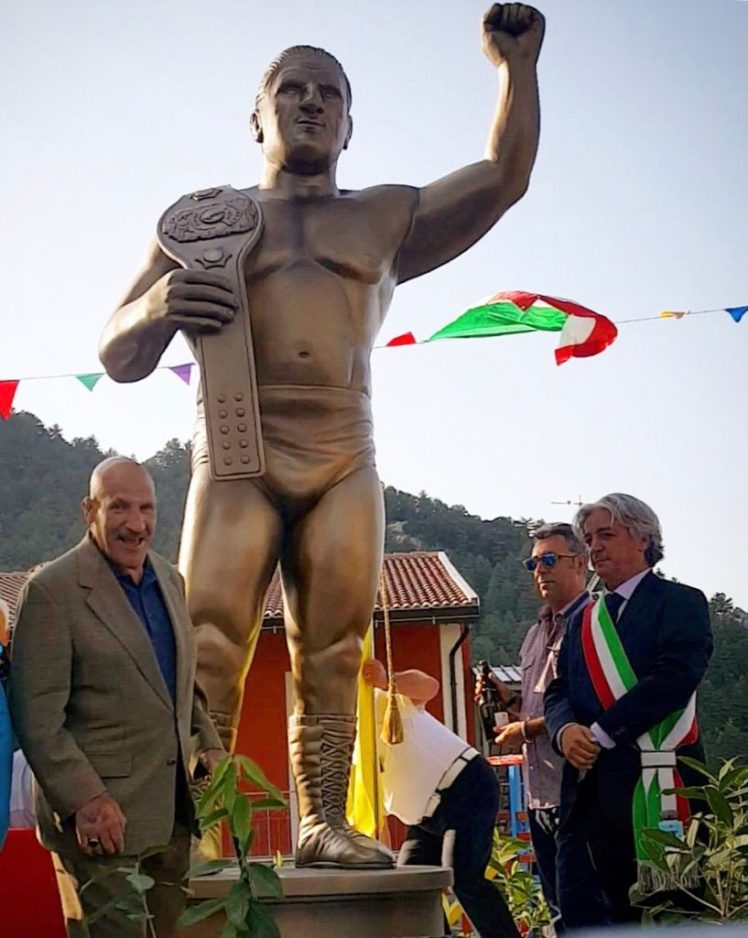
Bruno Sammartino, left, stands with a stautue of the former world wrestling champion in Pizzoferrato, Italy.
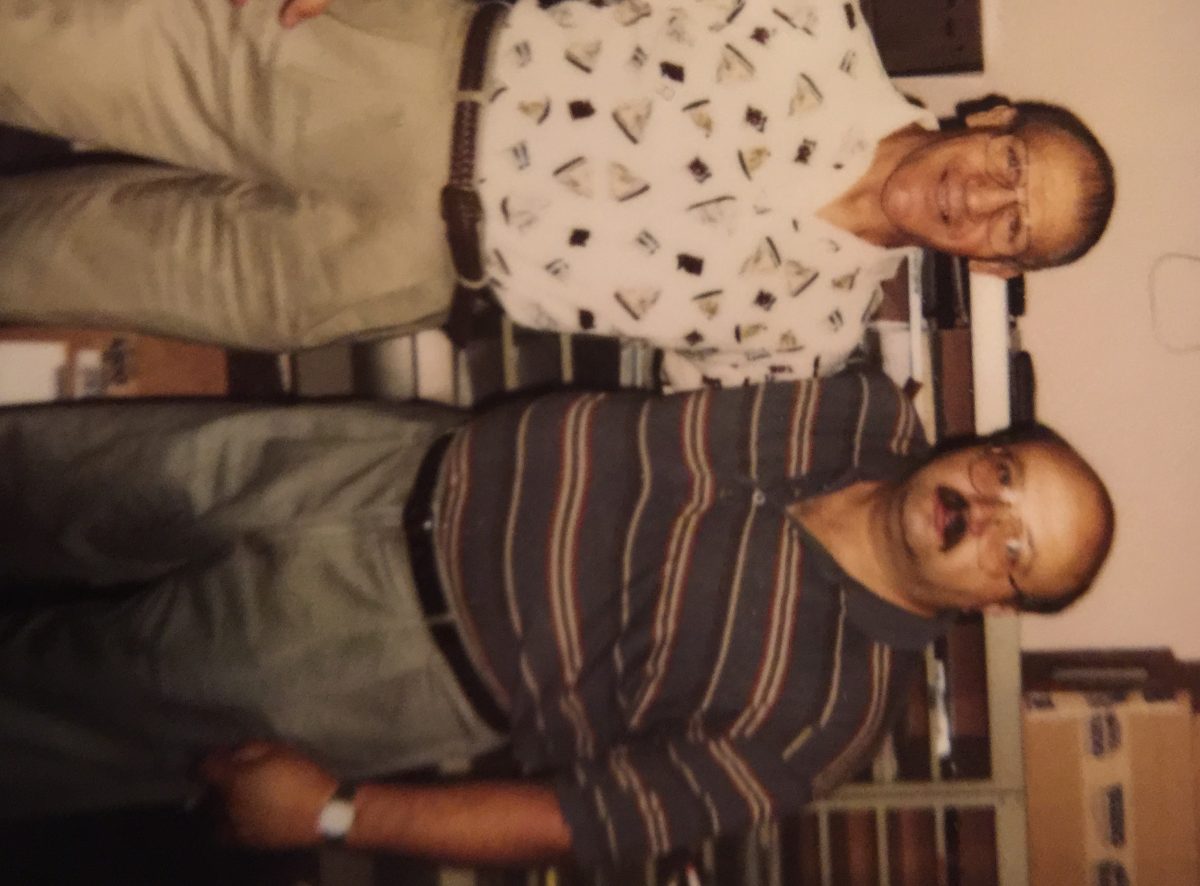
Bruno Sammartino, left, and Bill DiFabio
Timing is everything in professional wrestling, er, sports entertainment.
Good timing can turn a midcard match into a 5-star encounter. Bad timing can ruin a career quicker than you can say, “1-2-3.”
Perfect timing, however, can make a superstar. And nobody in the business ever had better timing than Bruno Sammartino. His perfect timing came from being the right guy, from the right city at the right time.
Sammartino, who died last week at the age of 82, was twice the World Wide Wrestling Federation champion, from 1963 to 1971 and from 1973 to 1977. He held the title longer than any wrestler. That made him a household name in the Northeast and a legend in Pittsburgh. And what Pittsburgh sports fans loved most about Sammartino, who spent part of his childhood hiding from Nazis in his hometown of Pizzoferrato, Italy, was that he immigrated to the United States with his parents and siblings and settled in Pittsburgh. And he was proud to call Pittsburgh home, even after becoming a wrestling superstar. He was even the wrestling promoter in Pittsburgh for several years.
His gimmick, or lack of one, was pure Pittsburgh. He didn’t dye his hair blond, wear a robe to the ring, have a catchy nickname or enter the ring to rock music. He simply had his wrestling trunks and boots and defeated the sport’s “bad guys” by overpowering them. It was a pure blue-collar approach, which added to his appeal in the Steel City.
“There was a time when Bruno was the king of Pittsburgh sports,” said Washington resident and radio talk show host Bill DiFabio. “The Pirates were good in 1965 and 1966, but they didn’t win a pennant from 1961 until 1971. The Steelers didn’t get good until 1972, Franco Harris’ rookie year. Pitt football was not very good back then. The hockey team in Pittsburgh was a minor-league affiliate until 1967. There was a championship basketball team in 1968, the Pittsburgh Pipers, and it had a great player in Connie Hawkins, but nobody went to see them play. Bruno was the main story in sports locally.”
In other words, the timing was right for Sammartino. For an entire generation in Western Pennsylvania, Bruno was Pittsburgh sports before Mean Joe, Mario, Big Ben or Sid.
And fans flocked to watch Sammartino wrestle, whether it was at the Civic Arena, the Brownson House in Washington or some other locale.
“Pittsburgh was always into pro wrestling,” DiFabio said. “A kid here in the 1960s had two icons: Roberto Clemente and Bruno Sammartino. Bruno made appearances at the Brownson House. They had wrestling matches there every month or so. Guys like Jumpin’ Johnny DeFazio and Frank Holtz, who was a cop from Carnegie, wrestled there, too.
“When Bruno would wrestle at the Wheeling Civic Center, he would pack ’em in. And we used to drive to the St. John Arena in Steubenville, Ohio, to see Bruno wrestle. Dean Martin was from Steubenville, but on certain Saturday nights Bruno was the biggest name in Steubenville.”
What added to Sammartino’s appeal to sports fans was his accessibility. He loved to sign autographs and talk with his fans. He was devoted to the fans. He enjoyed talking wrestling and telling his incredible story of how he went from a malnourished kid in Italy to wrestling legend.
“I had Bruno as a guest on talk shows dozens of times, and never once did he say he didn’t have time,” DiFabio recalled. “He was always available for the fans. And the fans loved to talk to him. When I was at ESPN Radio in Pittsburgh, we had eight phone lines. When we would go to commercial and tease that we’d be returning with Bruno Sammartino, boom, boom, boom, the phone lines would immediately light up with callers.
“I can remember Bruno making appearances at Rita’s Italian Ice in Washington, and at a hotel in Southpointe, and was he was supposed to sign autographs for 30 minutes. Instead, he would stay for two hours signing and talking.
“What made Bruno different was charisma,” he continued. “The guy just had it. And I don’t think the guy had a bad bone in his body. Everybody loved Bruno. New York loved Bruno. He sold out Madison Square Garden more times than any other wrestler, more times than anybody except the New York Rangers and New York Knicks.
“And he would never accept money when at autograph signings. One time, I told Bruno I would take him for a spaghetti dinner at a restaurant in Carnegie after one of his autograph signings because he refused to be paid for signing. He looked at the menu and said, ‘Bill, would it be alright if I ordered veal parmesan instead of spaghetti? Can you believe that? That’s the kind of man he was.”
Sammartino’s life story is remarkable and well-documented. He grew from a frail teenager, who was new to the United States, to a hulk of a man after being introduced to weightlifting in Pittsburgh. Former Pittsburgh Pirates broadcaster Bob Prince put the weightlifting Sammartino on his television show, and from that Sammartino was recruited to professional wrestling. Through his dedication to the sport, Sammartino became one of the most famous athletes in the world, even before the professional wrestling boom of the mid-1980s.
“The wrestlers today know what Bruno did,” DiFabio said. “Some greats, like John Cena, recently said they owe their success to Bruno Sammartino.”
No matter how famous he became, Sammartino was a Pittsburgh guy, and Pittsburgh will never forget him.
Sammartino helped make “Studio Wrestling,” which was held in the television studios of WIIC (now WPXI) and featured host Bill Cardille and Pirates great Pie Traynor – Who can? Ameri-can – wildly popular on Saturday nights and eventually Saturday afternoons in the 1960s and early 1970s. He defended the world title against challenges from evil opponents like George “The Animal” Steele, Killer Kowalski, Stan “The Man” Stasiak, Crusher Verdu and many others.
A Hollywood documentary about Sammartino’s life was recently completed. KDKA’s Larry Richert, who traveled to Italy with Sammartino, was heavily involved in the documentary, which will premiere in, of course, Pittsburgh in the coming months.
“Bruno Sammartino was Pittsburgh sports for an entire generation,” DiFabio said.