

Making a splash
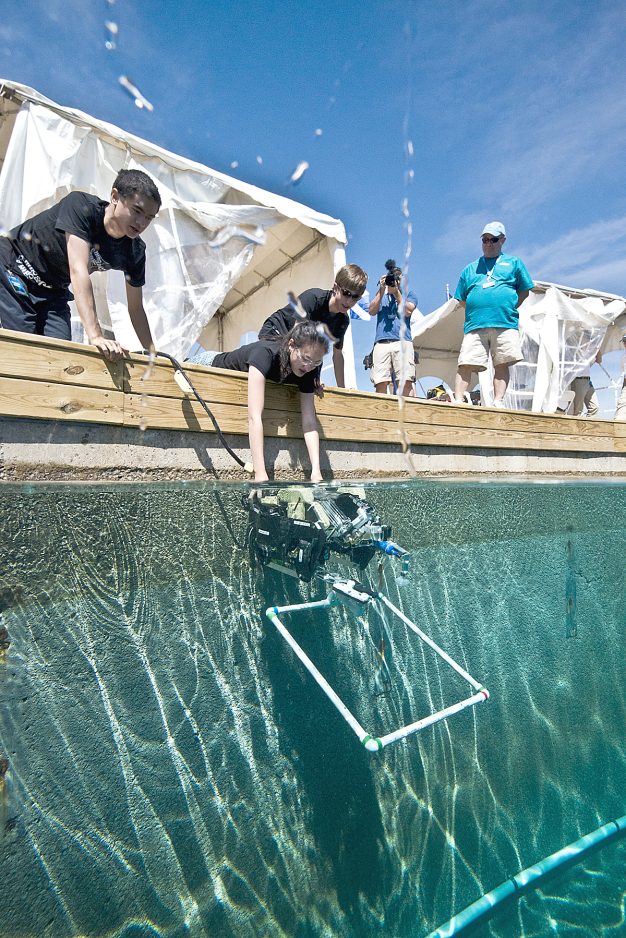
Seattle team AMNO & CO removes its remotely operated vehicle during final day of tank missions.
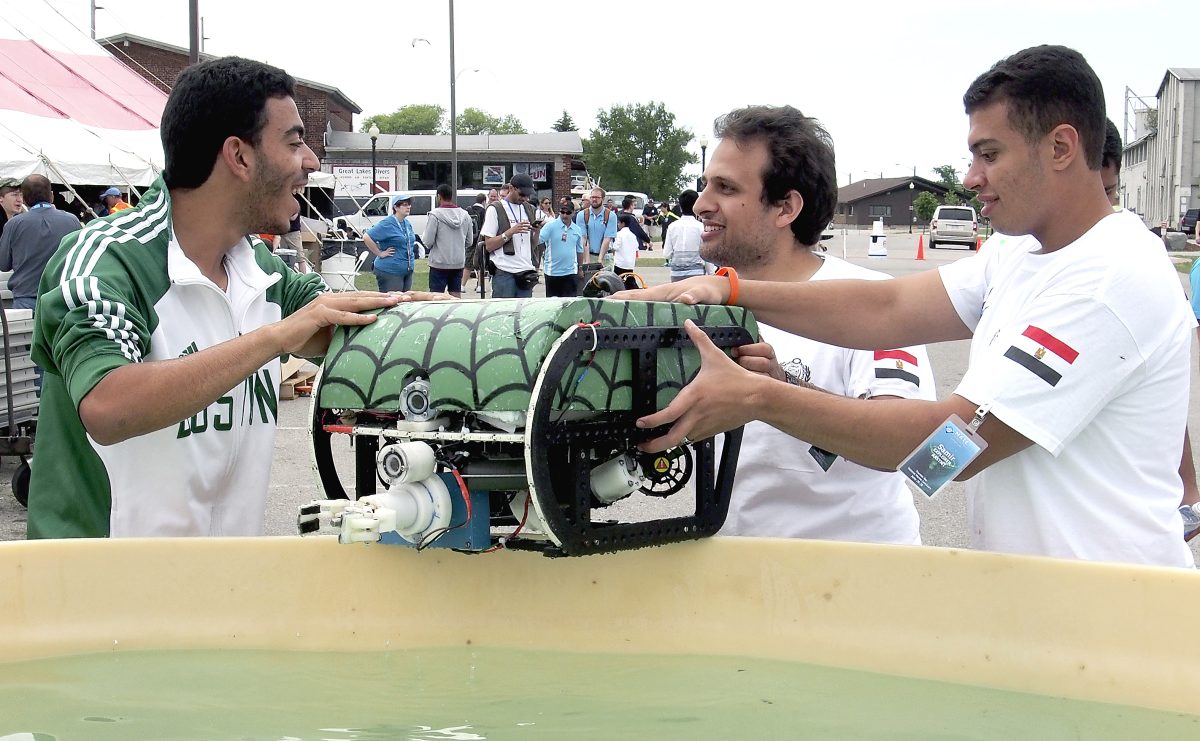
Students from Arab Academy for Science, Technology and Maritime Transport, of Alexandria, Egypt, hold their remotely operated vehicle by the practice tank.
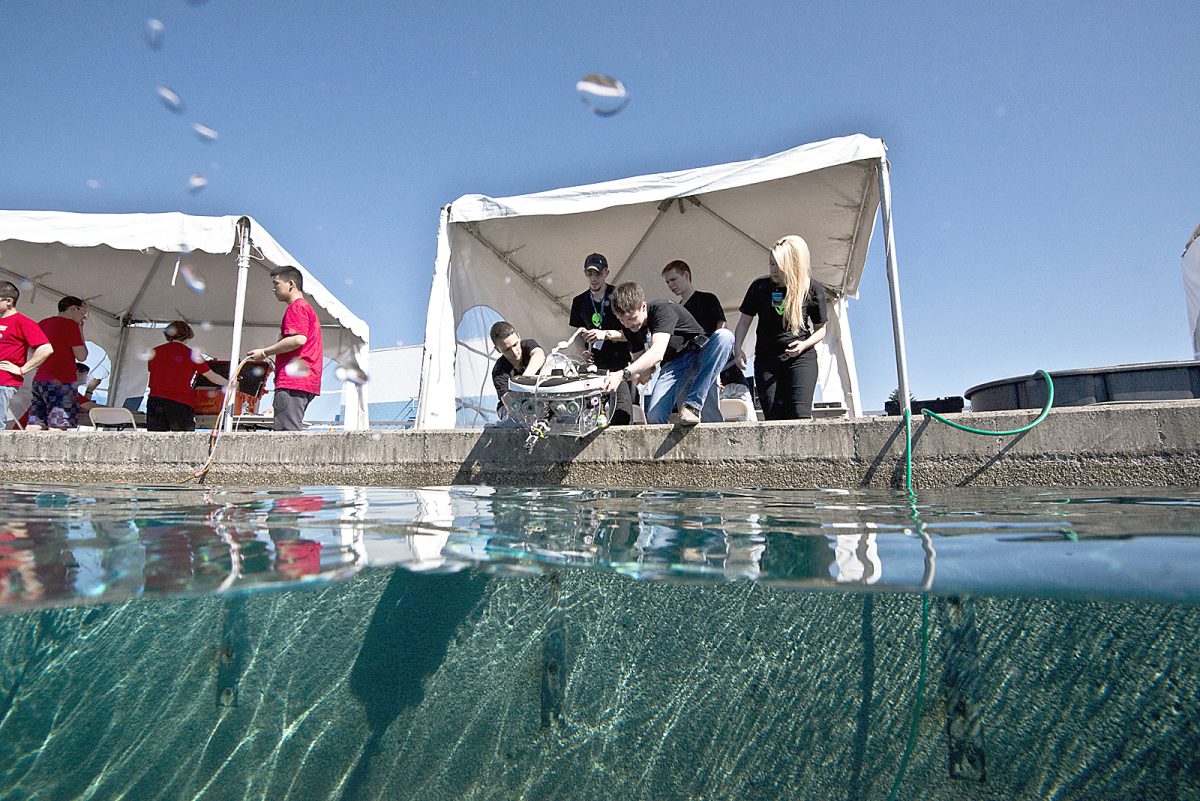
A team from Maritime State University of Vladivostok, Russia, lowers its remotely operated vehicle into the pool during the final day of tank missions.
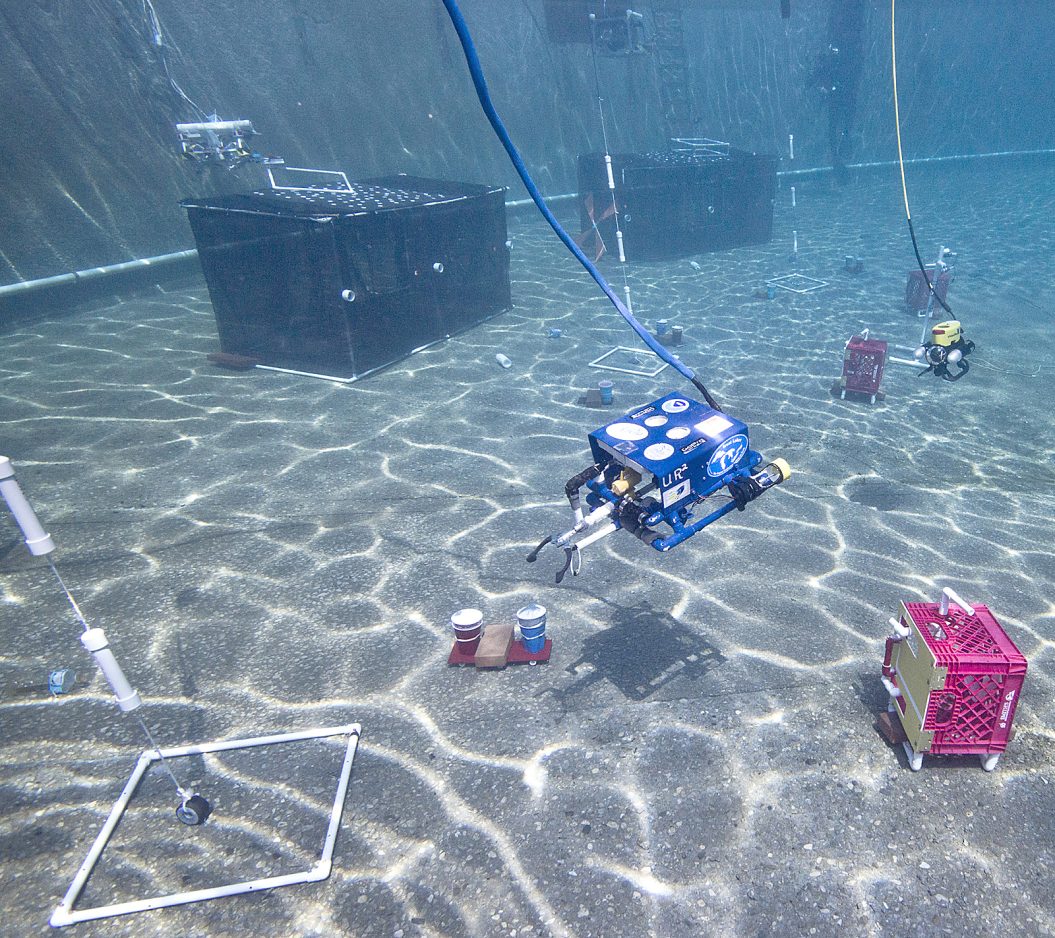
A remotely operated vehicle collects simulated samples at the bottom of the tank during the final day of tank missions.
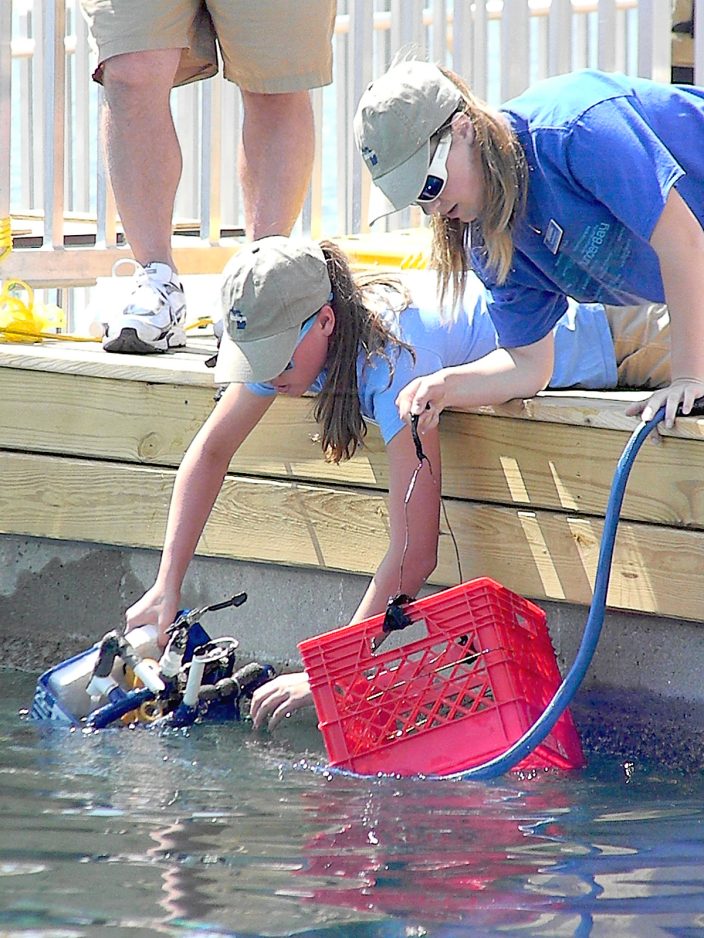
Teams from around the world wrap up the final day of tank missions for the 2014 MATE International ROV Competition. Each team had two attempts to complete the most missions and achieve the highest score. Mission scores, engineering presentation scores and a poster score all factor into the final points tally to determine a winner.
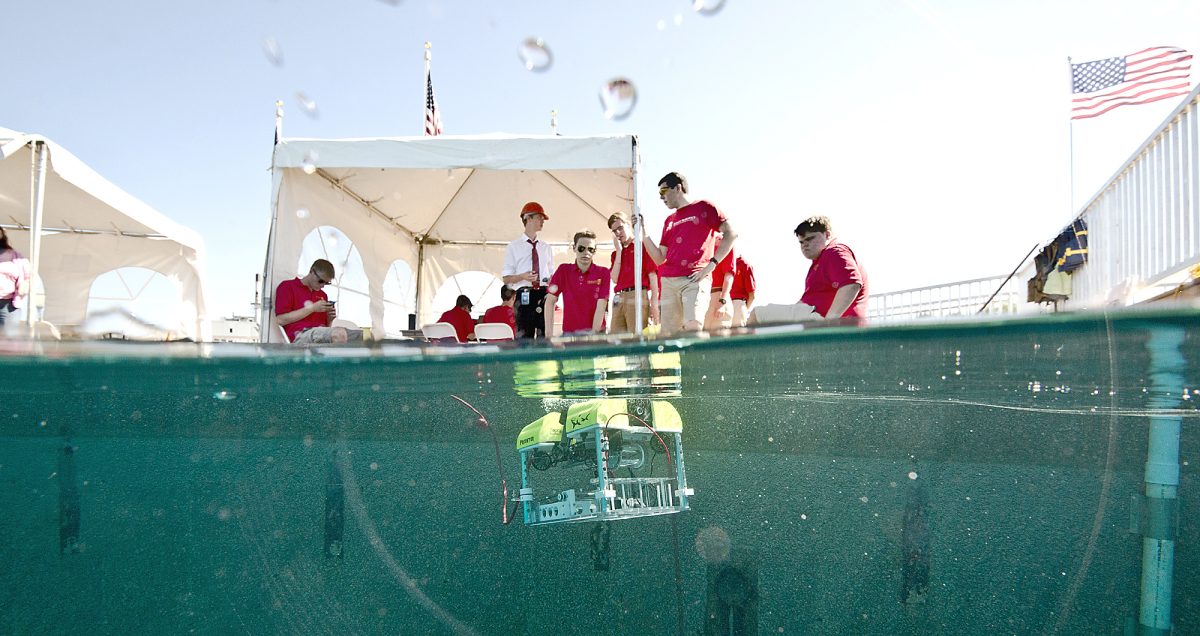
Students from Jesuit High School of Carmichael, Calif., control their remotely operated vehicle during final day of tank missions for the 13th Marine Advanced Technology Education Remotely Operated Vehicle International Competition at the Thunder Bay National Marine Sanctuary in Alpena, Mich. About 60 teams from 13 countries and 18 U.S. states participated in the event.
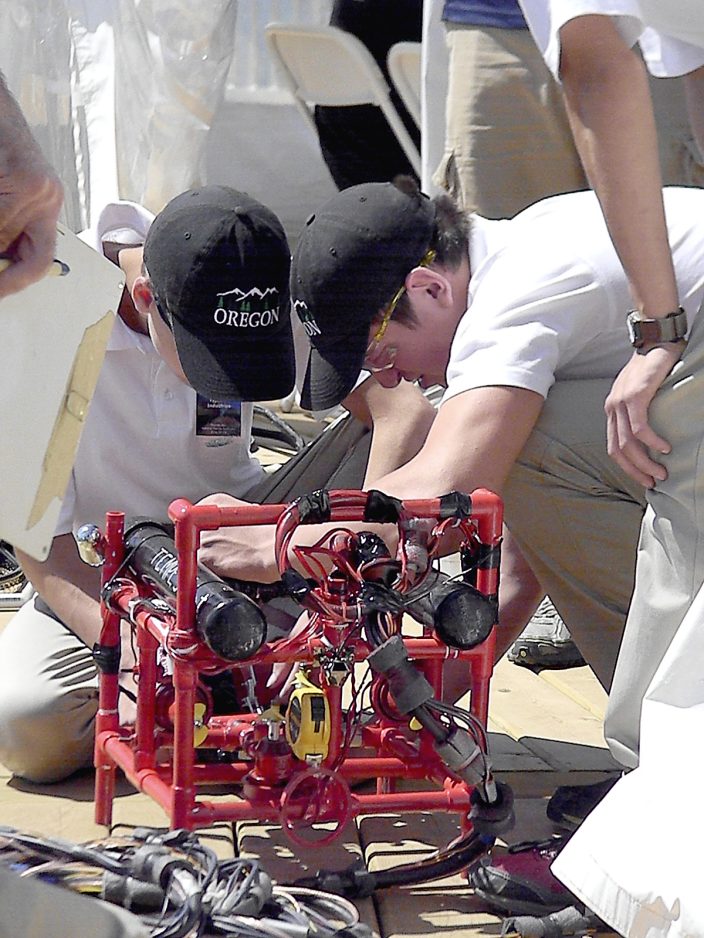
One of the fifty-nine teams from around the world compete in the 2014 MATE International ROV Competition at the Thunder Bay National Marine Sanctuary in Alpena, Mich. Friday, June 27, 2014. Team members launched their underwater robots into an outdoor tank and guided them through a series of timed missions based on the different jobs performed by sanctuary staff to preserve shipwrecks in the Great Lakes. (AP Photo/Alpena News, Nicole Grulke)
ALPENA, Mich. – Student teams controlling underwater robots from the United States, Canada and Russia were the winners recently in a global competition at the only federal freshwater marine sanctuary in the United States.
The high school and university teams were among 60 from 18 states and 13 countries participating in the 13th Marine Advanced Technology Education Remotely Operated Vehicle International Competition at Michigan’s Thunder Bay National Marine Sanctuary.
Taking first place in the advanced category was a team from Jesuit High School of Carmichael, California. Second- and third-place winners were Bauman Moscow State University of Moscow and Far Eastern Federal University of Vladivostok, Russia.
The top three in the intermediate category were Clarenville High School of Clarenville, Newfoundland and Labrador, Canada; Cornerstone Academy of Gainesville, Florida; and Greater New Bedford Regional Vocational Technical High School of New Bedford, Massachusetts.
Teams worked with robots in a large tank while judges evaluated their performance along with engineering and communication. They were also judged on the design and construction of their robots.
Sanctuary archaeologist Stephanie Gandulla said this year’s competition was focused on the Great Lakes and based on research performed at the northeastern Lower Peninsula facility. Tasks included identifying a simulated shipwreck, collecting microbial samples from a sinkhole, inventorying invasive species and removing trash.
“It’s really put us on a global stage,” Gandulla told The Associated Press. “The Great Lakes are such an important resource. It’s so important that people see that. It’s a huge supply of freshwater, and very important to the rest of the world – not just the United States.”
The Alpena facility is among 14 national marine sanctuaries operated by the National Oceanic and Atmospheric Administration. It was established to preserve and protect the Great Lakes and the roughly 200 shipwrecks found in the area.