

Feast of Fat Tuesday Pancakes, fasnachts fatty foods of choice on day before Lent
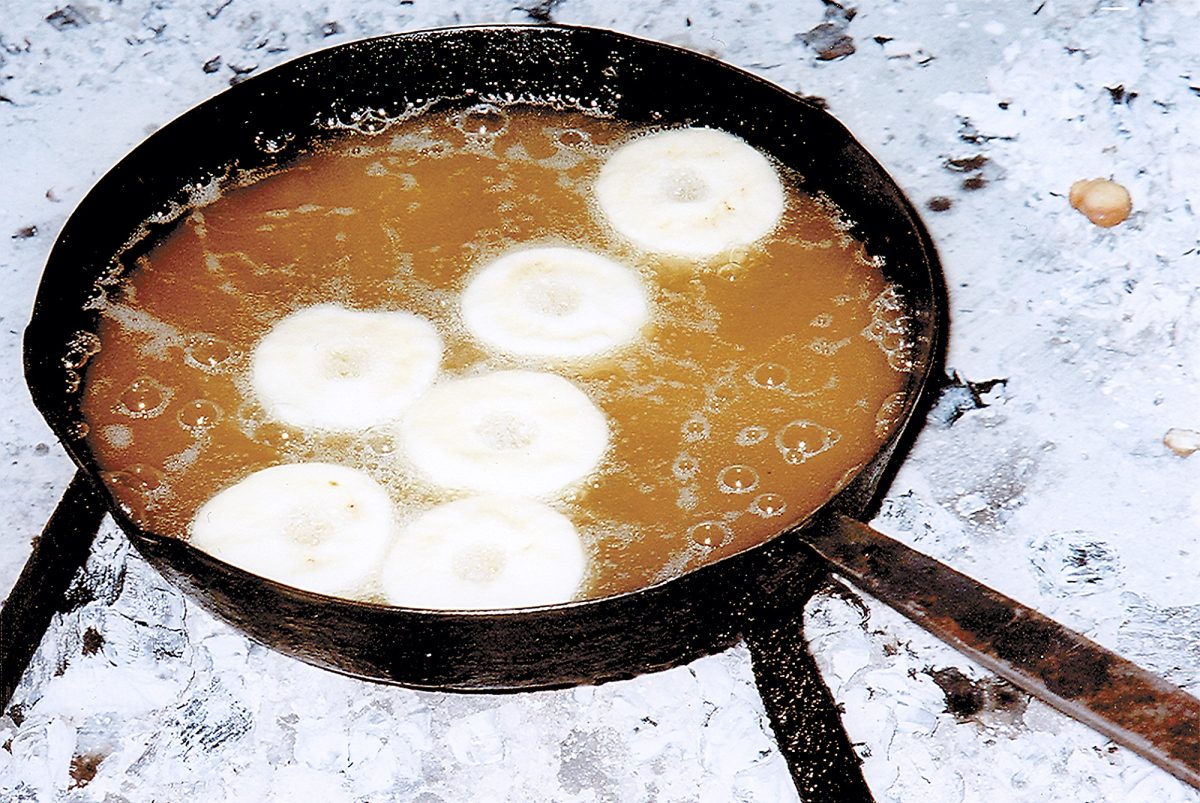
Grease bubbles as fasnachts float to the top of the skillet during “Fasnacht Making Day” in 2006 at the Landis Valley Village & Farm Museum in Lancaster.
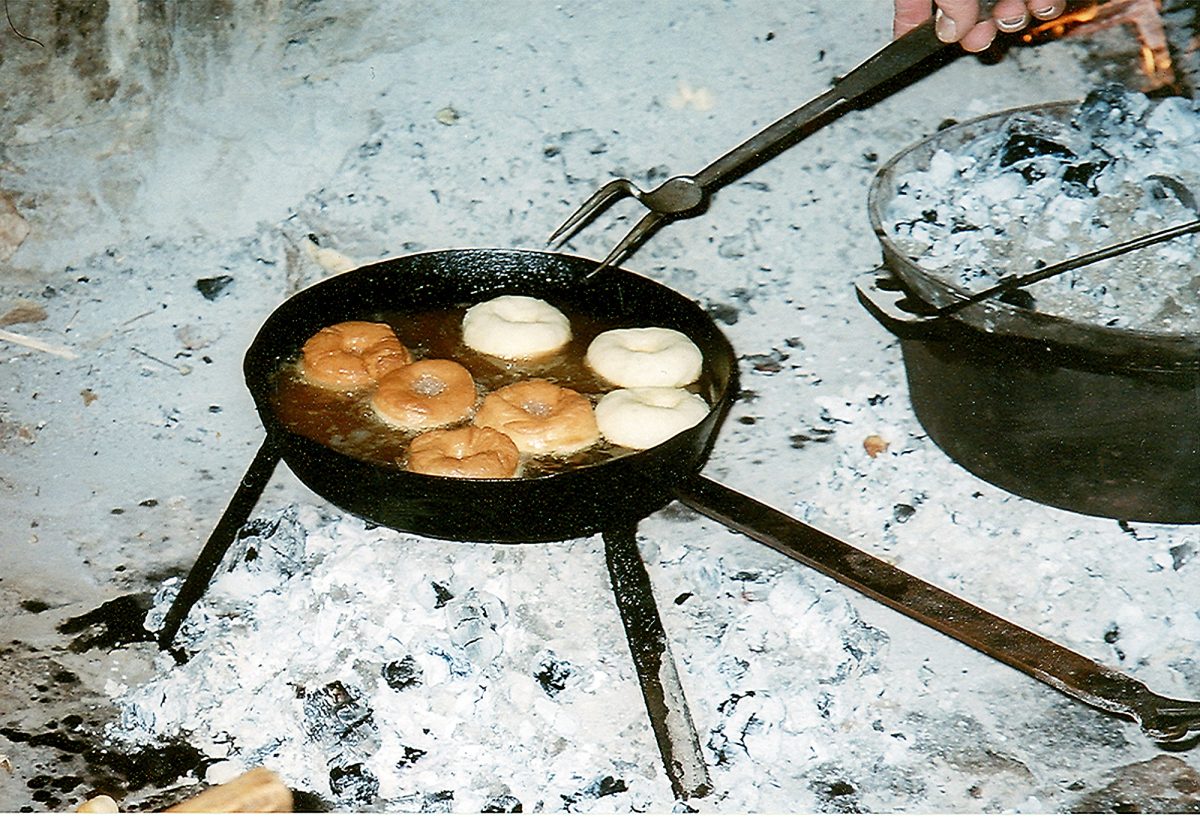
Fasnachts being deep fried in the walk-in fireplace at the Landis Valley Village & Museum
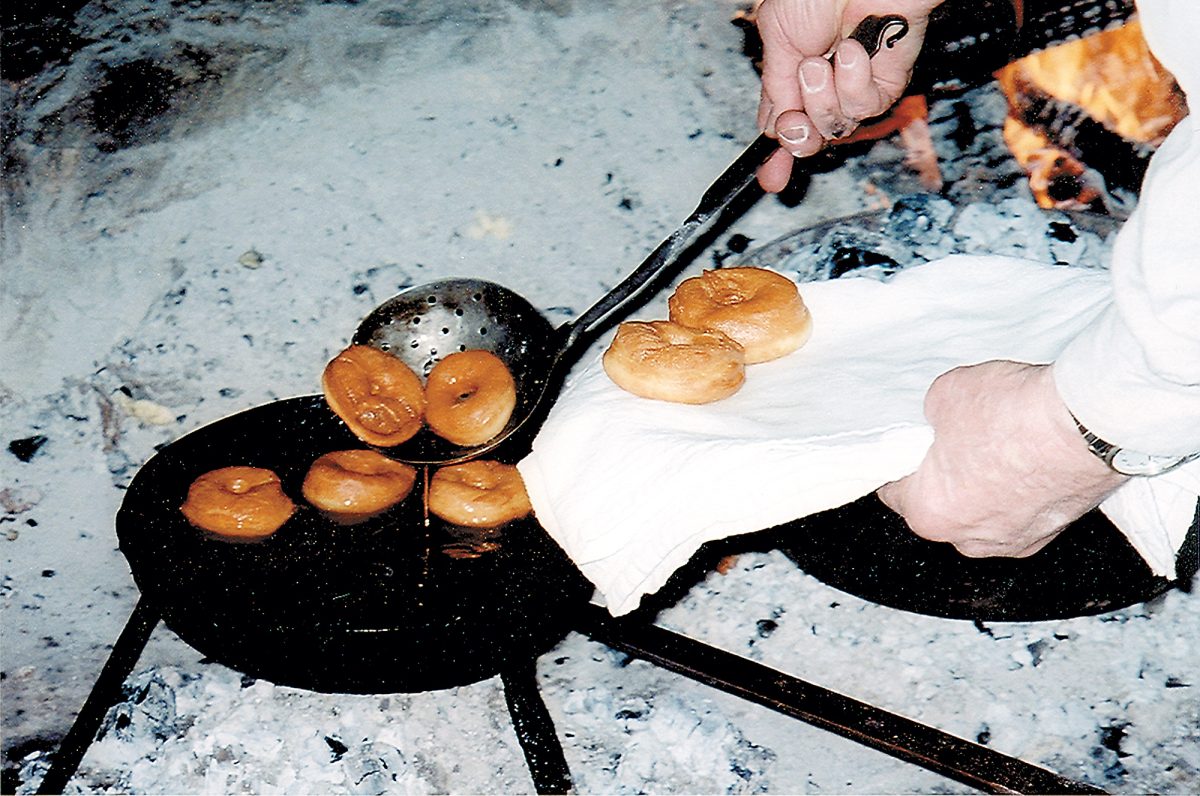
In a March 2006 file photo, Donald Beechler removes the lightly browned fasnachts from the skillet in the walk-in fireplace at Landis Valley Village & Museum in Lancaster.
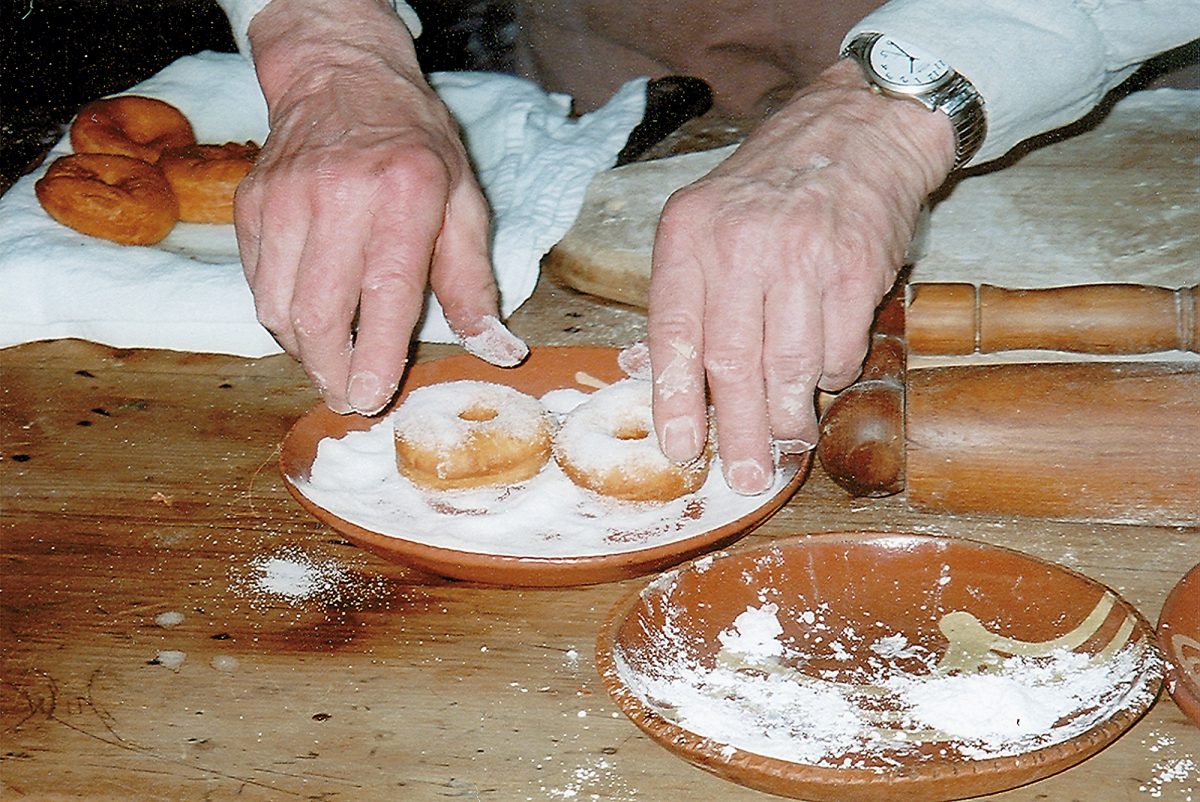
Donald Beechler rolls this batch of fasnachts in granulated sugar during “Fasnacht Making Day” in 2006 at the Landis Valley Village & Farm Museum in Lancaster.
Shrove Tuesday is fast approaching, and the day of indulgence is not lost on those who plan to feast on food that may be good for the soul, but not the waistline, as they prepare to make culinary sacrifices during the 40 days of Lent.
Traditionally, there were many foods that observant Christians would not eat during Lent, such as meat, fats, eggs and milk.
So that no food would be wasted, families would clear their cupboards and make meals using those rich, fatty ingredients on the day known by the French name Mardi Gras, which means Fat Tuesday.
And the food that quickly became associated with those ingredients – along with a little flour – were pancakes, which continue to provide a filling meal before the ritual of fasting begins on Ash Wednesday.
A few area churches will hold pancake dinners on Shrove Tuesday. Among them are:
• Center Presbyterian Church, 255 Center Church Road, McMurray – 5 to 7 p.m.
• Center United Presbyterian Church, 110 Washington Ave., Midway – 4:30 to 7 p.m.
• First United Methodist Church, 29 N. College St., Washington – 5:30 to 7:30 p.m.
In addition, Laboratory Presbyterian Church, 23 Manse St., Washington, will host a pancake supper at 5 p.m. Sunday.
Another food of choice on Shrove Tuesday are fasnachts, a yeast-raised, fatty doughnut-like treat traditionally eaten in Pennsylvania Dutch country. Fasnachts are made from potato dough and are fried. They became popular in the southeastern part of the state when Pennsylvania Germans started to make them as a convenient and easy way to use up the fat and sugar in their pantries before Lent. Fasnacht is German for “fast night.”
At one time, Landis Valley Village & Museum in Lancaster held a “Fasnacht Making Day.” During a trip in 2006 to the living history village and farm, which depicts a Pennsylvania German rural community from 1740 to 1940, one of the docents made the fatty treats in a walk-in fireplace in a tavern reminiscent of the 18th century.
Donald Beechler, who never made fasnachts before, took extreme care during the cooking process to ensure the grease was hot enough, yet didn’t splatter on the hearth.
“This isn’t like doing it at home. There’s no temperature gauge,” he said. “If I slop grease out there, I’ll be in big trouble. Lard is very flammable. All you need is a splat.”
Traditionally, fasnachts were made in the shape of a triangle and smeared with quince jam or crabapple jelly. Eventually, the shape changed to the more familiar doughnut, and it became a common practice to spread molasses over them, then dunk them into saffron or blue balsam tea.
Today, some fasnachts are covered with a glaze, and others are coated with sugar, a practice made popular by churches that have made the Fat Tuesday treats for fundraisers.
“They’re best when fresh,” said Michael Emery, museum educator/volunteer coordinator at Landis Valley. “Traditionally, they were made to be eaten fresh the same day.”
Emery also noted that everybody uses a slightly different recipe. His great-grandmother, who was raised Amish, made her fasnachts in the shape of pretzels.
Beechler took his recipe from “Pennsylvania German Foods and Traditions,” a cookbook published by Landis Valley Village & Museum, the largest living history museum of Pennsylvania German artifacts in the country. The museum has preserved and interpreted 200 years (1740-1940) of Pennsylvania German culture and history.
The recipe from “Foods and Traditions” calls for milk, mashed potatoes, sugar, yeast, flour, lard, salt, eggs and nutmeg.
The ingredients must be mixed just right, and the dough must be allowed to rise for about 1 1/2 hours before it is rolled and cut, then placed in hot fat. If the grease is hot enough, the fasnachts will float real quick – within about 30 seconds.
Once the bottoms of the fasnachts are lightly browned, they should be flipped over so they cook the whole way through, then removed and coated with a condiment of choice, such as sugar, syrup or honey, if desired.
According to Pennsylvania German folklore, as documented in the cookbook, the lard used to fry the fasnachts was believed to possess special powers. As a result, the first three fasnachts made were fed to the chickens to keep them safe from chicken hawks.
Some even believed the lard had healing powers and would rub it on a cow’s sore udders. Others said the lard would keep bugs from vegetables if it was spread on a garden shovel before digging.
And the fate for those who did not eat fasnachts on Shrove Tuesday?
They would get boils, their chickens wouldn’t lay eggs and their flax crop would fail.
Fasnachts
• Ingredients
2 cups scalded milk
1 cup mashed potatoes
3/4 cup sugar
1 package yeast
7 cups (approximately) flour
1/2 cup lard
2 teaspoons salt
2 eggs, well-beaten
1 grated whole nutmeg
Scald milk and add mashed potatoes, sugar, salt and lard. Let cool until lukewarm. Add eggs and nutmeg. Add yeast and enough flour to make a soft dough. Knead well and place in a greased bowl. Cover with a cloth and let rise about 1 1/2 hours.
Roll out about 1/4-inch thick on a floured board. Cut with a doughnut cutter, or cut into squares. Place on a cloth and let rise until doubled in size and fry in hot fat.
Fry until lightly browned on both sides. Drain on paper. Serve with molasses, syrup or honey, or sprinkle with sugar. Serve warm.
Note: Leftover fasnachts can be made fresh again by placing them in a brown paper bag in a 350-degree oven for about 10 minutes.