

Project Hope and Fairness helps cocoa farmers
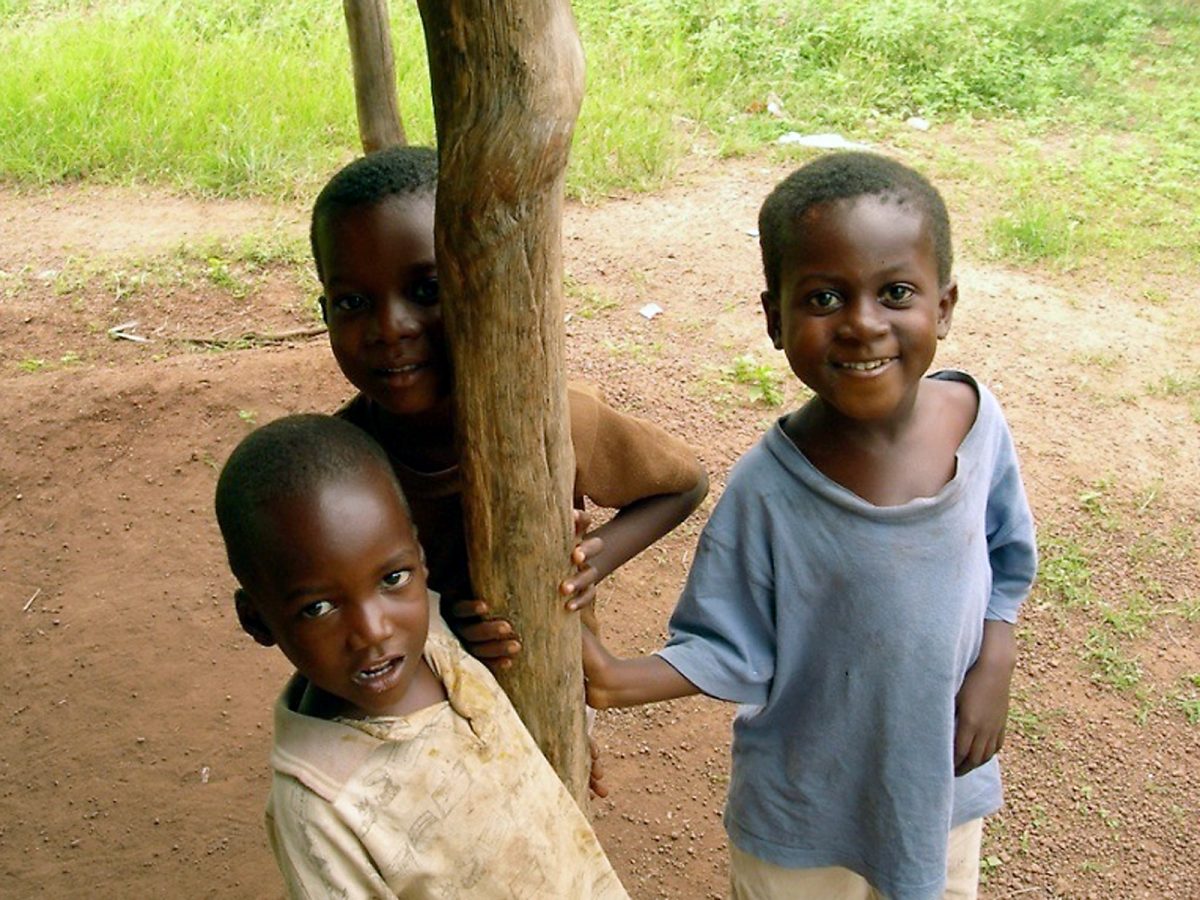
Children flash smiles in Bateguedia, Cote D’ Ivoire, where Project Hope and Fairness has donated tools and boots.
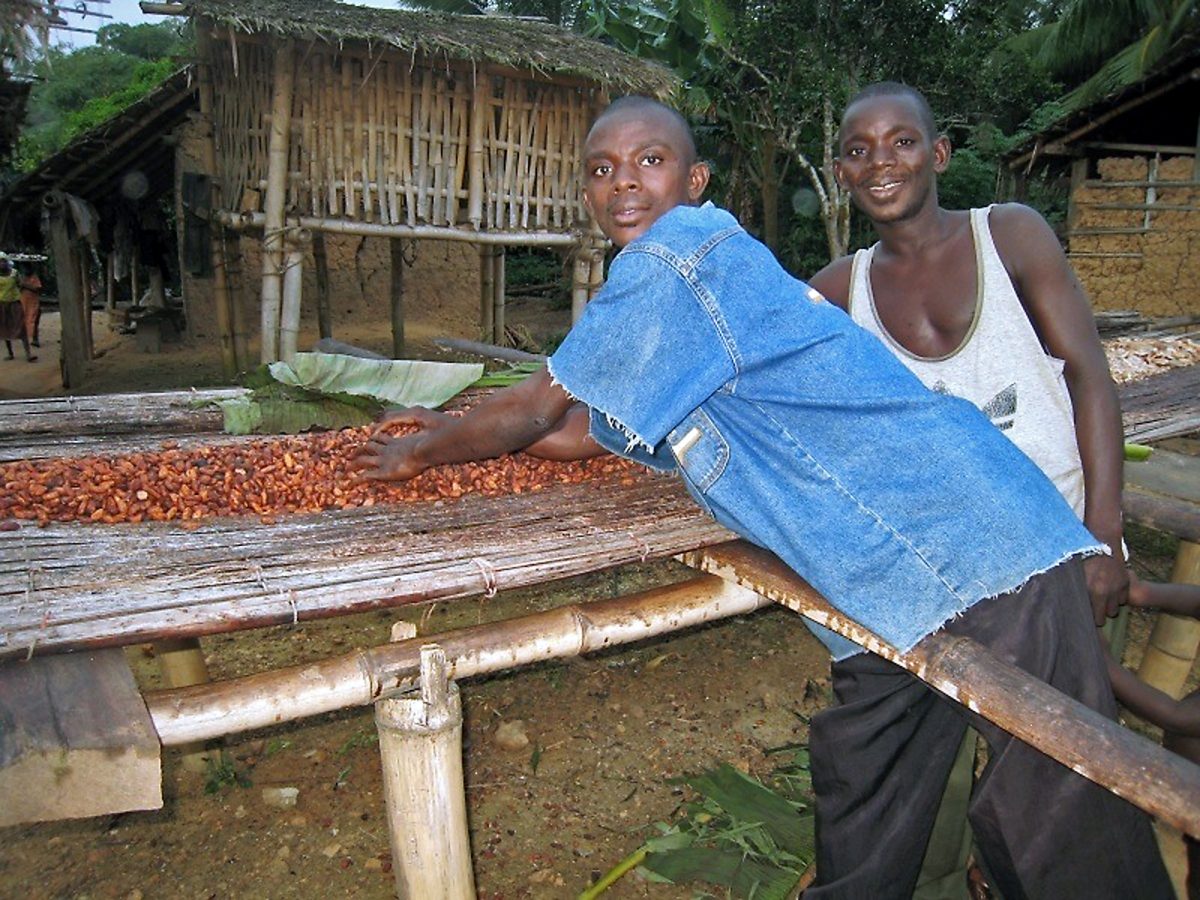
West African farmers work with cacao drying racks.
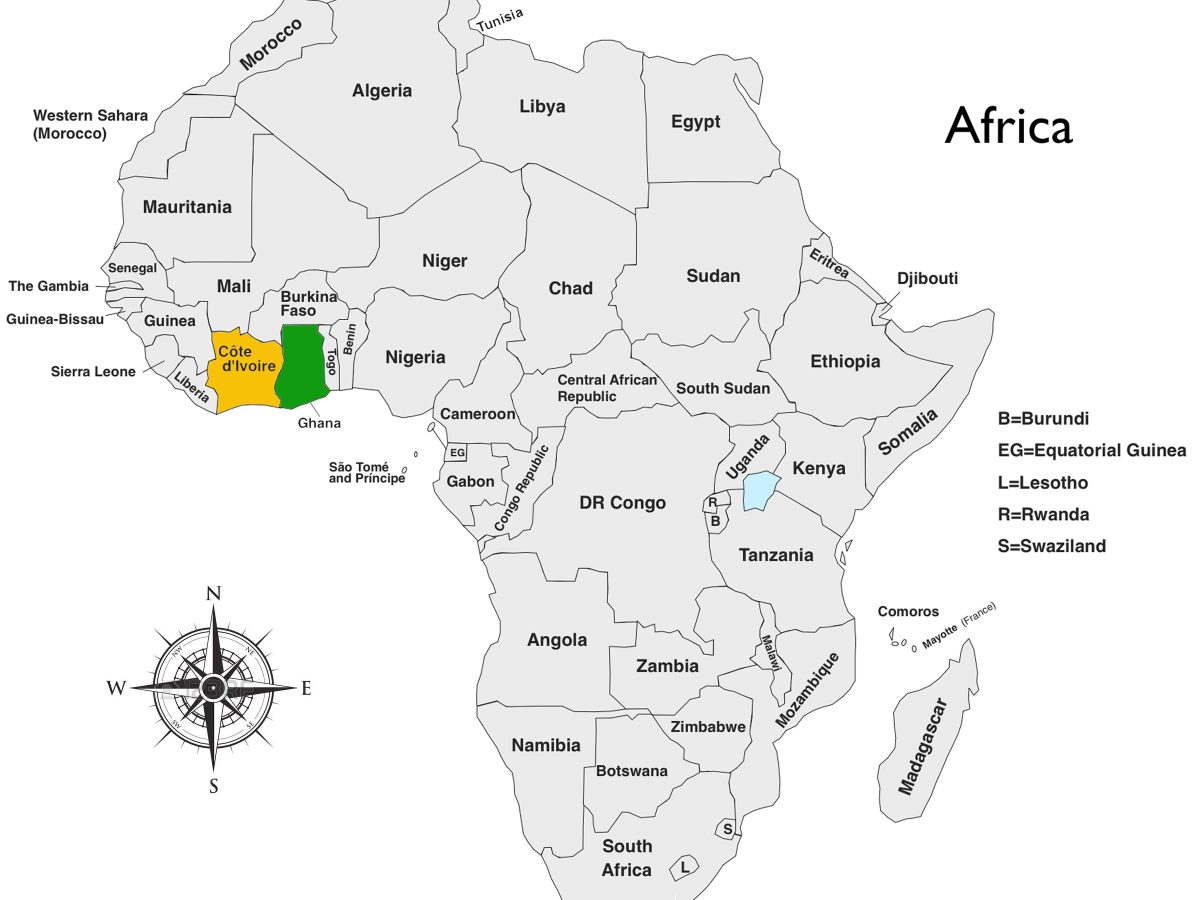
Even the most ardent of chocolate lovers might be unaware that some three-fifths of the world’s supply of cocoa beans comes from the small African nations of Ghana and Côte d’Ivoire.
The farmers who produce the beans, though, hardly are raking in the profits.
“The average cocoa farmer gets one cent on the retail dollar, and the average ‘fair-trade’ farmer gets two cents,” Tom Neuhaus said, referring to the social movement to aid producers in developing countries achieve better trading conditions. “So it’s double, but it’s two times a small number.”
He heads a nonprofit organization, Project Hope and Fairness, which has the goal of truly helping West African cocoa farmers.
“If they were to produce their own chocolate and sell it in their own country, and possibly trade with other countries, they would get 40 cents,” he said. “That’s 20 times as much as fair trade.”
Neuhaus, a San Luis Obispo, Calif., resident who is getting ready to visit the Pittsburgh area for the first time, looks to drum up support here with the assistance of his cousin Barbara Shah, an attorney who lives and works in Bethel Park. She is hosting a fundraising event at her home Saturday, featuring drinks, hors d’oeuvres, snacks and an opportunity to learn more about Project Hope and Fairness.
The culinary selections, by the way, will include samples from Mama Ganache Artisan Chocolates Inc. Neuhaus, who has a doctorate in food science, founded the organic artisan chocolatier business in 2004.
His interest in the plight of cocoa farmers was piqued the previous year, while he was teaching a class in the history and anthropology of food at California Polytechnic State University. He traveled to present a seminar at the University of Ghana, and then spent time with members of the fair trade-certified cooperative Kuapa Kokoo, an experience that made him think.
“Most of the questions that people deal with are ‘what’ questions,” Neuhaus explained. “I’d much rather deal with ‘why’ questions: why people eat what they eat, and why are things the way they are?
“So I became sensitized to the whole fair-trade issue and how with chocolate, like so many other colonial products, the market is designed to benefit the Europeans and Americans, and hurt the farmers,” he said about conditions established during Africa’s dominance by foreign powers. He founded Project Hope and Fairness with the initial purpose of taking university students with him on trips to West Africa.
“Basically, we would go to the big city. We would load up a four-by-four with tools and things that were useful to farmers,” Neuhaus said. “But then I came to the realization that, really, I want to do something more than that.”
In the past dozen years, the organization has donated nearly $100,000 for improvement projects in 20 villages, including Depa, Côte d’Ivoire. A rice-hulling operation started there in 2013, and a chocolate factory is nearly ready to open.
“We’re in the last few weeks of getting those electrified and actually producing chocolate,” Neuhaus reported. My hope is that we’ll have photographs of the bars by the time I’m at Barbara’s.”
His cousin is eager to promote awareness of Project Hope and Fairness and encourage local support.
“I believe that everybody should do all they can to make life better for others. I don’t have that many ways to reach out personally, other than through my work and through my activities,” Shah said. “But Tom just presented me with this golden opportunity. If there is some way I can connect him with other people who have more wealth and influence than me, I’d certainly love to do it.”
Contact Barbara Shah at 412-835-3050 or bshah@shahlawgroup.com. For more information about Project Hope and Fairness, visit www.projecthopeandfairness.org.