

Taylorstown man wins national award for second time
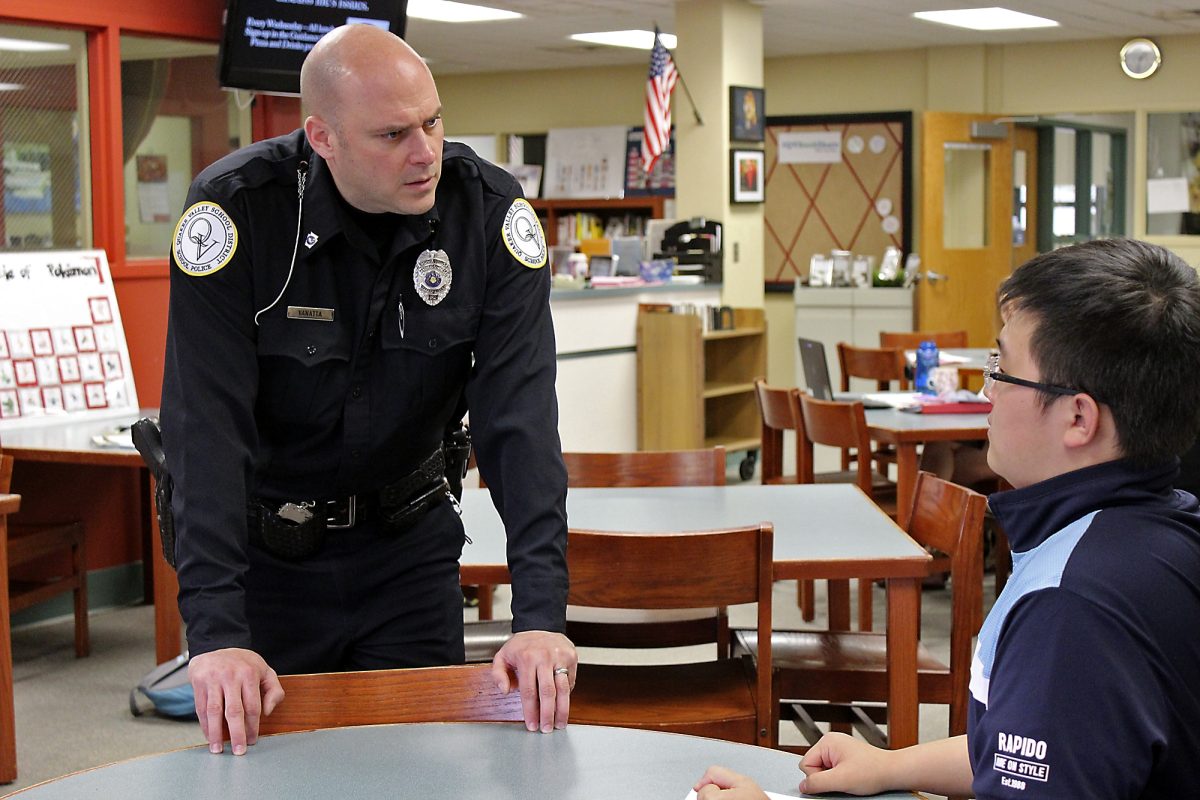
Aaron Vanatta, school resource officer for the Quaker Valley School District police department, talks with a student.
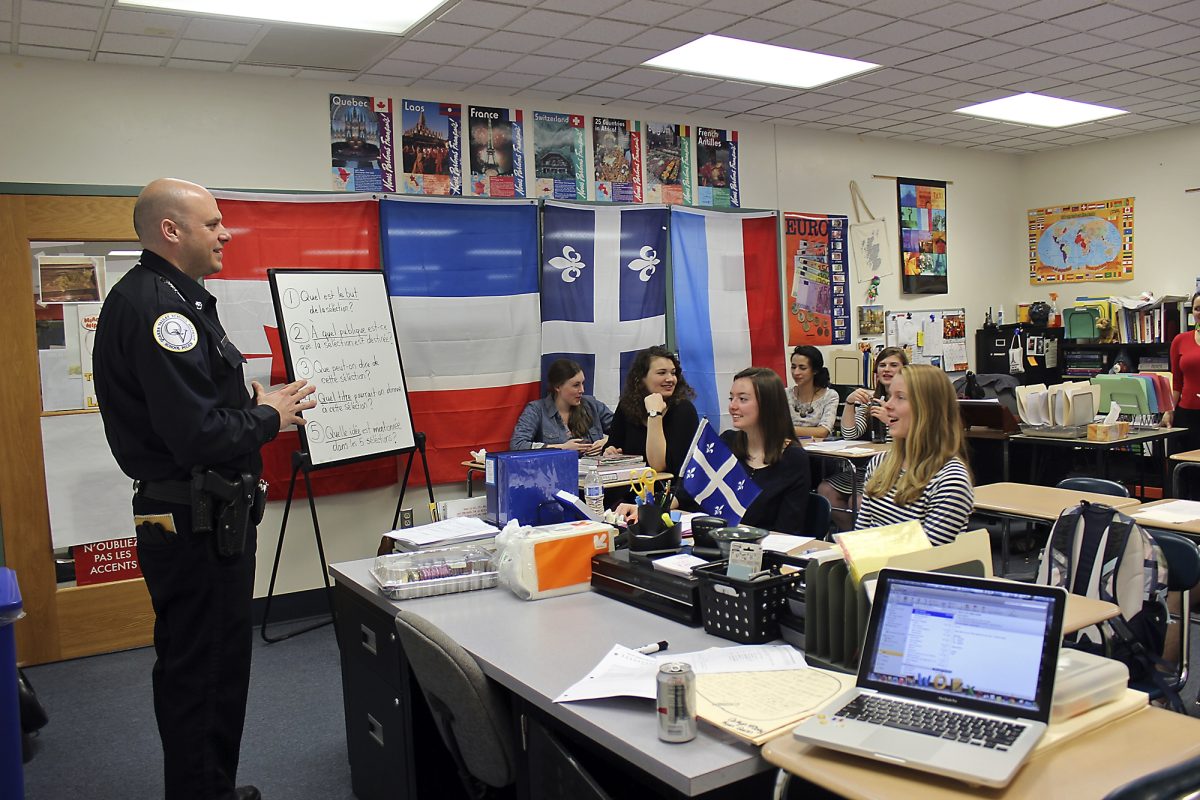
School resource officer Aaron Vanatta speaks with a class in the Quaker Valley School District.
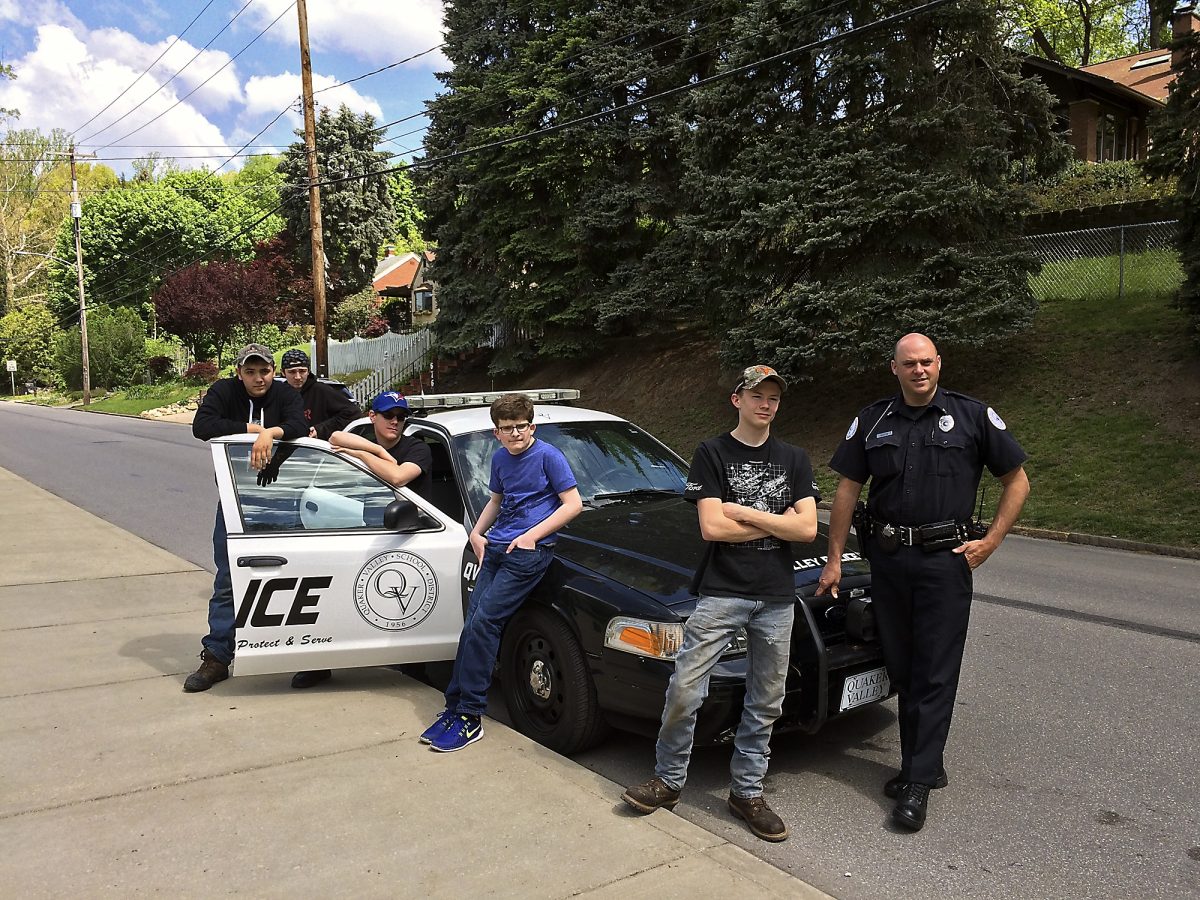
School resource officer Aaron Vanatta shows students in the Quaker Valley School District his police car.
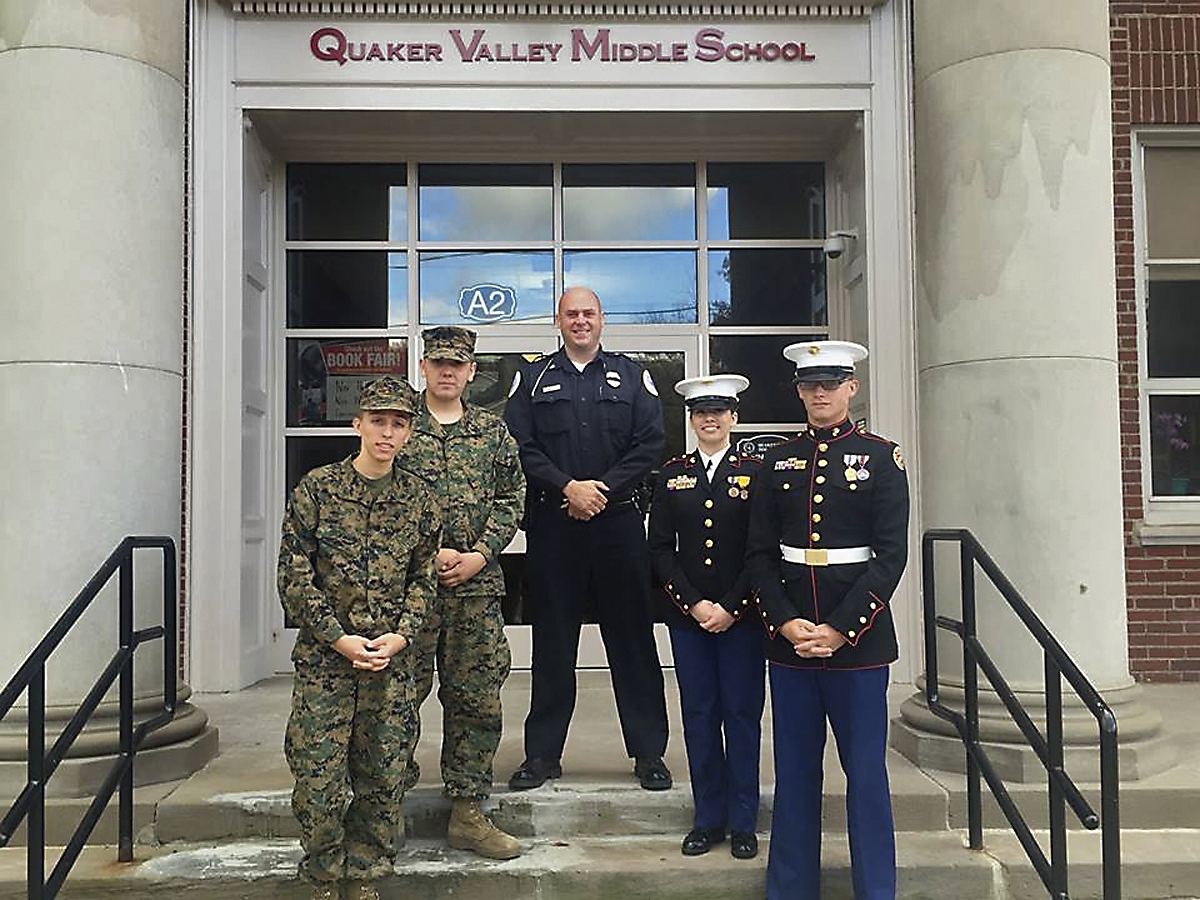
Aaron Vanatta, school resource officer for the Quaker Valley School District police department, poses with members of the school’s ROTC.
They say lightning never strikes twice in the same place, but that is not the case for a Taylorstown man who is a school resource officer for the Quaker Valley School District police department in Allegheny County.
Officer Aaron Vanatta received his second national model agency award from the National Association of School Resource Officers during a ceremony Tuesday at the association’s annual convention in Washington, D.C. The recognition comes three years after Vanatta received the award while in charge of the Keystone Oaks School District police department in Allegheny County.
The 43-year-old Vanatta, who also has been a part-time officer in South Strabane Township since 2007, took the job at Quaker Valley after the first officer retired from the district in 2014. His background is not only in law enforcement, but also working with students, starting his career as a school-based Washington County juvenile probation officer in the McGuffey School District.
As a school resource officer, part of Vanatta’s goal is to keep students from being part of the judicial system. During the last school year, Vanatta started the Quaker Valley Peer Jury program, which is designed to do just that and keep students who may get into trouble out of the legal system. Charges that can be heard by the jury include simple assault, harassment, minor violations of the weapons policy, criminal mischief, institutional vandalism, possession of drugs, tobacco or marijuana, truancy and underage drinking.
“A diverse group of students were picked with equal representation of boys and girls with an adult moderator,” Vanatta said. “They hear cases for first-time offenders charged with misdemeanor charges or other minor offenses, like having tobacco on school property.”
A case is sent to the peer jury if the student admits to committing the offense. The school police officer must determine that sending the case before a peer jury is appropriate, and the student and his or her parents must consent in writing to such a disposition.
At the hearing, the student foreman of the 12-student panel reads the charges, states the possible sentence if the offense was committed by an adult and summarizes the facts. The panel then asks the student charged about the offense, school, home life, activities and other factors. The parent or guardian is also encouraged to participate.
The offender and parents leave during the jury deliberation. The jury fixes an appropriate accountability and victim restoration recommendations, which are outlined in a contract. If the offender agrees to the terms, he or she is given a certain amount of time to complete the requested items outlined in the contract.
“It has been pretty cool,” Vanatta said, adding that it is for first-time offenders and has been successful because those students are less likely to repeat.
While he has the same powers as a municipal officer, Vanatta said the philosophy of being a school resource officer is to educate more than law enforcement. Vanatta also finds himself acting as a counselor or mentor not only to students, but also to teachers and staff who may be concerned about a problem. He has had students confide in him about problems, such as abuse, and has gotten them the help they needed.
Vanatta even helped an international student get a passport replaced after it was stolen.
“I don’t want to be a hired gun,” Vanatta said. “I want to educate students. That’s why I run programs focusing on things like traffic safety and the dangers of drugs, especially opiates.
“Starting with middle school students, I let them know that drugs don’t discriminate.”
Vanatta has secured grants to purchase equipment to increase safety, including the all-in-one visitor management system at the five schools in the district, as well as portable radios through the state’s Center for Safe Schools. The district also was able to purchase an active shooter response eLearning package for the faculty, staff and students for three years.
Vanatta also brought different programs into the district through the Pennsylvania DUI Association that shows young drivers the difference in reaction time if they are intoxicated. He also secured a grant from UMPC Children’s Hospital of Pittsburgh and Allstate Insurance to purchase a pedal car and Drunk Buster goggles to help educate high school students on the dangers of driving impaired, tired and distracted.
Vanatta was successful in securing a grant through the Pennsylvania Liquor Control Board that will provide funding during the next two school years for additional officers to assist in patrolling school functions, like football games and dances, to curb underage drinking.
For the younger students, Vanatta puts on programs on topics like stranger awareness and making good choices.
As the school resource officer, he also coordinates all phases of emergency preparedness for the district, including training the faculty, staff and students on responses necessary to keep them safe during different situations. Vanatta said that local first-responders often train with school district officials as part of the district’s efforts to be prepared for emergencies.