

McGuffey pupils step into the past at one-room school
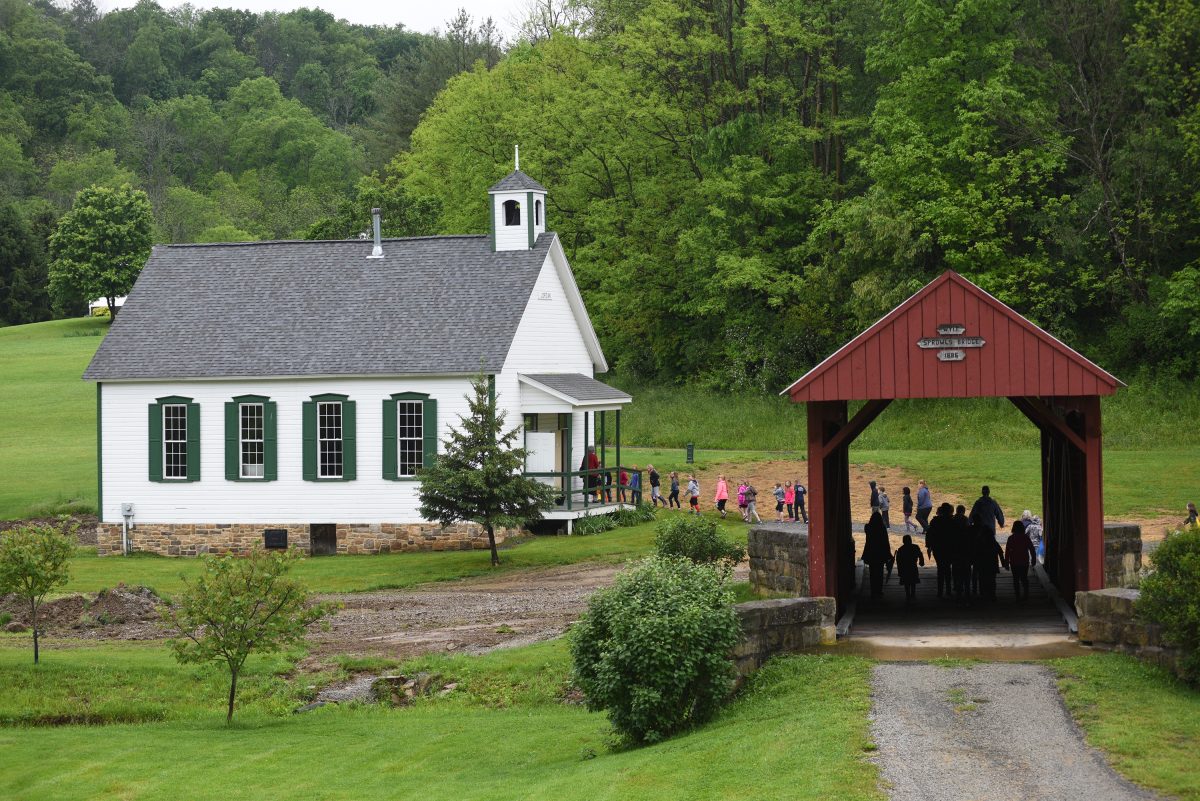
McGuffey School District second-graders attended a history lesson at Jordan School, a restored one-room schoolhouse at East Finley Township Park.

McGuffey second-grader Melia Stockdale listens to Pat Maggi talk about one-room schoolhouses.
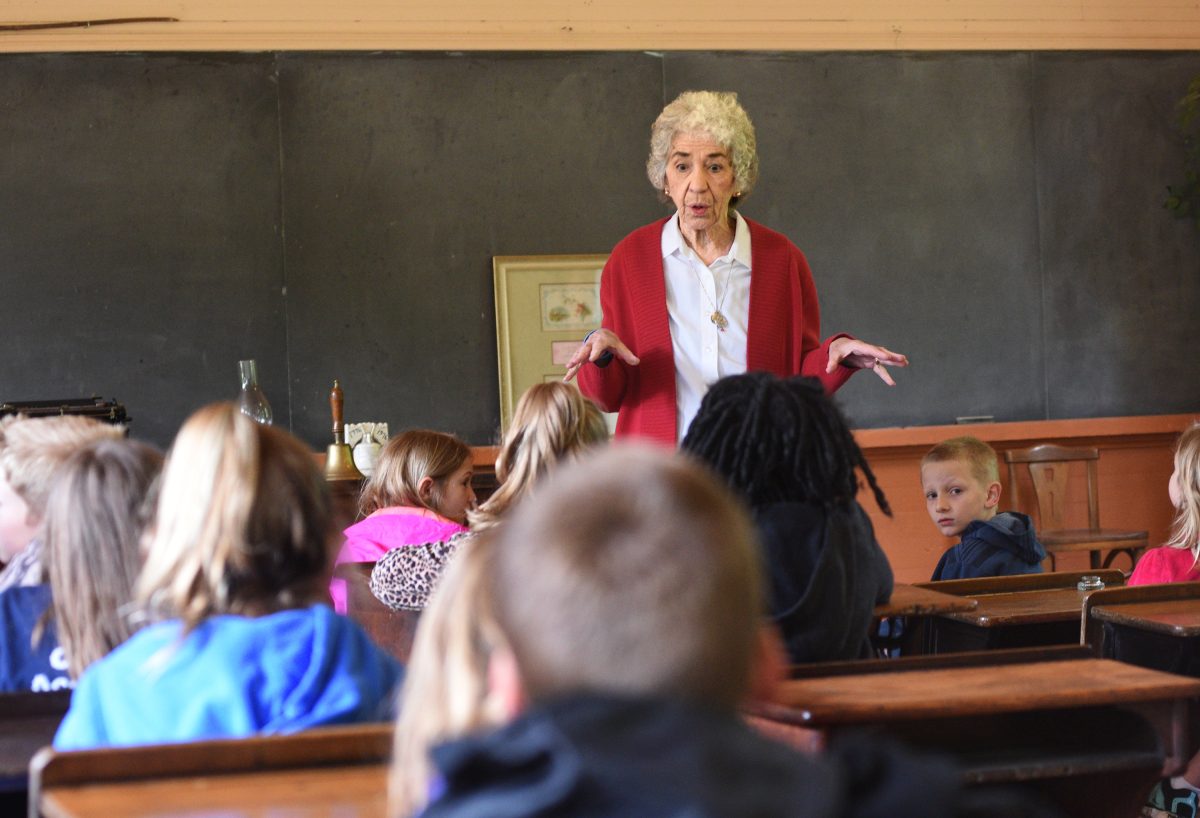
Retired schoolteacher Pat Maggi of Claysville gives McGuffey second-graders a history lesson about one-room schoolhouses at Jordan School in East Finley Township Park.
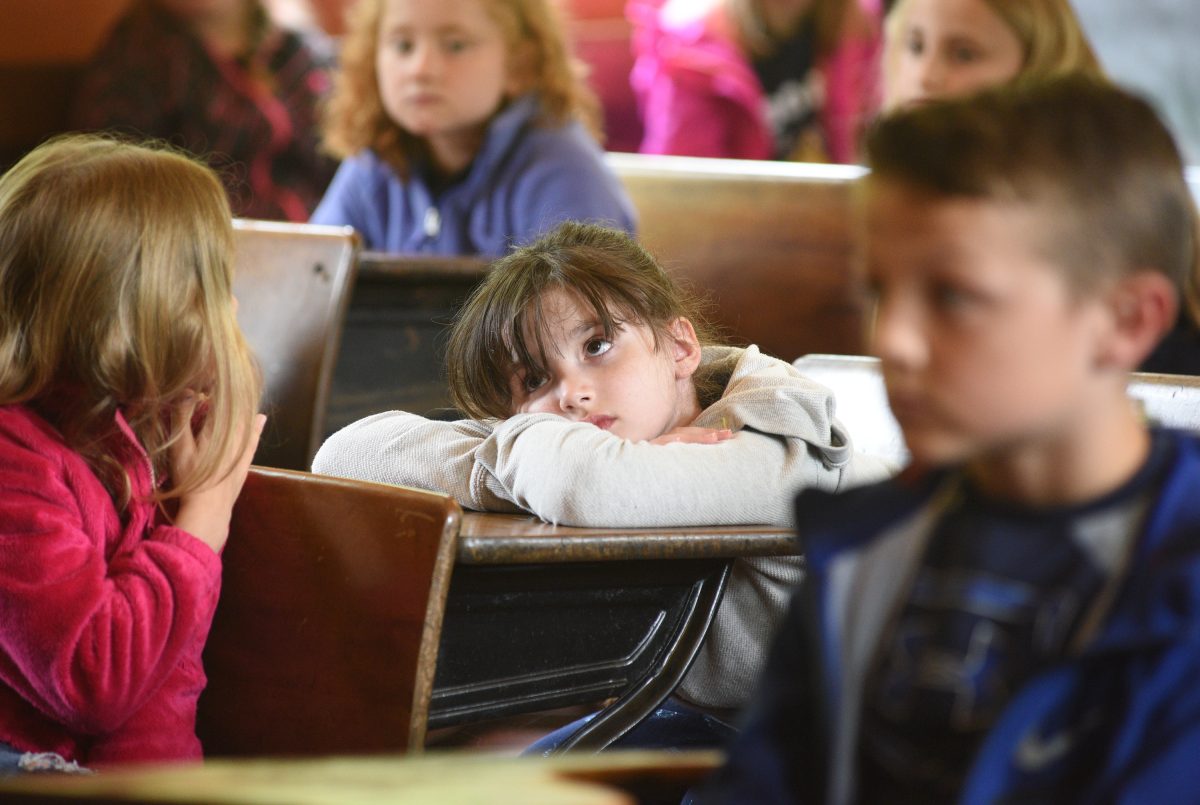
McGuffey second-grader Kaylynn Laverde listens to Pat Maggi describe what it was like to attend a one-room school at Jordan School in East Finley Township Park.
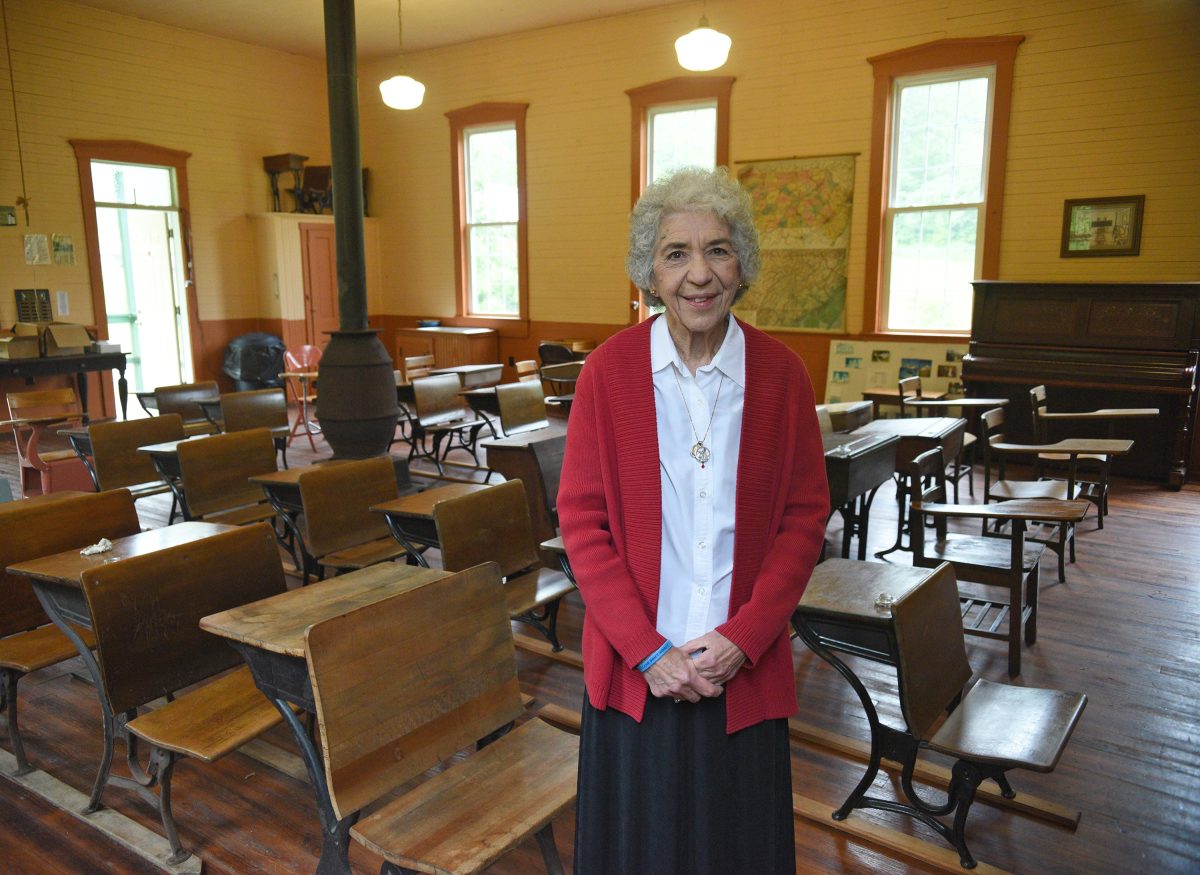
Retired schoolteacher Pat Maggi of Claysville gives local students a history lesson about one-room schoolhouses at Jordan School in East Finley Township Park.
Pat Maggi never taught in a one-room schoolhouse during her professional career. Now she rules there.
“Jordan School is different from what you are accustomed,” she said, addressing an audience that was small in stature and large in number. The 38 McGuffey second-graders who shoehorned into the refurbished one-room classroom Thursday morning comprised the first of a half-dozen groups of classmates to visit during the district’s annual field trip there.
In all, 125 students from Claysville and Joe Walker elementaries participated.
Maggi, a retired teacher with 40 years of service – 33 at McGuffey – is the volunteer instructor who volunteers a wealth of information about Jordan School. The 121-year-old building – disassembled, transported by truck and reassembled in East Finley Township Park a mile away – is emblematic of many schools from 70 years ago and beyond. It has one room, where classes were held for grades one through eight.
The kids were wide-eyed, mesmerized and occasionally puzzled by Maggi’s accounts of school life long ago. In an era of computers, iPads and ballpoint pens, this was quite a learning experience.
“If you had water duty, you had to go to a pump or stream, get buckets of water, carry them in and fill the bowl,” said Maggi, 75. “You won’t drink unless you get permission. You go to the bowl and use the dipper to drink. No paper cups.
“The stove here,” she said, tapping the old-style pot-bellied heat source smack dab in the middle of the room, “if the weather is cold, you gather coal the day before and put it in the stove and the teacher would start the fire the next day.”
Smiling, she pointed to a thin, three-foot-long piece of wood hanging above the blackboard.
“Do you know what this is?” Maggi asked the students from a much more enlightened time, None of them knew it was once used to flog fannies.
“This is a hickory stick,” she said. “If you were considered bad, she would take you outside and whack, whack, whack.”
“Ow” yelled a boy from the back.
“And if it wasn’t that,” the surrogate teacher added, “you would have to put on a dunce hat and stand in the corner.”
Anyone needing to use the facilities had to use a facility outside. “It’s called an outhouse,” Maggi said. “Imagine what it would be like if it were 10 degrees and snowing and you had to go to the bathroom. You wouldn’t goof around very much.”
Her half-hour lesson included two props that likewise were foreign to most of the youngsters. There was a clumsy hulk on her desk she referred to as a typewriter, and small glass bottles on the students’ desks.
“Teachers had to do everything on this,” Maggi said, tapping the typewriter. “We had no copies until mimeograph machines came along. With them, you had to be careful not to touch the blue ink and touch your face.
“In the morning, teachers would fill these bottles with liquid ink, and you had to use a quill pen.”
Yet, despite change, she pointed out to the kids that many basics of education endure: spelling, math applications, clear writing.
Kala Porter, who is in her first year at Joe Walker, was among the second-grade instructors accompanying the students. She found the session enlightening.
“It was really interesting for the teachers and the kids to see what school was like long ago,” she said. “We’ve taught them about the one-room classroom, but it was neat to see them get together here.”
Maggi, stepmother of Washington County Commissioner Larry Maggi, is an authoritative but genial woman who commands respect. She retired as a teacher in 2004, but 13 years later, the classroom remains her consummate comfort zone.
“I never, ever thought of it as a job,” said Maggi, who launched her career at Washington’s Wylie Avenue School in the mid-1960s. “I never thought, ‘I have to go to work.’ In 40 years, I never taught with the door closed. I thought every day how I loved the kids.”
By serving at Jordan School, she continues to embrace her craft.
“We have come a long way from a one-room schoolhouse,” Maggi said. “But we must remember what it was like learning in a one-room schoolhouse.”