

Local school districts prepared for students studying remotely
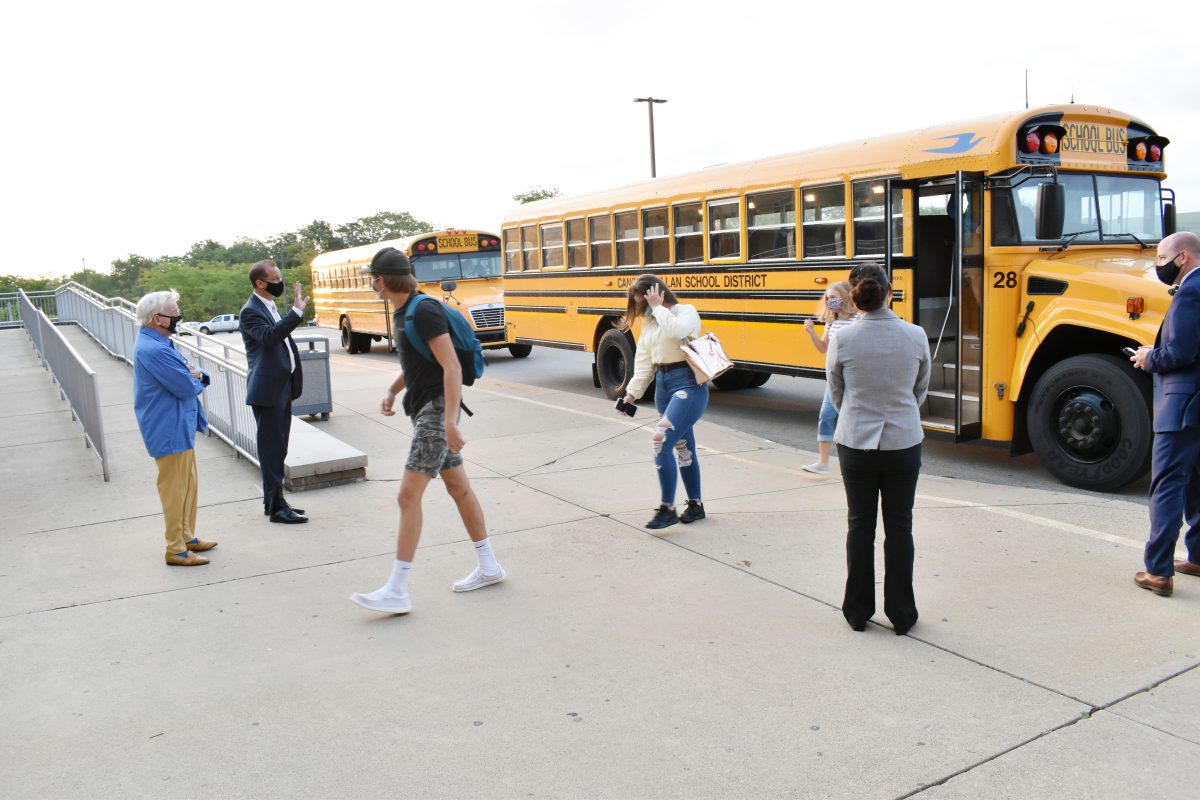
Courtesy Canon-McMillan School District
While many students are returning to classrooms at local schools, including Canon-Mcmillan High School, others are attending classes remotely this fall.
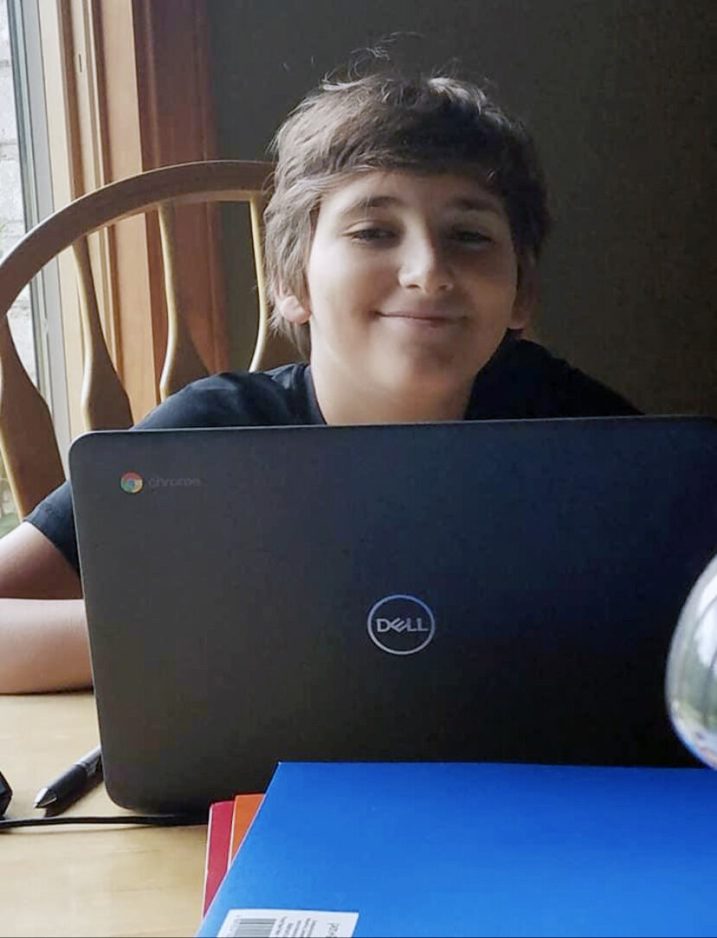
Nanette George’s son, Evan, a seventh-grader at California Area Middle School, is attending school remotely this year. About 28% of students in the California Area School District have opted for the remote learning choice.
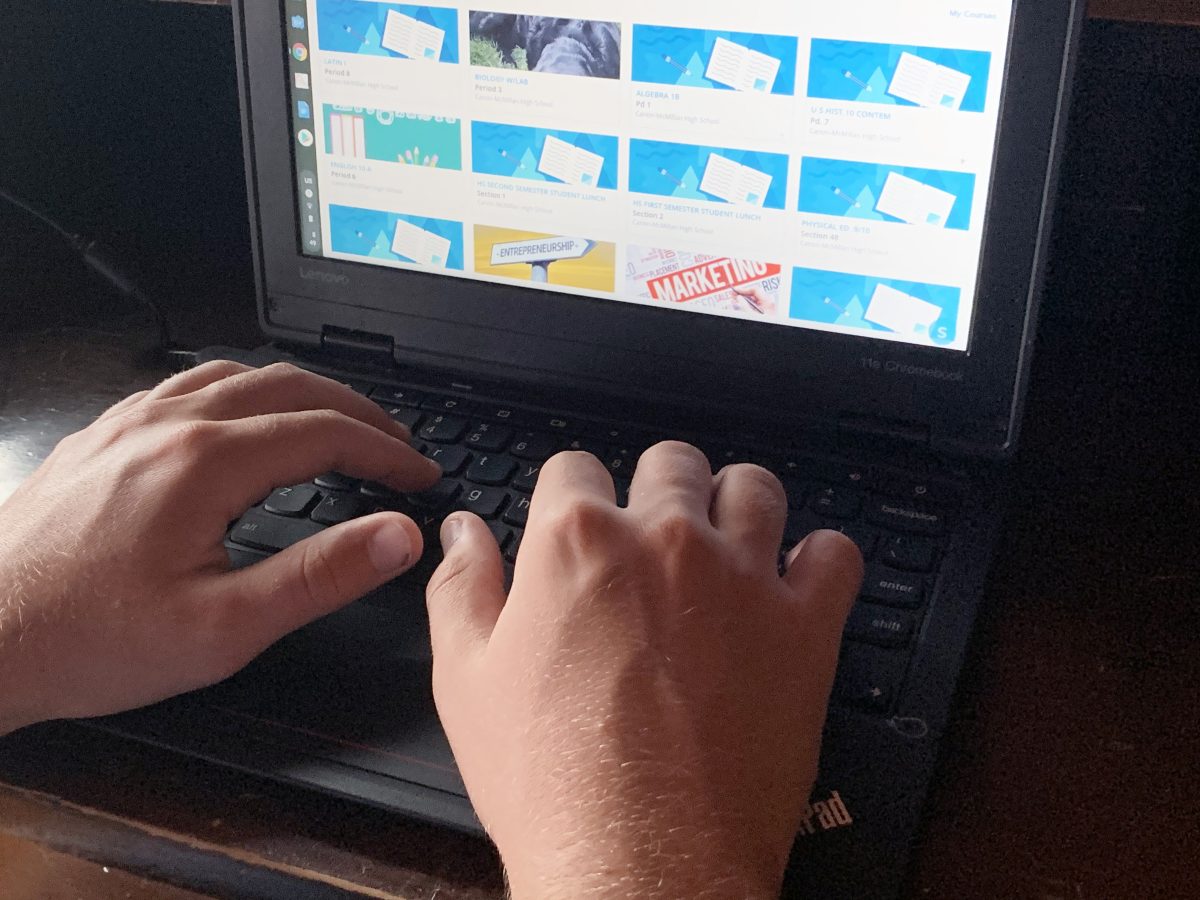
Karen Mansfield/Observer-Repoerter
School districts in Washington and Greene counties offer a remote learning option as the school year gets underway this year.
Thousands of students in Washington and Greene counties have begun their first day of the new school year by opening up their laptops at home while many of their classmates board the bus for school.
As schools reopen, some school districts, such as Peters Township, have brought all students back, while others have opted for a hybrid plan that includes a combination of days at school and remote learning.
All public schools, though, are providing a full-time distance-learning option for students who don’t want to return to the classroom during the pandemic – and many families are choosing it.
Several administrators said about 20% of their students have chosen to remain at home.
In some places, the numbers are higher.
About 28% of students in the California Area School District are starting the school year in the district’s full-time online Cyber Academy, which will closely mirror instruction happening in the classroom.
Among them is Nanette George’s son, Evan, a seventh-grader at California Area Middle School, who will be learning from home, at least to start the school year.
She isn’t sure schools can keep the virus from spreading, especially to teachers and other adults who may be at higher risk of complications.
“We had the option for hybrid – three days in school and two days remote. My husband and I opted for full-time remote. We do not trust that the virus would not be brought home to us,” said George. “If things do get better, I will have him return to school.”
Remote learning improvements
School districts’ plans for remote learning vary, but all have one thing in common: They are better now than the remote learning plans hurriedly put into place in March, when Gov. Tom Wolf ordered schools to shut down amid the COVID-19 pandemic.
During the spring and summer months, administrators and teachers have had time to work on “synchronous” learning, where teachers are live in front of remote students.
Dr. James Walsh, superintendent of Burgettstown Area School District, said the district invested in new technologies to improve instruction and communications between school and home.
“We believe this will improve the quality and delivery of instruction to our remote learners,” said Walsh, noting 19% of students will attend distance classes when school starts on Monday. “More importantly, we expect our curriculum to remain of consistently high quality whether a student is in the building or working remotely.”
Administrators also worked to give better guidance for teachers, parents and students on how to use online learning platforms. And, teachers are designing lesson plans geared toward distance learning, rather than trying to adapt traditional curriculum.
Canon-McMillan School District, where about 20% of students opted for distance learning, brought in the assistant dean of distance learning at Penn State University to implement distance-learning best practices and held teacher trainings.
One of the goals of school districts was to design distance-learning curriculum that reflects what students are learning in classrooms, so remote students won’t be left behind.
California provided professional development days to give teachers the experience of being a remote, asynchronous learner and to design their instruction accordingly.
Preparing to teach in class and online has been demanding and challenging, but teachers have stepped up, superintendents said.
“Our teachers have been amazing. They dug deeply into learning the new systems and tools we have, so they can put them to good use. They’ve been really helpful with problem-finding and problem-solving,” said Walsh. “They are being really resourceful and optimistic – as much as if not more than they were last spring when this all started. We may not have all the answers yet, but our teachers will undoubtedly find them.”
Schools also spent the summer making sure they have enough laptops for students who chose distance learning. Some districts are providing wireless hot spots and access to internet for families who lack those capabilities.
Jefferson-Morgan School District, where 18.5% of students opted for distance learning (all but four students enrolled in J-M eLearning Academy while the others opted for different cyber programs), upgraded teacher computers and purchased more student devices, said Superintendent Joseph Orr.
Southeastern Greene School District implemented google classroom, worked with textbook companies to provide online access, and purchased technical support through support.com, which will be available for students 24/7 throughout the school year, said Superintendent Rich Pekar, where 20% of students are attending remote classes.
Pekar, too, is proud of the district’s teachers.
“Our teachers are willing to meet the students’ needs in any capacity,” he said. “They are providing face-to-face instruction for our hybrid students and working to provide student and teacher interaction with remote learners as well. The administration, faculty, and staff have all worked together to make adjustments needed to provide flexibility.”