

This is not the most festive of Labor Days

Courtesy of Washington & Jefferson College
Robert Dunn, an associate professor in the Economics Department at Washington & Jefferson College, speaks with a student.

Dr. Robert Dunn

Cecil Roberts
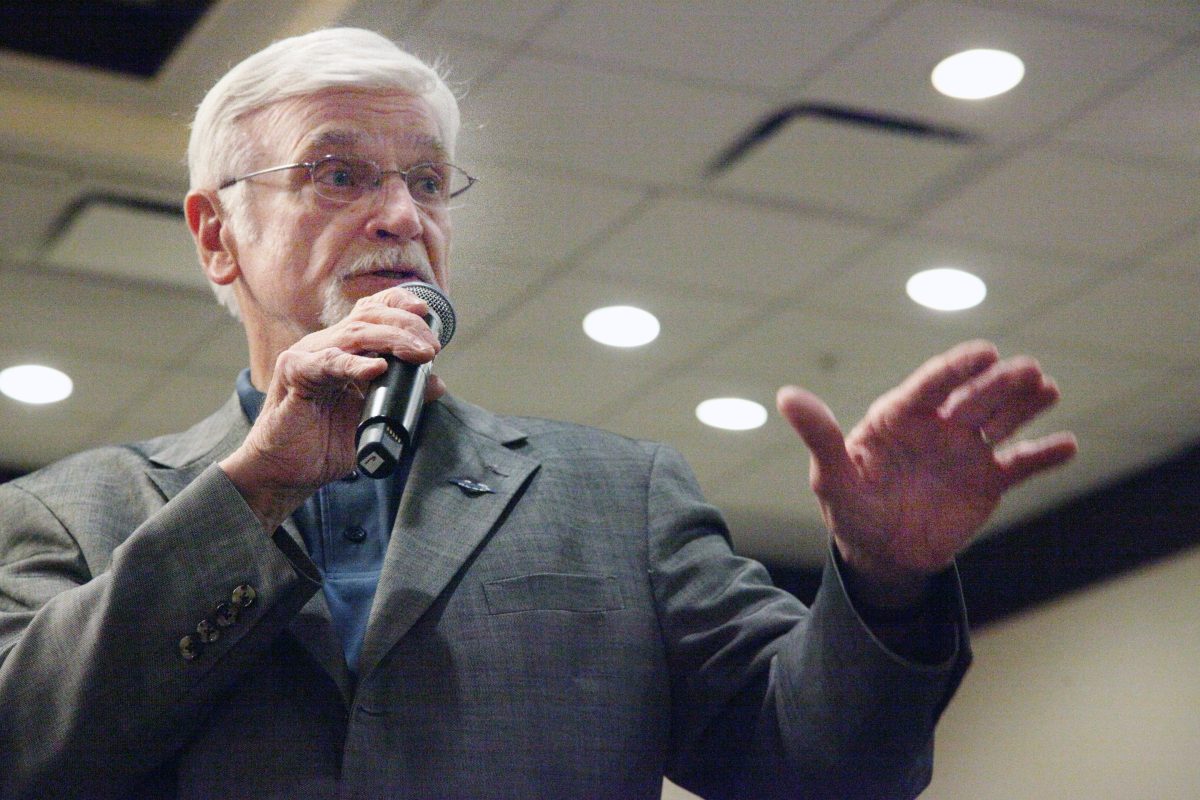
Cecil Roberts, the international president of United Mine Workers of America, is a sixth-generation member of a coal family.
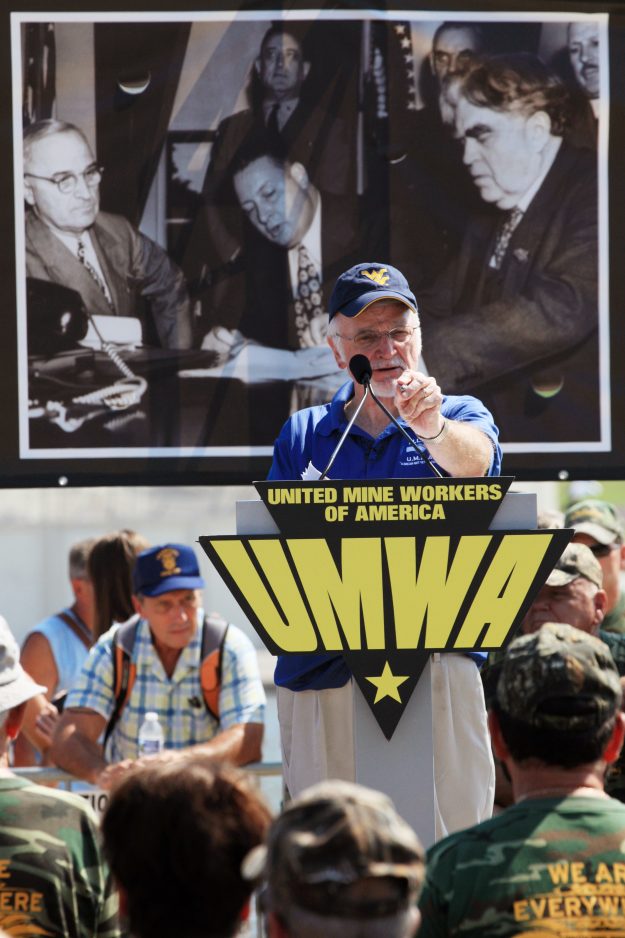
Cecil Roberts, international president of United Mine Workers of America, speaks at a recent union event.
In the words of Neil Young, Cecil Roberts has been a miner for much more than a heart of gold. He is a sixth-generation member of a coal family and a prominent industry leader, the international president of the United Mine Workers of America.
His industry was reeling before COVID-19 invaded the nation last winter, beset by diminishing demand, low commodity prices and corporate bankruptcies. The coronavirus has cut in even deeper, Roberts says, killing workers, sickening them and further sickening the profession in which he grew up in Cabin Creek, W.Va., and which he now leads.
“Coal is down 30% from a year ago,” he said during a telephone interview Thursday. “If that doesn’t change, the result will be the loss of contracts and utilities will change to other forms of electricity.”
This is not a happy Labor Day weekend for the UMWA leader of 25 years, and not just because of what is occurring – and not occurring – in the coalfields. Roberts speaks for a world enshrouded by future uncertainties.
“Most things we hold dear, we don’t have anymore and won’t have until the virus is gone. This pandemic has caused an economic crisis on top of these deaths.”
A federal holiday since 1894, Labor Day was created by the labor movement to celebrate American workers the first Monday of September. Those celebrations this year, for the most part, are nonexistent, or virtual and subdued.
Many Americans don’t feel like celebrating.
The pandemic has killed about 190,000 people nationwide, and will likely kill thousands of small businesses. It has cost millions of workers their jobs and wrought havoc on the economy.
National unemployment soared to 14.7% in April, at the peak of the outbreak. The U.S. figure for August, released Friday, dropped to 8.4%, with the addition of an estimated 1.4 million jobs. Yet the total number of jobs was down 11.5 million from when the virus hit.
Numerous industries, job sectors and independent small businesses are suffering – restaurants and bars, because of capacity restrictions; airlines are in peril of being grounded; oil and gas; steel; and coal.
And that is a mere sampling.
Yet, as pervasively debilitating as the pandemic has been, there have been some remarkable upticks. The stock market, which dived for a few months, has regained all that it had lost. Wall Street plummeted Thursday, but was expected to rebound.
The market can be a deceptive barometer, however. Gary Boatman, a Monessen-based financial planner who writes a weekly column for the Observer-Reporter business page, explained Friday that “six or seven stocks” dominate market index numbers. He said “43 stocks in the Standard & Poor’s 500 saw gains of 25% or more from their March lows. But 126 experienced losses of 25% or more.”
Dick’s Sporting Goods, based in Findlay Township, experienced a fabulous second quarter this year, establishing company records for quarterly sales and earnings. Consumers have been buying fitness-related items, and using them, at a time many are staying home more frequently. Golf, in particular, is on an upswing, as the O-R’s Joe Tuscano reports in a separate story on page C-1.
Real estate, shut down in Pennsylvania from mid-March to mid-May, has done well. People have been buying and selling. And because fewer vehicles are navigating highways, air quality has improved.
Rob Dunn, an associate professor in the Economics Department of Washington & Jefferson College, anticipated some of these outcomes, but not all.
“We’ve had high levels of unemployment, but real estate has been doing increasingly well. You don’t expect to see the two together,” he said.
Dunn, who grew up in Prosperity and a mentor for the W&J golf team, admitted he was surprised and gratified by the success of the stimulus checks distribution in the spring. “The government stepped in quickly, sent money to households that was tax-free, and almost everyone qualified. That enabled people to spend at a similar level.”
As an instructor, Dunn has had to develop valuable technological skills to teach virtually and by Zoom – an upside professionally. He, however, has concerns: Will the airline industry recover? Will travel change? Will more people work at home? Will jobs come back?
How difficult will it be to return to a level of normalcy? “I think a meaningful number of people will be uncomfortable to do things,” he said.
Recovery is a major concern, particularly for small businesses everywhere. “Small” is the operative word here.
Dan Reitz is executive director of the Washington County Council on Economic Development, which works with many small businesses. His advice to owners: “If you’re adaptive and can move on your feet, you can continue to stand.”
He cited two local standouts: AccuTrex Products Inc. in Southpointe, for development of face shields, and Angelo’s restaurant in North Franklin Township, which has set up ample outdoor dining space, enabling the business to outdo numerous competitors.
“Advisers said a few years ago to keep changing your business model,” Reitz said. “Well, guess what? Change your business model.”
The nation is laboring this Labor Day, with fewer smiles and fewer people working against a backdrop of sickness and death. But this is still a celebration of labor, a reminder to work through this.