

‘Unsubstantiated rhetoric’: Plaintiffs in suit over COVID-19 restrictions oppose stay
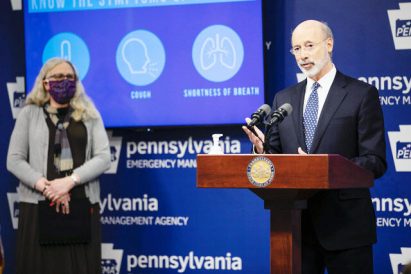
Attorneys for local individuals and businesses who sued state officials over gathering limitations and other COVID-19 restricts argued against staying the order of a judge who deemed the restrictions unconstitutional.
“After two full days of testimony, over 80 exhibits, over 20 supplemental exhibits and three judicial notice orders, defendants failed to produce a single expert witness or any other evidence establishing that (the) orders mitigated the spread of COVID-19,” wrote attorneys Thomas W. King III, Thomas E. Breth, Ronald T. Elliott and Jordan P. Shuber. “(T) he time for such unsubstantiated rhetoric has long since passed.”
The four represent plaintiffs from Washington, Greene, Fayette, and Butler counties who sued Gov. Tom Wolf and Secretary of Health Dr. Rachel Levine in federal court.
The suit contended gathering limits, stay-at-home orders and non-life sustaining business closures were unconstitutional. In a ruling last week, U.S. District Judge William S. Stickman IV agreed.
While stay-at-home and business closure orders expired several months ago, state-imposed limits cap indoor gatherings at 25 people and outdoor gatherings at 250. Stickman said those limits violated the First Amendment right to freely assemble.
An attorney for Wolf and Levine asked Stickman to stay the order while they appeal his ruling to the 3rd Circuit Court.
In opposition to that request, attorneys for the plaintiffs argued a stay would “further violate the constitutional rights of plaintiffs along with other citizens of the Commonwealth of Pennsylvania who have suffered under defendants’ unconstitutional orders and actions.”
To successfully seek a stay, state attorneys must show that there is a likelihood they will win an appeal; they would suffer irreparable harm if the stay is not granted; that the plaintiffs will not suffer greater harm if a stay is granted and that the public interest will be served by granting a stay.
Attorneys for the plaintiffs contended none of those elements were met.
“(T)here is no time in our history that the continued infringement upon and violation of the citizens’ constitutional rights can be said to further the public’s interest,” they wrote.
In other filings connected to the case, the Missouri-based Eagle Forum Education and Legal Defense Fund (EFELDF) asked Stickman to accept a brief in support of his findings. Called an amicus brief, the filing supports the plaintiffs’ position in the case.
Founded in 1981, the nonprofit EFELDF “has consistently defended not only the Constitution’s federalist structure, but also its limits on both state and federal power,” the filing stated.
In the proposed brief, EFELDF attorney Lawrence J. Joseph called the gathering limits “draconian and unprecedented” and classified them “as a violation of the First Amendment during an election season.”
Joseph’s filing noted Pennsylvania is considered a battleground state in the presidential election.
“As a factual matter, then, the congregation restrictions clearly prevent President (Donald) Trump from holding Pennsylvania rallies like the ones he has held across the country in both the 2016 and 2020 elections, including a rally three days ago in North Carolina,” Joseph wrote.
His proposed brief urged the judge to forego a stay, and instead ask attorneys for Wolf and Levine to show why Stickman should not enter a final order that would put his ruling into immediate effect.