

Why are businesses having trouble finding employees?
Karen Mansfield/Observer-Reporter
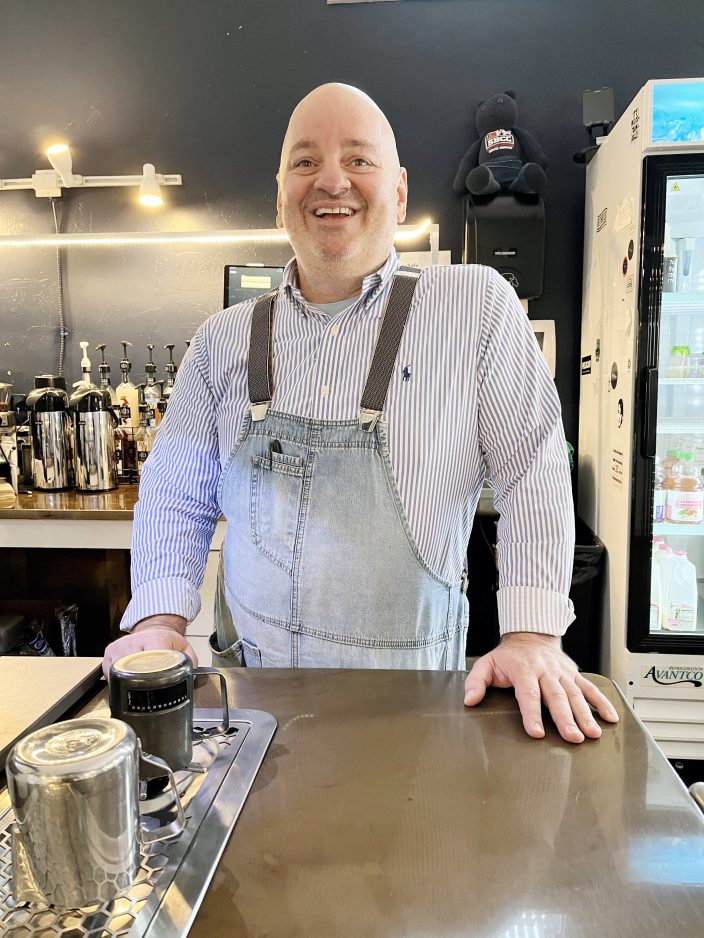
Dylan Sullivan, owner of Sullivan Brothers Coffee Company in downtown Uniontown, is doing everything he can to keep the popular coffee shop open during the pandemic, amid a shortage of workers and other hurdles.
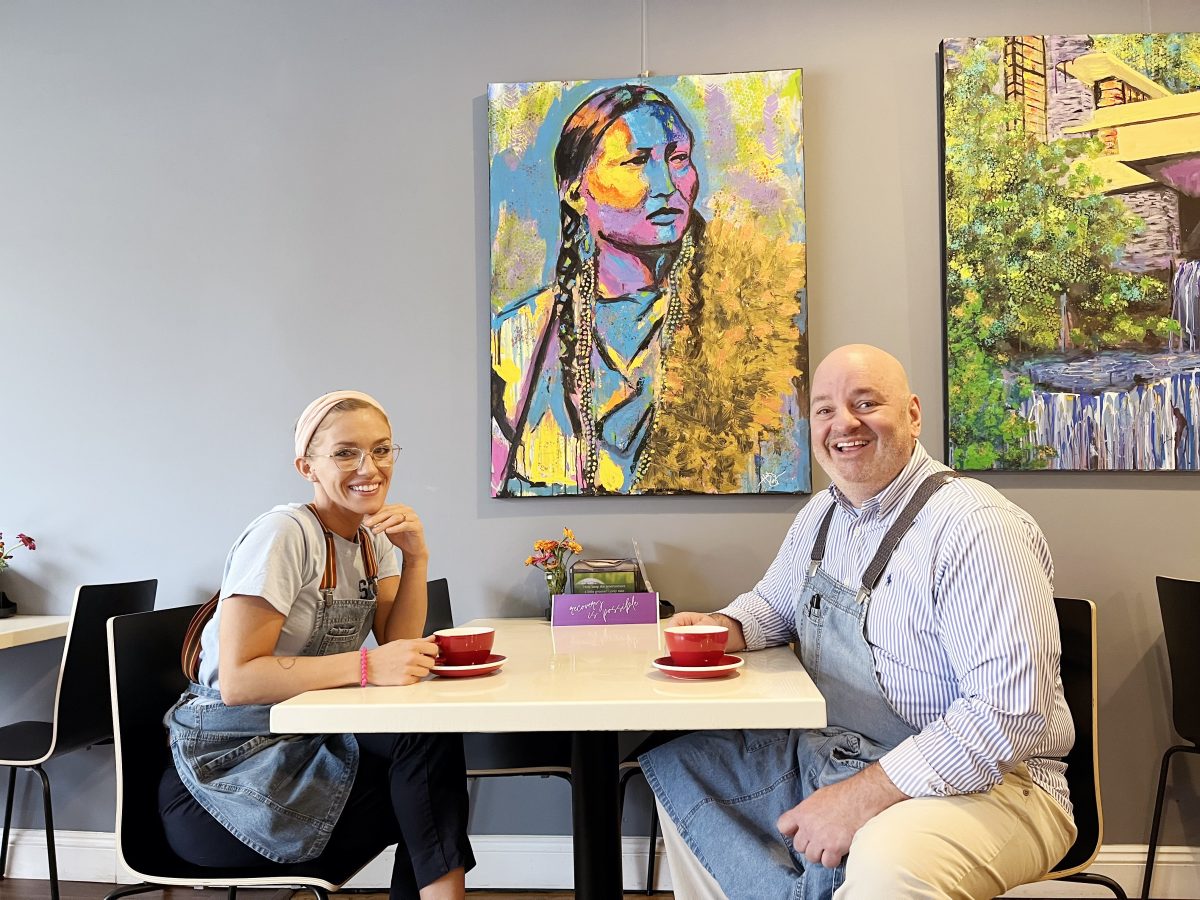
Dylan Sullivan, right, owner of Sullivan Brothers Coffee Company, with longtime employee Brittany Trotz, at a table in the coffee shop. Behind them on the wall are original paintings by local artist Holly Reagan. Sullivan is among the business owners who have struggled to find employees during the COVID-19 pandemic.
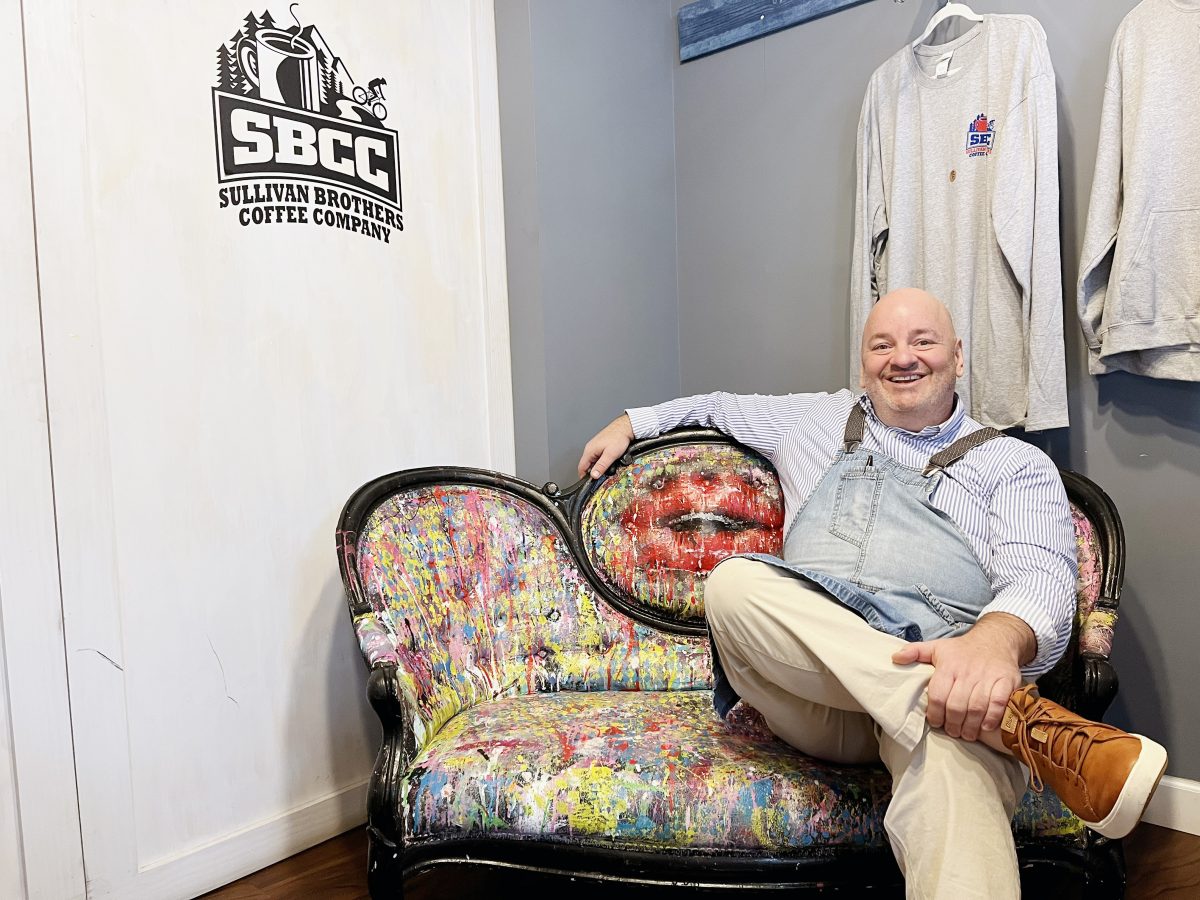
Dylan Sullivan, owner of Sullivan Brothers Coffee Company in Uniontown, sits on a century-old couch that was decorated by local artist Holly Reagan and is a conversation piece in the downtown coffee shop.
Karen Mansfield/Observer-Reporter
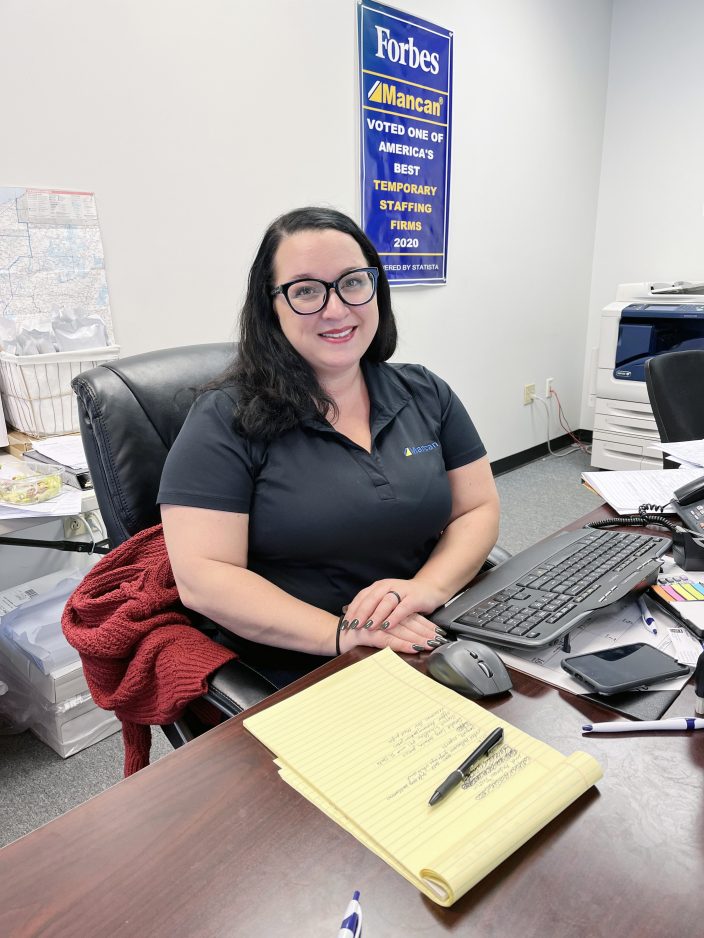
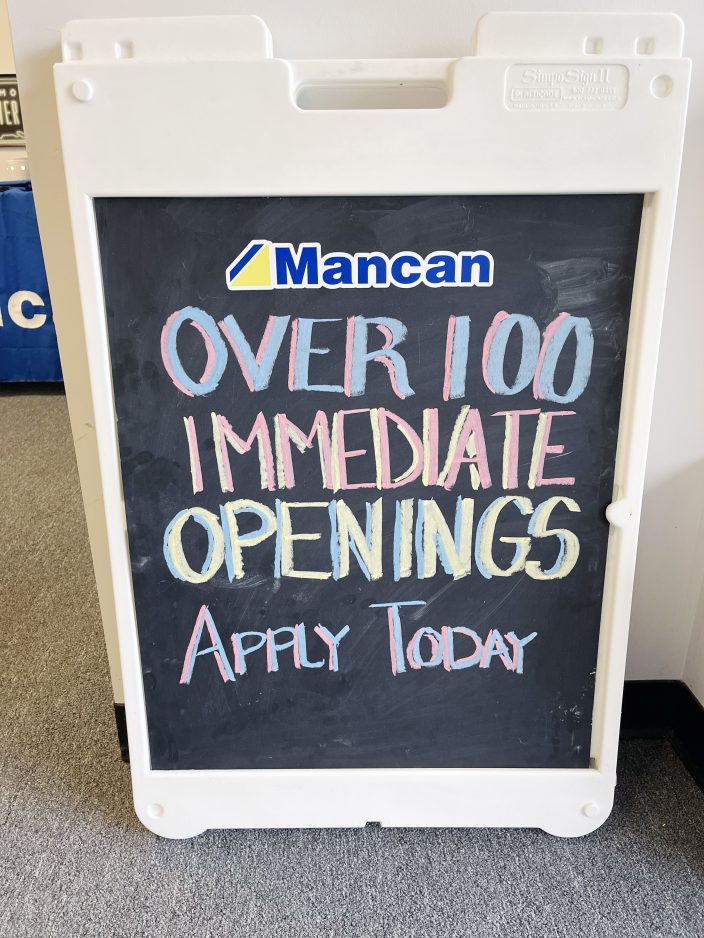
Holly Haas, branch manager at Mancan Staffing Agency in McMurray, described the employment atmosphere as “a job seekers’ market.” The staffing agency is working with local businesses to fill at least 100 job openings.
Mancan Staffing Agency in McMurray has at least 100 job openings at local businesses that it is seeking to fill.
Karen Mansfield/Observer-Reporter
Companies and businesses throughout the region are seeking to hire workers for job openings that they can’t fill.
Before the COVID-19 pandemic, Sullivan Brothers Coffee Company, a specialty coffee shop in downtown Uniontown, was finding its groove.
Opened in the fall of 2018 by Hopwood native Dylan Sullivan, the coffee shop – which features locally sourced food and handmade ice cream and is a champion for local nonprofits and artists – had a loyal and growing customer base and a full staff.
“Things were going unexpectedly well. We had a great staff and we saw growth, about 15% to 20%. And then COVID happened,” said Sullivan.
Fast forward to more than a year-and-a-half later.
Now, Sullivan, like other employers in Southwestern Pennsylvania who in the early days of the pandemic were forced to lay off employees because of business closures and a host of other complications, is struggling to find workers.
“I’m putting in 80 to 100 hours a week just to keep the business afloat, and I’m paying myself $3 an hour,” said Sullivan, who now finds himself running the kitchen, mopping the floor and cleaning the store, and doing other odd jobs.
He’s cut the coffee shop’s hours of operation and reduced the number of days it’s open.
Sullivan isn’t the only one.
“We have been hearing from employers in virtually every industry sector in Washington County that have job openings but find little interest from prospective employees,” said Jeff Kotula, president of the Washington County Chamber of Commerce.
Kotula noted that the reasons companies are experiencing a shortage of workers are more complicated than people choosing not to work because of government policies that extended and enhanced unemployment benefits (which ended in September), and a series of stimulus payments.
“The fundamental issue is that the pandemic has changed the dynamic of work,” Kotula said.
People have become accustomed to working at home, having flexible hours or hybrid work models and they are now looking for employers to accommodate that work style.
In addition, he said, many long-term employees have decided on early retirements and, at the other end of the spectrum, those with young families have decided that one partner will either work from home or remove themselves from the workforce altogether to provide child care or parent care.
Also, others who would have traditionally worked at small businesses have found opportunities working at large fulfillment companies such as Amazon, Walmart or Target.
And still more have used savings from lifestyle changes to explore new jobs not necessarily in their traditional fields.
“Many have commented that the overall reason for these openings are due to increased government assistance. That is not entirely correct,” said Kotula. “It is a more complex issue driven by demographic and personal economic changes accelerated by the pandemic. COVID-19 has proven itself to a be virus that not only infects humans, but also affects the very way we have done business in our country.”
Mancan, a staffing agency in McMurray, said it’s “a job seekers’ market.”
“I’ve been doing this job in Washington County for 8½ years, and this is the toughest market I’ve ever seen for employers. It’s a great market for job seekers,” said Heather Haas, branch manager at Mancan. “One hundred people could come through this door, and I would have a job for every one of them. When I first started doing this, there were times when we had a list of 300 to 400 people looking for jobs, and I’d say, ‘Sorry, I don’t have anything.’ Now, it’s like I have eight choices for you; which do you like best?”
Companies are paying higher wages and providing enhanced benefits as incentives for people to return to work, and are using innovative ways to recruit workers, including job fairs and bonuses.
“Employers really have to be competitive, and for a lot of smaller companies that don’t have the resources to make jobs more appealing with higher pay, better salaries and benefits, that’s difficult,” said Haas.
Rich Diesel, who has run Diesel’s Heating and Air Conditioning for more than 40 years and over the decades established a loyal and large base of customers, recently took out a radio ad to seek workers.
Throughout 2020-21, Diesel lost four employees. He recently hired one back and another employee is slated to start working next week.
But, as winter approaches, he’s still short-staffed, and he’s falling behind on scheduled fall maintenance jobs because he doesn’t have enough HVAC workers to handle the appointments.
“We have 750 annual customers we do spring and fall tuneups for, and we’re short on guys for our crews,” said Diesel. “The customers get frustrated and they call and say they want quicker service. It’s a tough business atmosphere right now.”
An increase in the cost of materials, too, along with supply chain problems, increased wages, and other issues have added to Diesel’s and other business owners’ woes.
Companies find themselves faced with charging customers more in order to account for those increased material costs and wages, among other worries.
But despite the hurdles companies and businesses big and small have encountered, Sullivan remains optimistic about the future of Sullivan Brothers Coffee Company.
“We lost a lot of regular people, but we’ve met a lot of new people, and we really do feel like we’re going to keep growing, if we can hang in there. That’s the problem,” said Sullivan, who has lost money every day except four in the last year-and-a-half. “I do see hope for the future. I’m an optimistic person. I see the potential for business to get better, and I wouldn’t want to be anywhere but downtown Uniontown. We have a bike trail coming in, we’re seeing new guests, there’s a bunch of positive energy here. We found some new employees who share that energy. Also, I have found that this process, this experience, has been one of incredible growth, and that I’m finding strength and resolve I didn’t know I had. I want this to work.”