

Training for the Meadows at the Greene County Fairground
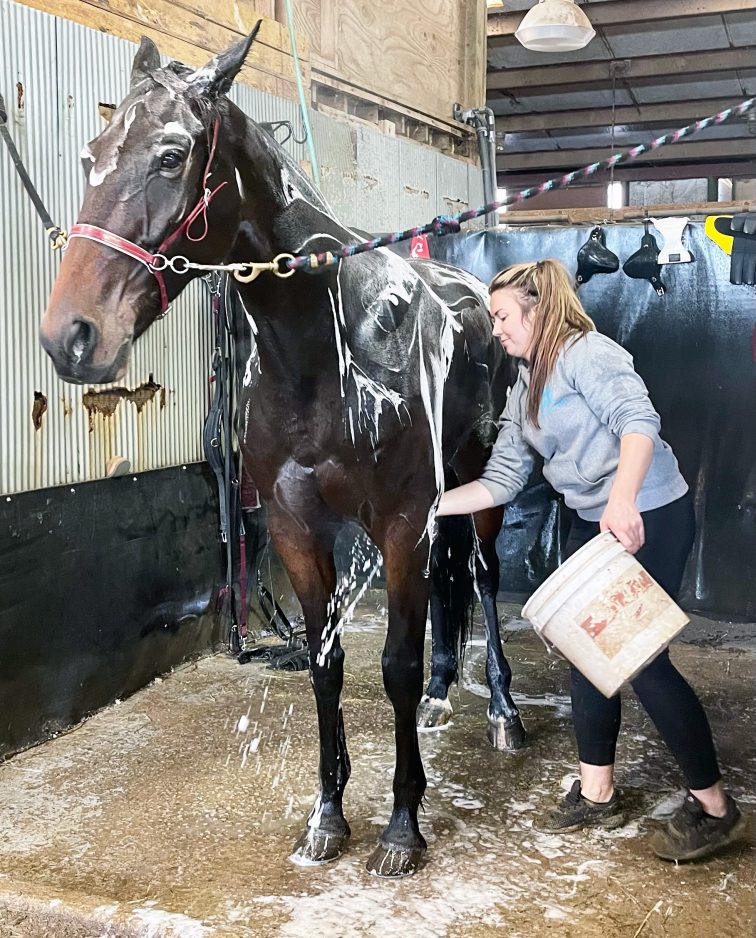
C.R. Nelson/For the Observer-Reporter
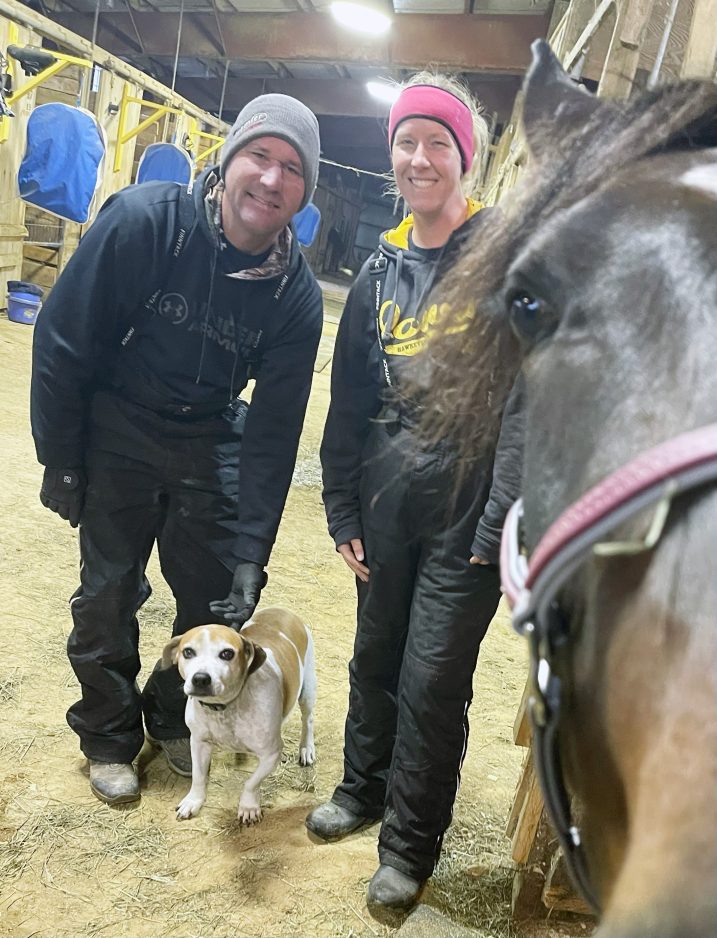
New kids on the block Nick Roland and Jess Johnson of Idaho are boarding horses at the Greene County Fairgrounds for the Meadows winter racing season. C.R. Nelson/For the Observer-Reporter
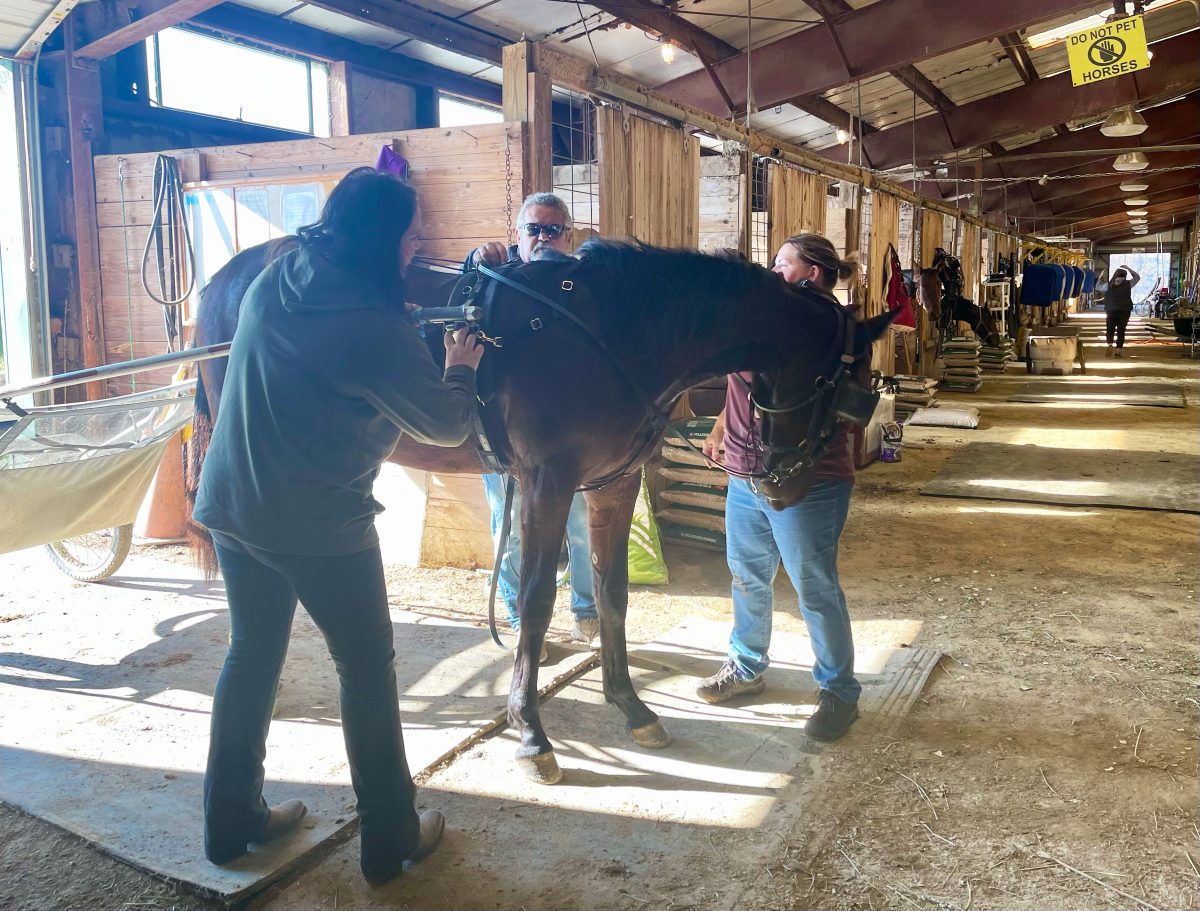
Above: Jerry Lee, center, and his grooms, Jody Corwin, left, and Leona Freeman, getting ready to exercise. They operate as one big family. C.R. Nelson/For the Observer-Reporter
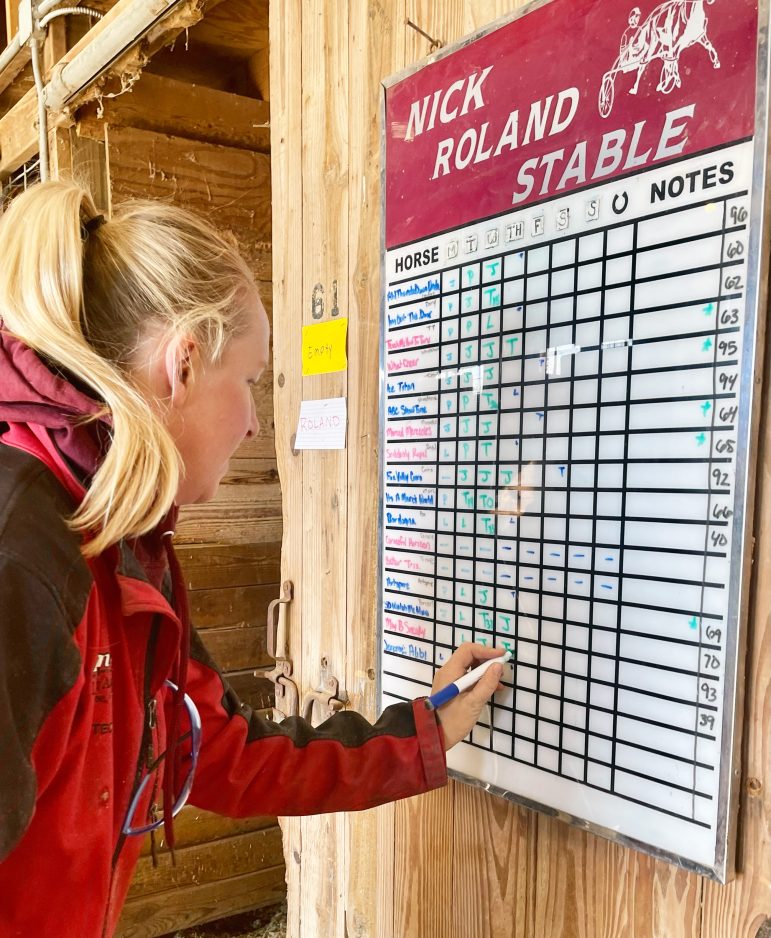
Jessica Johnson marks the dry-erase training board with each horse’s details.
C.R. Nelson/For the Observer-Reporter
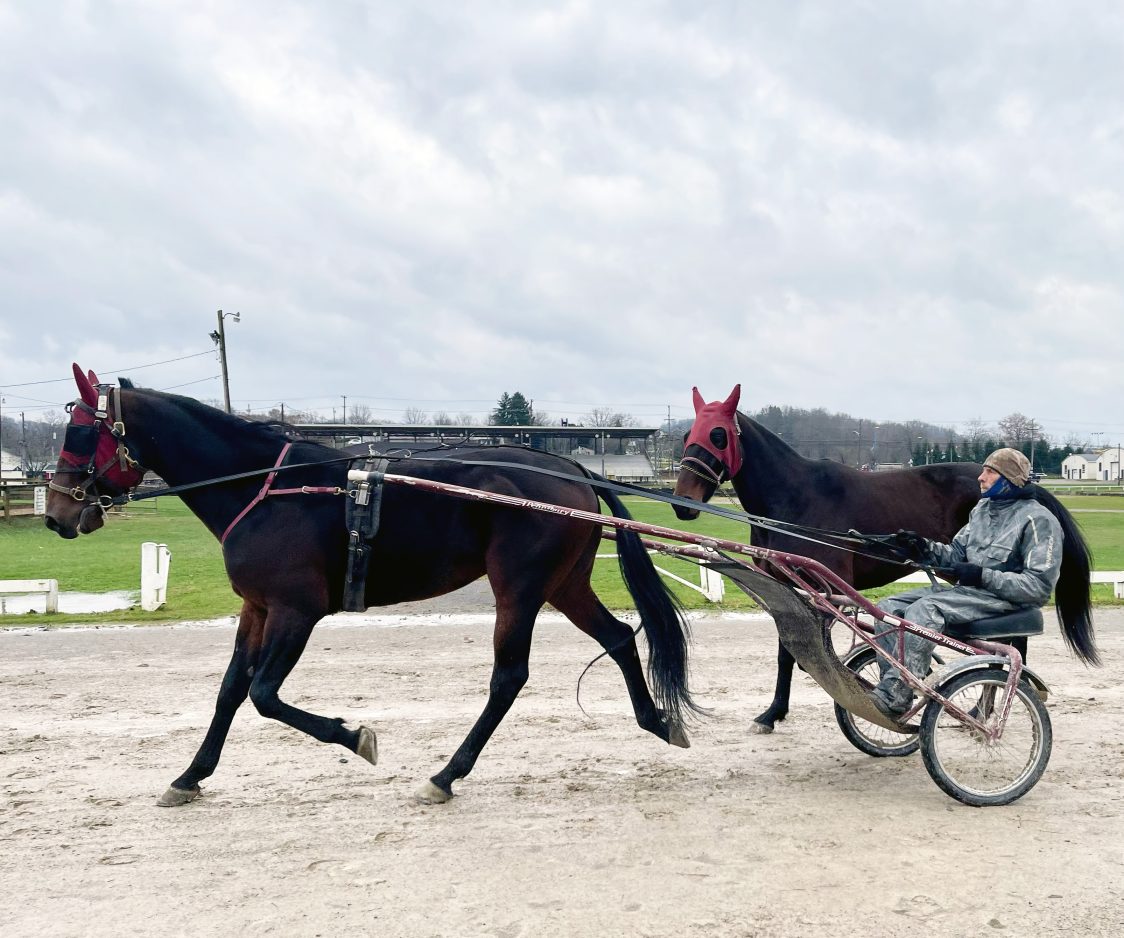
Below: One of the trainers is driving one horse, ponying the other. C.R. Nelson/For the Observer-Reporter
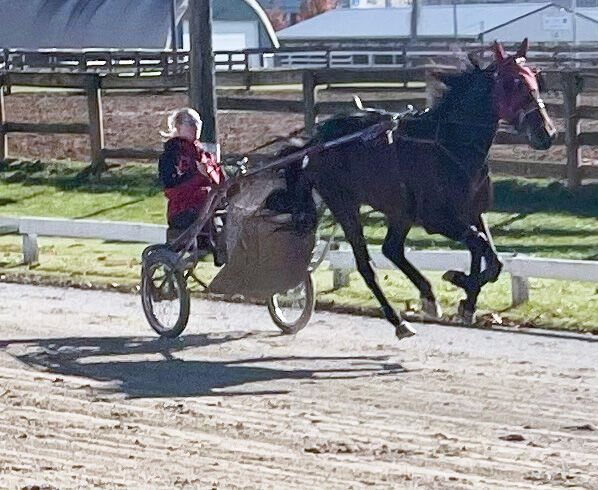
Jess Johnson lets her horse do some cantering after a workout because it feels good. C.R. Nelson/For the Observer-Reporter
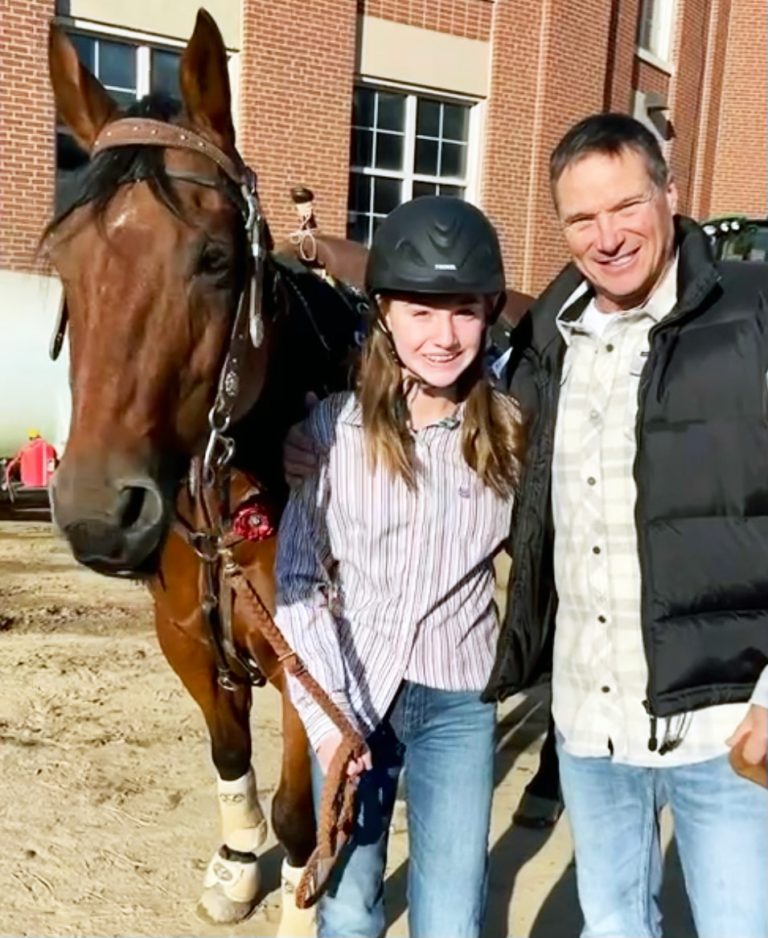
Left: Dave Palone, right, and daughter Sophie, 11, who won reserve grand champion on her 4-H pony project this year. Courtesy of Dave Palone
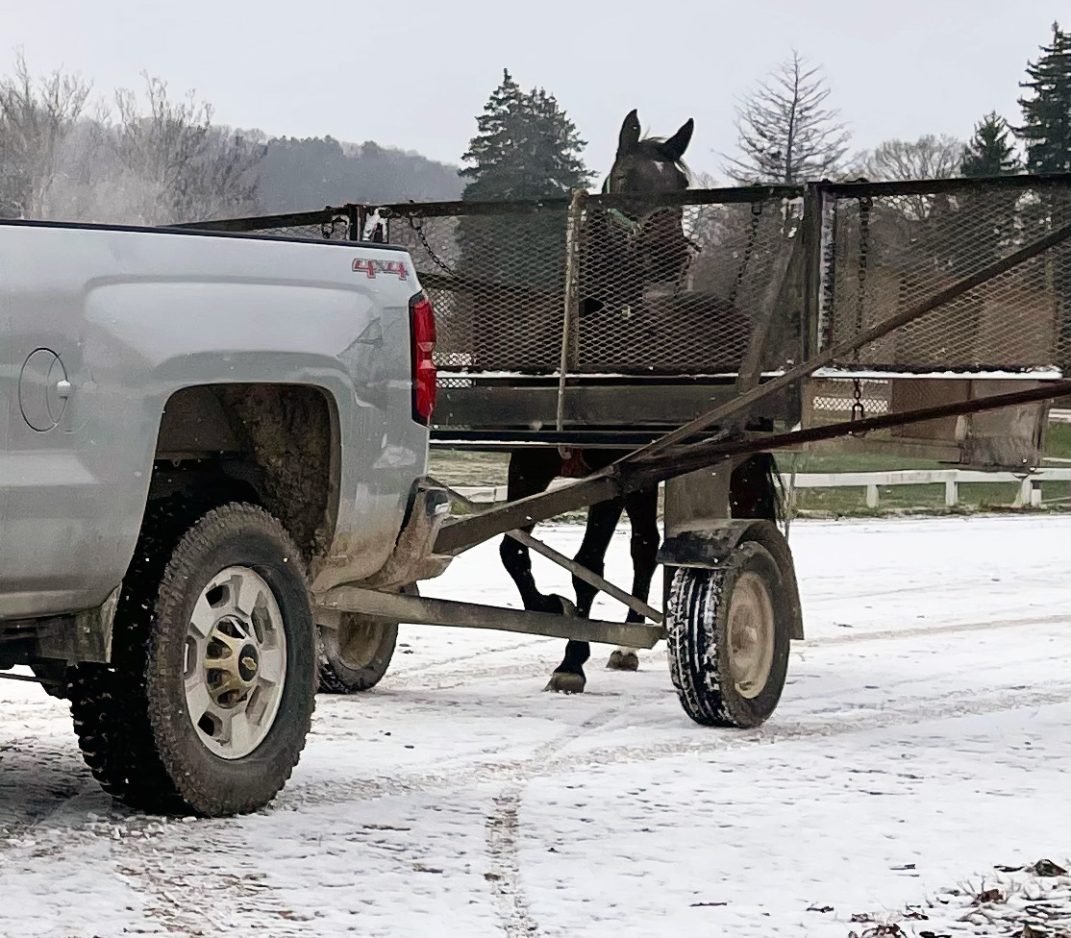
Above: Jerry Lee’s horse Ruffled Up being “lead” by truck on the track. C.R. Nelson/For the Observer-Reporter
The drizzle leaves snowflake shadows on the windshield as I turn from Jefferson Road, aka Rt. 188, onto the swoop of macadam that leads up to the 4-H barn at the edge of the Greene County Fairgrounds. A few minutes past 8 a.m., trainer Jerry Lee is already loading up for the Meadows, aka Meadowlands Racetrack and Casino in Washington. A dozen races are on for today, and he’ll be running in the first, groom Jody Corwin says. I’m here, hot coffee in hand, ready to become part of a day in the life of the people and horses that live and breathe harness racing. It’s a day that begins early and ends late – just like every other day at the races – rain, snow or shine. The stable’s gray tabby, known as Renee’s Cat, says hello. She knows I have treats in my pocket. I grab a plastic chair from Jerry’s corner and move it to the middle of the barn beside an already muddy jog cart. Steam is rising from the sleek, muscled body of a horse fresh from the track. The first act has already begun. These countless moments flow seamlessly into hours as workers, trainers and owners arrive to feed and water, clean stalls, attend to legs and hooves, then harness up and head out to the half-mile track for a three-something-mile workout. Then back to the barn for a good lather up and hose down, then into the stall as other horses get harnessed and hitched. These animals are seasoned athletes that race from the time they are two-year-olds through perhaps another dozen years before retiring to pasture to breed or get retrained to be some trail rider’s new best friend. When the half-mile track at the fairgrounds was built in 1911, harness racing was already the big-ticket draw at fairgrounds across rural America, and the finish line was where the crowds cheered as their favorite bets crossed it. The first pacers and trotters that competed here in 1912 during the July 4 races drew 2,500 spectators and $6,000 in purses alone, never mind the side bets. I first met Jessica Johnson on a much warmer afternoon a few weeks earlier when Nick Roland Stable arrived from Iowa to set up for a winter of training and competing at the Meadows. She and Nick Roland had just gotten in at 4 a.m. bringing fifteen horses with more on the way, filling most of the available stalls on the track facing side of the barn. “We needed a place to pony our horses that don’t need to harness up every day and also lead them with the truck, which is a nice leisurely way to get exercise. We called stables all around the Meadows, and Greene County had what we need, so here we are. This is a great location for us.” Nick Roland is a “fourth generation horseman, his mom and dad both raced,” Johnson tells me. He took his written exam, got his licenses to train and drive at age 16 and “put himself through college on his summer winnings.” By 2008, Roland could finally quit selling insurance and race full-time. They met at a racetrack in Minnesota where Johnson was training riding horses. Two years after she started working for him, “we started dating.” That was 11 years ago. “Now we’re partners. I’m covered in dirt every day and couldn’t be happier!” Jerry Lee’s horses are stabled at one end of the shed row with stalls on both sides of the center aisle. At the far end is the row of blue bags filled with racing gear that mark the stalls local trainer Rob “Buddy” Berdine is occupying. In the middle are the newly arrived standardbreds of Nick Roland Stable, 19 horses in all. Daylight spills in from the big middle doorway where horses and jog carts arrive and depart. Johnson marks the dry-erase training board with each horse’s particulars – who worked what day, feed allotment, workout speed and shoeing schedules. On the other side of the barn are fellow renters – 4-H kids, private owners and barrel racers looking for room to practice their moves in the indoor arena beyond the track, stretch legs in the outdoor ring in the big field and mosey the trails and roadways that crisscross the fairground’s 40 acres. The 110-stall 4-H barn was built in 1975 to replace a 50-stall barn that was outgrown and outdated. The new barn offered hot and cold running water for filling buckets and those lather-ups between workouts and had plenty of room for camaraderie. Some 4-Hers who got their start here would grow up to become prize-winning barrel racers and harness horse drivers or return to board their own horses and work for the trainers who keep their stables here. Case in point – Harness racing legend Dave Palone. When 50-year-old Palone broke the harness racing world record in 2012 with his 15,181st win, he was driving Herculotte Hanover, “a two-year-old filly that had never competed in a pari-mutuel race before.” Joe Tuscano wrote all about it that year in the Greene County Living magazine special edition: “Greene County natives who hit the big time.” Ten years later, Palone is still training and racing at the Meadows. I learned this when I mentioned his name at the barn and learned that everybody knew Dave. So I messaged my friend and his cousin Lucille Palone DeFrank, who connected me with his mom. I was eager to hear the backstory about how Palone got his start here at the 4-H barn. “He said he was going to drive horses when he was 10 years old. He was born to do this, I guess,” Jeannie Palone told me when I called. The family lived in Rices Landing and got into riding horses as the kids got older. Jeannie took up trail riding too. “You know Dr. Marx, the vet? He gave us the best advice; he said horses are dangerous animals, get someone to teach you to ride. So we did. Dave learned a lot in 4-H – he showed English saddle seat because he said it was more challenging. I think that’s what got him into harness racing, using those reins. His senior year, he went to school in the morning and trained in the afternoon at the fairgrounds with Herman Hylkema, one of the best trainers at the Meadows. That’s how it started. I’ll have Dave call you. He can tell you all about it.” Here at the barn, I’m getting a crash course on what makes standardbred pacers do what they do. It’s a mutation in the DNA, Johnson tells me. Horses that pace move the front and rear legs laterally rather than the diagonal movement of the trot. Pacing is a learned movement, but Swedish research has identified the gene DMRT3 that indicates the tendency to pace. Now breeders can predict which horses will have offspring that will be unlikely to break their gait while racing. Today I see the hobbles used while on the track to keep the pacers from breaking their gait, along with the colorful cloth covering the head and ears to keep sounds muffled while racing. Standing in the doorway, Disco Johnny, a just-turned four-year-old stallion, dances a bit as Barnhart fastens the jog cart into position. Barnhart is helping Roland and Johnson with their training and will drive Disco Johnny, “non-winner of $6,500 in his last four races,” and pony Art Spire beside the jog cart for a three-and-a-half-mile workout. What does Barnhart think of Johnny? He gives a trainer’s nod of approval. “He’s a pretty cool horse.” I follow them to the track and crouch to take photos. As they sweep by for a second lap, my phone rings. It’s Palone, calling from the Meadows to say hello. He’s happy I’m writing about the fairgrounds where he got his start. Yes, Herman Hylkema, “He was from Holland, one of the best trainers in the country,” came down from the Meadows to train him at the fairgrounds, an awesome break for a 4-H kid who was born to drive. I asked for a photo of him for the story, and he says he has one with youngest daughter Sophie, 13, when she finished in the top 10 in her age class at the Barrel Racing Congress in Cleveland, Ohio, in October. “She’s barrel raced at the fairgrounds many times. I’ll send it over when I get home.” And as for his good friend Jerry Lee: “Jerry won his race today, so he’ll be getting back late. I probably won’t see him.” I head home with ice crystals pinging the windshield, sorry I won’t get a photo of Jerry Lee smiling over his win. Two mornings later, I’m back for one last shot for the story – Jerry Lee’s grooms taking Ruffled Up on a leisurely lead behind the truck. The temperature is still dropping, snow on the ground, and it’s something after 9 a.m. last time I looked. But never mind that. Jerry Lee is already on the road with his trailer and won’t be back until dark. Come rain, snow or shine, win or lose, he and his buddy Dave Palone will be racing at the Meadows today.
The drizzle leaves snowflake shadows on the windshield as I turn from Jefferson Road, aka Rt. 188, onto the swoop of macadam that leads up to the 4-H barn at the edge of the Greene County Fairgrounds. A few minutes past 8 a.m., trainer Jerry Lee is already loading up for the Meadows, aka Meadowlands Racetrack and Casino in Washington. A dozen races are on for today, and he’ll be running in the first, groom Jody Corwin says. I’m here, hot coffee in hand, ready to become part of a day in the life of the people and horses that live and breathe harness racing. It’s a day that begins early and ends late – just like every other day at the races – rain, snow or shine.
The stable’s gray tabby, known as Renee’s Cat, says hello. She knows I have treats in my pocket. I grab a plastic chair from Jerry’s corner and move it to the middle of the barn beside an already muddy jog cart. Steam is rising from the sleek, muscled body of a horse fresh from the track. The first act has already begun.
These countless moments flow seamlessly into hours as workers, trainers and owners arrive to feed and water, clean stalls, attend to legs and hooves, then harness up and head out to the half-mile track for a three-something-mile workout. Then back to the barn for a good lather up and hose down, then into the stall as other horses get harnessed and hitched. These animals are seasoned athletes that race from the time they are two-year-olds through perhaps another dozen years before retiring to pasture to breed or get retrained to be some trail rider’s new best friend.
When the half-mile track at the fairgrounds was built in 1911, harness racing was already the big-ticket draw at fairgrounds across rural America, and the finish line was where the crowds cheered as their favorite bets crossed it. The first pacers and trotters that competed here in 1912 during the July 4 races drew 2,500 spectators and $6,000 in purses alone, never mind the side bets.
I first met Jessica Johnson on a much warmer afternoon a few weeks earlier when Nick Roland Stable arrived from Iowa to set up for a winter of training and competing at the Meadows. She and Nick Roland had just gotten in at 4 a.m. bringing fifteen horses with more on the way, filling most of the available stalls on the track facing side of the barn.
“We needed a place to pony our horses that don’t need to harness up every day and also lead them with the truck, which is a nice leisurely way to get exercise. We called stables all around the Meadows, and Greene County had what we need, so here we are. This is a great location for us.”
Nick Roland is a “fourth generation horseman, his mom and dad both raced,” Johnson tells me. He took his written exam, got his licenses to train and drive at age 16 and “put himself through college on his summer winnings.” By 2008, Roland could finally quit selling insurance and race full-time. They met at a racetrack in Minnesota where Johnson was training riding horses. Two years after she started working for him, “we started dating.” That was 11 years ago. “Now we’re partners. I’m covered in dirt every day and couldn’t be happier!”
Jerry Lee’s horses are stabled at one end of the shed row with stalls on both sides of the center aisle. At the far end is the row of blue bags filled with racing gear that mark the stalls local trainer Rob “Buddy” Berdine is occupying. In the middle are the newly arrived standardbreds of Nick Roland Stable, 19 horses in all. Daylight spills in from the big middle doorway where horses and jog carts arrive and depart. Johnson marks the dry-erase training board with each horse’s particulars – who worked what day, feed allotment, workout speed and shoeing schedules.
On the other side of the barn are fellow renters – 4-H kids, private owners and barrel racers looking for room to practice their moves in the indoor arena beyond the track, stretch legs in the outdoor ring in the big field and mosey the trails and roadways that crisscross the fairground’s 40 acres. The 110-stall 4-H barn was built in 1975 to replace a 50-stall barn that was outgrown and outdated. The new barn offered hot and cold running water for filling buckets and those lather-ups between workouts and had plenty of room for camaraderie. Some 4-Hers who got their start here would grow up to become prize-winning barrel racers and harness horse drivers or return to board their own horses and work for the trainers who keep their stables here.
Case in point – Harness racing legend Dave Palone.
When 50-year-old Palone broke the harness racing world record in 2012 with his 15,181st win, he was driving Herculotte Hanover, “a two-year-old filly that had never competed in a pari-mutuel race before.” Joe Tuscano wrote all about it that year in the Greene County Living magazine special edition: “Greene County natives who hit the big time.” Ten years later, Palone is still training and racing at the Meadows. I learned this when I mentioned his name at the barn and learned that everybody knew Dave. So I messaged my friend and his cousin Lucille Palone DeFrank, who connected me with his mom. I was eager to hear the backstory about how Palone got his start here at the 4-H barn.
“He said he was going to drive horses when he was 10 years old. He was born to do this, I guess,” Jeannie Palone told me when I called. The family lived in Rices Landing and got into riding horses as the kids got older. Jeannie took up trail riding too. “You know Dr. Marx, the vet? He gave us the best advice; he said horses are dangerous animals, get someone to teach you to ride. So we did. Dave learned a lot in 4-H – he showed English saddle seat because he said it was more challenging. I think that’s what got him into harness racing, using those reins. His senior year, he went to school in the morning and trained in the afternoon at the fairgrounds with Herman Hylkema, one of the best trainers at the Meadows. That’s how it started. I’ll have Dave call you. He can tell you all about it.”
Here at the barn, I’m getting a crash course on what makes standardbred pacers do what they do. It’s a mutation in the DNA, Johnson tells me. Horses that pace move the front and rear legs laterally rather than the diagonal movement of the trot. Pacing is a learned movement, but Swedish research has identified the gene DMRT3 that indicates the tendency to pace. Now breeders can predict which horses will have offspring that will be unlikely to break their gait while racing.
Today I see the hobbles used while on the track to keep the pacers from breaking their gait, along with the colorful cloth covering the head and ears to keep sounds muffled while racing.
Standing in the doorway, Disco Johnny, a just-turned four-year-old stallion, dances a bit as Barnhart fastens the jog cart into position. Barnhart is helping Roland and Johnson with their training and will drive Disco Johnny, “non-winner of $6,500 in his last four races,” and pony Art Spire beside the jog cart for a three-and-a-half-mile workout. What does Barnhart think of Johnny? He gives a trainer’s nod of approval. “He’s a pretty cool horse.” I follow them to the track and crouch to take photos.
As they sweep by for a second lap, my phone rings. It’s Palone, calling from the Meadows to say hello. He’s happy I’m writing about the fairgrounds where he got his start. Yes, Herman Hylkema, “He was from Holland, one of the best trainers in the country,” came down from the Meadows to train him at the fairgrounds, an awesome break for a 4-H kid who was born to drive.
I asked for a photo of him for the story, and he says he has one with youngest daughter Sophie, 13, when she finished in the top 10 in her age class at the Barrel Racing Congress in Cleveland, Ohio, in October. “She’s barrel raced at the fairgrounds many times. I’ll send it over when I get home.”
And as for his good friend Jerry Lee: “Jerry won his race today, so he’ll be getting back late. I probably won’t see him.”
I head home with ice crystals pinging the windshield, sorry I won’t get a photo of Jerry Lee smiling over his win.
Two mornings later, I’m back for one last shot for the story – Jerry Lee’s grooms taking Ruffled Up on a leisurely lead behind the truck. The temperature is still dropping, snow on the ground, and it’s something after 9 a.m. last time I looked. But never mind that. Jerry Lee is already on the road with his trailer and won’t be back until dark. Come rain, snow or shine, win or lose, he and his buddy Dave Palone will be racing at the Meadows today.