

Textured bathroom walls
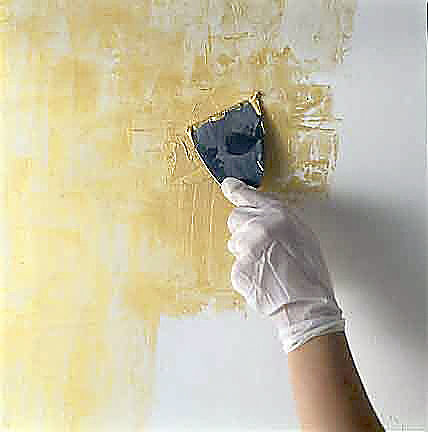
A gel-like gold glaze is troweled over the first plaster coat in random patches.
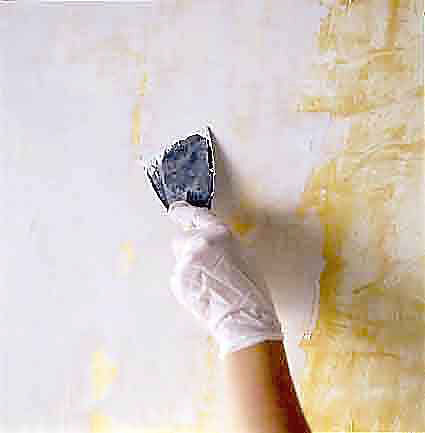
The final plaster coat hides most of the gold, but allows some to shine through, augmenting the textured appearance of the wall.
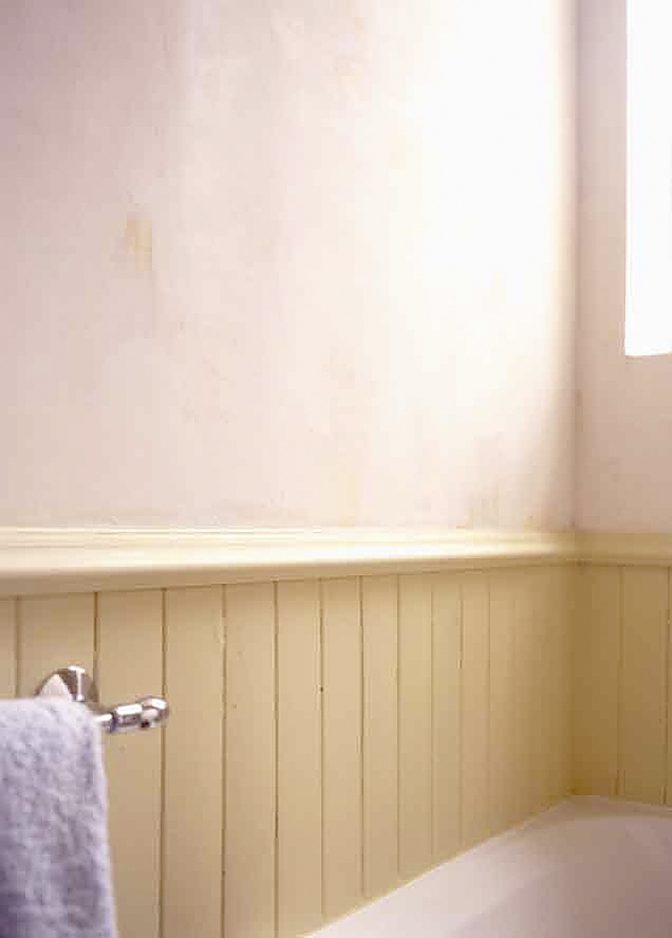
The wall above the wainscoting has a textured plaster finish with gold highlights that shimmer through the final plaster coat.
Q. I would like to texture the guest bathroom walls and need some direction. The look I am after is a very thick texture, not the regular texture that can be applied with a sponge or a pressure gun.
I am hoping you know what I’m talking about. – Donna
A. The thick texture that you are talking about is created with plaster, applied with a metal trowel and then worked with a wood trowel. I would recommend contacting a professional plasterer, who will know the type and thickness of the plaster mix required.
There are different types of plaster available for wall applications that you can do yourself. Venetian plaster has marble dust mixed into it – unlike traditional stucco – and can be burnished to a high sheen by rubbing with a spatula or trowel. For the light, smooth texture shown here, I used Venetian plaster. Prime your walls with a good paint or plaster primer before you start. Use a trowel to apply the plaster to the wall, smooth it on and work in a cross-hatch pattern smearing on and taking off the plaster until you have a thin coat covering the wall. Let dry and then apply a second coat, building up a smooth, slightly uneven texture. After each coat dries, sand off any sharp points or stubbly bits.
Plasters can be precolored using universal tints. Rather than the color sitting on the surface as it does with paint, pre-tinted plaster won’t show nicks and scratches. You can also achieve beautiful effects by layering colors. For the textured bathroom walls shown here, I layered a gold metallic gel (or gold glaze) between layers of white plaster. I smeared on the gel with a spatula over and across the plaster to highlight the subtle texture underneath. The final plaster coat is skimmed over the gold, showing tons of white while allowing bits of gold to shimmer through.
Plaster is porous, so particularly for a bathroom, it is important to apply two coats of acrylic varnish to seal the walls.
Q. I am planning to remove the paneling in our rec room and have drywall installed. There is an ugly fuse box in one corner that has been covered over. It sits above the couch. How can I hide the fuse box and make it look like part of the decor? Thanks for any suggestions. – Jackie
A. Your best plan is to diminish the appearance of the fuse box so that it blends in with the wall. Use metal paint the same color as the wall. Follow the instructions for painting over metal so that the paint won’t peel. If your fuse box doesn’t stick out too far – the door is usually about an inch deep – then hang a picture over it.
Make it part of a collage of pictures that hang above your couch.
Q. We have white painted cabinets throughout the house. Over the years they have taken on a yellowish hue. Is there any way to bring back their whiteness without painting? – Sandy
A. There are various recipes for bleaching yellowed cabinets using baking soda and vinegar or lemon juice, but they are time-consuming and don’t promise an even finish. There is no process that reverses the color of paint that has aged. It’s a bigger job to try to bleach them than to paint.
Please email your questions to house2home@debbietravis.com.