

Show your patriotism on Veterans Day with vintage collectibles
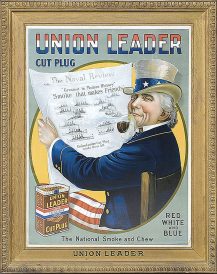
Use your collections to celebrate holidays like Veterans Day. Nov. 11, 1919, was the day chosen to commemorate the Armistice, the agreement signed the year before that ended World War I. The celebration, named Armistice Day, featured parades, meetings, a moment of silence, prayers and events that encouraged good will. It also included displays of the flag on all government buildings, schools, churches and other suitable places. The holiday was changed in 1954 to honor veterans of all wars and the name became “Veterans Day.”
In 1968 a bill was passed, proclaiming that all national holidays will be celebrated on a Monday to make long holiday weekends. The public complained, and in 1978 Veterans Day was returned to the original Nov. 11 date.
Collectors like to own and will pay extra for vintage pieces that picture the flag, Uncle Sam, Lady Liberty or any other patriotic symbols. During past decades, advertisers could alter a flag with a product name, claim an endorsement from the president, or use the symbols in ways that now are not considered politically correct. Union Leader Tobacco pictured Uncle Sam with stars and stripes in ads and on packages in the early 1900s. By 1920, they redesigned the package and replaced Uncle Sam with an eagle, probably because Uncle Sam had become old-fashioned. This is a clue to the age and value of the Union Leader tins, packages and signs collected today.
On Nov. 11, display some vintage collectibles that praise veterans, especially those that show the flag or Uncle Sam. It is a day of remembrance, and objects from the past help us understand what we celebrate.
Q. During World War II, my father was in the U.S. Navy and was stationed in Washington, D.C., in the photo lab under the direction of Edward Steichen. I have about 200 black-and-white photos depicting the war that were taken by Steichen and many of his handpicked photographers. I also have a letter addressed to my father thanking him for his service and signed by Steichen. I have the photos in archival pages and moisture-proof albums. Is there anything else I should be doing to preserve them? Is there any value to them?
A. Edward Jean Steichen (1879-1973) was known for his portrait and fashion photos. He helped develop aerial photography during World War I and served as Director of the Naval Aviation Photographic Unit during World War II. His photos sell for high prices at auctions. Using archival pages and albums to store your photos helps preserve them. Make sure the albums don’t contain PVC (polyvinyl chloride), which can damage photos. Don’t store them in an attic, basement, or anywhere they’ll be exposed to high temperatures or high humidity. The highest price realized for a photograph by Edward Steichen was $2,928,000 for a landscape in 2006.
Q. I have a 25 cents stamp album issued for the purchase of a war savings bond during World War II. It took 75 stamps ($18.75) to fill the book. The book I have has $12.50 in stamps. Does this have any monetary value?
A. World War II savings-bond stamp books were issued by the United States Treasury Department in 1942. Once the book was filled with stamps, it had to be held for 10 years before it could be exchanged at the post office for a $25 savings bond. Partially filled savings-bond booklets sell online for $5 to $15. You can redeem the stamps for their face value by filling out and submitting form PD F 1522. You can get the form at www.treasurydirect.gov by putting “1522” in the Search box at the top of the page. Send the completed form to one of the addresses listed on it.
Q. My husband’s mother left us a handkerchief, 12 inches square, and framed. It is white silk, embroidered with the words “Souvenir of the Great War” within a circle of nine flags. The flags represent the U.S., Romania, Portugal, Italy, Serbia, Belgium, Great Britain, France and one I can’t identify with a center red circle and red bands like rays. The handkerchief has 1 1/2-inch-wide lace trim all around. We know nothing about it and would love some information.
A. During the World Wars, many soldiers wanted souvenirs to bring or mail home to their mothers, wives and sweethearts. Embroidered silk and linen handkerchiefs were small, easy to carry and didn’t disintegrate like paper letters. World War I souvenir handkerchiefs usually were hand-sewn, many with intricate colors, designs and lace. They were not to be used, but carried in a purse or pocket or framed and displayed. By World War II, most handkerchiefs were made from synthetic fabrics like nylon and printed by machine. Your handkerchief is from World War I, the “Great War,” and was made about 1917 or 1918. The flag you can’t identify represented the Imperial Army of Japan. Handkerchiefs like yours sell between $50 and $75.
Tip: Old finishes on furniture may dry out, and changes in temperature and humidity may cause fine hairline cracks in furniture finishes. Paste wax can cover this checking or cracking. Use the paste as suggested on the package, then rub with a soft cloth.
Current prices are recorded from antiques shows, flea markets, sales and auctions throughout the United States. Prices vary in different locations because of local economic conditions.
• Flying saucer, Sky Patrol, red, tin, plastic dome, astronaut, battery-operated, box, Japan, c. 1960, 7 3/4 inches, $170.
• Clarice Cliff pottery, bowl, Bizarre pattern, triangles, painted black, red, yellow, signed, 5 inches, $285.
• Purse, alligator, Classic Tote, green, suitcase shape, double zipper, goldtone metal, handles, Prada, 8 1/4 x 12 inches, $834.
• Architectural door latch, iron, tulip ends, arched handle, central design, c. 1800, 12 x 6 inches, $1,180.
• Coca-Cola sign, Tired? Coca-Cola Relieves Fatigue, Sold Everywhere, 5 cents, soda jerk, paper, frame, 22 x 12 inches, $1,320.
• Cigar store figure, Indian, carved, painted, holding pack of cigars, tomahawk, 1800s, 62 inches, $8,400.
Write to Kovels, Observer-Reporter, King Features Syndicate, 300 W. 57th St., New York, NY 10019.