

Nobel laureate Wiesel remembered at private service
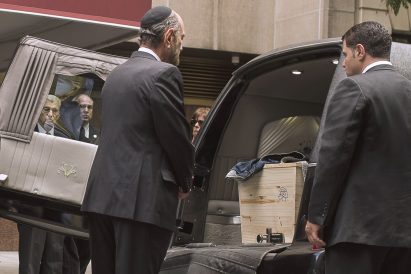
NEW YORK (AP) – Elie Wiesel was memorialized Sunday at a private service in Manhattan, as family and friends gathered and praised the endurance and eloquence of the Nobel Peace Prize winner and mourned him as one of the last firsthand witnesses to the Nazis’ atrocities.
“This is really the double tragedy of it, not only the loss of someone who was so rare and unusual but the fact that those ranks are thinning out,” Rabbi Perry Berkowitz, president of American Jewish Heritage Organization and a former assistant to Wiesel, said before the service at Fifth Avenue Synagogue. “At the same time, anti-Semitism, Holocaust revisionism keeps rising. The fear is that when there are no more survivors left, will the world learn the lesson because those voices will be silenced.”
Millions first learned about the Holocaust through Wiesel, who began publishing in the 1950s, a time when memories of the Nazis’ atrocities were raw and repressed. He shared the harrowing story of his internment at Auschwitz as a teenager through his classic memoir “Night,” one of the most widely read and discussed books of the 20th century.
The Holocaust happened more than 70 years ago and few authors from that time remain. Another Nobel laureate and Holocaust survivor, Hungary’s Imre Kertesz, died earlier this year. Like Wiesel, he was 87.
While Berkowitz and others worry the Holocaust’s lessons will be forgotten, some note Wiesel himself worked to make memories endure. Abraham Foxman, former national director of Anti-Defamation League, said before the service Wiesel wrote dozens of books. Sara Bloomfield, director of the United States Holocaust Memorial Museum in Washington, D.C., credited Wiesel with making organizations like hers possible.
“‘Night’ really put Elie Wiesel’s personal memories into our personal consciousness and it ended up spawning a global remembrance movement that is very vital today,” she told the Associated Press in a telephone interview.
“He carried a message universally, he carried the Jewish pain, the message of Jewish tragedy to the world but he took it way beyond,” Foxman said. “He stood up for the people in Rwanda, he stood up for the Yugoslavians, he stood up for the Cambodians,” said Foxman, who knew Wiesel for decades.
On Sunday, mourners shared personal memories. Ronald Lauder, president of the World Jewish Congress, remembered visiting Auschwitz with Wiesel in the 1980s and was struck Wiesel’s response was not one of hate, but of “great sadness.”
“And he said to me what I think was one of the most important statements: ‘The opposite of love is not hate, it’s indifference, it was indifference that brought anti-Semitism to Germany and it was indifference that brought the Holocaust,'” Lauder explained.
Foxman said in recent months he and Wiesel would reminisce, in Yiddish, and talk philosophy.
“We talked about forgiveness, we talked about God. He was struggling with it,” Foxman said. “Well now he’s a little closer. Now, he can challenge the Almighty much closer and maybe he’ll get some answers, which he asked, but never got the answers to.”