

Usher gets harder to love with new album
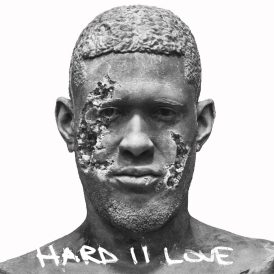
If music stops panning out for him, Usher has bright prospects in fortune telling; by naming his eighth studio album “Hard II Love,” he knew exactly what the future held. Or he recognized the slight masochism of a passion project that disregarded the need for commercial viability.
In the digital age, launching a record with 15, yes 15, tracks is overkill. But launching a 15-track record with mostly lackluster songs? That’s downright wrong.
“Harder II Love” feels like a low energy experimental project with mash-up genres that meet in a vacuum and bump against each other. Gone are the dynamic days of the head-bopping, body-rolling Usher song. This album just wants your phone number but only tries really greasy lines to get it.
The album shines when it goes noir R&B, a niche Usher should perhaps focus on.
Some of the better moments include first single “No Limit,” which has an urban bass electro beat that bumps and grinds, and the catchy “Bump,” with its drowsy beat. “Downtime” showcases Usher’s voice in a rhythmic piano vortex and “Make U A Believer” is a dramatic, scratchy track that gets the job done. “Rivals,” featuring Future, brings in a nice, luminous dancehall EDM feel, and “Tell Me” is an inexplicable but cool eight-minute mash of romantic beats.
On the other hand, singles “Crash” and “Missing U” fade into instant obscurity alongside the other half of the album.
Maybe nine time’s the charm.
- Christina Jaleru
Associated Press
When tightrope walker Philippe Petit was asked why he did what he did, he replied curtly: “Why – there is no why.”
Rachael Yamagata was floored by his answer, which led the critically acclaimed singer-songwriter to question her own reason for doing things – and to name her new album for the Frenchman who in 1974 crossed between New York’s twin towers.
Searching for her own purpose, Yamagata turned “Tightrope Walker” into an album about perseverance. It is tonic, she says, for anyone thinking of quitting anything.
“I have fully stepped into my role as healer, optimist, entrepreneur, writer, producer and spirited badass,” says Yamagata. “And that is my ‘why.”‘
Clearly confidence is not a problem.
Along with the bad-assery, Yamagata brings a world-weary passion to her singing. Her voice is a soul-baring, sultry instrument that commands center stage at all times. She has that deliberate, I’ll-sing-the-note-when-I’m-ready pacing that helped make Amy Winehouse great, and before her Billie Holliday.
Yamagata can rock, too. She sings with fire on the outstanding jam-band romp, “Let Me Be Your Girl,” her vocals complemented perfectly by edgy guitar and horns. And she stays in command when she slows things down – to a near stop on “Break Apart,” and then again on “I’m Going Back,” both stirring ballads.
Throughout the album, Yamagata sings with the confidence of someone working without a net. And if she’s not quite walking a tightrope herself, she is performing at a very high level.
- Scott Stroud
Associated Press
It might seem paradoxical for a politically outspoken singer-songwriter like Billy Bragg to ride off during a divisive, restive time on both sides of the Atlantic.
But he wasn’t hiding out: The English musician with a roots-folk-punk persuasion literally hit the rails with American musical partner-in-crime, Joe Henry, and returned from a roughly 2,700-mile train journey from Chicago to Los Angeles with the album, “Shine a Light: Field Recordings from the Great American Railroad.”
The musicians rode the Texas Eagle and the Sunset Limited and recorded on them, as well as in train stations and one hotel room along the way. They emerged with a baker’s dozen of rambling, raggedly exquisite rail-inspired songs.
Standouts include the up-tempo “Rock Island Line” and “John Henry,” and Bragg delivers the lead on a gem, “Waiting for a Train.” The song was adapted by Jimmie Rodgers, a country music forefather who lived in the same San Antonio hotel where Bragg and Henry recorded it. Rodgers adapted it from a British ballad called “Standing on a Platform.” That apparently suits Bragg, who sweetly sings – and even yodels – on what sounds like an authentic, early 20th century field recording.
The 21st century troubadours travel light here, with only guitars, a bit of harmonica and the ambient sounds of birds and trains. But the spare arrangements are enriched by their harmonizing, a fine blend they should bring to future projects.
Henry and Bragg – the latter worked with Wilco on writing music for a cache of Woody Guthrie lyrics – say in the liner notes that this was no nostalgia trip. They were plying musical ground in an effort to understand “just who we have become and why.”
This collection indeed shines a light and breathes new life into old songs that roll ever on – sometimes loosely but never off the rails.
- By Jeff Karoub
Associated Press