

Walking provides physical, psychological benefits
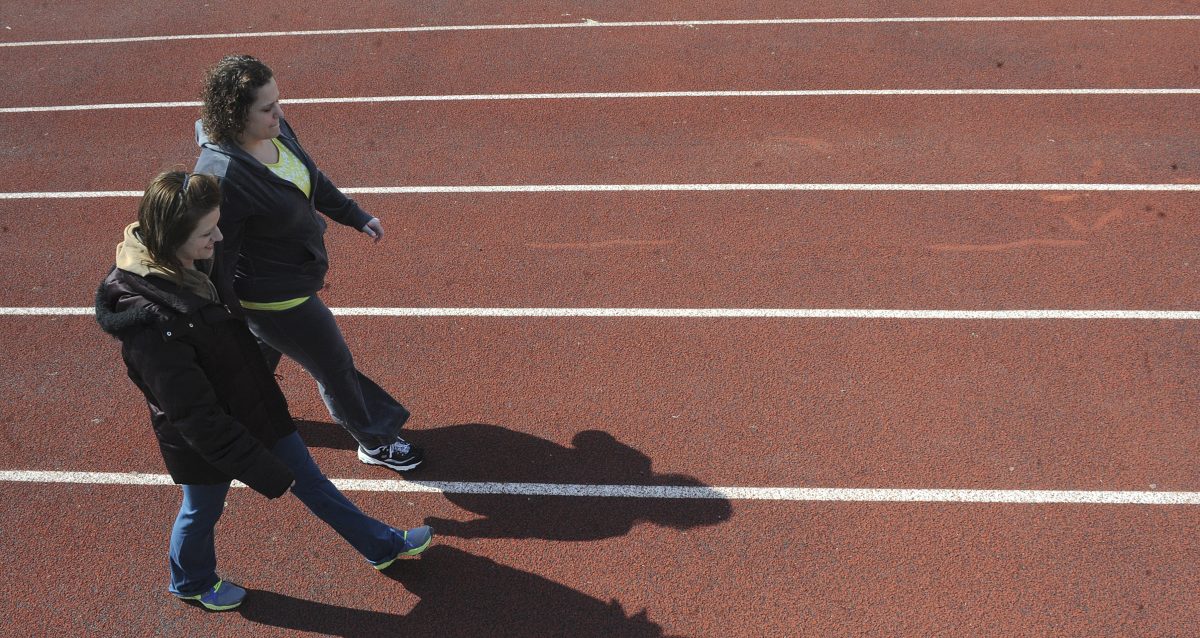
Lindsay Leininger of Avella, left, and Jessie Johnson of Burgettstown walk around the track together at the Burgettstown High School football stadium. Johnson said she likes walking as a cost-effective form of exercise.
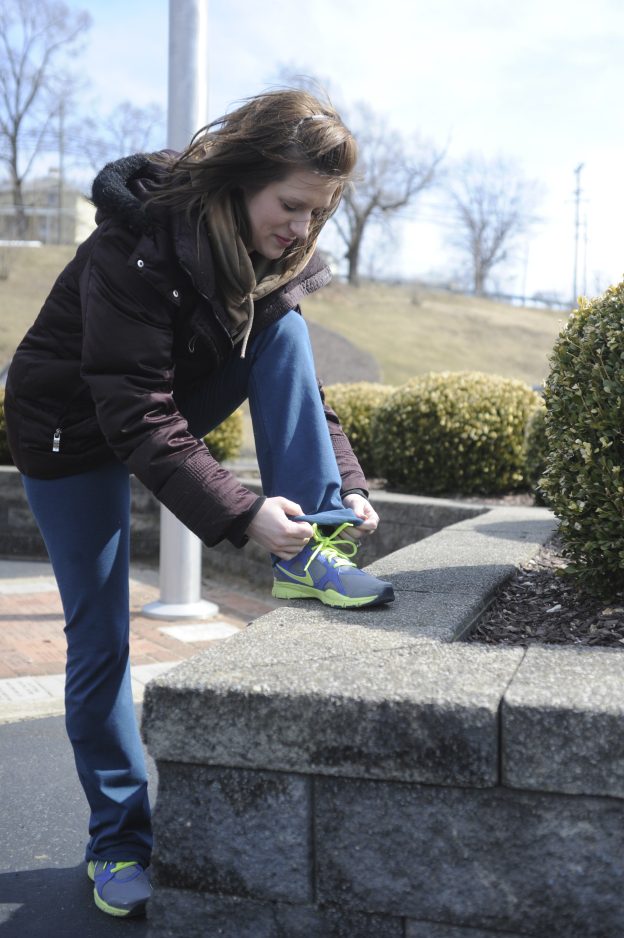
Lindsay Leininger of Avella ties her sneaker before heading out for a walk. Leininger is starting a walking program to stay active.
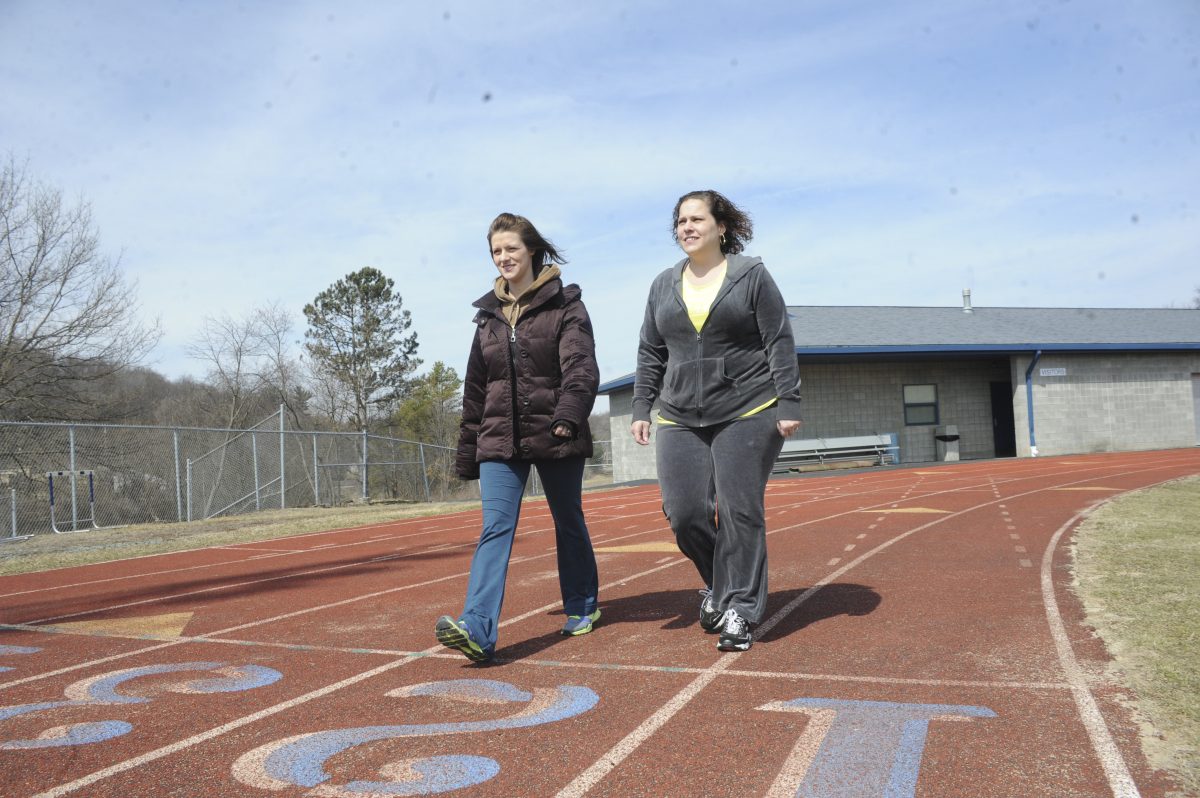
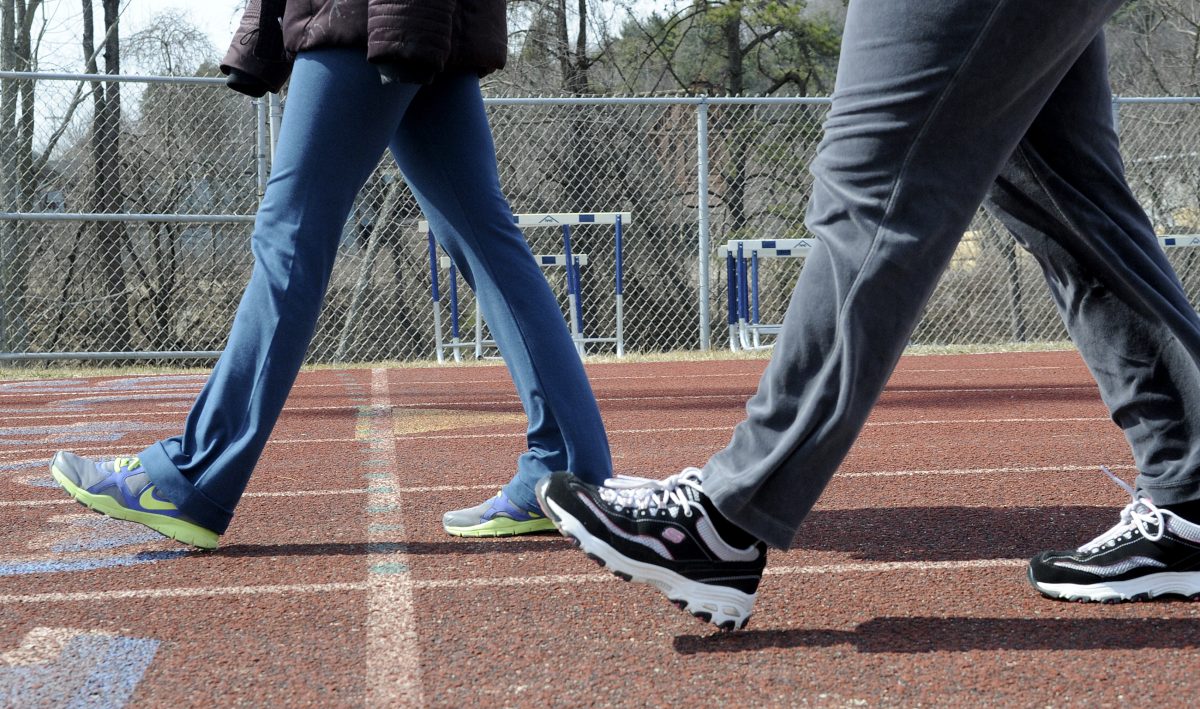
A good pair of walking shoes will help prevent injury while walking. Walking can decrease the chance of a heart attack or stroke.
According to the American Heart Association, 68 percent of adults are obese or overweight, partly as a result of the physical inactivity that is plaguing the country. The organization claims that people are less active due to better technology and transportation, as well as an increase in sedentary jobs and a longer work week.
Walking for just 30 minutes a day reduces cholesterol levels, lowers blood pressure and reduces the risk of stroke and heart attack. But for beginners, even 30 minutes may seem unattainable. Luckily, there’s an easy way to get moving, no matter what an individual’s activity level.
Starting a walking program is simple, said Joseph Bradley, doctor of physical therapy and director and founder of Bradley Physical Therapy Clinic in Washington. Even those who have never exercised or have afflictions like arthritis can reap the benefits of the low-impact workout.
Bradley suggests beginners take it easy and aim to reach a certain amount of time, not distance.
“Find a fairly level place to walk,” he said. “Walk for five minutes. See how you feel. If you feel good, increase your walk by two minutes per day.”
Bradley said that eventually, a person should aim for a 30-minute brisk walk at least three times per week. The goal, though, is to start at a slow pace and eventually work up to moving faster. He said that he has seen beginners overexert themselves, then quickly give up their walking routine because it hurts or exhausts them. He cautioned that walkers shouldn’t push themselves to pain or shortness of breath.
“You should progress without any symptoms,” he said.
The benefits of walking span a person’s entire body, Bradley said. In addition to strengthening the heart, walking helps a person’s joints by increasing the natural lubrication. Walking is even beneficial for people with arthritis, and is proven to help reduce pain in the joints.
“Walking is one of the best forms of exercise. It’s low impact and almost anyone can do it,” said Bradley.
There are psychological benefits to walking, as well.
“Studies have shown that people who walk feel better,” he said. “People cope better when they walk.”
Jessie Johnson, 32, agrees that walking has improved her physical and emotional health. She said she has used walking not only to lose weight, but as a stress reliever. The mother of two started walking in high school, and, in warmer months, walks outside nearly every day. Usually, she takes a 20- to 30-minute walk around her Burgettstown neighborhood. And while her children are frequent sidekicks on her excursions, she also likes to walk solo.
“Sometimes, as soon as my husband gets home from work, I’m ready to go,” she said. “It’s just a couple of minutes of alone time for me to clear my head.”
Johnson sees the benefits in her wallet, too.
“It’s cheaper than joining a gym and it doesn’t cost any gas money,” she said.
Scarlett Yacoviello, 71, began walking last year after her regular gym went out of business. After two knee replacements, she said her doctor recommended the low-impact exercise.
“Walking is great for me,” she said. “It keeps me going and keeps me agile.”
Yacoviello walks one mile, three times per week. She sticks to the routine by strolling with a friend at Burgettstown’s Hill Memorial Stadium outdoor track. Walking with a buddy not only keeps her motivated, it keeps her social.
“You don’t even realize you’re walking,” said Yacoviello. “Time goes fast when you’re talking.”
With so many frigid and snowy days this winter, Yacoviello said she definitely felt a difference in her joints when she couldn’t exercise, and had increased difficulty moving her knees. Now that warmer weather is returning, Yacoviello knows not to push herself too far.
“I used to walk a couple of miles a day,” she said. “But I only do one now. And afterward, I don’t hurt. I feel good.”
Unlike other exercises that require costly equipment, a walking program can be started with just a good pair of shoes. Bradley recommends comfortable, supportive footwear to avoid injuries.
“There are very few injuries associated with walking. But the feet are the first area where people see problems,” he said. “This can be avoided by wearing good shoes.”
Bradley has also seen people aggravate pre-existing conditions by pushing themselves too far. Again, he stressed to begin a walking routine slowly on a flat surface. He said that taking it slowly is the best way to stick to a new routine, which will lead to improved overall health.
“Research has shown people who are doing something – like walking – as opposed to people who do absolutely nothing show a big difference in their physiological benefits. There is a nice rise in health benefits when you start moving,” Bradley said. “Our bodies are made for walking.”