

Hospitals join forces to promote heart health awareness
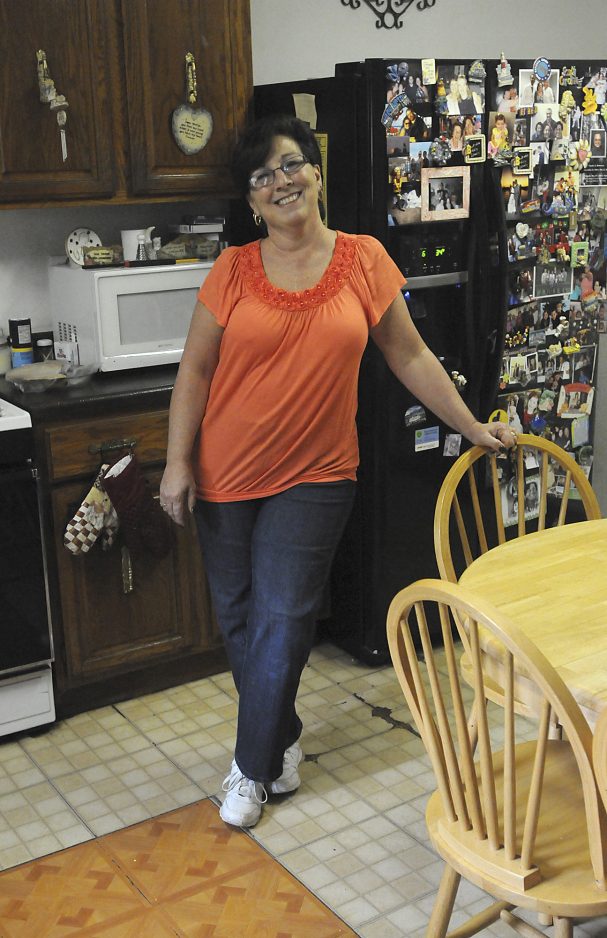
Janice Trumpie of Bunola suffered a series of strokes and a heart attack dating back to 2009. A reaction to medication following a heart attack that resulted in losing both of her legs.
Observer-Reporter
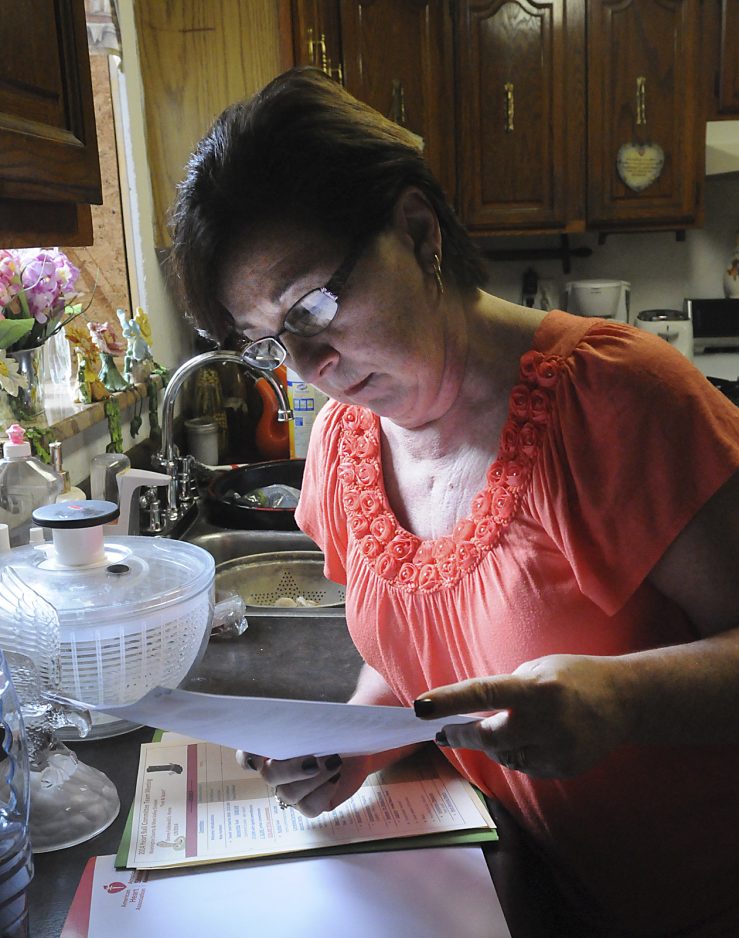
Janice Trumpie of Bunola, a heart attack survivor, looks over her mail while cooking in the kitchen of her home.
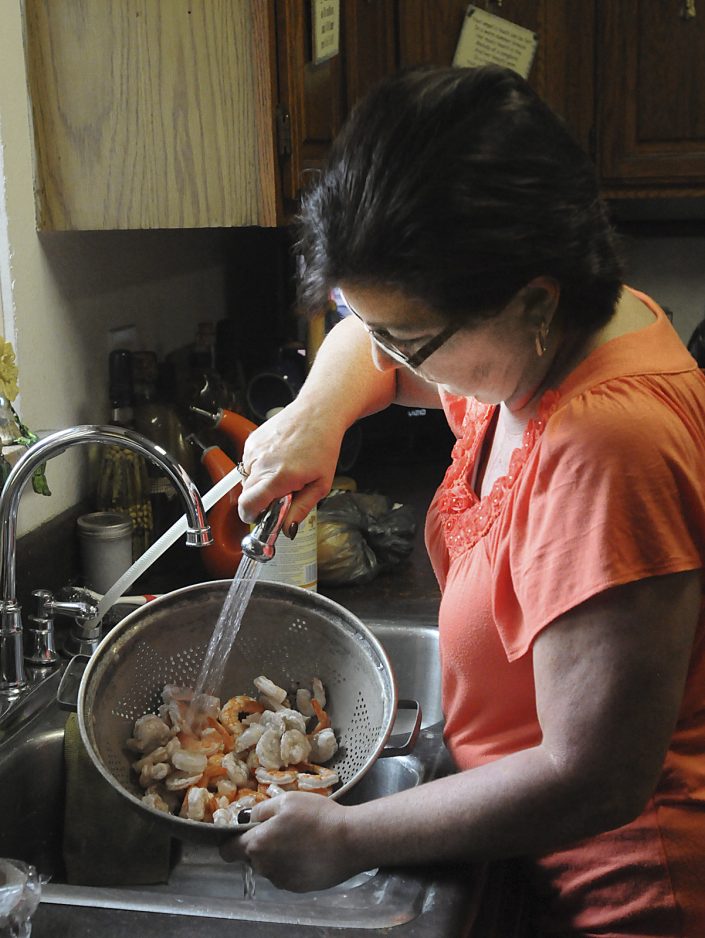
Janice Trumpie cleans a batch of shrimp for dinner at her home. She has learned about healthy eating and lifestyle choices after a heart attack and a series of strokes.
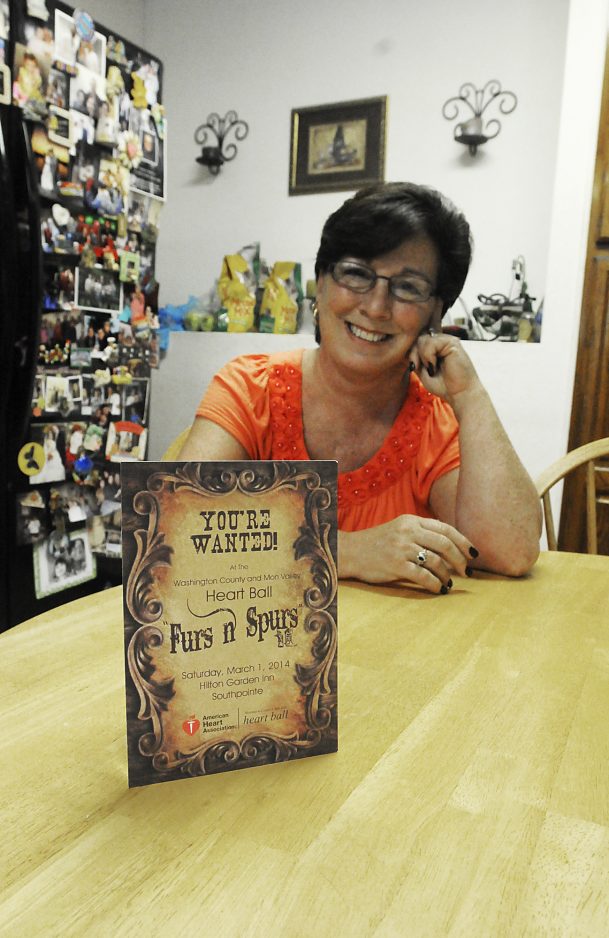
Janice Trumpie of Bunola has become involved in the Go Red Campaign and the upcoming Heart Ball after surviving a heart attack.

Harper Hutchinson plays in her favorite toy she received for Christmas, a parachute.

Seventeen-month-old Harper Hutchinson plays with Linda, the family dog. She is thriving after open-heart surgery to repair a defect.

Seventeen-month-old Harper Hutchinson was born with a hole in her heart and suffered a heart attack before she was born.
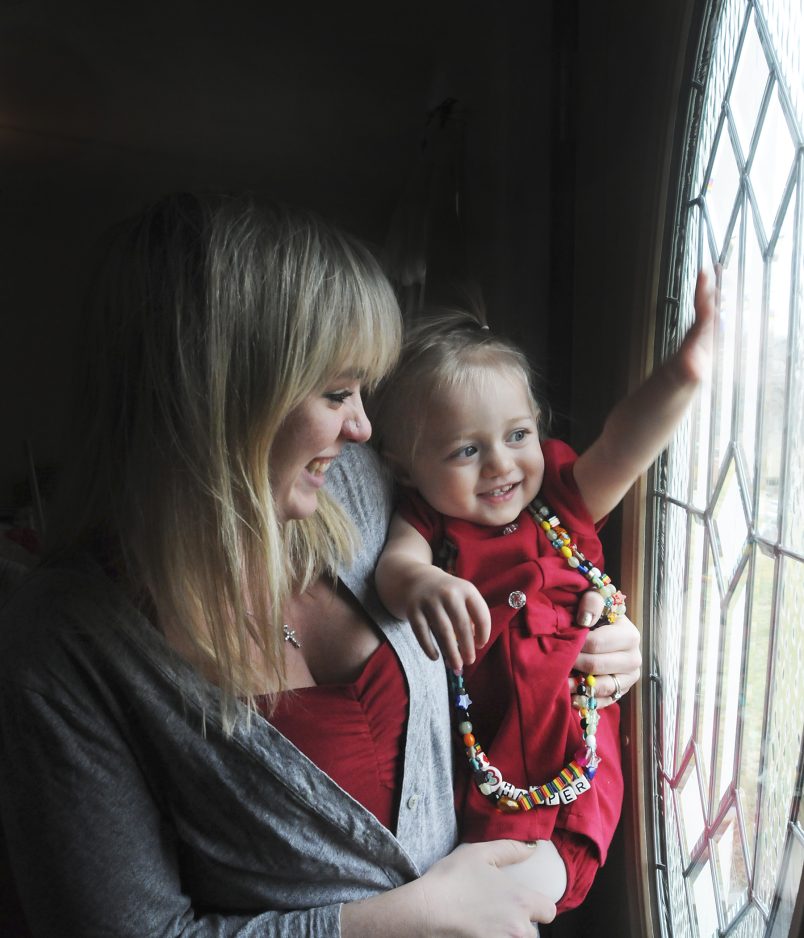
Harper Hutchinson and her mother, Rachel Hutchinson, watch for the mailman at their Bethel Park home. Rachel has become involved with the American Heart Association after Harper was born with a heart defect.
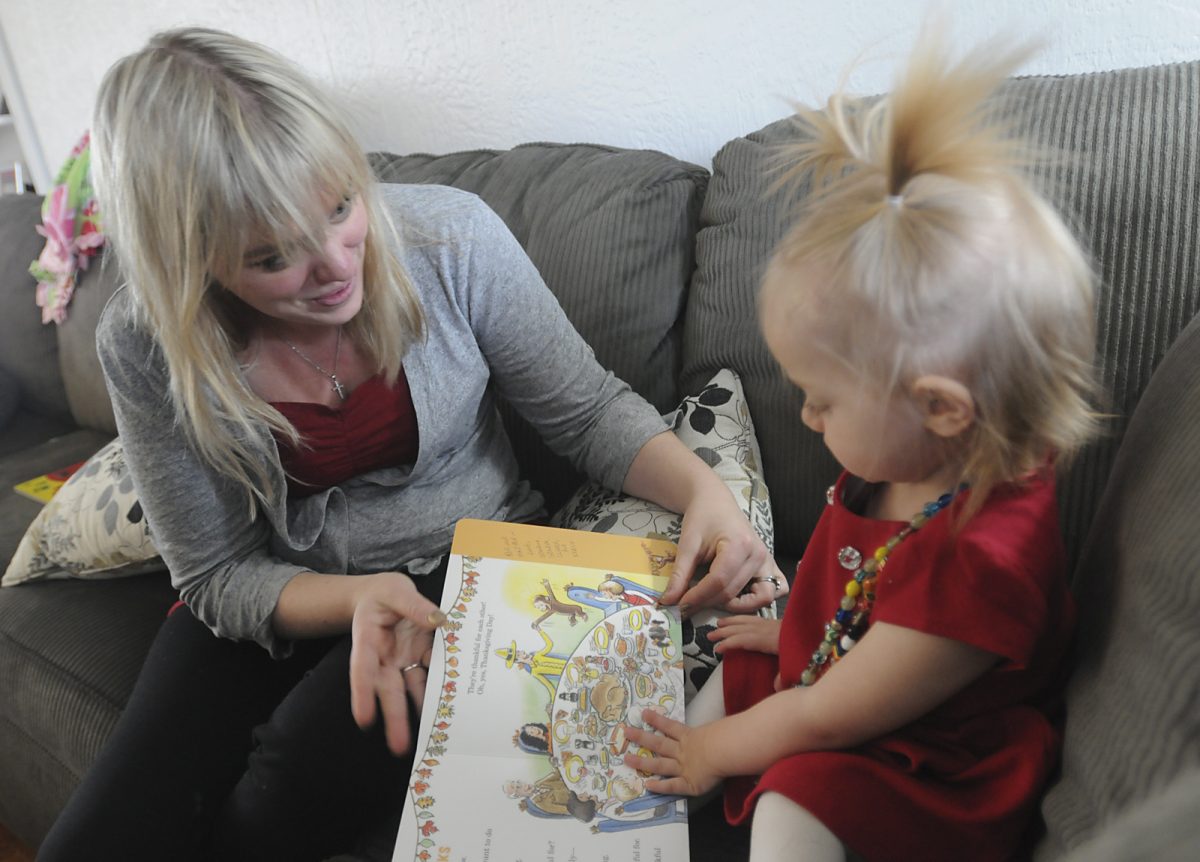
Rachel Hutchinson, of Bethel Park reads to her daughter, Harper, 17 months.
Heart disease is preventable and controllable, but it is the leading cause of death in the U.S. for both men and women. In fact, heart disease – including heart attack, stroke and vascular diseases – claims more women’s lives each year than all forms of cancer combined. About 600,000 people in the United States die from heart disease every year.
Three local hospitals are joining forces during National Heart Month for “Go Red, Washington County,” a county-wide education and awareness program to inform people about cardiovascular diseases and to promote heart health.
Canonsburg and Monongahela Valley hospitals and Washington Health System will host events at their respective hospitals on from 4 to 8 p.m. Feb. 20. Offerings will include speakers, educational demonstrations and giveaways, among other events.
The hospitals’ staff members are encouraging men and women to don red clothing throughout the month to bring more attention to the issue of heart health, and employees at the local hospitals were among those across the country who wore red on National Wear Red Day on Feb. 7.
The hospitals teamed up last year for “Go Red, Washington County,” with good results.
“We share a deep commitment to promoting good heart health in our local communities,” said Gary B. Weinstein, president and chief executive officer of Washington Health System. “And we are delighted to participate in Go Red Washington County again this year with our partners, Canonsburg Hospital and Monongahela Valley Hospital.”
Heart Month is designed to help people learn about changes they can make – even small ones – that can improve their heart health and add years to their lives. Today, there are many effective treatments for heart disease, but it’s important for people to take proactive steps to protect their hearts and their overall health, says Dr. John Pacella, an invasive cardiologist at Monongahela Valley Hospital.
“I tell my patients the best defense against heart disease is a good offense,” said Pacella, noting that often people don’t realize they have heart disease because symptoms frequently don’t appear until damage has been done. “The two best things patients can do to take care of their hearts is diet and exercise.”
Some risk factors for cardiovascular disease, such as heredity, race and age, can’t be changed. But people can reduce their risk by controlling their weight, cholesterol, blood pressure and stress, as well as quitting smoking and increasing their activity level, Pacella said.
Warning signs for heart attack differ for men and women. Men often experience chest discomfort, shortness of breath or arm pain, while women may feel indigestion-like pain, dizziness, nausea or vomiting, but the longer a person waits to seek treatment for a heart attack, the more his or her heart muscle deteriorates, increasing the likelihood of permanent damage or death.
Mon Valley Hospital President and Chief Exeuctive Officer Louis J. Panza and Canonsburg Hospital President and Chief Executive Officer Marcie S. Caplan both agree that the Go Red event helps the hospitals raise awareness about good heart health in their communities.
“Knowledge is power and we are so glad to work together on this effort to help empower our residents to make changes, even small ones, for better heart health,” said Panza.
While more than 600,000 people die each year from heart disease, there have been strides made in recent years, thanks to programs including Go Red For Women, created 10 years ago by the American Heart Association. Janice Trumpie, 55, and 17-month-old Harper Hutchinson, are survivors of serious heart problems. Trumpie, along with Harper’s parents, Chris and Heather Hutchinson, have volunteered with the American Heart Association to raise awareness and funds for the organization. Here, they share their stories.
Janice Trumpie never planned to become an advocate for women’s heart health.
But after the 55-year former intensive care unit nurse suffered a series of strokes and heart attacks that eventually resulted in her losing both legs, Trumpie has become involved with the American Heart Association in an effort to educate other women about heart disease and its signs and symptoms.
“If I could make even one person more health conscious or thankful for their lives, I’ll feel like I have accomplished something,” said Trumpie.
Between 2007 and 2009, Trumpie suffered three strokes, but recovered.
Then, on June 28, 2010, Trumpie was on duty at UPMC-McKeesport when she felt severe chest pain.
“I got up to get a cup of coffee, got dizzy and the next thing I knew I woke up on the floor. I had arrested,” said Trumpie, who grew up in Monongahela and lives in nearby Bunola.
She had two more heart attacks while she was in the coronary care unit, and was transported to UPMC, Shadyside hospital, where she underwent heart surgery, and then UPMC, Presbyterian hospital, after her liver and kidneys failed. Trumpie had an allergic reaction to the anticoagulant drug Heparin, and in January and February 2011, the mother of two underwent surgery to have her legs amputated. She has learned to walk with prosthetics, and she had a pacemaker and defibrillator implanted to assist in regulating her heart rate and heart rhythm.
Trumpie’s heart functions at 20 percent.
A former smoker, Trumpie quit after she had the heart attack in 2010, and she tries to exercise and watch her diet. She acknowledged that she let her own heart health get away from her because of her busy schedule.
“I am very spiritual and I believe God has a plan for me,” said Trumpie. “My priorities in life have totally changed. I don’t sweat the small stuff. I have no time to get upset over the little things. I don’t let them stress me.”
Trumpie – who volunteers at her church’s food bank – also volunteers with and participates in the American Heart Association’s Heart Walk and will be a speaker at the heart association’s Heart Ball on March 1.
Trumpie – who wanted to be a nurse for as long as she can remember – can no longer work, so her mission now is to continue to educate people and to promote the American Heart Association so that the organization can continue its research and provide programs to raise awareness about the dangers of heart disease in women.
“I credit two things: God was responsible for helping me through, but the educated health care professionals who cared for me are also responsible,” said Trumpie. “I’m trying to give back however I can.”
Heather and Chris Hutchinson have always been aware of the importance of heart health. Heather’s mother suffered a heart attack and underwent double bypass surgery in 2009; both of her grandfathers died of heart attacks; and one of her grandmothers died from a stroke.
“Heart health was on my radar,” said Heather. “It’s affected so many members of my family. And I don’t know anybody who hasn’t experienced heart disease or doesn’t know someone who’s been affected by it.”
The Bethel Park couple never expected, however, that they would face a heart crisis with their now 17-month-old daughter Harper, but that’s exactly what happened.
A routine ultrasound at 18 weeks revealed that Harper had a ventricular septal defect, commonly known as a hole in the heart.
A team of doctors tracked Harper’s condition throughout Heather’s pregnancy and on Aug. 8, 2012, Harper was born following a cesearian section.
“It was an extremely stressful time. All I wanted was a healthy baby. During the delivery, there were a bazillion people in the room, specialists and nurses who checked out Harper. There were no other complications during the delivery and they gave her a quick echocardiogram and saw the hole in her heart, but they said she could come home,” said Heather.
Shortly after, doctors discovered a second heart defect, stenosis of the pulmonary valve. When she was seven weeks old, Harper had open heart surgery at Children’s Hospital in Pittsburgh.
It was during that surgery that doctors found scar tissue that indicated Harper had suffered a heart attack before birth. Harper experienced complications after the surgery, including arrhythmia, so doctors left her chest open for five days in case they needed access to her heart again.
Today, Heather reports, Harper is doing well.
“She’s not only doing well, she’s thriving. She has absolutely no restrictions at all, and she’s completely normal as far as development and growth,” said Heather. “In fact, (the doctors) were laughing because heart babies can be smaller, but Harper’s at the 95th percentile for height.”
Because of the impact heart disease has had on both her and Chris’s families, Heather became involved with the American Heart Association and she participates in AHA events in Washington County, including the Go Red Ball. She also volunteers for the auxiliary at the Children’s Hospital Heart Institute.
“We’re very grateful that there are so many advances in medicine. If this had happened to Harper years ago, our daughter might not be living a normal life, if she was living at all,” said Heather. “With the history of heart problems in our families, we try to be cognizant of that and we try to eat healthier – less processed foods, more fruits and vegetables. We’re trying our best to stay healthy so that’s something Harper doesn’t have to worry about when we’re in our 50s.”