

A scary situation

Dr. Brian Popko
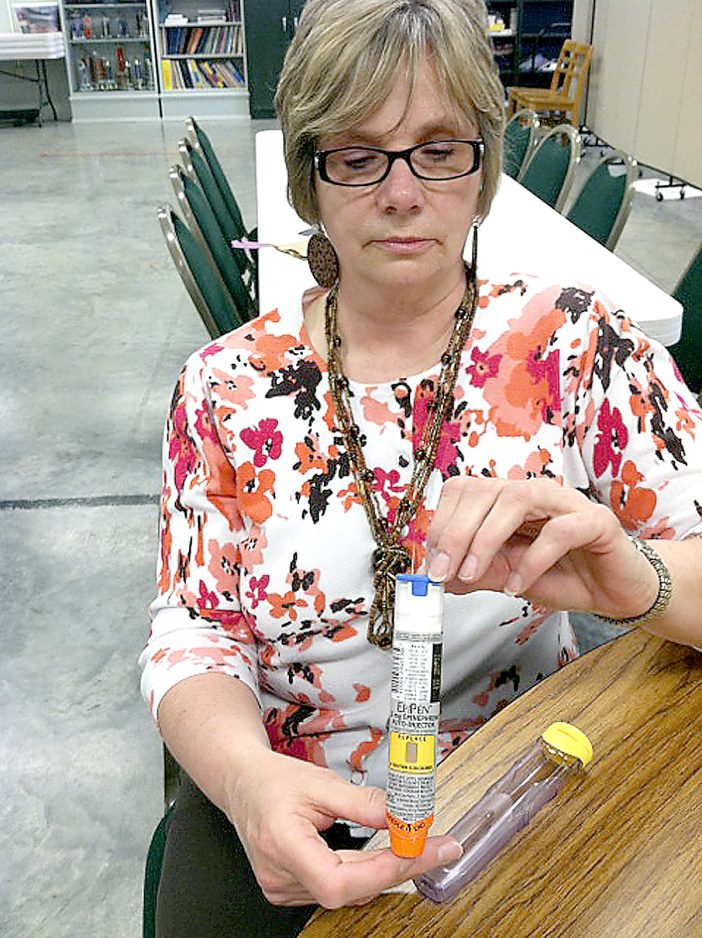
Michelle Robinson-Ritter shows the EpiPen she carries with her because she is allergic to bee stings.
It’s been more than 25 years since Michelle Robinson-Ritter last was stung by a bee, but she faithfully carries two emergency bee sting kits and steroid tablets with her at all times.
“It’s a little unnerving to always be on the lookout,” the Washington woman said of her stinging insect allergy. “I love to be outside and there’s just so many things that sting.”
With spring’s arrival, one segment of the population has to take a careful approach to warmer weather.
Each year, insect stings send about 500,000 Americans to hospital emergency rooms. According to the American Academy of Allergy Asthma & Immunology, between 63 and 99 people in the U.S. die from anaphylaxis, a severe allergy response to being stung by a bee, hornet, wasp or fire ant. Many of those people were unaware they were allergic.
“People get really sick if they’re allergic,” said Dr. Brian Popko, an emergency room physician at Canonsburg Hospital who treated between 20 and 25 patients suffering from insect stings last summer. Most of those had minor reactions, such as mild swelling, redness or itching at the site where they were stung.
But when symptoms affect other parts of the body such as hives, swelling of the tongue or throat that leads to trouble breathing, or a drop in blood pressure resulting in fainting or dizziness, that person needs medical treatment immediately as these are signs of anaphylaxis, which could result in death.
People who experience anaphylactic reactions have excessive amounts of immunoglobulin E antibodies to allergens in their blood. When the allergen is injected by an insect, the antibodies trigger the release of chemicals, particularly histamines, which cause the anaphylaxis.
Emergency treatment includes administering epinephrine, which helps to ease the effects of the allergic response, and an antihistamine such as Benadryl.
Unfortunately, people won’t know if they have an allergy to bees until they are stung by one and even that, explained Popko, may not be enough.
“Some people, you can’t even tell on the first exposure; they’ll be fine. It usually takes being stung twice to know if you’re allergic,” he said.
That was the case for Robinson-Ritter, who recalled being stung as a child with no severe symptoms. But in her 30s she was stung on her hand by a wasp, and experienced a much different reaction. Eventually she sought treatment from an allergist, which included injections for about five years.
Allergists help desensitize a patient’s immune response by injecting them with small amounts of insect venom.
Popko said someone stung by a bee who has a known allergy should call 911 right away. Those with severe reactions are advised to keep a bee sting kit with them at all times. Such kits contain epinephrine, or adrenaline, for self-administration. The EpiPen has an auto-injector feature and comes in both adult and children’s strengths. Many people are advised to have two since the symptoms can be so severe. After the EpiPen is used, medical treatment is still needed.
In addition to being careful outdoors, Robinson-Ritter carries two EpiPens and prednisone with her. But as worrisome as the stings are, medical professionals note that the probability of death is very low. More people in the U.S. are likely to die from firearms, lightning or the flu than a bee sting.