

Cleaning laminate floors may require light sanding
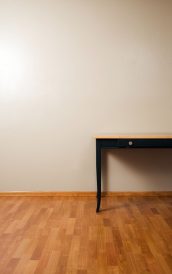
Q. I have a laminate floor on which a liquid covering has been placed. Now it has smudged. I think I need to strip it back to the original surface. I fear that anything too liquid will seep through the seams and raise the laminate surface.
A. Liquid covering is a primitive term for any finish: polyurethane varnish, old-fashioned varnish, wax, shellac, and others I don’t even know about. Maybe you smudged and it by walking on it before it hardened. At any rate, if the laminate surface is wood, sand it very lightly to get rid of those blotches and spots and apply two coats of a water-based polyurethane varnish. If it is some kind of plastic, clean it with a strong detergent.
Q. I have a set of steel spiral stairs going from the pool deck to a porch that has been in place about 25 years. Originally, I had put treads on them made from pressure-treated decking and fastened with screws up through the steel treads. These worked well for about 12 years, but they eventually cupped from the moisture sitting underneath them. I steel-brushed the treads to remove loose rust, applied a rust restorer and Rust-Oleum primer and paint, and reattached the treads, which had dried and flattened. Two years ago, the treads were clearly shot, so I removed them and refinished the steel treads Âusing a Loctite Extend rust treatment. I looked for rubber treads, but could not find any, so I left the painted steel steps uncovered. They continued to rust.
I am considering making new treads of composite decking, which should not cup from moisture. What will keep the steel treads rust resistant?
A. The composites can work to resist cupping, but if pressure-treated treads worked for 12 years, they’re pretty good, too. For the steel, which I think is wrought iron, try this: Sand off as much rust as possible, then coat it with Rust-Oleum Rust Reformer (or other anti-rust coatings), which will turn the rust black and make it paintable. Then apply one or two coats of Krylon wrought-iron paint. No primer needed.
Q. I want to replace my front door. What is really necessary to replace, and tell me what would be a good, low-maintenance door to select.
A. You need to buy only a door. Ask for the Brosco catalog. It contains many kinds of doors, including wood, which is what you want. The proprietor should find you a wood door; it may come with things you don’t need, but that is OK. Be sure to tell the proprietor the exact size and thickness of the old door. And remember, the beauty of wood is that it can be trimmed to fit, if necessary.
Q. I have three old asphalt driveways in rough shape. I don’t want to be penny-wise and pound foolish, but neither do I want to shell out more than I have to. Cobblestones and bricks are probably out of the question because of the cost. Snow removal is a definite consideration.
A. They are all expensive, especially those that must be laid by hand, such as cobblestones (too rough), bricks, and concrete pavers.
Asphalt and concrete are two good ideas, equally expensive. Gravel/pebbles show promise. Six or more inches of crushed stone are best because they have sharp edges to resist sloughing.
I think you can choose asphalt and concrete (laid in 10-foot units to reduce cracking) and also the gravel/pebbles (crushed stone) for good service and good prices. The gravel/pebbles need a sturdy border of wood timbers or large concrete lengths to keep them in place. The bigger the pebbles, the better. Also, the old underlayment of the driveways must be removed to make room for 6 inches of crushed stone as a base and for drainage.