

100 Objects: Coachman’s coat
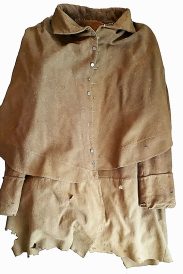
Coachman’s coat
The National Road, in many places known as Route 40, was built between 1811 and 1834 to reach the western settlements. It was the first federally funded road in U.S. history. In 1806, Congress authorized construction of the road and President Jefferson signed the act establishing the National Road. It would connect Cumberland, Md., to the Ohio River.
In 1811, the first contract was awarded and the first 10 miles of road built. By 1818, the road was completed to Wheeling and mail coaches began using the road. During the heyday of the National Road, traffic was heavy throughout the day and into the early evening. Almost every kind of vehicle could be seen on the road. The two most common vehicles were the stagecoach and the Conestoga wagon.
Stagecoach travel was designed with speed in mind. Stages would average 60 to 70 miles in one day. Stagecoaches would run through the night in all types of weather. The coachmen sitting on top of the coach would face freezing temperatures, pouring rain and driving snow. Because of this, coachmen wore heavy wool coats with a three-layered cape. The cape would deflect rain and snow, keeping the layers underneath dry and the coachman warm. The coach pictured here was used by William Curry when he drove for Good Intent Stage Coach Co. in the early 1820s. This coat was donated to the historical society by the Hugh Curry estate.
Clay Kilgore is executive director of Washington County Historical Society.