

Swimming with sharks
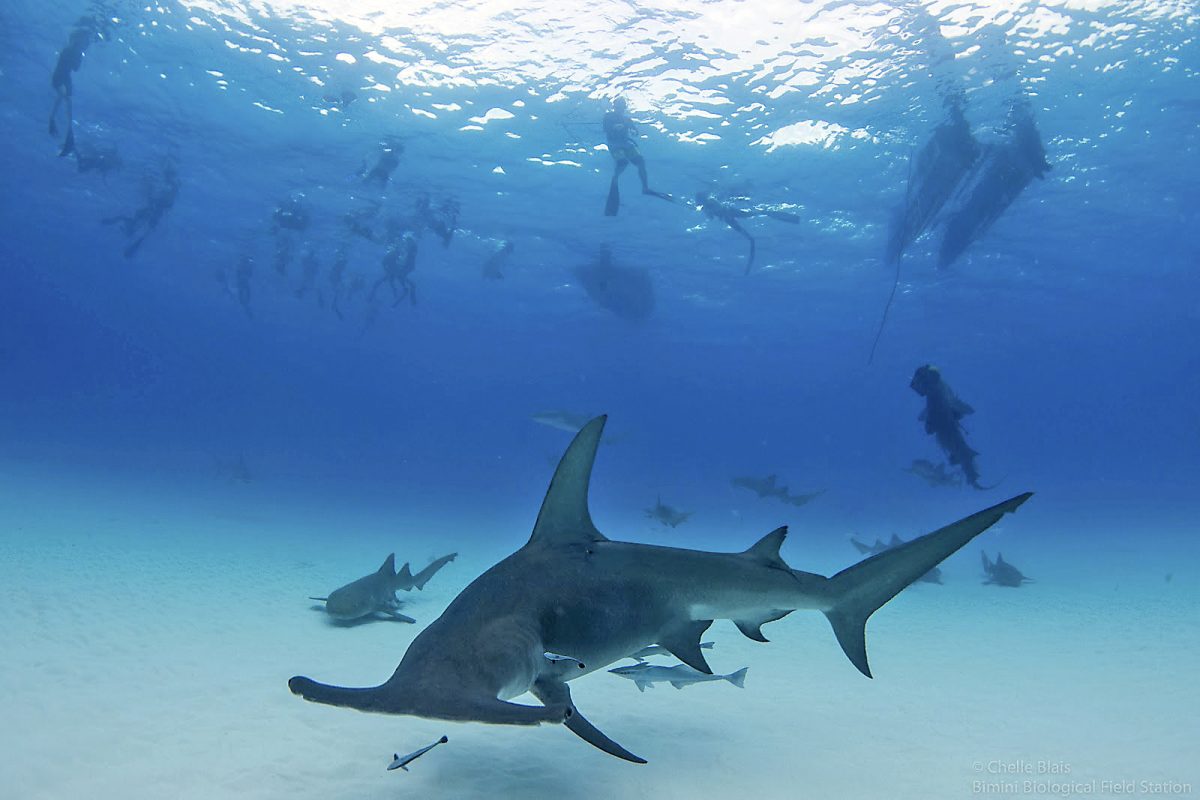
A great hammerhead shark swims below Sharklab students.
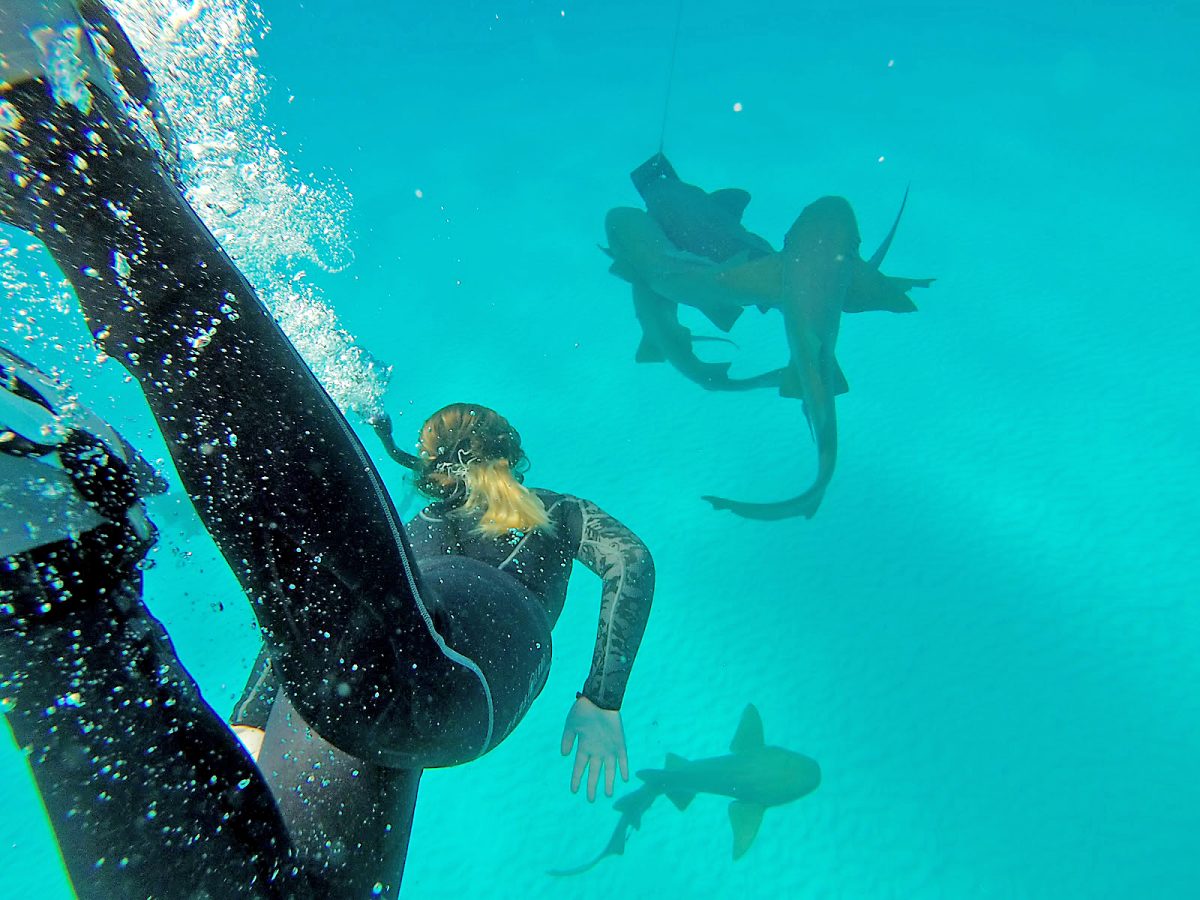
McKenzie Mungai watches nurse sharks feeding from a bait bucket during a January trip to the Bahamas.
This summer, the Discovery Channel will mark 30 years of its hit, “Shark Week.” But McKenzie Mungai won’t have to tune in to get up close and personal with the fascinating fish.
In January, Mungai swam with sharks during an educational trip to Bimini Biological Field Station, Bahamas. Known as the “Sharklab,” the nonprofit organization studies sharks and stingrays and educates student marine biologists, and has been featured in “Shark Week.”
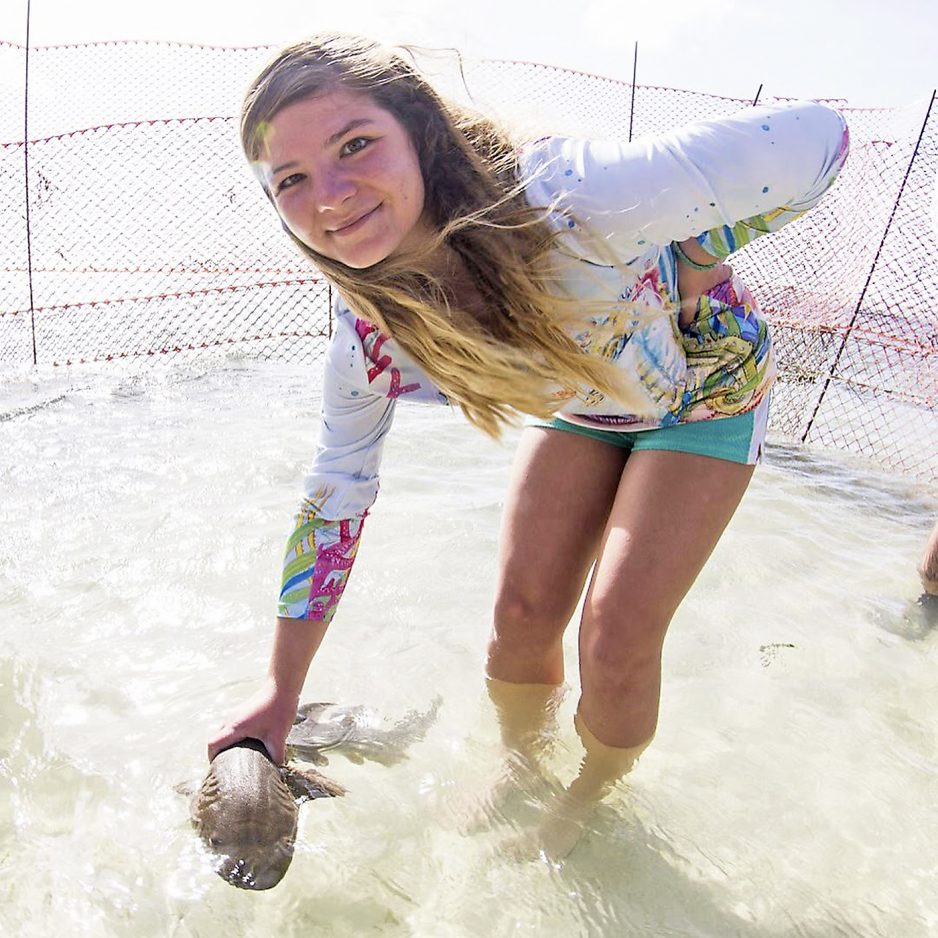
While at the Bimini Biological Field Station, or “Sharklab,” McKenzie Mungai was taught how to handle and take data on a juvenile nurse shark.
“They took us out to Triangle Rocks, and we waited until they were done feeding, then we swam with them,” said Mungai. “I never thought I would be able to do that. I was really nervous at first. They told us if (the sharks) come close, put our (swim) fins in their face. We all got in and they were curious. It was amazing to see.”
Mungai, a marine science major at Eckerd College in St. Petersburg, Fla., is a 2017 Trinity graduate. Since she was a child, Mungai, 19, has been passionate about the environment, oceans in particular.
She participated in 4-H, recycling projects and conservation groups. At her college, she formed a cleanup club.
“I’ve always been interested,” she said. “It’s been a goal my entire life.”
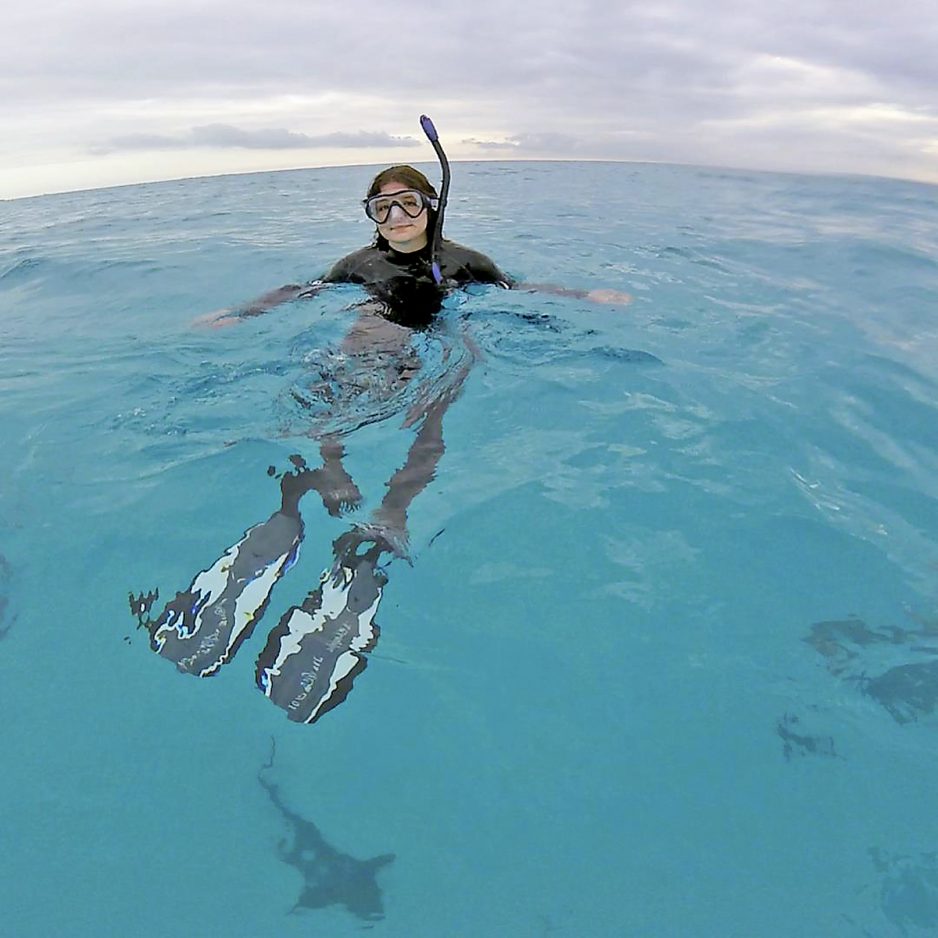
McKenzie Mungai snorkels as nurse sharks swim below.
McKenzie stayed and studied at the Sharklab with about 15 other Eckerd students. In addition to swimming with several species of sharks, including the great hammerhead (her favorite), nurse, bull, tiger and blacknose, the group attended lectures and assisted in research and gathering data from marine life. Mungai helped to place trackers on stingrays – by placing a towel around their barb – and learned how to handle them and juvenile nurse and lemon sharks. She also was able to see an MRI (magnetic resonance imaging) of a pregnant stingray and the clipping of a shark’s dorsal fin.
“It doesn’t hurt,” she said. “It’s like a fingernail clipping.”
The experience, she said, reinforced her passion for marine biology.
“I really think it cemented that I want to work at a rescue rehab facility,” she said.
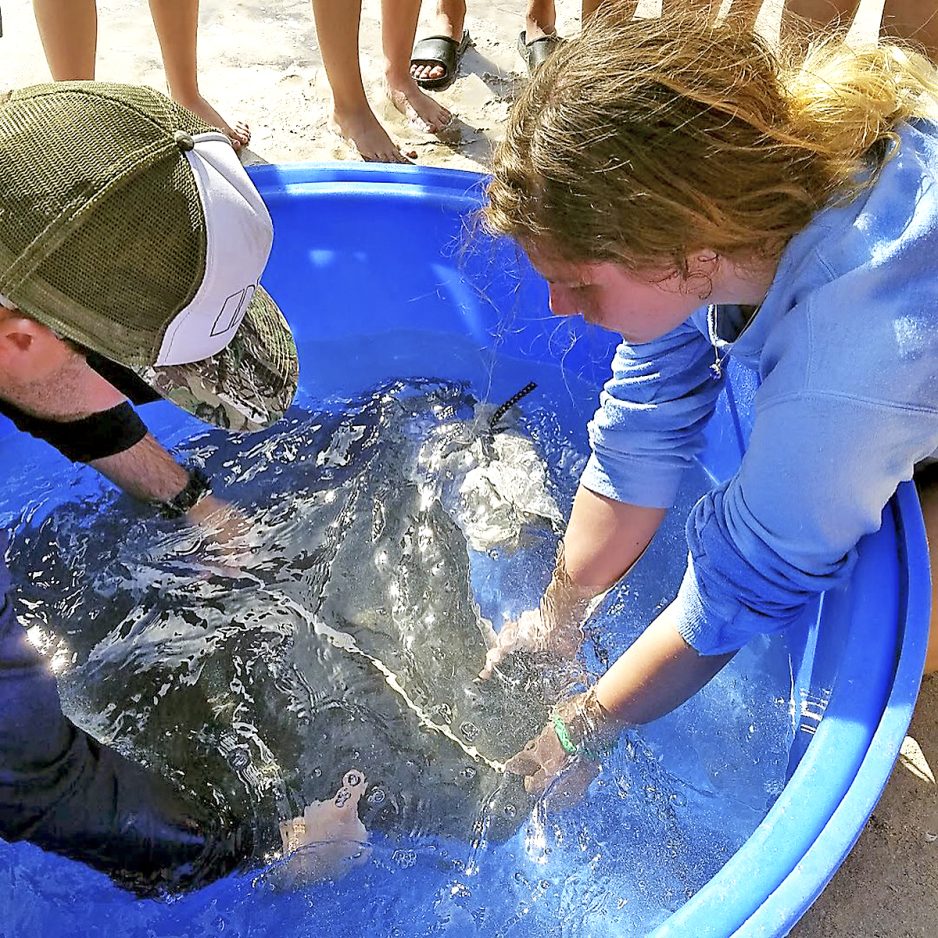
McKenzie Mungai helps measure a stingray. After taking measurements, DNA samples and inserting an acoustic receiver, or tracking device, Mungai helped release the stingray, which was pregnant.
While in high school, Mungai earned the Alex Loos Scholarship, which helped fund the educational trip. She also sold jewelry she creates from seashells and sea glass, and last summer, set up a booth at the Canonsburg farmers market as Sea Breeze Beads. She was able to put about $500 toward the trip from sales.
Mungai earned enough credits while at Trinity to be able to take just one more college course before entering Eckerd as a sophomore. Her plan is to graduate in 2020 and then attend graduate school.
For now, having her grandparents, who live just a few miles away from the college, visit weekly has helped ease the transition from her land-locked hometown in Pennsylvania to the Florida coast. She visits family – including siblings Jessie Mungai, Austin Joseph, Abigail Joseph and Bristol Joseph and parents Evan Mungai and Joanna Joseph of Washington – as much as she can, but appreciates the adventures of studying marine life.
“Marine biology is competitive, so you have to specialize. I want to focus on sea turtles,” she said. “The opportunities we have (at Eckerd) are significant. We’re right on the beach and we have relationships with aquariums. I’m happy to have the experience.”