

Walking tours of Donora’s Cement City will explain its history
Walking tour takes look at Cement City homes
Scott Beveridge/Observer-Reporter
Scott Beveridge/Observer-Reporter
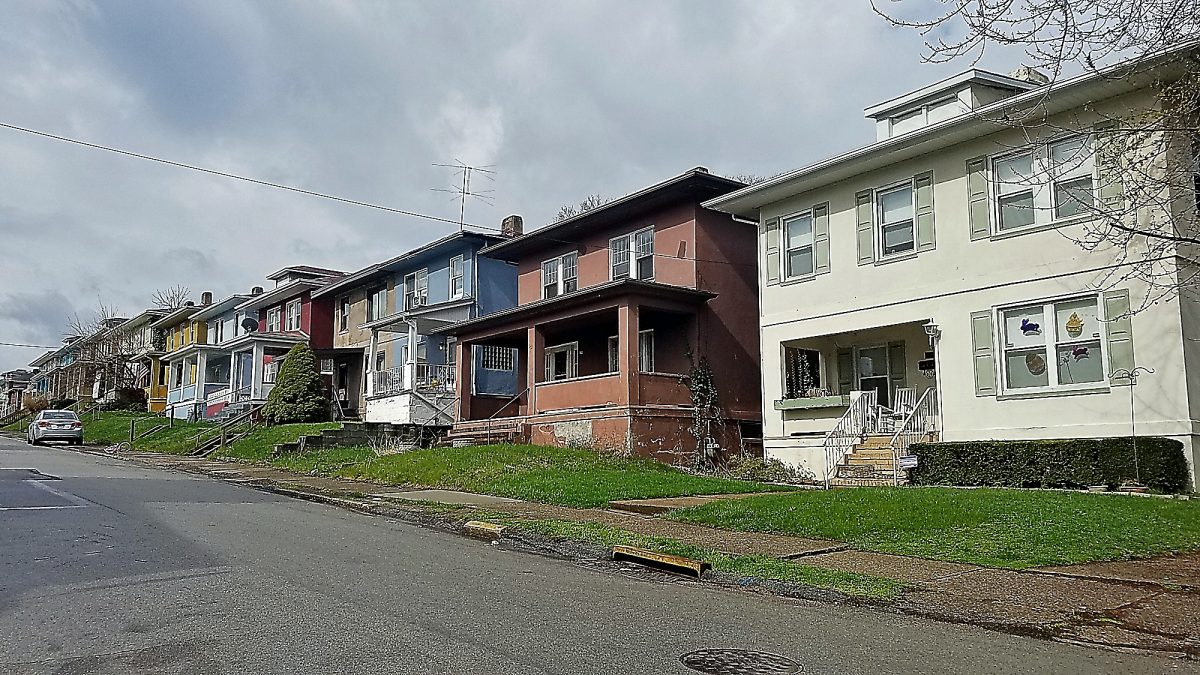
A row of Cement City houses facing Modisette Avenue in Donora
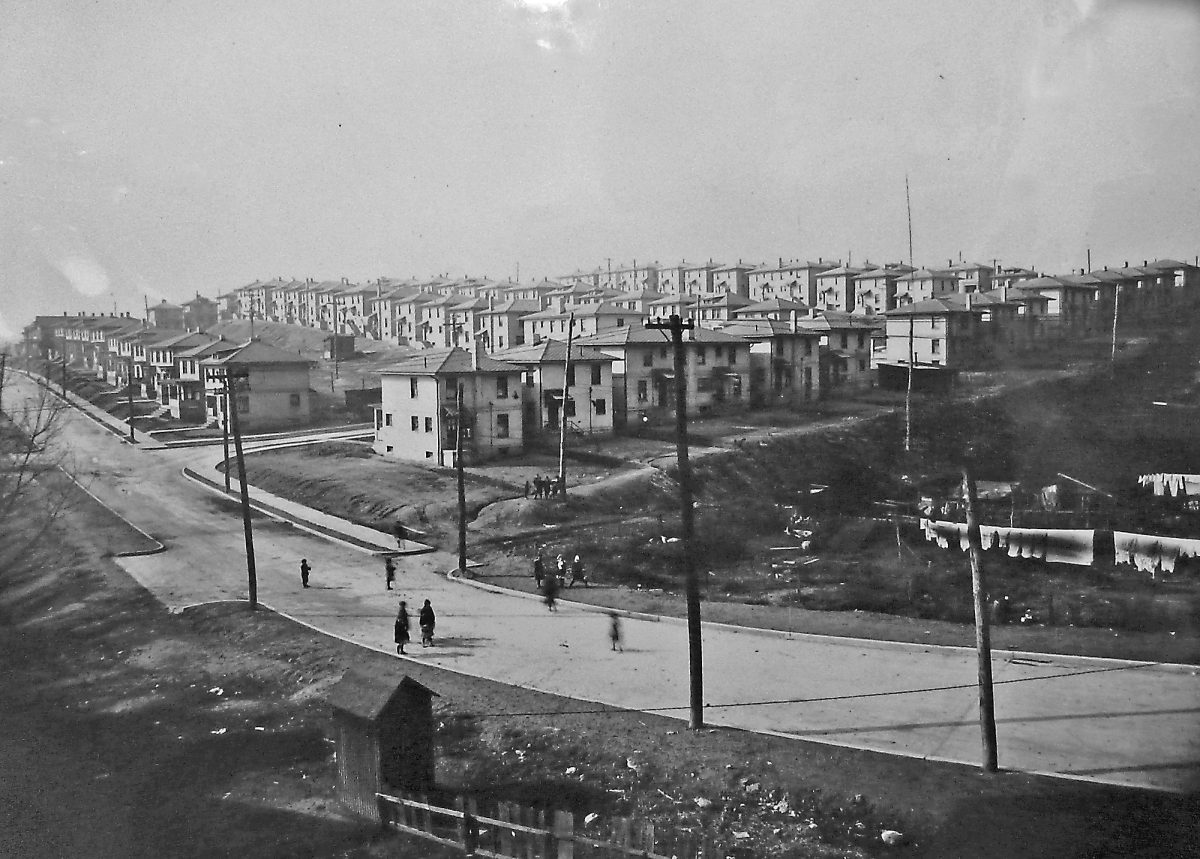
Photo courtesy of Donora Historical Society
Cement City as it appeared when construction was completed in 1917.
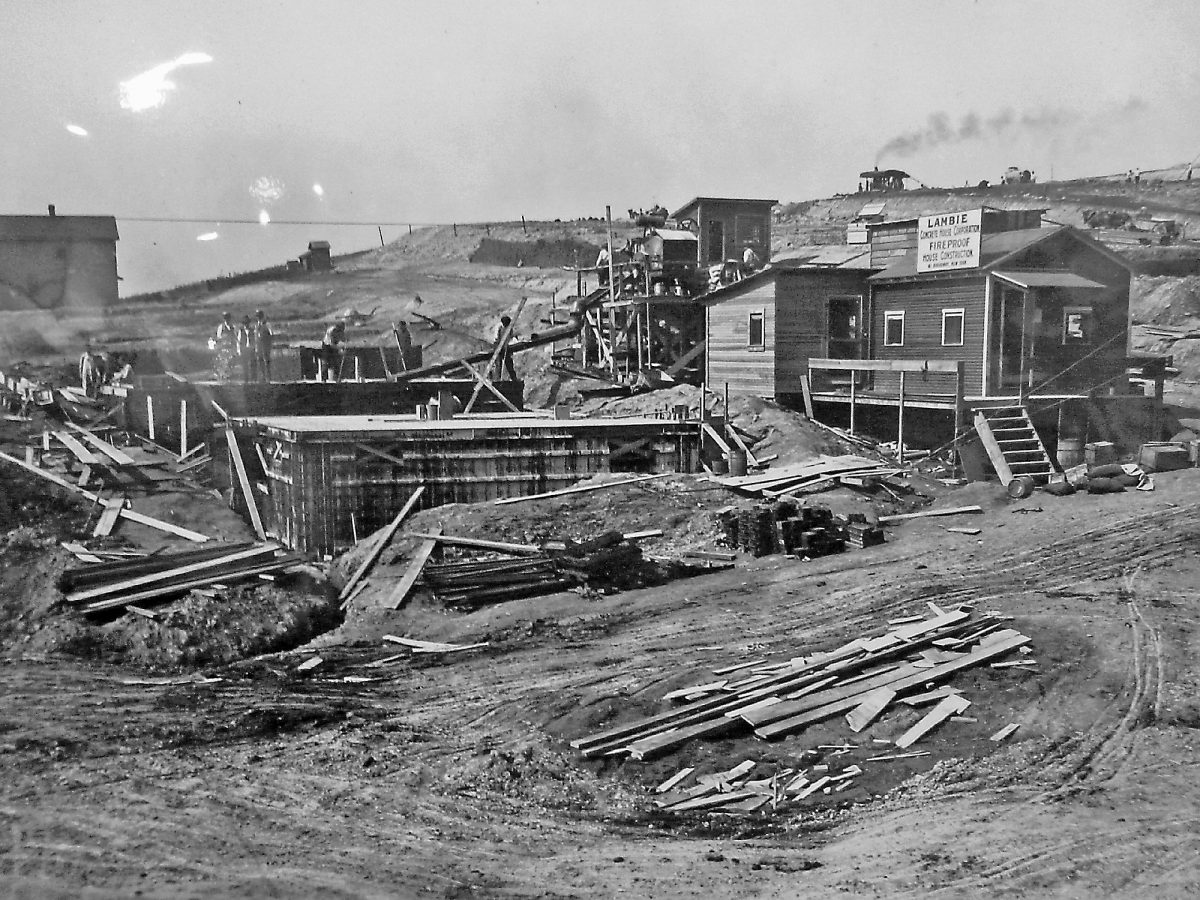
Photo courtesy of Donora Historical Society
Lambie Concrete House Corp. begins construction in 1916 on Cement City in Donora.
Donora’s Cement City may not be the first or largest Cement City in the United States. But it is one of the earliest and the second largest, trailing only a 110-house tract in Gary, Ind.
One of about 13 cement cities in the United States, each of which consists of dozens of poured-in-place cement houses, Donora’s first planned housing community has been a National Historic District since 1994.
At 1 p.m. April 13 and 14 and again at 1 p.m. on May 4 and 5, those interested in learning more about the section of town completed in 1917 for middle management workers of the American Steel and Wire Company can join the ninth annual Cement City Home and Walking Tour.
Tour takers will meet at the Donora Smog Museum, 595 McKean Ave., and go inside two of the cement homes, one of which is owned by Brian Charlton,historian, author and curator of the Donora Smog Museum. Charlton, who authored an article in the fall 2013 edition of the Western Pennsylvania History magazine published by the Heinz History Center titled “Cement City: Thomas Edison’s Experiment with Worker’s Housing In Donora.” will begin the tour with a slide presentation at the museum. Besides showing examples of where other cement cities are located, he will explained the role Thomas Edison, the most prominent person associated with the concrete housing movement at the time, played in the project .
The presentation will include blueprints, artifacts and photos taken during the construction in 1916 and 1917 by Donora’s original photographer: Bruce Dreisbach, on glass plate negatives. During the talk, visitors will get a firsthand look of how workers built continuously poured concrete houses over 100 years ago.
“Though Edison’s name is written on some of the museum’s blueprints, we have no record of him ever visiting Cement City,” said Mark Pawlewec, museum volunteer.
Following the presentation, tour takers will drive as a group to Cement City, where two docents will point out some of the buildings’ architectural features. Two additional guides will be stationed in the two houses included on the tour to answer questions. Maps of the area will be available at the Smog Museum, and, because parts of the tour are on an incline, those with physical challenges may want to wait outside one of the homes that will be visited for the rest of the tour takers to arrive.
“All 80 of the houses that were built still exist, and all but one are occupied,” Pawelec said. “The homes have been privately owned since the 1940s.”
According to Pawelec, developers built the houses in eight different styles, and the rental fee ran between $22.50 and $42 a month, an affordable cost for the mill’s middle management workers. In all, Cement City could house as many as 100 families.
Organizers are expecting to have 25 to 35 people for each presentation and tour, which should take at least 2 1/2 hours. Space is limited, and the cost of the tour is $15 a person. RSVPs are required by phoning 724-823-0364 or emailing DonoraHistoricalSociety@gmail.com. For hours when the museum is closed, leave a phone message.
“Sometimes we get former residents who come back to take the tour and share stories,” Pawelec said. “One of our visitors from Morgantown was an Edison fan who wanted to see something he created nearby. We’ve even had people take the tour from as far away as California.”
Last year, the Carnegie Science Center in Pittsburgh included models of six Cement City houses in its model railroad display as part of a partnership with the Smog Museum. An additional house is shown under construction using moving pieces and techniques of the era. The exhibit will remain up for viewing through August.
Those who’d like to know more about Cement City, Bruce Dreisbach or the museum’s Digital Storytelling videos by California University of Pennsylvania Honors English students telling the story behind Cement City, visit www.donorahistoricalsociety.org and click on the “Cement City” and “Dreisbach Photos” tabs for more detailed information. Organizers encourage tour takers to view the Cement City videos and read the comments of past walking tour guests before taking the tour..