

100 Objects: Dr. F. Whittlesey medicine bottle
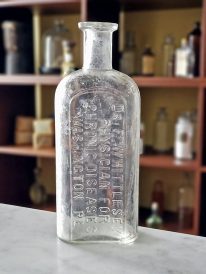
Hazel-Atlas Glass bottle
Glassmaking first crossed the Allegheny mountains in 1797 when Albert Gallatin opened the New Geneva Glass Co. on the Monongahela. The massive amounts of wood needed to fuel early glass furnaces quickly depleted forests. The expansion of railroads in the early 1800s made access to anthracite coal possible replacing wood. Skilled craftsmen blowing glass, one object at a time, were replaced by mechanized glass production. By the time of the Civil War, the Pittsburgh region reigned as the center of the nation’s glass industry, operating more than 2,000 glasshouses.
In 1880 an oil well drilled on the McGugin’s farm in South Strabane Township hit a large pocket of natural gas, making it the largest flow of natural gas in the world. With this cleaner cheaper fuel available industry in Washington County surged. After a fire destroyed the Duncan Miller plant in Pittsburgh, the plant reopened in Washington County with the offer of free natural gas. Other glass manufactures in the county included Hazel, Jefferson, Blair, Macbeth, Perfection, Novelty, Sterling, Atlas, Gilchrist, Phoenix, American Window, Highland, Macbeth-Evans and Pittsburgh Window Glass.
Duncan Miller made unique batch formula colored glass tableware inspired by modern industrial design. Jefferson Glass made cathedral glass used in churches. Macbeth-Evans was the world leader in producing oil-lamp chimneys. During WWII they made the famous green visor automobile lens to reduce light detection during wartime. Hazel-Atlas had three plants in the county producing Atlas mason jars for home canning, opal glass for medicine and cosmetic containers, and inexpensive dinnerware, sometimes referred to as “depression era glass”.
The 1920s marked the peak of the glass industry in Western Pennsylvania. Glassmaking, however, has continued to be a staple of Charleroi for 126 years. In 1936 Corning Glass acquired Macbeth-Evans because of its expertise in producing heat-resistant glass. The plant became the production site for what would become the centerpiece of Corning’s success, Pyrex heatproof ovenware. Today, under the name World Market, 50 million pieces of Pyrex are made annually in Charleroi.
The bottle pictured was made by the Hazel-Atlas Glass Co.
Linda Zelch is a volunteer for Washington County Historical Society and a member of the antiquities committee.