

100 Objects
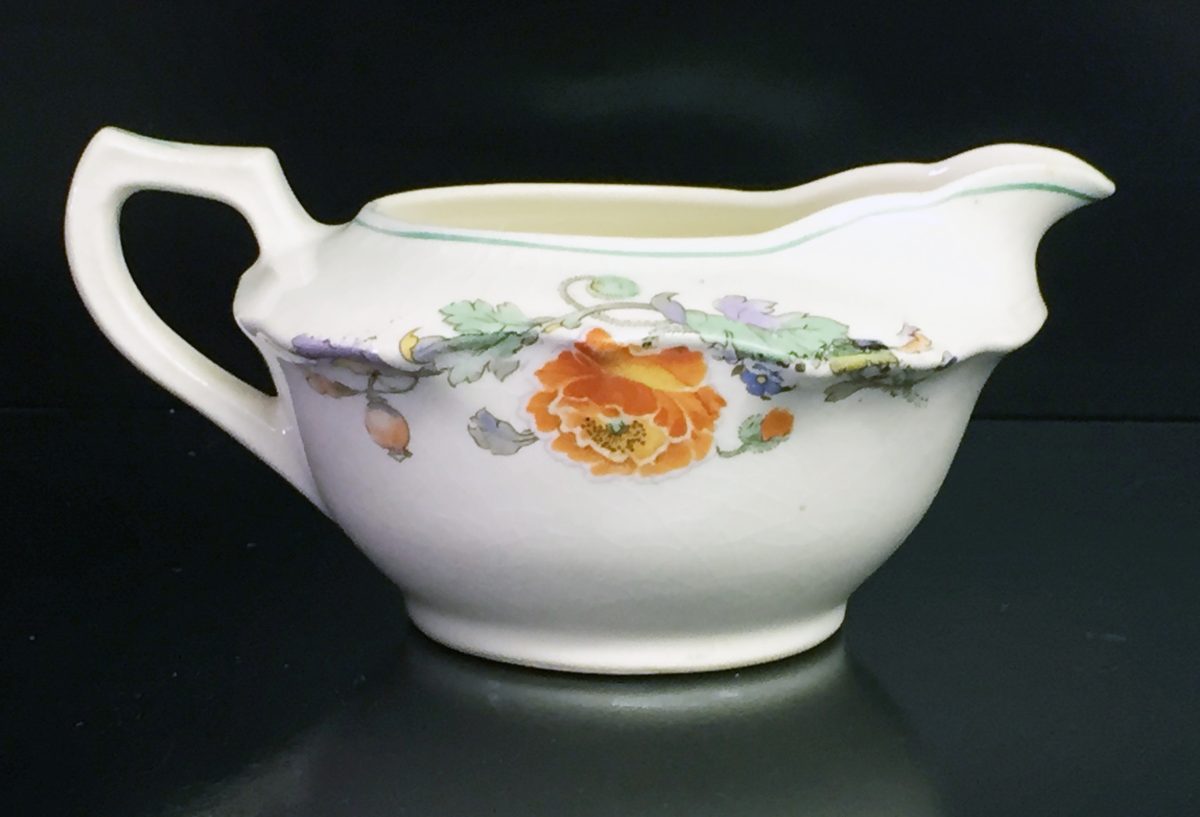
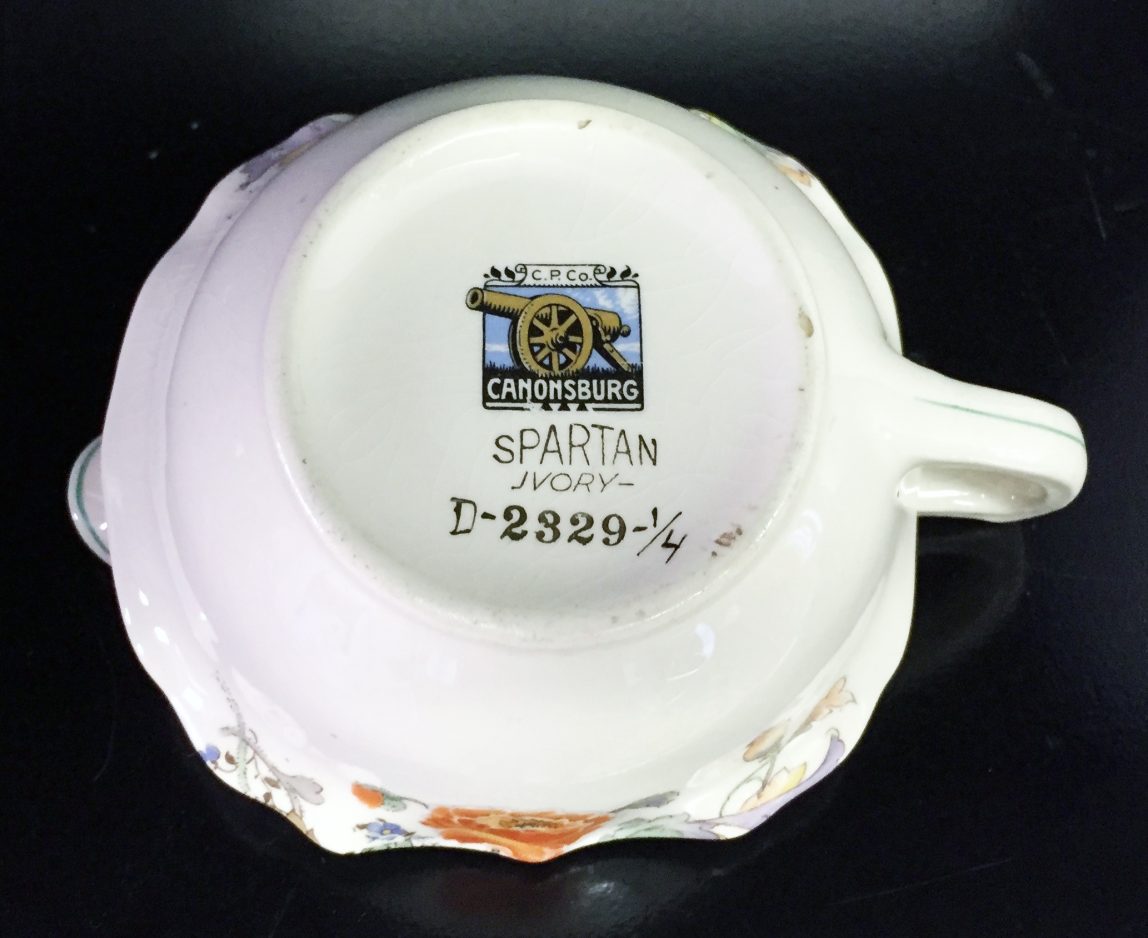
Canonsburg Pottery creamer
Stoneware potteries in Southwestern Pennsylvania thrived from the 1850s until cheaper, lighter, factory-produced glassware and china replaced the heavy, durable, domestic stoneware at the end of the 19th century.
The Canonsburg China Co. was founded in 1900 by John George. The plant was erected between Meadow Lane and Harrison Street for a total cost of $50,000. An estimated 11 million bricks were used to construct the factory, including eight kilns. The Canonsburg site was ideal because of nearby access to water, coal and rail transportation. In 1909, the name was changed to Canonsburg Pottery.
The company started production in 1901. By 1910, the plant employed 200, including young boys, had added five more kilns and was producing around a $250,000 worth of ware a year, including high-grade, semi-porcelain dinnerware, toilet ware, fancy shapes – plain and decorated – hotel ware and decorated specialties, much of it shipped to New York City for distribution.
The clay used in production came from Delaware, Kentucky, Florida, New Jersey and North Carolina as well as imported from abroad. Clay was mixed with powdered flint, spar rock and water, then strained, pressed and aged. Jigger wheels and plaster molds replaced human hands in the formation of a finished piece. After the piece was dried and bisque fired, it was dipped in glaze and fired again. The glaze-fired pieces went to the décor shop, where decorative decals were applied. A third firing completed the process. The decals replaced the hand-painted designs of the 19th century. From 1910 until the 1970s, the company produced hundreds of dinnerware patterns; from the early, delicate florals to more modern designs of the fifties, sixties and seventies.
By mid-century, child labor laws, gas-fired kilns and automated decal machines changed production, and by 1972, wage increases and improvement in automation meant that the workforce was reduced but output remained the same. The company remained in the George family until 1975, when it was sold to Angelo Falconi. When chain stores, department stores and mail order houses turned to cheaper Japanese imports, the cost of doing business became too high. In mid-January, 1977, production stopped. Among the last items produced were crockpot inserts.
The creamer was donated by Fred Bender, 2017.
Source: Jefferson College Historical Society, James T. Herron Jr.
Alice Burroughs is a volunteer for the Washington County Historical Society and a member of the antiquities committee.