

What’s in a name: Washington’s historical thoroughfares
Observer-Reporter
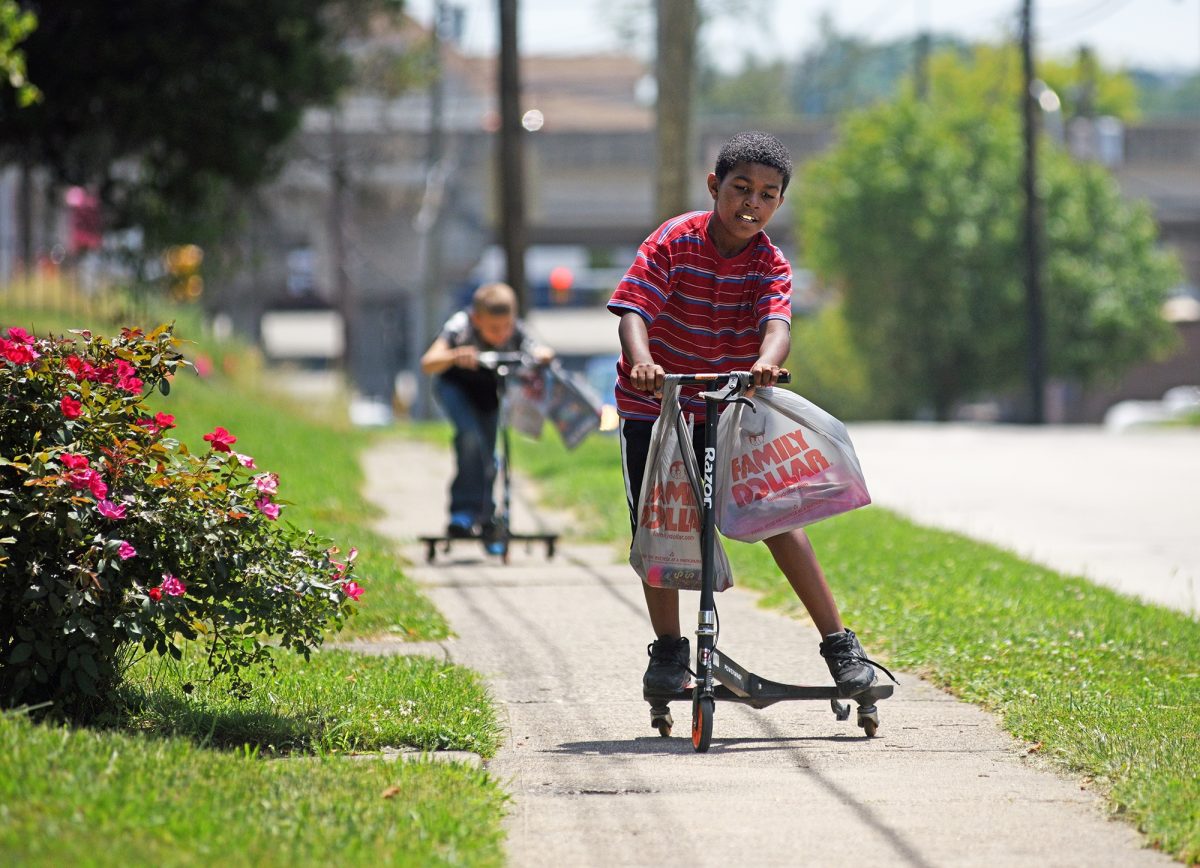
Christopher Harper, front, then, 9, and Eli Bonus then, 8, both of Washington, ride their scooters down Allison Avenue in Washington in August 2016.
Courtesy of Washington County Historical Society
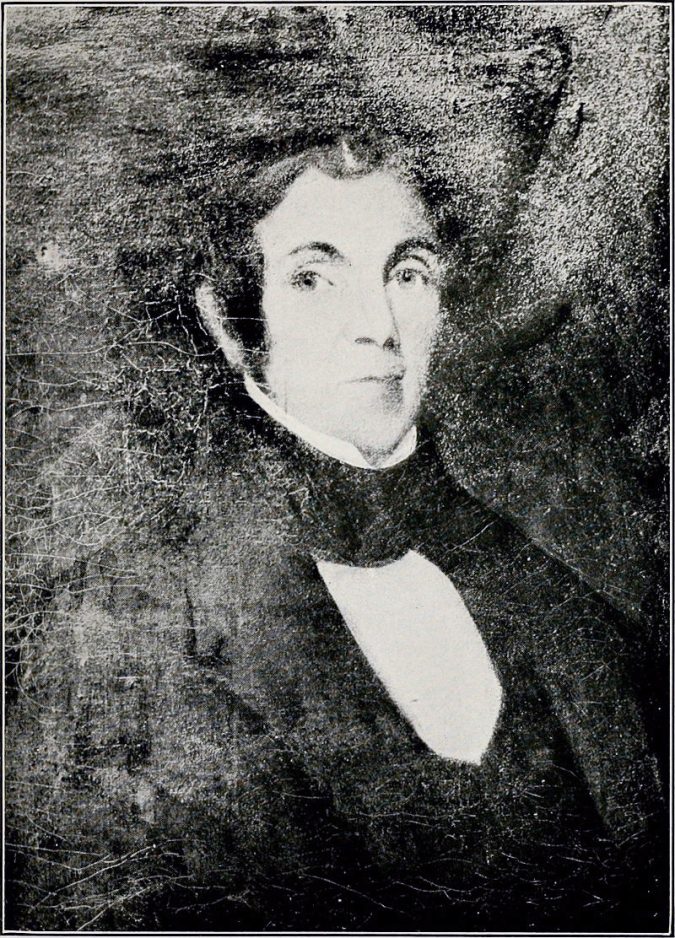
Alexander Addison
Courtesy of Washington County Historical Society
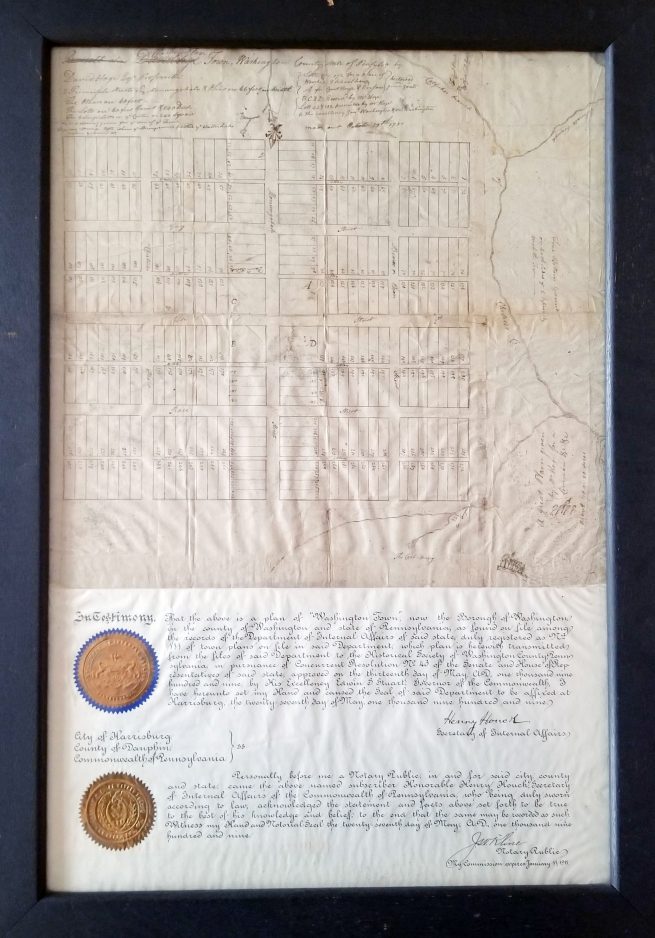
Hoge Map
Courtesy of Washington County Historical Society
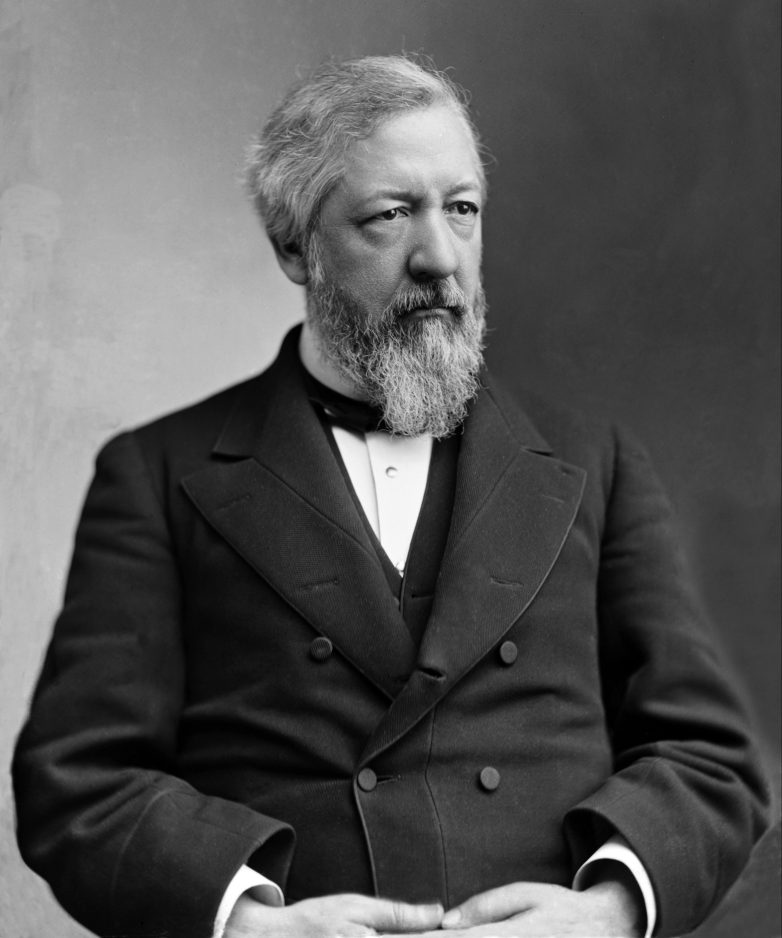
James G. Blaine
Courtesy of Washington County Historical Society
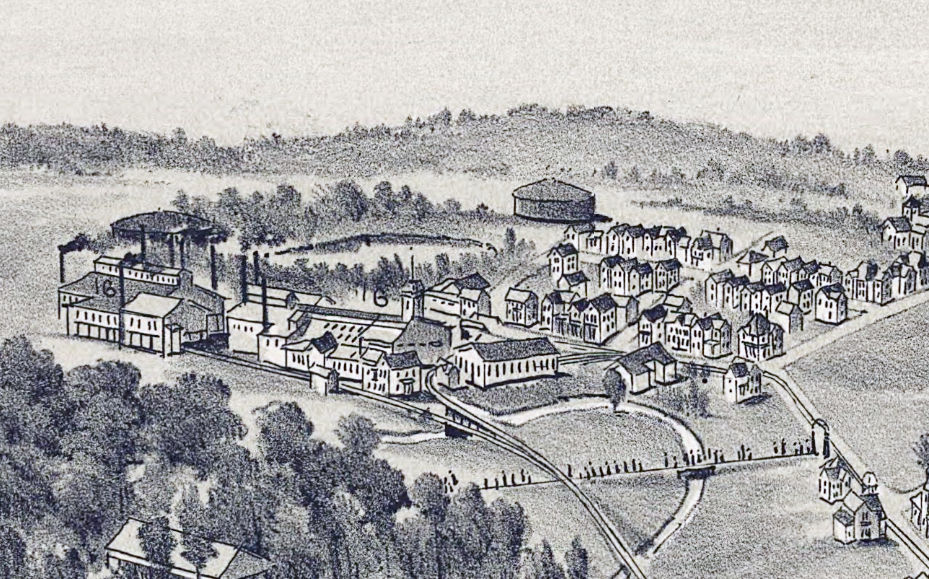
A portion of an 1897 panoramic photo of Washington shows Tyler Tube and Pipe which was one of the buildings that would become the Brownson House
Several weeks ago, this Looking Back column “What’s in a Name” examined some of the historical streets in Washington. This second installment of the column similarly looks at the origins of the names of the streets people drive every day, not knowing the important figures from our past who lent their names to those streets. Those streets are:
Hoge Avenue -
- In early 1781, David Hoge built a small log cabin near Catfish Camp. Soon, Hoge, who owned the tract of land that now makes up downtown Washington, began laying out lots on his property for a new town. The first property titled by deed was designated for a courthouse and jail. In October 1781, court was convened in the log courthouse Hoge had built, and he officially named his new village Basset Town. In 1784, the town was replotted and named in honor of George Washington.
Allison Avenue -
- Col. James Allison was born in Ireland in 1743. He came to America with his parents in the 1750s. They initially settled in Cecil Township, Md. In 1773, he came to Western Pennsylvania and became one of the earliest settlers in Chartiers Creek when he established himself on a tract of land called “Mount Pleasant” in 1774. He married the sister of David Bradford, famed leader of the Whiskey Rebellion. It was on Allison’s land in 1800 that bituminous coal was first discovered, and Chartiers Creek became a trading point for the coal. He was elected as a justice of the peace of Washington County Court of Common Pleas and served as a representative for the county in the Pennsylvania Assembly. Allison was one of the early proponents of the abolition of slavery and was a member of several abolitionist and anti-slavery societies. While serving as a member of the Pennsylvania Assembly in 1788, he voted for an amendment to the Gradual Abolition of Slavery Act of 1780. This amendment prohibited the rotation of slaves in and out of the state to circumvent the original act.
Addison Avenue -
- Alexander Addison was born in Scotland in 1758. He graduated from Aberdeen University at 19, and a few years later was accepted into Aberlowe Presbytery where he studied to become a minister. In 1785, he left Scotland for the United States and settled in Washington County. Failing to obtain a license to become a minister, he instead applied to the bar and was accepted in 1787. Being such a successful and respected lawyer, he was appointed to the position of President Judge of the Fifth Judicial Court of Pennsylvania in 1791. A supporter of George Washington and the federal government, he supported the tax on whiskey and upheld the authority of the Pennsylvania state government and the federal laws over Western Pennsylvania and put a stop to the Westylvania movement. He died of consumption in 1807 at the age of 49.
Blaine Street -
- James Gillespie Blaine was born in West Brownsville Jan. 31, 1830. At the age of 13, Blaine enrolled in Washington College where he graduated near the top of his class as a salutatorian in 1847. Shortly after graduating, he was hired at Western Military Institute in Kentucky. There he met Harriet Stanwood who taught at nearby Millersburg Female College. The two were married June 30, 1850. They then moved to Maine to be near Harriet’s family. After taking a job at a Republican newspaper, Blaine got involved with politics, being selected as a delegate to the 1856 Republican National Convention. He was elected to the Maine House of Representatives in 1858 and served as Speaker of the House in 1861 and 1862. He was later elected to the U.S. House of Representatives from Maine’s 3rd District where he served from 1863 to 1876. He was Speaker of the House from 1869 through 1875. He served as a member of the U.S. Senate from 1876 to 1881 and mounted unsuccessful bids for the presidency in 1876, 1880 and 1884. He would be named Secretary of State by James Garfield in 1881 and again by Benjamin Harrison in 1889. Due to his declining health, Blaine resigned as Secretary of State June 4, 1892. Blaine died in January 1893 in his home at Bar Harbour, Maine.
Brownson Avenue -
- James Irwin Brownson Jr. was born in Washington Jan. 25, 1856. In 1875, Brownson graduated from Washington & Jefferson College, where his father had served as interim president on two occasions. James apprenticed to become a lawyer under Alexander Wills and was admitted to the Washington County Bar in 1878. He was appointed as a judge of Washington County Court of Common Pleas Jan, 4, 1918, where he would serve until suffering a stroke in the fall of 1938. He died Jan. 1, 1939, at Hillsview Sanitarium, which was located on South Main Street near the present-day Presbyterian Care Center. He was heavily involved in the Neighborhood House Association, serving as president of the trustees for many years. The NHA was a charitable organization the lent aid to children and provided recreational, educational and character development services. Upon his death, the NHA was renamed The Brownson House.
I hope you enjoyed this additional look at some of street names in Washington. Perhaps we can explore the origins of a few more street names in the future. We could talk about Jacob Shaefer, Earle Forrest and even “Mad” Anthony Wayne, who have all lent their names to streets in the city. But for now, the next time you are traveling these streets, maybe take a minute to remember the contributions their namesakes made to this region.
Clay Kilgore is executive director of Washington County Historical Society.