

New therapy to help high school athletes avoid prescription painkiller use
Courtesy of Allegheny Health Network
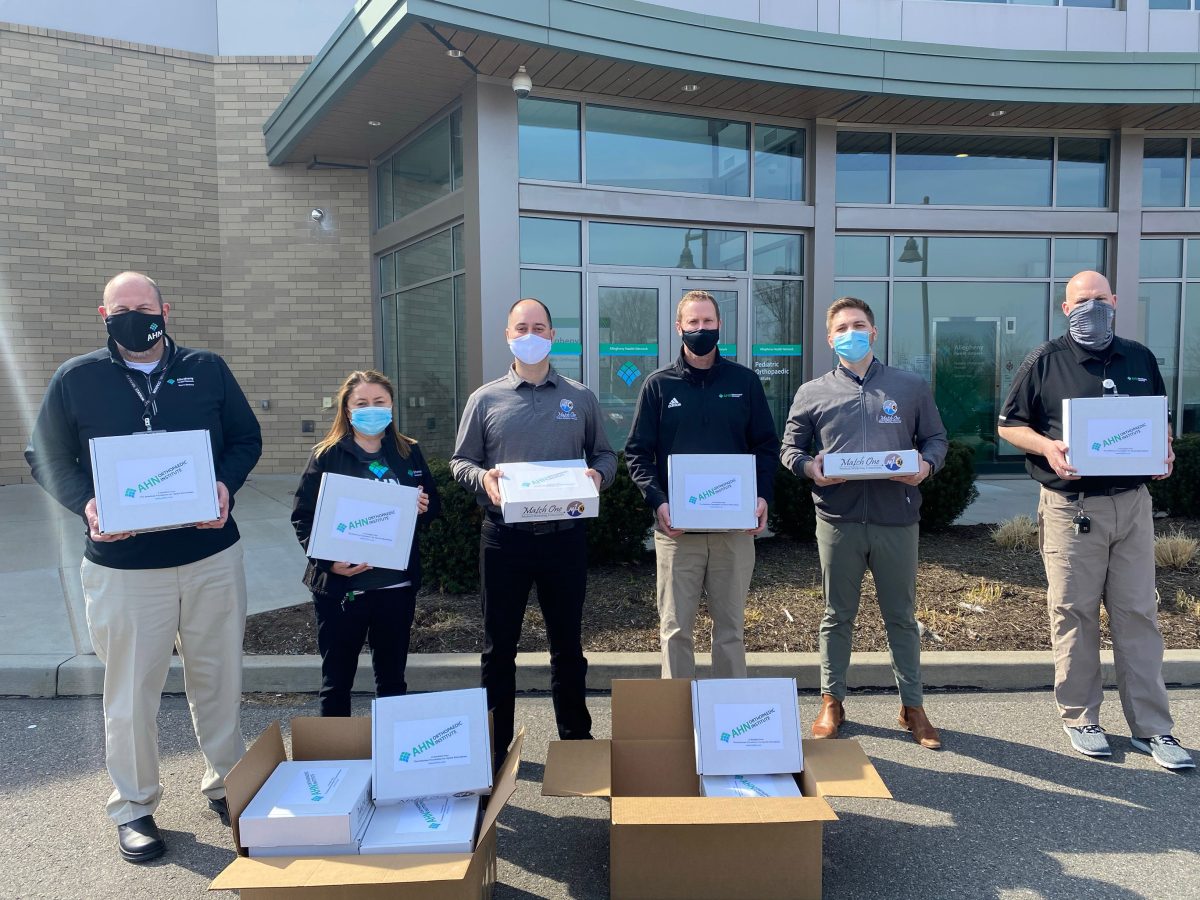
From left Craig Castor, AHN Sports Medicine supervisor; Karen Richards, AHN athletic trainer; Chaz Jannuzi, Match One Medical representative; Chris Leonard, AHN athletic trainer; Matthew Royle, Match One Medical representative; and Eric Cardwell, AHN athletic trainer pose for a picture at AHN’s Pediatric Orthopaedic offices in Wexford. Match One came to the office in March to deliver the donated devices.
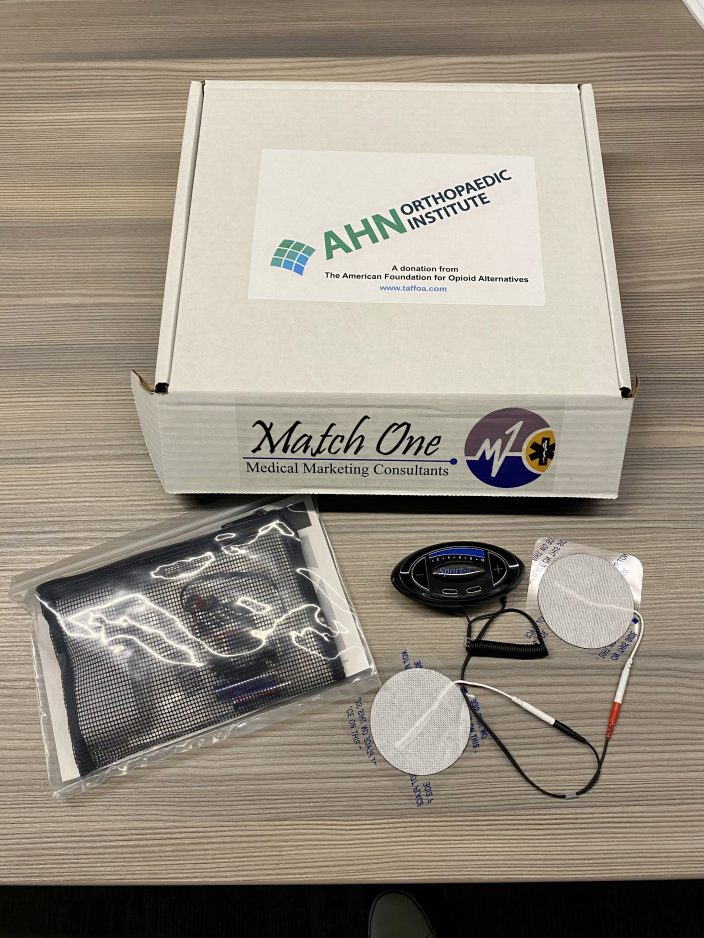
The Match One Device
Courtesy of Allegheny Health Network
What if young athletes could use a new device to treat their painful sports injuries and promote healing rather than just taking a pill to dull the pain?
That’s the idea behind a new device called SportZ electrostimulation and it’s being tried out by high school athletes across Southwestern Pennsylvania. Match One medical and the American Foundation for Opioid Alternatives recently donated 40 SportZ devices to Allegheny Health Network’s Sports Medicine program. Its athletic trainers are using the devices to treat young athletes in their work with teams from more than two-dozen schools.
SportZ is manufactured by a company called Prizm and are a small, wearable, neuromuscular electrical stimulation device designed to help relieve pain, reduce edema and swelling and help increase blood circulation. Its designers said the device will promote faster healing from musculoskeletal injuries including those requiring surgical repairs. The device can be used to treat acute or chronic injuries, target sources of pain and improve range of motion to accelerate the body’s natural healing process.
Part of the motivation in designing the device is to cut down on the need for prescription opioid painkillers.
A recent study published in American Journal of Public Health shows young athletes like football players and wrestlers have a nearly 50% higher risk of opioid use to manage pain than people who aren’t athletes of the same age. Abuse of prescription opioids among adolescents nationwide has increased over the past 15 years with hydrocodone and oxycodone topping the list and the percentage of adolescents who were prescribed controlled medications by medical centers almost doubled between 1994 and 2007.
Since 1994, interscholastic sports participation among adolescents has also increased with about a quarter of all high school students playing sports. Roughly two million high school athletes sustain injuries each year with nearly a quarter of all emergency room visits stemming from youth sports injuries.
Sports medicine experts applaud the new approach as an alternative to prescription medications.
“SportZ uses electrical current to decrease swelling and improve circulation to promote healing,” said Dr. Todd Franco, a Sports Medicine specialist at AHN who works with sports teams at Bethel Park, Upper Saint Clair and many other schools. “Opioid sparing modalities are beneficial as medications only cover up the pain as opposed to the healing potential of the SportZ. The device treats the injury locally to decrease pain and improve healing as opposed to simply covering up pain.”
In addition to helping injured student athletes, the devices will be used with recovering drug addicts and retired military personnel, police officers and firefighters injured in the line of duty.
The foundation also provides research funding for new and existing opioid-sparing technologies.
“Statistics show that nearly 6% of people that are introduced to prescription opioids will become dependent in the first week,” said Chaz Jannuzi, director of sales and owner of Match One Medical Marketing Consultants and founder of the American Foundation for Opioid Alternatives. “It’s important that we can share these resources and devices with like-minded partners such as Allegheny Health Network as we continue our work to help advance alternative therapies for pain management and reduce substance misuse of opioid prescriptions.”
While this device may sound similar to the Transcutaneous Electrical Nerve Stimulation (TENS) units some people may use at home or be treated with during physical therapy, Franco said the difference is in the type of current they use.
TENS therapy involves the use of low-voltage electric currents to treat pain.
“Micro-Z uses microamps whereas traditional TENs uses milliamps,” Franco said. “The belief is that the microamps aid in true healing.”
Franco said this approach promotes healing rather than just focusing on dulling pain. He said he has noticed patients now have an increased awareness of the opiate dependency problem.
“That has led to a significant decrease in physicians’ prescribing patterns for young athletes,” he said. “The injury patterns are dependent on the sport. We are seeing a significant increase in overuse injuries given the tendency for sports specialization at younger ages.”