

New study: Acetaminophen can raise blood pressure
Courtesy of Allegheny Health Network
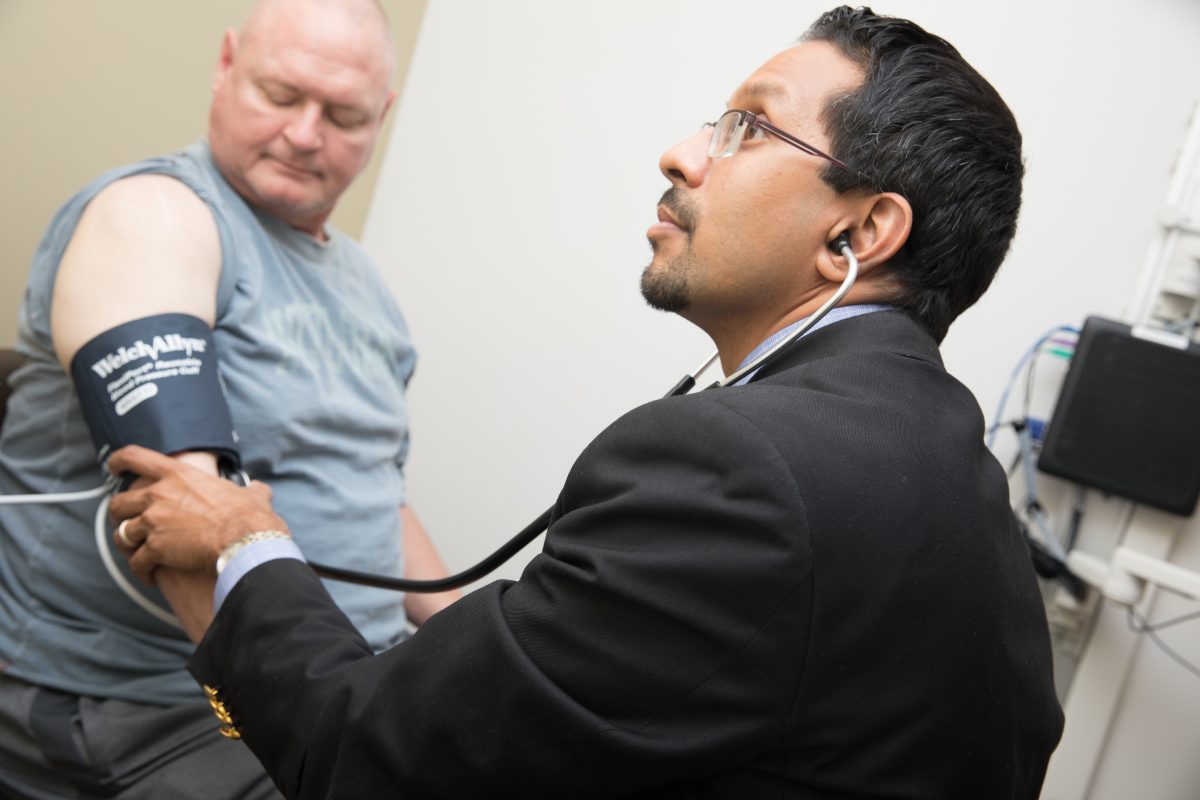
Dr. Raghu Tadikamalla, Allegheny Health Network cardiologist and certified hypertension specialist, takes a patient’s blood pressure.

Courtesy of Allegheny Health Network
Dr. Raghu Tadikamalla, Allegheny Health Network cardiologist and certified hypertension specialist, said, “Almost half of people have high blood pressure and, in general, we just don’t talk about it.”
If you usually reach for Tylenol – the brand name for acetaminophen – to ease headaches and aches and pains, a surprising new study has some bad news for you: Acetaminophen can raise blood pressure when it’s taken regularly.
According to the study, published in the academic heart journal Circulation, just two weeks of regular use of the drug caused blood pressure to spike in people who already had elevated readings. This is the first study to show a direct link between acetaminophen and blood pressure and is notable because of prevailing thinking that it is safer than nonsteroidal anti-inflammatory drugs (NSAIDs) such as Advil or ibuprofen for those with hypertension.
The study included 110 patients taking either acetaminophen four times daily or a placebo for two weeks. Results showed regular acetaminophen use resulted in a significant increase in mean daytime systolic and diastolic blood pressure. The study’s authors concluded taking the drug daily for two weeks increases cardiovascular risk and calls into question the safety of such regular acetaminophen use.
“The findings of this study were a surprise to many people, but they are not completely out of the blue,” says Dr. Raghu Tadikamalla, Allegheny Health Network (AHN) cardiologist and certified hypertension specialist. “We have always had some data that suggested this, but the data was of poor quality and sometimes conflicting. I think this study is a reminder that we have to pursue comprehensive treatment strategies for hypertension, pain control, and other diseases. While most are beneficial and generally safe, we can’t expect to solve all our problems with medication alone.”
While NSAIDs have previously been known to affect blood pressure, the new study on acetaminophen having the same effect may raise some eyebrows. The question now is what should patients with high blood pressure (HBP or hypertension) take for pain relief?
“NSAIDs, such as ibuprofen and naproxen (commonly sold as Advil, Motrin, or Aleve) are well known to raise blood pressure, as well as have multiple other adverse effects, including fluid retention, kidney damage, and bleeding complications,” says Tadikamalla. “In general, acetaminophen would still be considered safer than NSAIDS for most patients, but this data suggests that we should pay more attention to non-drug treatment options, including exercise, stretching, cognitive therapy, and a number of other tools, often with the help of a pain management specialist.”
Tadikamalla explained how the pain relievers raise blood pressure.
“NSAIDs likely increase blood pressure by causing the kidneys to retain more sodium, thereby increasing the amount of fluid in the blood vessels,” Tadikamalla said. “We don’t precisely understand how Tylenol works, but one of the mechanisms appears to be similar to that of NSAIDs, which may be why it also affects blood pressure.”
The news comes at a time when hypertension numbers are skyrocketing across the United States.
“The prevalence of hypertension has been increasing over time, likely due to lifestyle factors including poorer nutrition and less physical activity,” says Tadikamalla. “Additionally, the most recent guidelines decreased the threshold for the diagnosis of hypertension from 140/90 to 130/80. Based on that definition, almost half of Americans have high blood pressure.”
He went on to say there are a number of gaps in achieving blood pressure control in the United States, with the most important issue being that many people don’t know they have the condition. “A large component of this is lack of access to health care,” Tadikamalla says. “We have seen many patients come into the hospital with severe heart failure or kidney failure when the patient was not even aware they had high blood pressure.”
That’s why hypertension has been labeled the “silent killer” because it tends not to have symptoms, especially early on in its development. “Almost half of people have high blood pressure and, in general, we just don’t talk about it,” he adds. “We don’t have conversations with friends or family about having the diagnosis, monitoring blood pressures, taking medications or watching salt intake. Restaurants often have low-fat or low-calorie options, but rarely have low-salt menu items.”
For more information and a primer on hypertension, visit Tadikamalla’s website at https://pagingdoctort.com/blood-pressure-basics/.