

Construction of fish reefs completed on Monongahela River

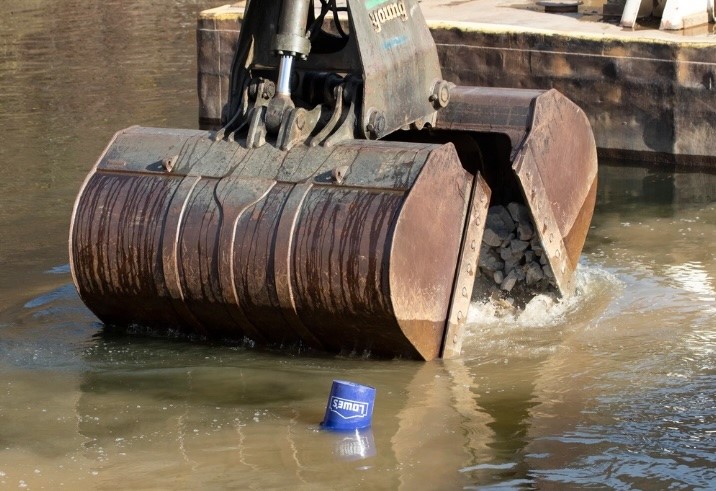
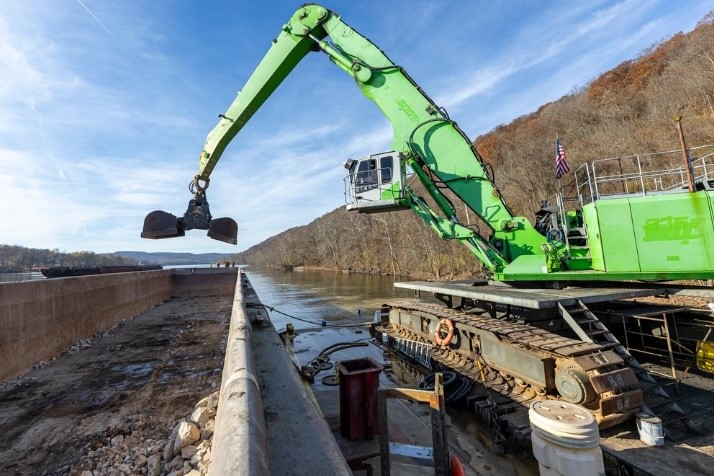
Aquatic life in the area of the Lower Monongahela River has a new home with the recent completion of 73 stone fish reefs, built in conjunction with a sweeping locks and dam reconstruction project.
The fish reef construction is part of the Lower Monongahela River project, which was launched in 1994 with the goal to modernize locks 2, 3 and 4 in Braddock, Elizabeth and Charleroi, respectively, the three oldest operating navigation facilities on the waterway.
The project includes construction of the larger rock chamber at Charleroi Locks and Dam and the removal of Lock and Dam 3 in Elizabeth, which runs between Braddock and Charleroi. The reefs are located between miles 21.3 and 33.5 on the river from Victory Hills to Clairton.
“This is in reaction to the removal of the Elizabeth Lock and Dam, the oldest that we have in our project inventory,” explained Claire Murphy, civil engineer with the U.S. Army Corps of Engineers Pittsburgh District. “Once Charleroi is completed, we will have a gated dam at Charleroi and a gated dam at Braddock. That will render use of Elizabeth kind of irrelevant for flood control the way it was historically. In order to improve navigation between those two locks on the Monongahela River, we’ll remove that and just have an open pool of about 30 miles from Charleroi to Braddock.”
Construction of the reefs began in October, four months after the U.S. Army Corps of Engineers Pittsburgh District awarded a contract for more than $2.4 million to Gregori Construction Inc. of Sarver to build them.
Murphy explained that the reefs are made of R-5 riprap, a large stone commonly used to armor shorelines, streambeds, bridge abutments, foundational infrastructure supports and other shoreline structures against erosion.
“There’s about a five-foot wide crest at the top of the reef,” Murphy said. “It tapers down to meet up with the river bed below that changes elevation in the different locations where they’re placed.”
Each of the reefs extends about 50 feet perpendicular to the shore line and rests between 1.3 and 3 feet under the water.
The fish reefs offset disruption to the river and aquatic life that will result from the removal of Lock and Dam 3, which is scheduled for the summer.
“When Elizabeth Lock and Dam is removed, there’s going to be a lot of tailwater habitat or shallow water habitat that the fish use,” said Kristina Schultz, biologist for the U.S. Army Corps of Engineers Pittsburgh District. “So the purpose of the reefs environmentally is for fish to be able to use them. It will diversify the habitat in that 30-mile stretch of the Lower Monongahela River. It will give fish a place to rest and feed and spawn. It’s good for the fish because with that dam being removed they have 30 miles that’s unobstructed for fish passage.”
Schultz added that having that much unobstructed water in the river results in a more diversified fish population.
“They’re not limited to where they can reproduce,” Schultz said. “It’s good for anglers too. It will create more spaces where there will be recreation near the reefs to do some fishing.”
In addition, the unobstructed water benefits the navigation industry by cutting the transportation time required to pass through the region.
With the reefs constructed, the project that has been progressing for 30 years moves closer to completion. A three-year contract is in place for the implementation of complete removal and stability measures, once Lock and Dam 3 is demolished.
That work would include clearing out the debris to open the new navigable channels in the river and adjusting the sailing line for the passage of industry vessels, because once the area is open there will be free lockage from Charleroi to Braddock in the river.
“Once Charleroi is up and fully operational, then we can move forward with the removal of that dam,” Murphy said. “Once the removal and stability measures are implemented, then we’ll be wrapping up the entirety of the project.”