

Chris Sidick
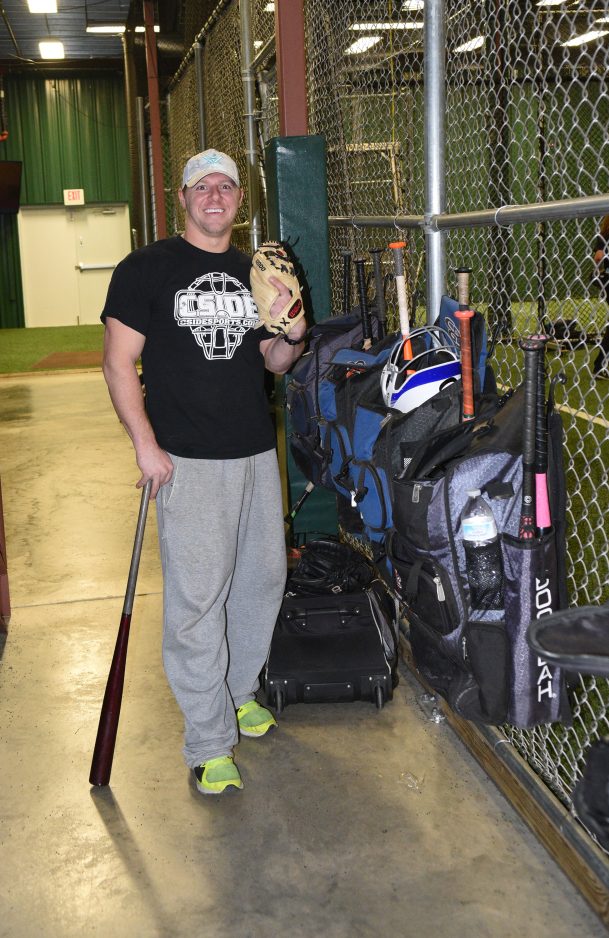
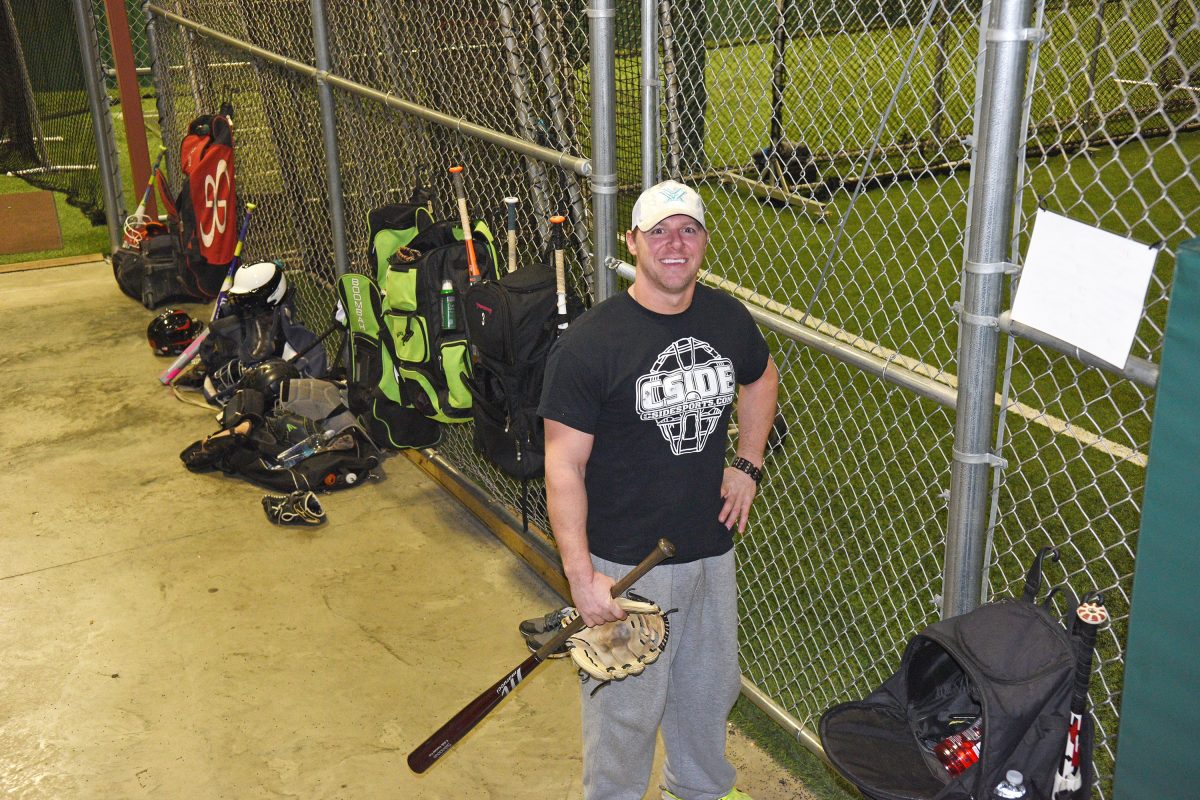
A Washington Wild Thing for seven seasons, Chris Sidick can measure his success in statistics. Games played, at-bats, hits, runs, triples, stolen bases – the 34-year-old holds almost all of the team’s career offensive records.
But he’s also a record holder in strikeouts.
“Anytime people would write stuff about me, they’d say, ‘Oh, he’s the best hitter there ever was in the Frontier League.’ No one talks about all the strikeouts,” Sidick says.
The baseball-player-turned-business owner appreciates his success on the field. But he gives the failures credit, too.
“There’s no crying after strikeouts. Don’t pout. Make an adjustment,” he says.
Sidick, a 2001 graduate of Canon-McMillan High School, owns and operates C-Side Sports Academy, a 27,000-square-foot operation off Route 19 and Mansfield Road in North Strabane Township where baseball and softball players receive professional training.
Sidick started the business in his parents’ garage. It has grown to 10 baseball and softball trainers, field rentals and a HitTrax baseball simulator.
Here’s a conversation with Chris Sidick, who teaches his students that striking out isn’t the worst thing.
Q. Tell me about your early baseball days.
A. I went through five baseball coaches in four years at Canon-Mac, so there was no help with college assistance. That’s one thing we really focus on here, helping the kids get into college, move on from there and get drafted. We’ve had some kids get drafted into the pros too, now. That’s one thing I remember when I was coming out of high school. I literally did not get a single letter for baseball from any college. I got two for football. One from Marietta (College, Ohio) and one for Albany, New York. I visited both, and I chose Marietta football.
The Marietta baseball team was very good at the time. I didn’t know anything about it because they didn’t recruit me. So I went down to the coach’s baseball office and asked if I could try out. He said, ‘No.’
And I said, ‘Give me one day.’ I went and tried out. It was in the middle of three days for football, so my legs were like Jell-O. But I went down there, ended up going three-for-four, in their scrimmage fall ball game. I ran a fast 60 (yard dash) and he said, “I’ll see you in January.”
That’s how I started my baseball career. I didn’t get recruited. I just did a one-day tryout. Then I became an All-American in baseball and football. I went to play arena football after college. In my senior year, we were here to play W&J for the playoffs in baseball. And the Wild Things came over to watch the game, and I just had a blow-out game. I hit two home runs and a couple of doubles. The Wild Things offered me a contract there. I said, ‘Yeah, but I’m going to leave for football in four weeks.’ So I said, ‘I’ll come here for three.’ But they treated me so good, I just never left.
Q. How did you transition from playing to training?
A. Minor leagues don’t pay much. I made $600 a month my first year. Obviously, you’re looking to get some money. I had a college degree, but no one would hire me because I was still playing baseball. They knew for four or five months, I was gone. I ended up giving some lessons. I started with three kids from Fort Cherry and grew it into what we have today. I started in my parents’ garage, no bigger than this office. I put a $300 batting cage net on the credit card, which was a lot of money to me. At first, I didn’t even know what a lesson was, because I didn’t take lessons. But three (clients) grew to six, and those six grew to 12. That just snowballed it. Everything grew from there.
Q. How did being from the area help the business?
A. It was very helpful, being the local player. I went to Canon-Mac, so they really marketed that for the Wild Things. I had that fan support. It was nice because they would make baseball cards and bobbleheads for me, and on that stuff, I would put ‘C-Side.’ The Wild Things really helped with that. It was just a great working relationship – I enjoyed playing there. It was nice being the local guy.
Q. During your professional career, did you ever want to get out of this area and go elsewhere?
A. I did one year. I believe it was my second year, 2006. Baseball America ranked me a top 10 independent prospect. I was one of the top 10 players throughout the country playing independent ball. I should have been signed to an affiliated team. After I didn’t get signed with that … I went to a showcase, I think for the Mariners, in Chicago, at the end of that season. There were like 140 kids there. At the end of it, they kept 30. A lot of them were pitchers, but there were a few position players, including me. Twenty-nine people signed that day, except me. I was the only person who didn’t sign, and I had a phenomenal day. After that, I decided to stick with what I’m doing. That’s when I started focusing on the business side, because I knew I needed something to do in the off-season. That’s when I focused on being pure Wild Things and running C-Side during the off-season.
Q. Tell me about C-Side.
A. We do baseball and softball training. We do field rentals for a lot of teams, organizations and colleges. A lot of travel teams use it. We also do a ton of birthday parties to offset downtime. We do baseball, dodgeball, kickball.
We have a HitTrax system. It’s great for training because you can talk about launch angles and ball exit speeds, and you can video your swing. Neil Walker used it here. Jim Leland used it here. It’s a great tool for training, because it gives a visual. It also gives you progress reports. It’s not just a random lesson. You’re actually tracking the swing and tracking the progress. It does player rankings for your age group at C-Side and across the world. But also it does games where you literally play a nine-inning baseball or softball game. And it does remote games. Like this weekend, I have a 13-year-old team coming in to play Ontario. It’s very cool stuff. We coordinate the time zones, set a roster and play a game. The kids love it. They’re playing a team in Anchorage, Alaska, that they would never get the chance to play.
Q. What do you tell the kids who want to play professionally?
A. The biggest thing is, it doesn’t take talent to hustle. I played with a lot of guys with the Wild Things who came in and out. Some of the best players I’ve played with weren’t the most talented. But they just kept grinding. Baseball, that’s what it is. It’s a grind. It’s a slow, nine-inning game. It’s a game of failure, too. You’re going to fail a lot more than you’re going to succeed. If you’re good and work hard, especially with social media now, you will be found. You don’t have to worry you’re going to get looked over. A decade ago, I got looked over. I came out of high school, I didn’t have a single letter. So I got looked over. And that just doesn’t happen anymore. There’s so much exposure, so many showcases. That’s what I tell those guys looking to move on to the next level.
Q. Tell me a good baseball story.
A. My Marietta College coach, (Don) Schaly, he was one of the guys when I went in as a freshman who told me ‘No,’ then gave me the spot. He coached me the first two years, then he got cancer. The third year, my junior year, he let the assistant coach take over, even though he was still a big part of the program. My senior year, we were down in Florida for our spring trip. He was real bad, but he still came down to Florida in that heat. It was the second or third inning. I was in center field. And I came jogging in to hit. Coach (Brian) Brewer grabbed me and said, ‘Coach Schaly wants to say something to you.’ I went over to him. He said two things to me. The first thing he said was, ‘Damn it, Chris, don’t throw the ball from center field to first base. It’s bad baseball.’ He got real upset because I always used to try to back-pick the guy at first. So I said, ‘OK, coach, I won’t ever do that again.’ He’s in a wheelchair, barely talking. Then he whispered in my ear, ‘I just want to let you know, you’re going to do great things in baseball.’ At that time, I was a senior. I didn’t know I was going to play pro ball. I didn’t know about C-Side.
I went and hit because I was lead-off hitter. I ended up hitting a double. Standing on second base, I looked around. I looked in the dugout to say ‘I got it’ to Coach Schaly, and he was gone. We finished the game and got on the bus. Coach Brewer was crying. Coach Schaly had died. Later, we found out he left the dugout and refused to go to the hospital. So they put him in a van in the air conditioning in center field and he watched the rest of the game. Once the game was over, he went to the hospital. He died 30 minutes later.
The last thing he said to me, I have a banner with that quote. I was his pall bearer that week. That was something. It’s just crazy how he said that. I was the last player he talked to. And the fact that he stayed and watched the entire game. That’s what he wanted to finish with.