

The Master Gardener: Margaret Sams
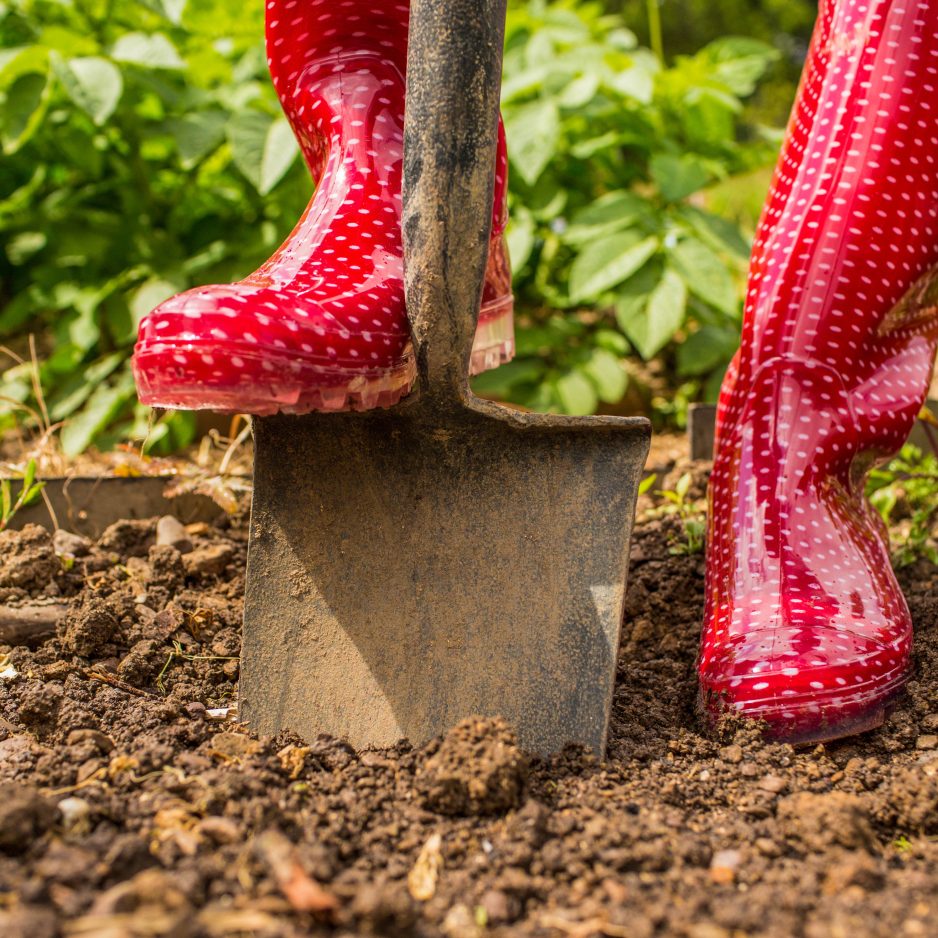
Want to have a more productive backyard garden? A soil test to determine the lime and fertilizer requirements for what you’d like to grow in your soil is a great start. But adequate chemical conditions can’t create an ideal growing environment if other soil conditions are lacking.
If your land has decent drainage and your garden receives adequate sunlight, but your backyard garden still isn’t as productive as you think it should be, take a good look at your soil, and really get your hands and fingers into it. The best soil for most plant growth is dark, crumbly and spongy, with plenty of worms and other critters you can’t easily see. Signs of a less-than-healthy soil for plant growth are a light brown or gray color, a heavy feel due to a lack of airy soil pores, and soil that stays in large compacted clumps without breaking up into smaller aggregates.
Master Gardener volunteers support Penn State Extension’s educational programs in consumer horticulture. They develop their horticultural expertise through participation in educational training classes conducted by Penn State University faculty and Extension staff.
A Penn State Master Gardener not only learns research-based and sustainable horticultural practices, but also develops life-long friendships with others who have similar gardening interests.
After completing their training, Master Gardeners help Extension better serve the home gardening public by answering questions, speaking to groups, writing gardening articles, working with youth, gardening in the demonstration gardens, participating in the Penn State pollinator research program, and in many other ways.
If you are interested in the group or have gardening and horticulture questions that you would like us to answer, then join us in April at Washington County Ag Days at the Fairgrounds!
Along with providing you with information about our group and answering your gardening and horticulture questions, the Washington County Master Gardeners will have the following presentation themes and items for sale:
- Let’s Get Planting! Milk jug plants, bulbs, onions, leeks, and garden items for sale
- Victorian Charm Shop – Handmade soaps, violas in tea cups for sale
- Gardening Books Sale
- Children’s Corner of Fun Things Just for Kids
- Bees & Butterflies – items for sale to attract pollinators plus honey, seeds, butterfly feeders for sale
- Gift Basket Raffle – Wine Basket, Gardening Basket and Children/Nature Basket
Washington County Ag Days has a new home this year! The Washington County Ag Days Committee and the Washington County Agricultural Fair have teamed up to host Washington County Ag Days at the Fairgrounds on April 20 (5-9p.m.) and April 21 (noon-9 p.m.) in Hall#1 and the Food Court at the fairgrounds (2151 N. Main St., Washington). Having the event at the fairgrounds brings together two entities that have always been connected by a common interest … sharing agriculture with the community Ag Days at the Fairgrounds allows for a more interactive experience for visitors. This is the 29th year of sharing agriculture with the community.
The free event will be filled with demonstrations and hands on activities for all ages. Enjoy some great food, raffles, crafts, entertainment, live animals, demonstrations and exhibits on agricultural products and methods.
Discover what makes Washington County one of the top agricultural counties in Pennsylvania! Visit our Facebook page, “Washington County Ag Days,” for details and more information.
What primarily can change the latter into the former? A long-term program of adding organic matter along with smart soil management practices can bring most soil types back to prime gardening shape. It requires time and patience, but after conditions improve, maintenance is not difficult. Just let the worms and microbes do their job!
Most of us understand that increasing the amount of organic matter in a soil will greatly improve its fertility. This is indeed true, but it also improves soil structure. Soil structure is the way that soil naturally cracks and breaks open when a small amount of pressure is applied with the fingers, like slowly breaking pieces off a candy bar. Good structure increases the amount of air in the soil, improves both the infiltration and drainage of water, and allows roots to more easily penetrate the soil and access nutrients. Soils without structure can be called “massive,” with no cracking or aggregate formation, like a brick of American or provolone cheese. As structure begins to form, the soil resembles aged cheddar cheese, with weak cracks defining separate cohesive units, called “peds.” Continued structure development will result in soil peds like feta or gorgonzola cheese – the ideal soil structure for gardening.
But simply adding organic matter, even if it is composted, is only part of the solution. To create structure, worms, fungi, microbes, plant roots and insects require time to work together to fully digest the organic material and bind it to soil particles. It is this biological activity that darkens the soil and makes it crumbly and spongy. Have you ever looked into a bait container and noticed how cohesive the soil peds are, with all those worms (and microbes) digesting organics and binding together the soil they are living in?
It takes time, possibly several years, to rehabilitate a dense, massive soil with low organic matter. Keep those worms, fungi and other microbes happy and busy by giving them a healthy supply of food (organic matter), watering the soil if it gets too dry and avoiding compaction. Repeatedly walking on the soil while it is damp will cause compaction, decreasing the porosity and air supply the worms and microbes require. Also, too much tilling and turning the soil will decrease structure, setting the clock back toward the formation of healthy soil. If your soil is low in organic matter and has little or no structure, a moderate amount of tilling is necessary to initially incorporate composted organic matter into the soil. As the number of worms and other critters gradually increase, they will begin to do the work for you. The soil will darken and become less dense, and simply churning the soil a bit with a broad fork may be sufficient before planting. Eventually, no tilling will be necessary! Just continue with additions of organic matter over the ground surface, and admire your healthy garden soil.
More information on creating and maintaining a healthy garden soil can be found at: https://extension.psu.edu/soil-quality. Soil tests are available at Washington County Penn State Extension Office at 100 W. Beau St., Suite 601, Washington.