

Courthouse heading toward 120th birthday this November
Holly Tonini
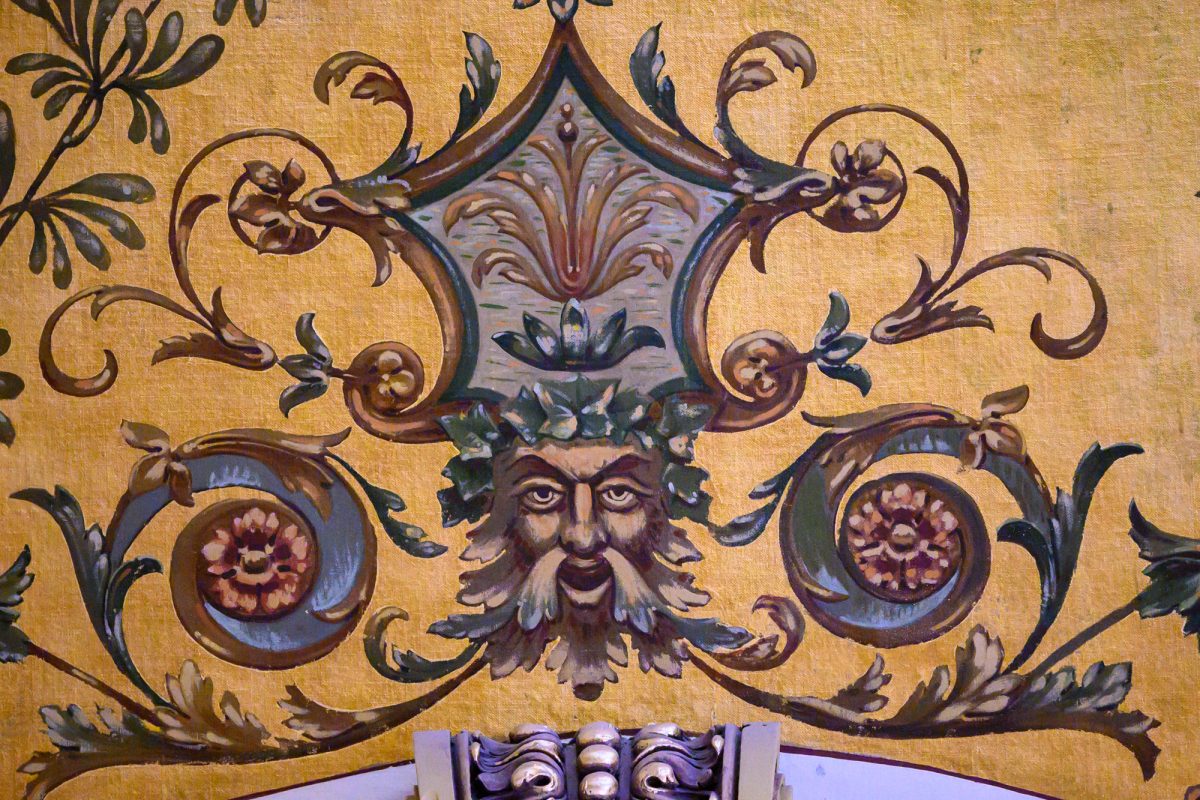
A closer example of the paintings that adorn the walls of Washington County Courthouse.
Holly Tonini
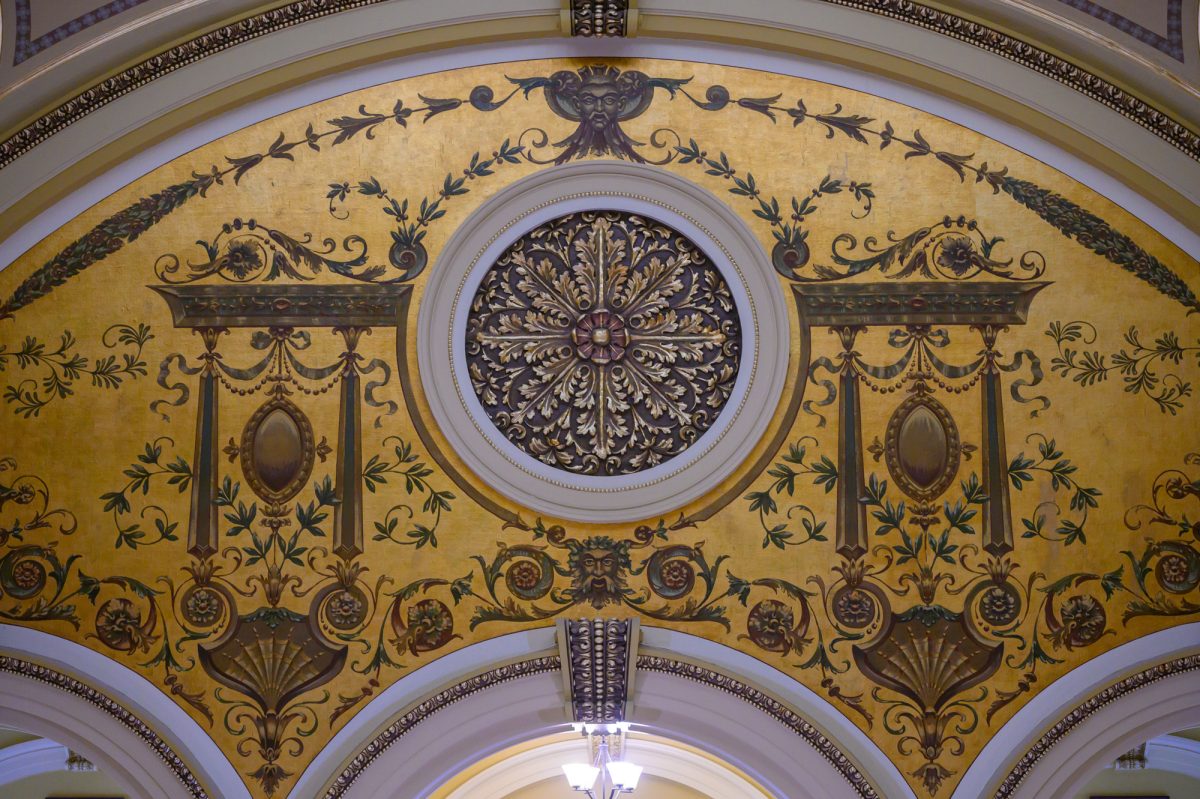
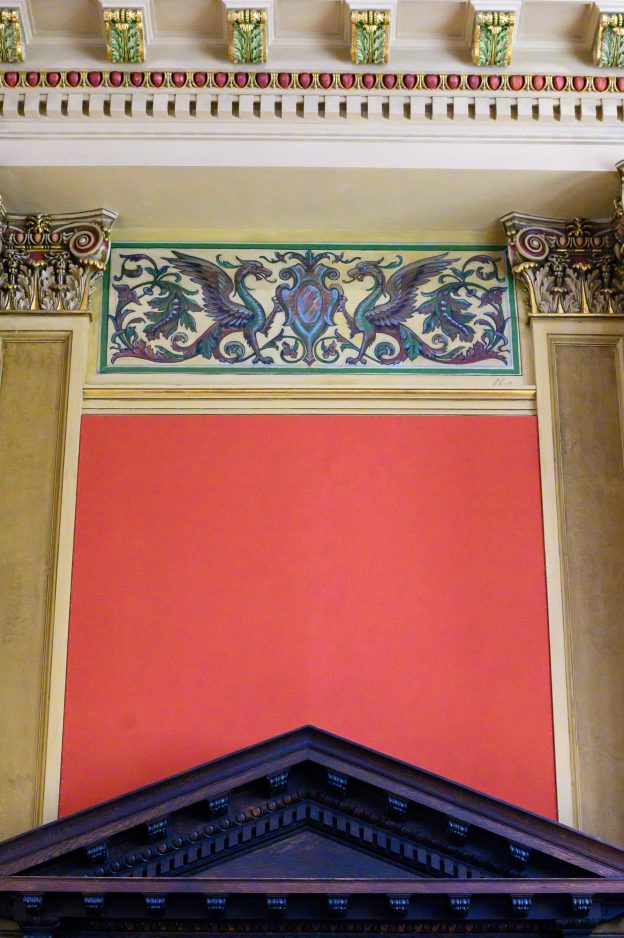
A closer example of the paintings that adorn the walls of Washington County Courthouse.
Holly Tonini
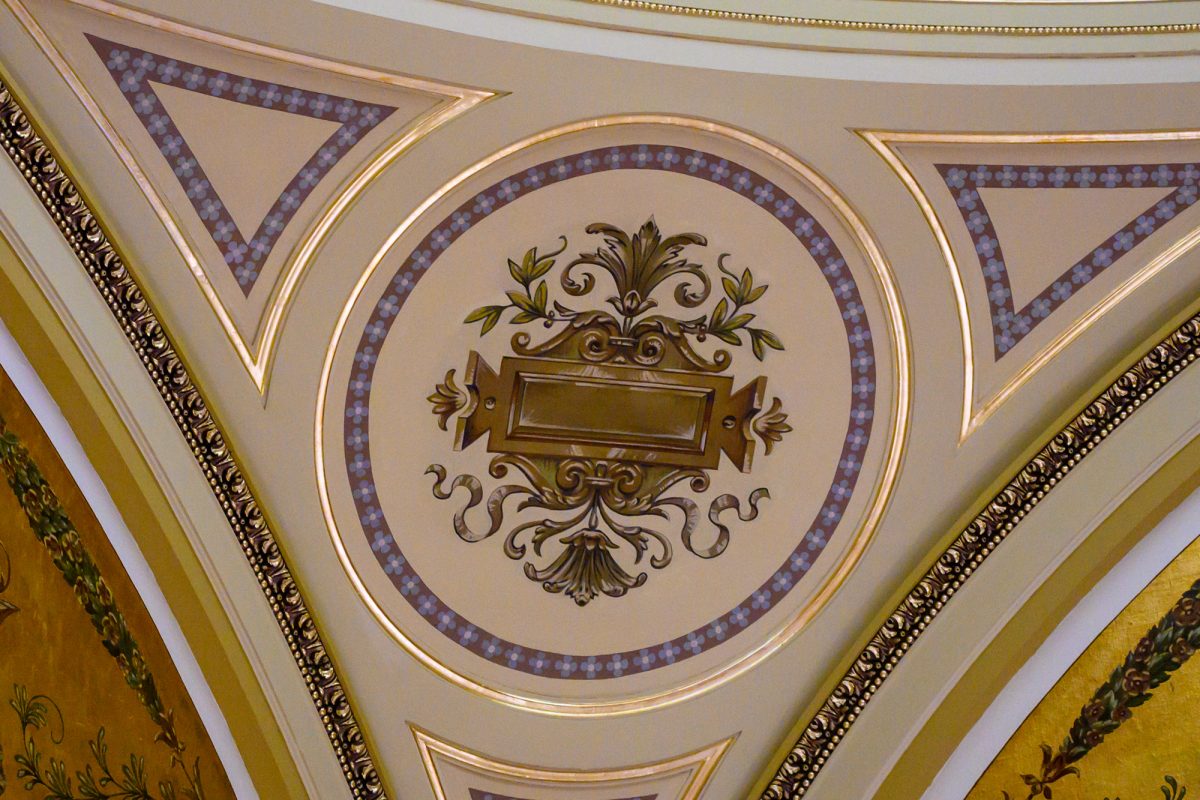
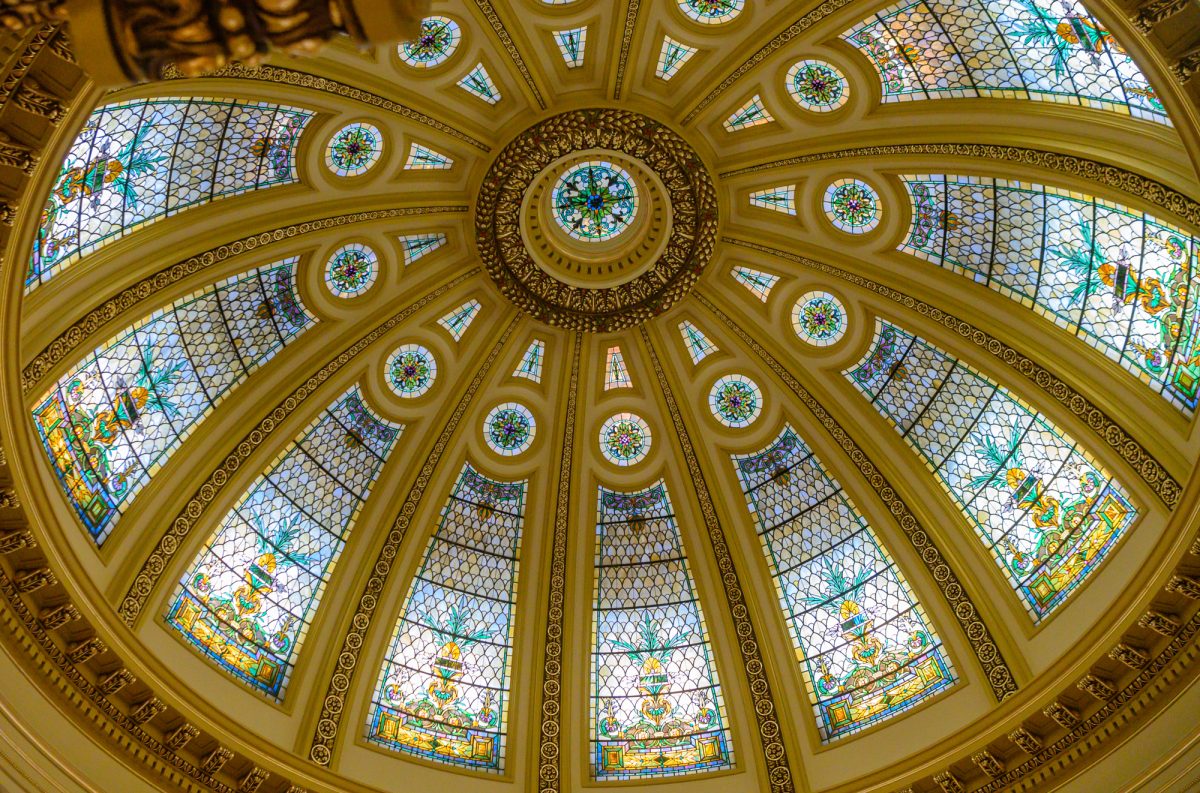
A view of a decorated ceiling in Washington County Courthouse.

Holly Tonini
Construction of Washington County Courthouse was completed 120 years ago in November.

Holly Tonini
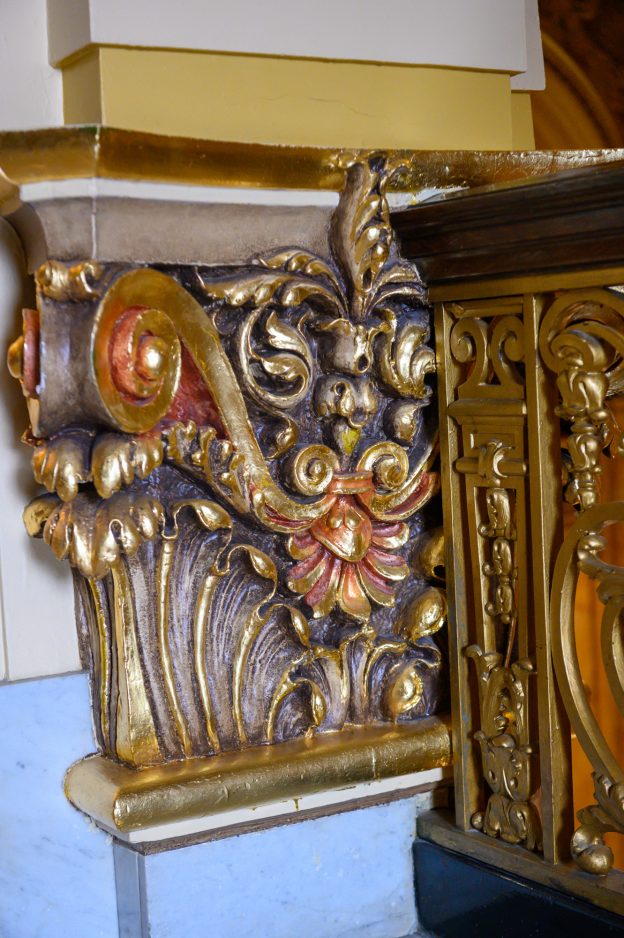
Decorations in Washington County Courthouse
20200807_liwc_courthouse10.jpg
Holly Tonini
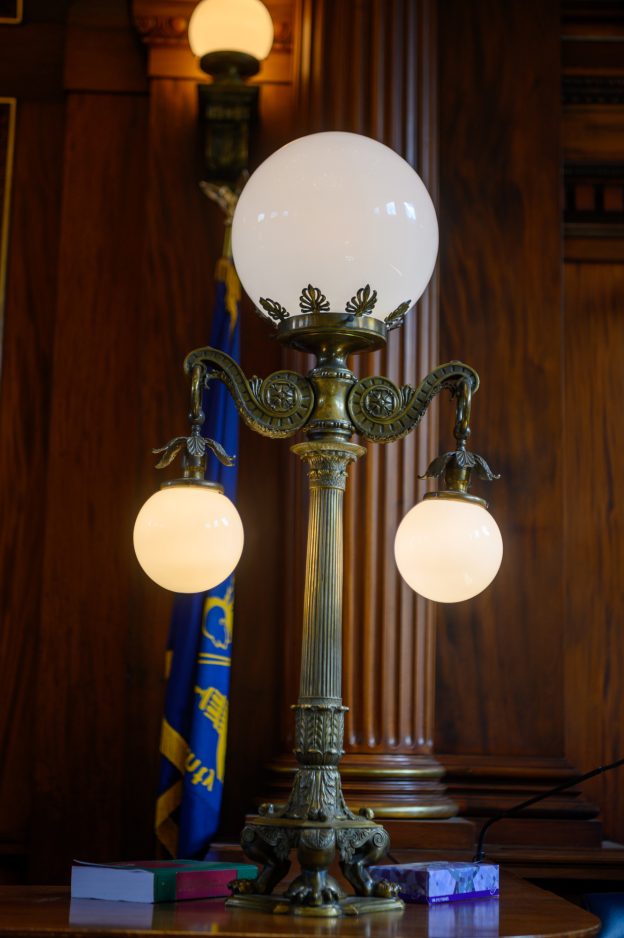
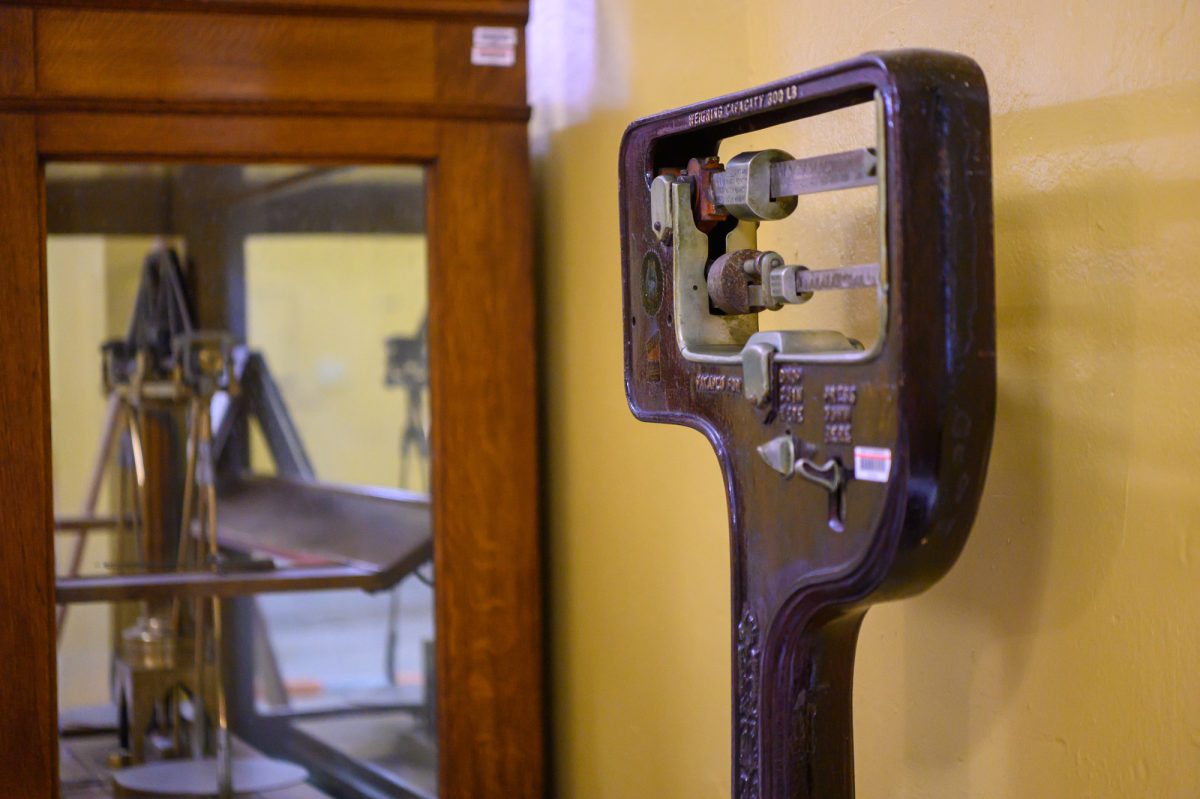
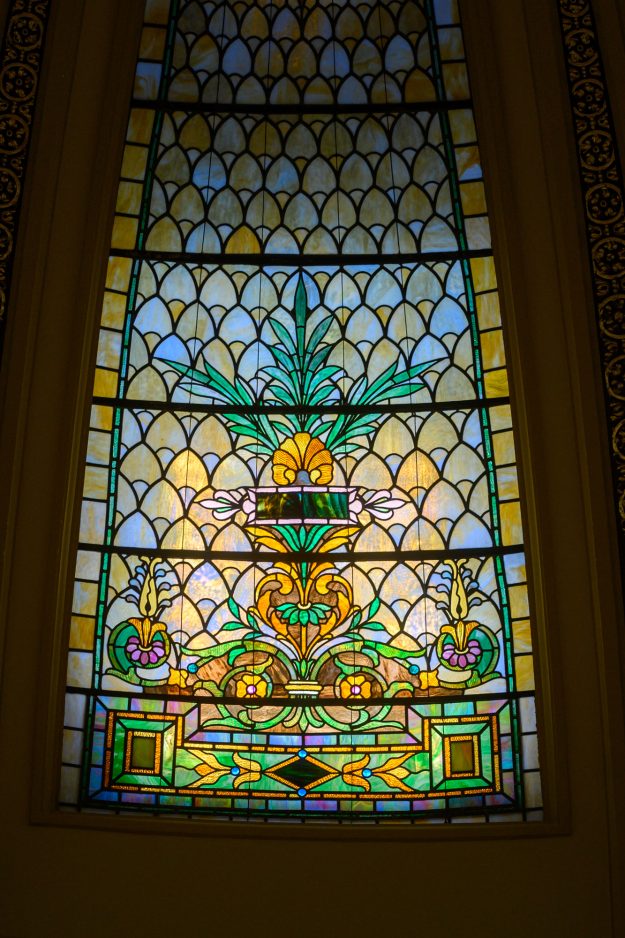
Ornate decorations adorn the walls of Washington County Courthouse.
By Barbara S. Miller
Eric Garland found himself serving on a jury on the top floor of the Washington County Courthouse earlier this year.
“I spent three long days admiring the architecture and wondering about the history of the courthouse in my down time,” the Centerville Borough resident wrote in an email.
During breaks in the testimony, Garland was about as close as most people get to the stained-glass dome. His eyes were drawn to the golden frescoes beneath it, especially a mustachioed face that appears on each corner of four “lunettes,” half-moon-shaped panels that arch above the atrium.
His inquiry, accompanied by a photo, was eventually submitted to the Art Department of Washington & Jefferson College. John Lambertson, professor of art history, was willing to take a stab at it.
“I do not know who the figure is for certain, but he appears to be a classical motif which was common in Beaux-Arts decoration. Often, gods and goddesses would appear in sculpture on the exterior or on painting on the interior.
“My guess from the iconography, meaning set of attributes, is that he may be the Greek god Dionysus who is the Roman Bacchus, the god of wine.
“Admittedly, this seems to make little sense for a courthouse, but decorators often pulled motifs for aesthetic purposes. I must stress that I am making a guess based on the picture and what I know of other Beaux-Arts buildings.”
Garland was curious to find out more about the art of the courthouse, and the repository for information lies deep inside the edifice.
Research at the law library from volumes in the vault turned up no names of artisans who painted 120 years ago, only that of the building’s architect, Pittsburgher Frederick J. Osterling and contractor William Miller and Sons, also of Pittsburgh, in charge of constructing the sandstone courthouse and jail.
But records in the law library confirm Lambertson’s inkling. Osterling began studying architecture as a teenager, and he worked as a draftsman.
“His education included travel to Europe, observing and sketching important buildings in France, Italy and Germany,” according to an official courthouse history.
“Like most other American architects of the time, Osterling looked to the classical past for his models of beauty, harmony, and proportion.
“He revered the Ecole des Beaux Arts (School of Fine Arts) in Paris, then the leading center of architectural education in the Western world. There he learned that architecture was a noble public service. More than bricks and mortar, architecture was the presentation in stone or civic dignity.”
Osterling established an office in Pittsburgh in 1888, about the time that Washington County had outgrown its third courthouse. A competition was held to design a fourth. He had come to Washington in 1891 to draw up plans for a bank.
His vision of a courthouse was put on display seven years later and chosen from among several entrants. Among those passed over was Cass Gilbert, who would design the United States Supreme Court building on Capitol Hill.
In the Pittsburgh area, Osterling went on to design the downtown Union Trust, Arrott and Commonwealth buildings and the Charles M. Schwab mansion in Braddock. He was also in charge of remodeling of “Clayton,” the Point Breeze home of industrialist Henry Clay Frick.
In the home of the Whiskey Rebellion, another taxpayer revolt was afoot over the cost of the new courthouse, estimated at half a million dollars.
Seventeen disgruntled taxpayers circulated a petition signed by 372 citizens who believed Osterling’s plans were too “magnificent and worthy of royal estate.”
The county commissioners filed a response with the court, choosing to build larger rather than smaller so the project would serve generations of Washington County residents.
Members of the board of commissioners presented a united front, saying they had talked with influential people all over the county to assure them that their plans were “not extravagant.” They argued that “we are building for the county’s needs now and in the future.”
President Judge John A. McIlvaine, who decided the case, noted the grand building was “in keeping with the grand purposes for which it will be used…. The courthouse is the temple of justice that should be the incarnation of the civic life of the county.”
The final cost of the courthouse and jail actually ended up being double the half-million-dollar estimate.
An architectural description written in conjunction with the courthouse’s public opening describes the interior upper reaches: “The facades of these arches are richly frescoed in colors in the renaissance style, on a background of pure gold leaf, and have a large rose medallions in their center, which is also richly decorated” and would include the aforementioned Bacchus.
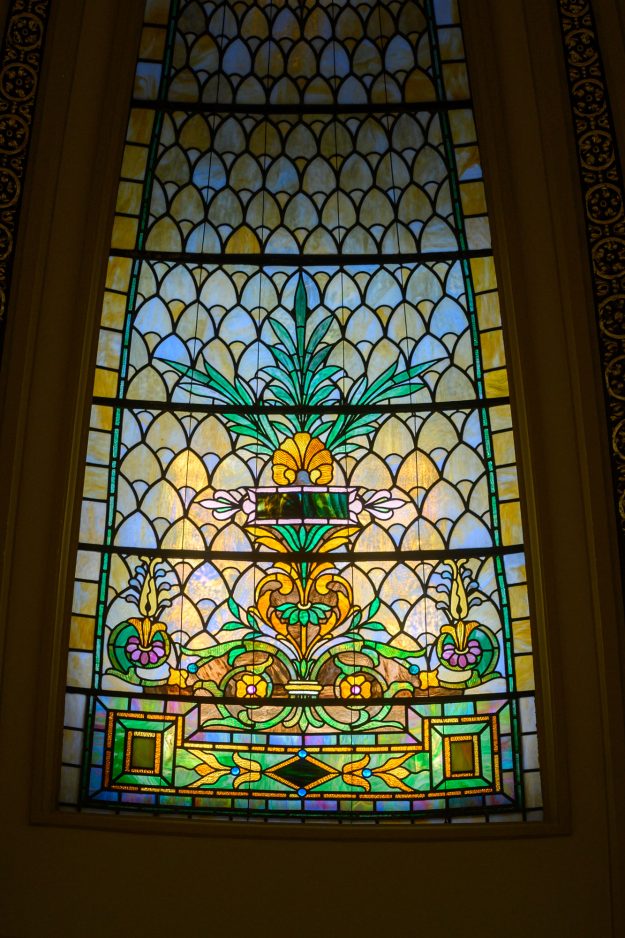
“Divided into 12 sections of brilliantly colored art glass which terminate in a rose skylight in the center, it is one of the handsomest pieces of work in this country, and presents a brilliant appearance at night when illuminated,” the historian wrote of the dome.
Named to the National Register of Historic Places in 1974, the courthouse’s pale Columbia sandstone exterior was by then blackened by decades of soot. A cleanup was in order. Pedestrians and lawyers put up with years of grit and dust on the sidewalks as the accumulated grime was blasted away during a major restoration pegged at $1.1 million.
Those folks of the Gilded Age were hoping the courthouse would last 75 years, and in that respect, it has exceeded its projected lifespan with the help of those footing the bill for constant maintenance. This November, it will turn a venerable 120 years.