

A former mill town cleans up
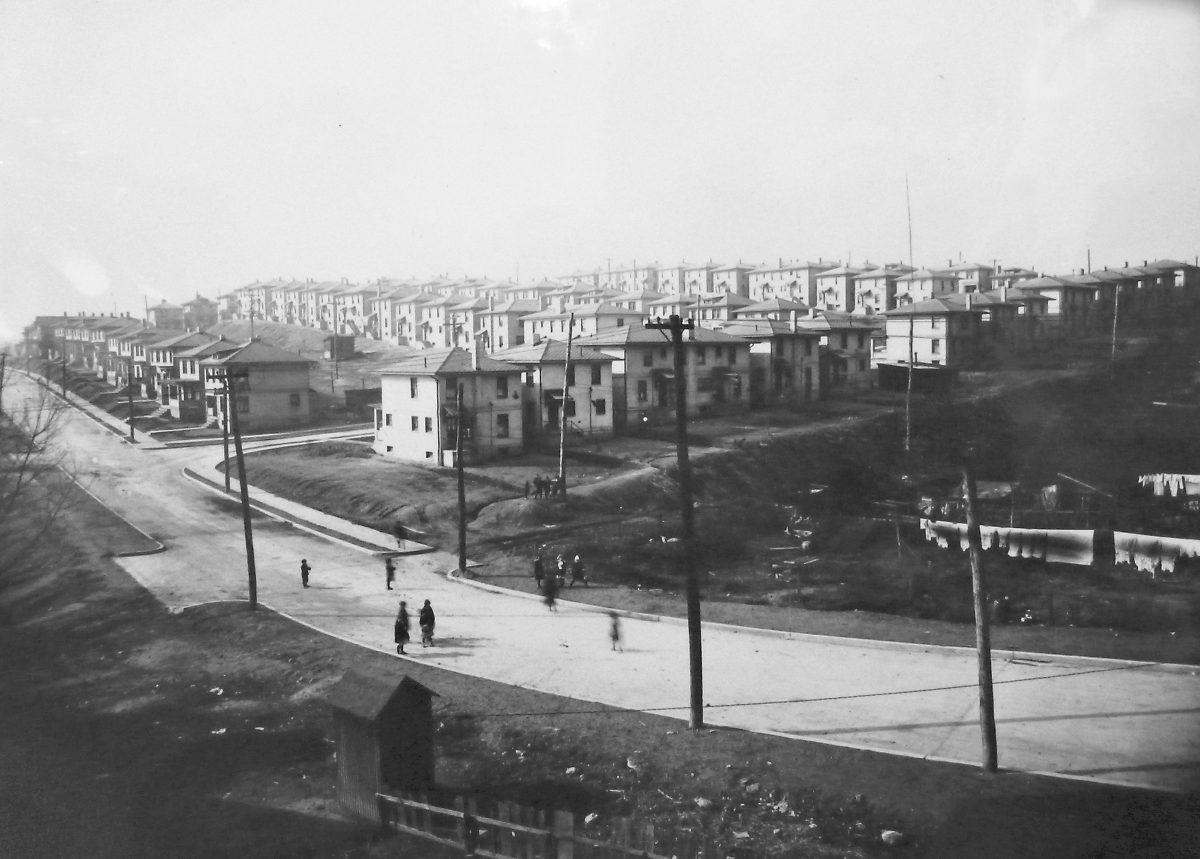
An undated photo of the Donora landscape.
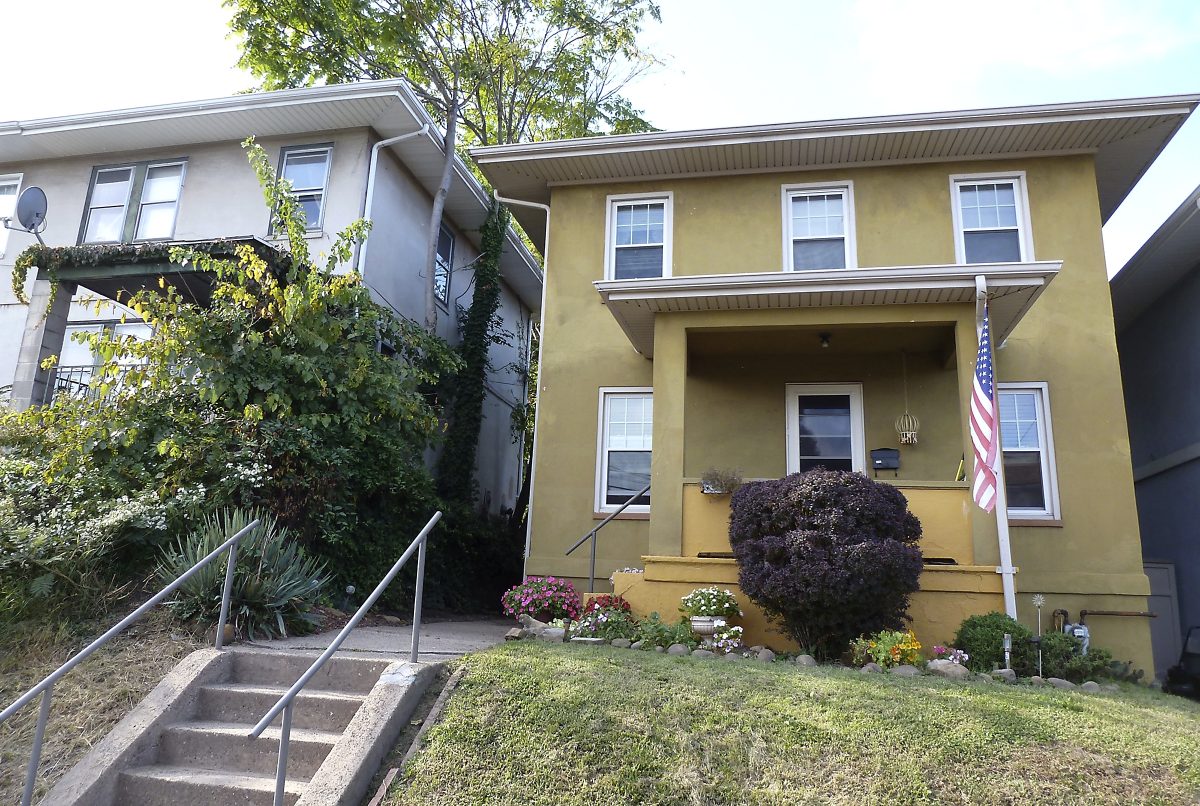
One of the biggest threats today to this Donora development involves absentee owners who neglect their houses inspired by a Thomas Edison design.
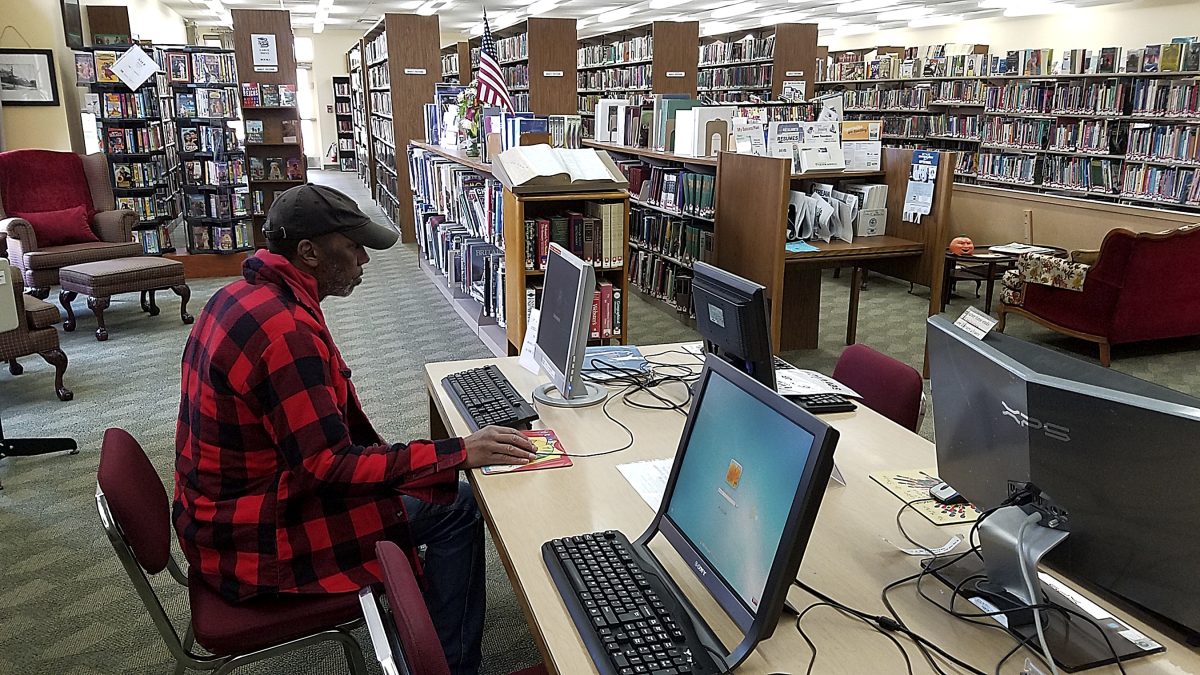
Donora Public Library aid Dennis Lomax readies the computers at the start of a workday.
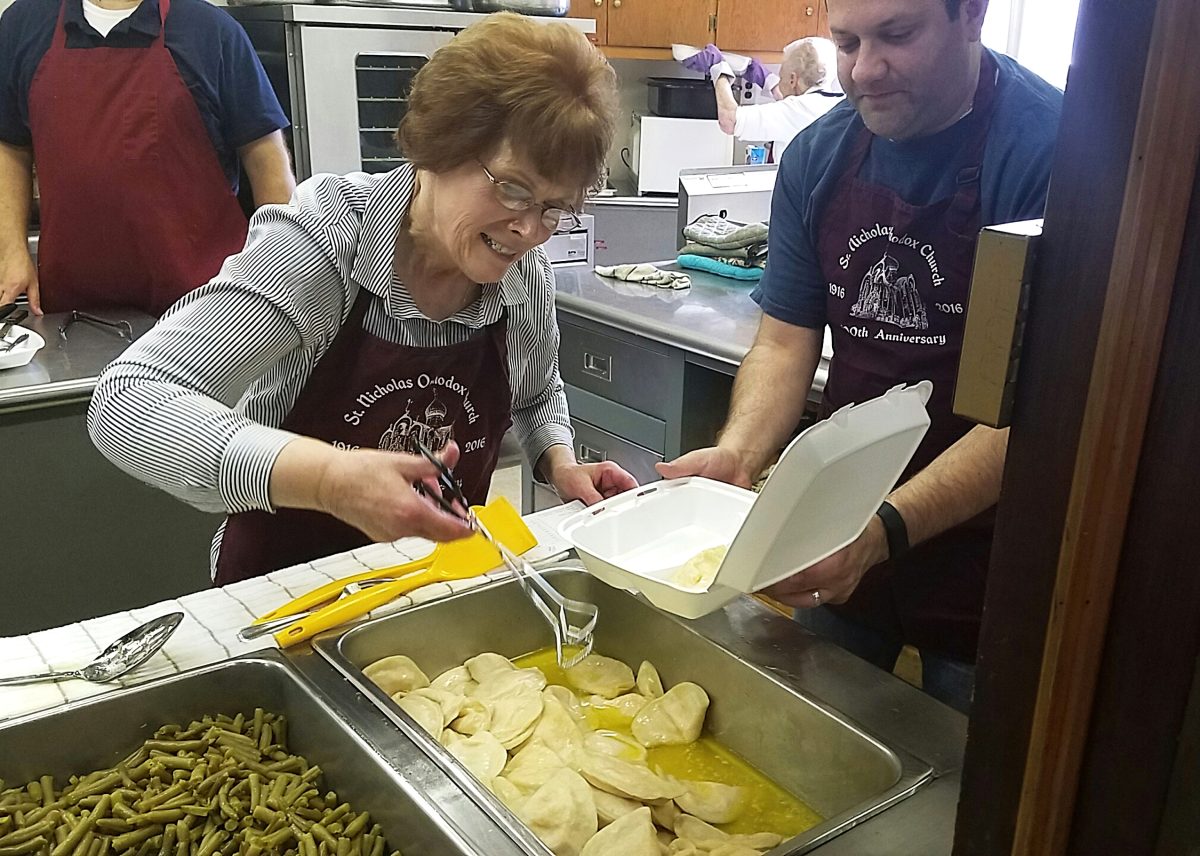
St. Nicholas Orthodox Church volunteers Pauline Petro and Rob Montini serve pierogies at its Ethnic Food Fair in October in Donora.
DONORA – It isn’t uncommon for patrons to be found on any given day waiting outside for the doors to unlock at the lively Donora Public Library.
The library in a struggling downtown district is thriving and has plans to expand its building at a time when other public libraries have been begging for money in the Mon Valley.
“The Donora Public Library is the crown jewel of that town,” says Alan Benyak, a Charleroi attorney and member of the library’s board of directors.
“It’s going to be the catalyst for the town to move forward,” Benyak says.
Historians and researchers from across the world come to this library as well as the nearby Donora Smog Museum for information on the 1948 pollution disaster here that killed more than 20 people and sickened thousands of others during an unusual weather pattern.
Donora’s history was etched in steel and zinc production after land speculators arrived in the new town alongside a sharp bend in the Monongahela River in 1901.
Bidders camped overnight beside stakes marking vacant lots on farmland before the property auction began there at 10:30 a.m. Sept. 10, 1901.
“A gun was fired and the rush for lots started,” local historian J. P. Clark wrote in a 1951 story about the quick rise of Donora.
Within a day of the first public sale of land, two hundred lots were sold for more than $100,000 in anticipation of the steel mill. The Donora land sale was announced after Pittsburgh tycoon Richard B. Mellon purchased 230 riverfront acres there for the Union Improvement Co., an affiliate of Union Steel.
Entrepreneur William H. Donner became the driving force for steel production in Donora after rising to president of Union Steel Co. by 1899, three years after he built a tin mill in nearby Monessen.
Donner was born in 1864 in Columbus, Ind., and he dabbled in real estate after reviving his family’s failing grain mill in his early twenties. The borough incorporated in February 1901, taking its name from him and Nora Mellon, wife of A. W. Mellon.
Eventually U.S. Steel folded the steel mill into its corporation, and it went on to develop in 1915 a zinc plant whose pollution would take most of the blame for the deadly smog over a Halloween weekend in 1948. The disaster led the argument for the nation’s first clean air laws and the event has been commemorated for the past seven years by a 5K run or walk in the borough.
Steel production ended here by 1960, leaving the borough with a diminished downtown district and a problem with blight, but there is new hope for Donora.
“In the past six months there has been renewed interest in the town,” said Gene Svrcek, president of the Colgan Insurance Agency in downtown Donora.
“Retail has been failing, but that’s not Donora’s fault,” Svrcek said.
He said a new restaurant is planning to open in the former Costa’s Restaurant on McKean Avenue. Other local businesses still draw traffic to town, including Hanna’s Plumbing and Electric, Jed Heating & Cooling and Del Suppo Inc. Swimming Pools and Spas.
The town with about 4,700 residents also is home to an industrial park that is making a comeback. The Glassport-based Tech Met Inc., which produces high-temperature titanium and ferrous alloys, announced it would develop a plant in the park this year. Retal Industries Ltd., a Cyprus-based firm that produces plastic bottles for the beverage industry, also announced this year that it will locate its headquarters in the park. Other property there was purchased this year for new developments.
“My dad was here since 1964. I’ve been here for 35 years,” Svrcek said. “The town; it’s a terrific place. The people are loyal.”
Donora has a small-town feel with retirees exchanging stories over coffee at Station 6-Pack Shop and volunteers serving pierogies and other dishes in October at the Ethnic Food Fair at St. Nicholas Orthodox Church, which is marking its 100th anniversary this year.
Although it has limited hours the Smog Museum operated by the Donora Historical Society is worthy of a visit with its vast archives, many of which are on display in a storefront at McKean Avenue and Sixth Street. The displays include artifacts that belonged to professional baseball greats Stan Musial and Ken Griffey Sr. and Ken Griffey Jr., all of whom were born in Donora.
“We have an incredible collection of primary materials,” said Brian Charlton, the historical society’s archivist. He marveled at the fact that Donora’s rich history took place over just 60 years.
The society also has an annual fundraiser that offers tours of Donora’s historic Cement City, a plan of poured-in-place concrete houses and apartments built for the middle management at U.S. Steel. The neighborhood, which has 80 Prairie School structures that were built in 1916 and 1917, is on the National Register of Historic Districts.