

Wooly-bully
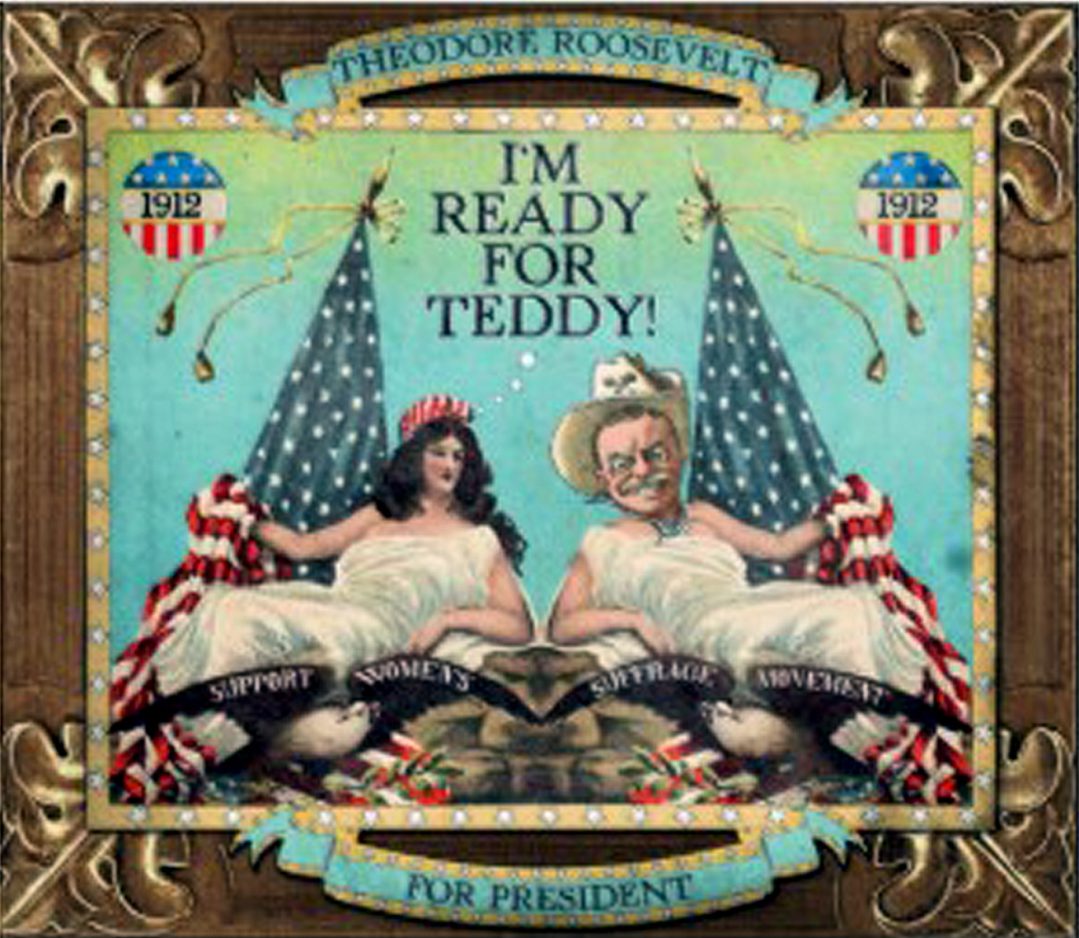
A “Ready for Teddy” poster from the 1912 presidential campaign
William Howard Taft
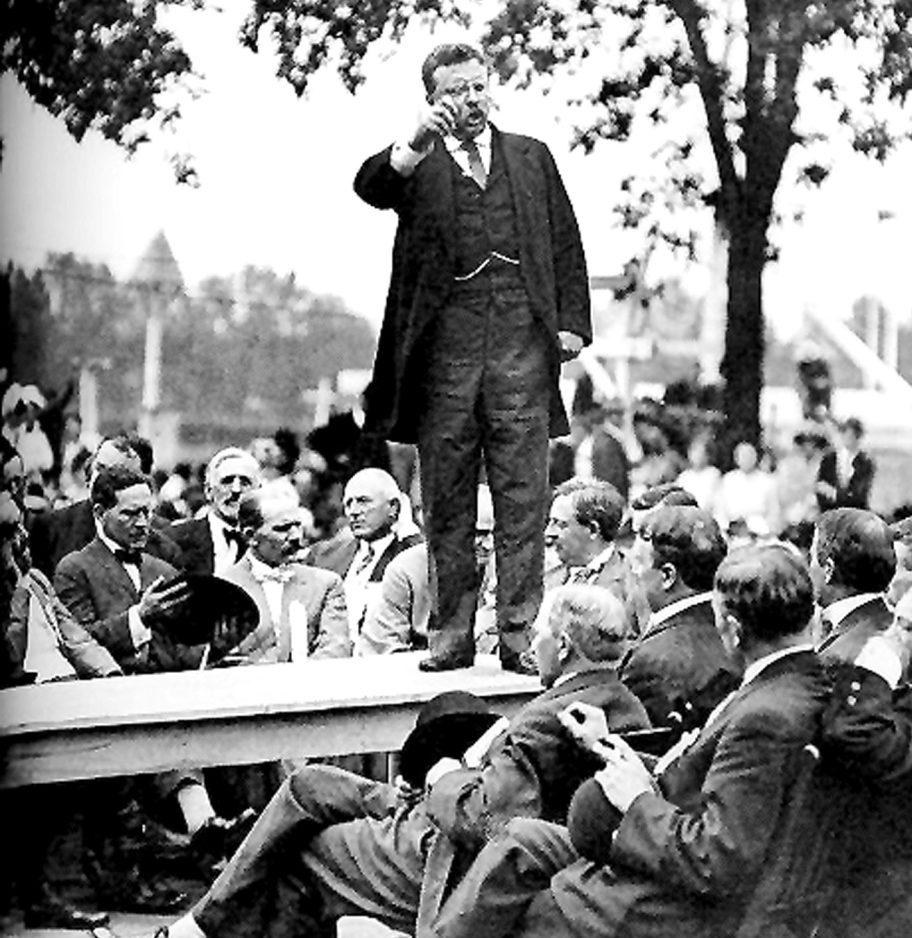
Teddy Roosevelt on the campaign trail in 1912
Woodrow Wilson
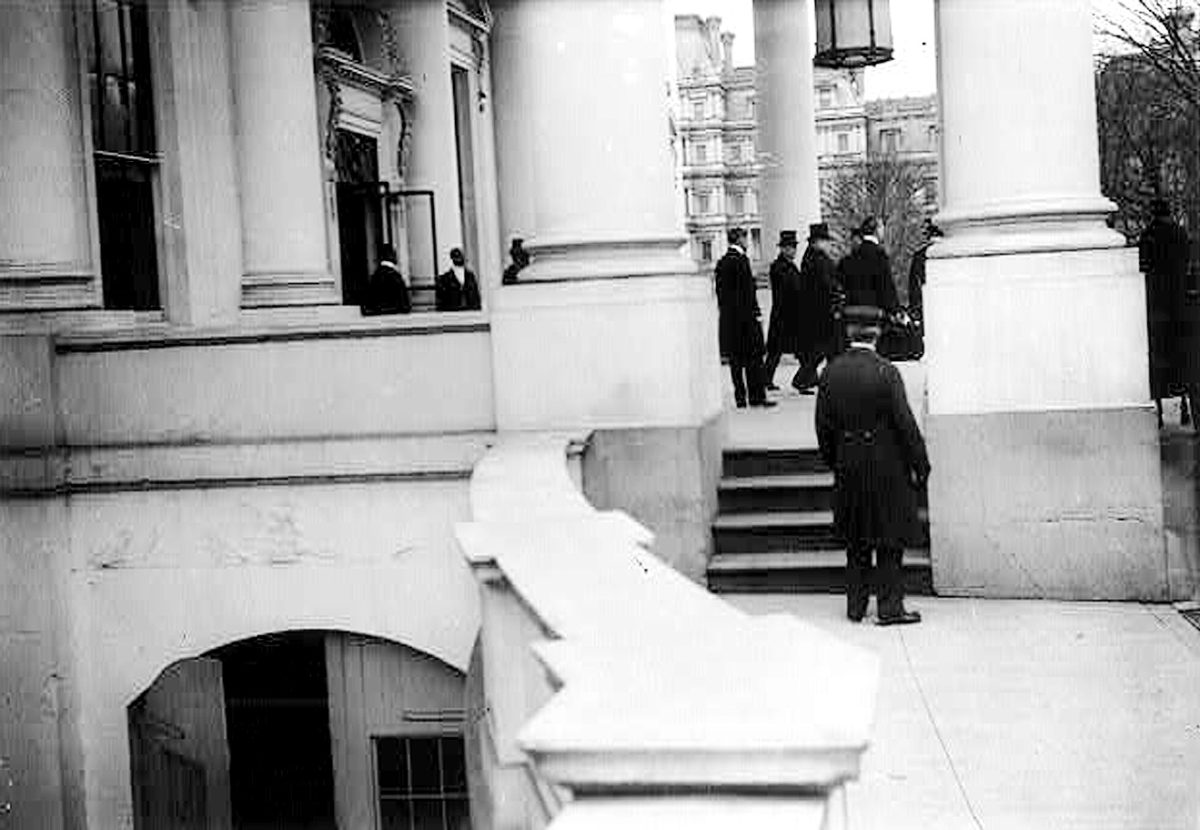
Woodrow Wilson and William Howard Taft leave the White House at Wilson’s inauguration.
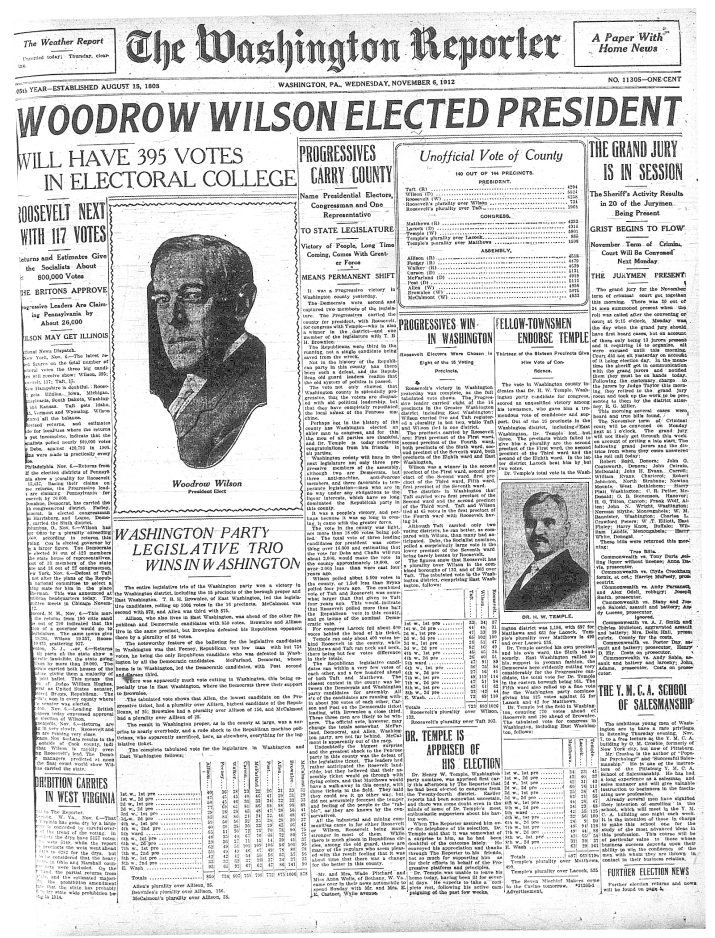
A reprint of the front page of the Washington Reporter from Nov. 6, 1912
This year’s presidential race have you on pins and needles? Obsessively refreshing your computer for the latest polling data? Calling friends in Ohio and Virginia to get the latest feel for what’s happening on the ground? Hanging on tight to the remote so no one switches the channel away from MSNBC or Fox News?
Ha!
For presidential campaign drama, the 2012 Obama-Romney battle royale is a snoozer, a genteel debating-society tussle, compared to the tumultuous campaign for the White House in 1912.
Heading into its final hours 100 years ago this weekend, the 1912 campaign had so many twists, turns, gyrations and convulsions that a novel containing all its elements would be hooted at for being wildly overplotted and enormously unrealistic.
The 1912 contest to be commander-in-chief contained an incumbent president who tipped the scales at more than 300 pounds, hated his job and hankered for a spot on the Supreme Court; a larger-than-life former president intent on ousting his one-time protégé; a prim academic and pastor’s son prone to moralizing; a radical firebrand intent on dynamiting America’s economic system; an assassination attempt; and a running mate dying in the campaign’s home stretch.
With all these ingredients, just imagine how Twitter and Facebook would have exploded if social media had been around back then. Cable blowhards like Chris Matthews or Bill O’Reilly would have been in such a state of high agitation that tranquilizer guns would have been necessary to calm them down. “The Daily Show with Jon Stewart” would have had to expand to one hour every night to accommodate the geyser of material.
“The year 1912 constitutes a defining moment in American history,” the late historian James Chace once said of that year’s presidential race.
The four – yes, four – leading contenders in the 1912 presidential race were William Howard Taft, the hefty incumbent from Ohio and the Republican nominee; Theodore Roosevelt, the former president, dismayed at the pace of progressive reform under Taft’s administration, running under the banner of the Progressive Party; Woodrow Wilson, the governor of New Jersey, former president of Princeton University and Democratic nominee; and Eugene Debs, at the top of the ticket for the then hard-charging Socialist Party.
The dramatic split in the Republican Party that year was at the heart of the campaign’s hurly-burly. Since Abraham Lincoln’s election in 1860, Republicans had enjoyed a seemingly permanent lease on 1600 Pennsylvania Ave., with Grover Cleveland the only Democrat to be elected in that 50-year span (Democrat Samuel Tilden won the popular vote in 1876, but was bested in the electoral college by Rutherford B. Hayes).
And it’s quite possible that the long-running Republican dominance would have continued unabated in 1912 if Roosevelt had not decided that Taft, his hand-picked successor, was not sufficiently progressive. Truth be told, Roosevelt also missed being at the center of attention in the Oval Office. This split the Republicans in two, and gave Democrats an opening.
Wilson, whose father, Joseph, had been a minister at Chartiers Hill Presbyterian Church in North Strabane Township from 1840 to 1851, was just 18 months removed from having won the governorship of New Jersey when he became the Democratic nominee. He was nominated in a deadlocked convention that required 40 ballots to settle on a nominee.
And, in 1912, “Socialist” was not yet an epithet used to hammer center-left political opponents, and Socialists were making inroads in municipal and legislative elections, winning support among recent immigrants, and two Socialists managed to reach the U.S. House of Representatives. However, the presidency remained an elusive prize. Again, in 1912, the Socialists nominated Eugene Debs, who had been their standard-bearer in every presidential election since 1900.
After Roosevelt was rejected by Republicans at their convention, he formed the Progressive, or “Bull Moose,” Party, and aggressively took to the hustings. Taft, meanwhile, was the ferociously unhappy warrior – he stayed off the campaign trail in a funk, became even more depressed when his running mate, Vice President James Sherman, died of kidney and heart ailments on Oct. 30, 1912, at age 57. The weekend before the election, Taft even admitted to reporters that he was going to lose.
On Oct. 11, 1912, California Gov. Hiram Johnson, Roosevelt’s running mate, visited Washington. The Washington Reporter, which was unabashedly supportive of the Bull Moose ticket, hailed him as a “machine smasher,” “a constructive statesman” and “the best campaign speaker in America.” After Johnson spoke at Washington’s Town Hall, the Reporter noted, in those days before women’s suffrage, that there were more than 200 women present, “who showed as lively an interest in the proceedings of the day as any man present.”
A few days later, in Milwaukee, Roosevelt was shot by a disgruntled tavern owner who had been stalking him and believed no president should serve three terms. The bullet’s course was slowed by a 50-page speech and an eyeglass case he was carrying in his front pocket, but it did pierce his chest. Despite bleeding through his shirt, Roosevelt insisted on finishing his 90-minute speech before seeking medical assistance.
“I have just been shot,” he told his audience. “But it takes more than that to kill a Bull Moose.”
As headlines on the attempt on Roosevelt’s life, his recovery and the eight-game World Series between the Boston Red Sox and the New York Giants filled the Observer and the Reporter, word on the street was that Wilson was going to make a campaign stop in Washington. His train was due to pass through Washington Oct. 18, 1912, on his way from Wheeling, W.Va. to Pittsburgh. The Observer said Wilson would dedicate a new science building at Washington & Jefferson College, and maybe even stop in Claysville just before getting to Washington.
However, Wilson called off the visit in Wheeling, saying that he was tired and wanted to rest before his speech in Pittsburgh. The closest Washington residents came to seeing Wilson was when his train passed through the Baltimore & Ohio railroad station on South Main Street.
Since polling in presidential races wasn’t attempted until 1936, who was winning and who was losing was a mystery until Americans – specifically, American men over the age of 21 – went to the polls Nov. 6, 1912. The Reporter, its support for Roosevelt unflagging, ran front-page editorials in support of him, and laudatory stories with headlines like “Roosevelt Sentiment Sweeps Over Country,” “Roosevelt Lives as Though He Were Never to Die” and “Why Working Men and Women Favor Roosevelt.”
On the eve of the election, the Reporter headlined, perhaps a tad too optimistically, “Trend Very Strong For Roosevelt.” The story went on to contend that “there will be a landslide for Roosevelt tomorrow in this county as well as throughout the state and nation.”
There was, alas, no Roosevelt landslide. The former president did manage to eke out a win in Washington County and Pennsylvania was one of the six states that he carried, taking 37 percent of the vote, with Wilson following closely at 33 percent, Taft trailing at 22 percent and Debs placing fourth with 7 percent. To get an indication of how dire things were for Taft, he only carried Utah and Vermont, came in second in his home state and came in fourth, behind Debs, in Arizona, Nevada, and California. In the latter state, Taft managed only 0.6 percent of the vote.
Likely owing to the split in the Republican Party, Wilson won in an Electoral College landslide, carrying 40 states and winning 435 electoral votes. Roosevelt won 27 percent of the vote and 88 electoral votes. Taft won 23 percent and Debs managed 6 percent, a high-water mark for the Socialist Party.
Roosevelt’s bid remains the most successful third-party effort in American history, and many of the reforms that Roosevelt championed remained in the political debate after the 1912 campaign ended and later became law.
“The 1912 presidential election showcased four impressive candidates who engaged in a remarkable debate about the future of American politics,” Sidney Milkis, a professor of politics at the University of Virginia wrote in the Claremont Review of Books in 2002. “All four candidates acknowledged that fundamental changes were occurring in the American political landscape…”