

Trinity High School starts vo-ag program
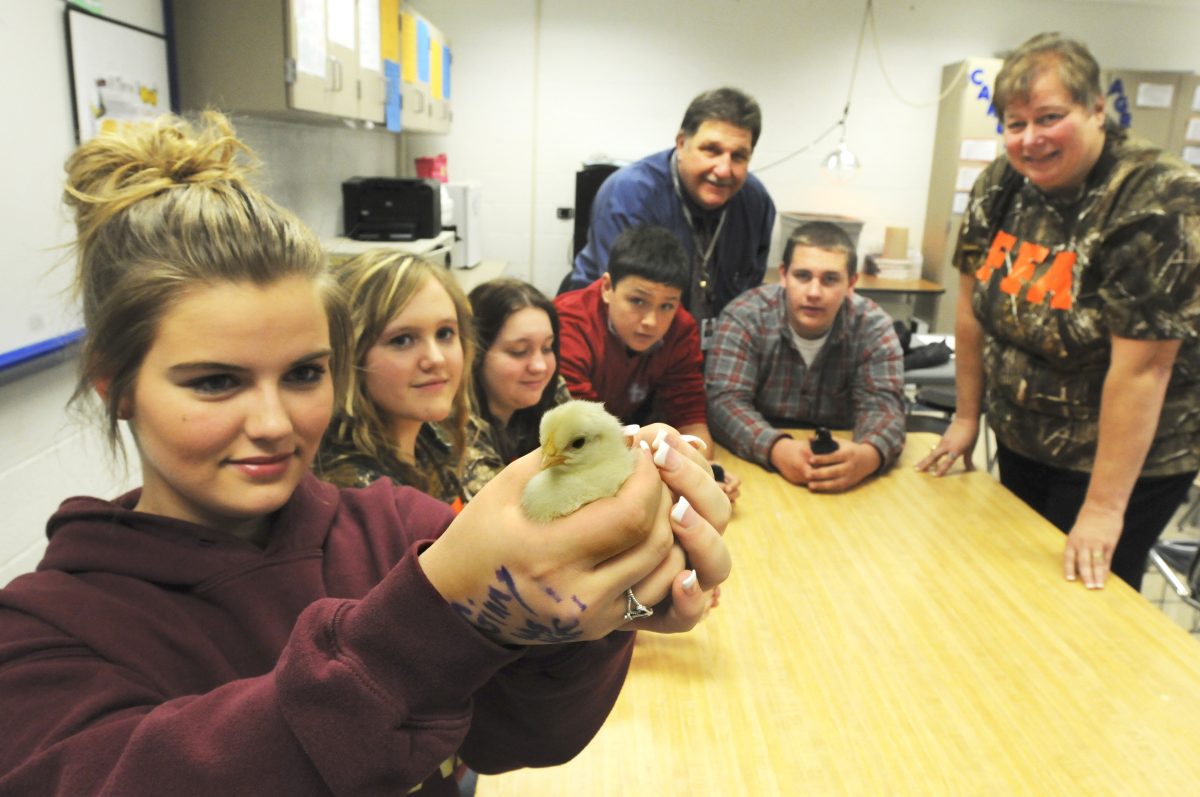
Jessica Baker, left, holds a baby chick, one of eight hatched recently in the new vo-ag program at Trinity High School. With Baker, from left, are Lindsey Hanley, Ashley Burbank, Kurtis Hannah, principal Don Snoke, Jacob Devenney and vo-ag teacher Robin Durila.
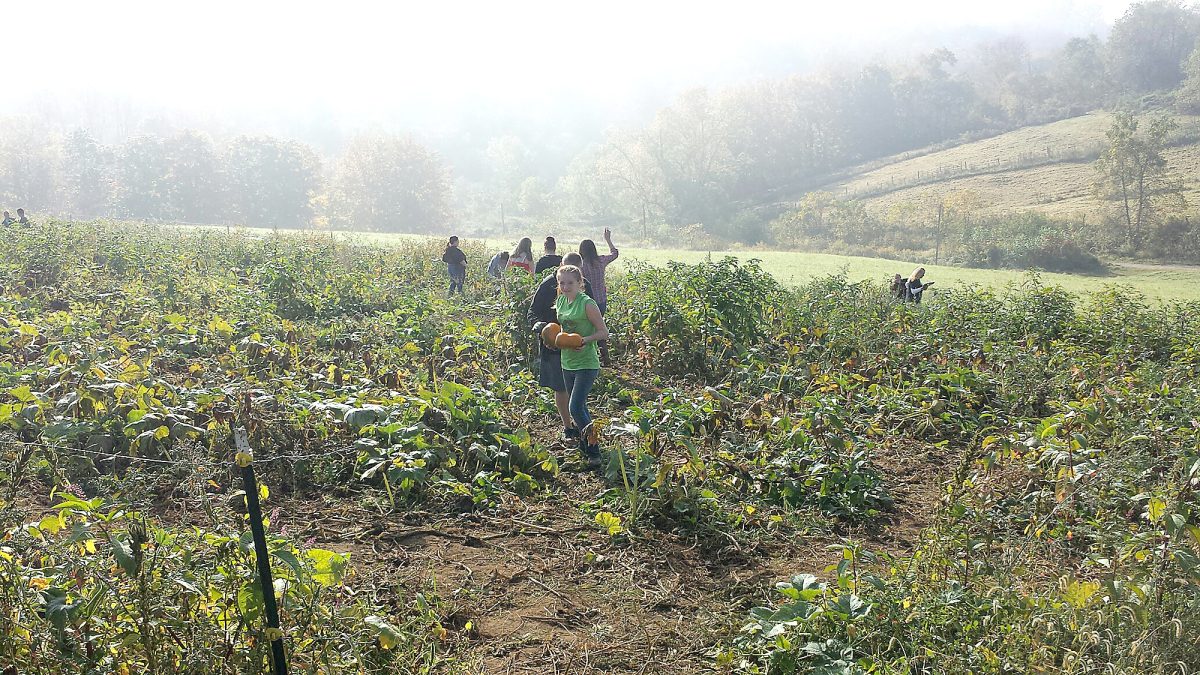
Students from Trinity High School’s vocational-agricultural program pick pumpkins on a farm owned by Donald Snoke, assistant to the superintendent. Students sold the pumpkins.
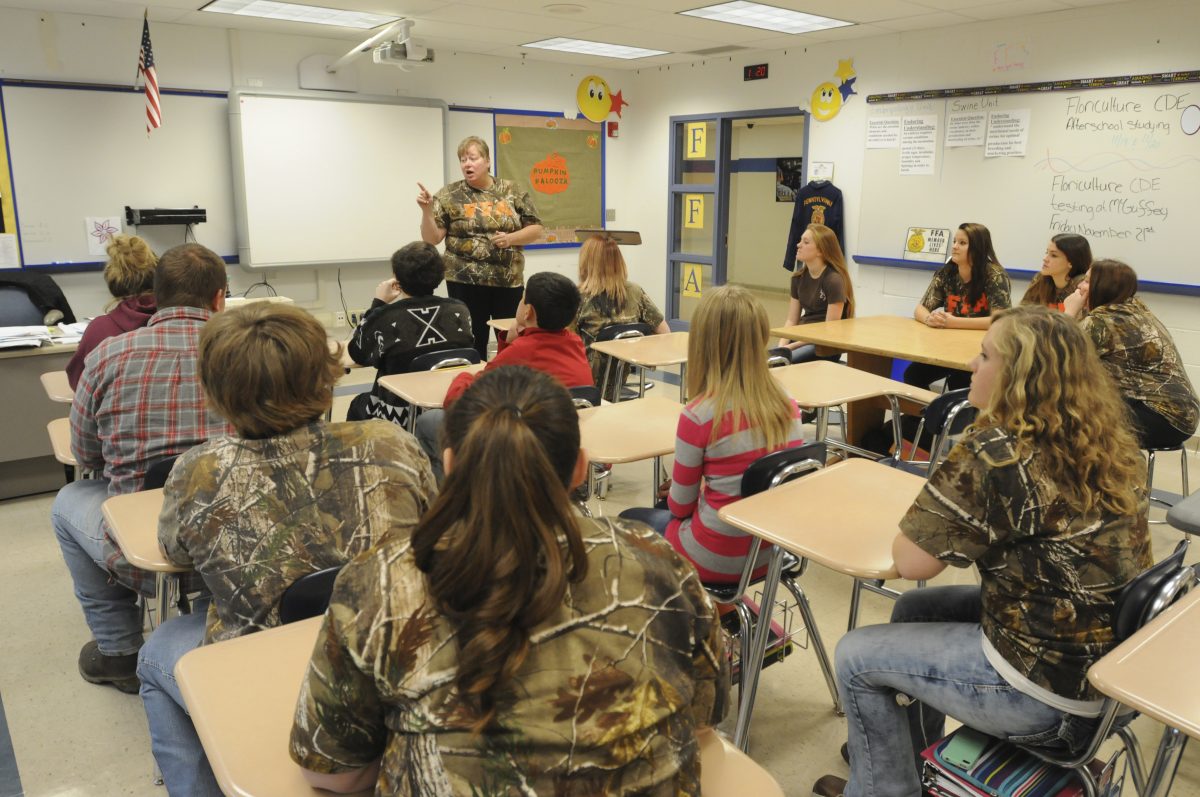
Trinity High School teacher Robin Durila goes over a lesson plan with students in the new vo-ag program.
It’s been about three decades since Trinity High School had a vocational agriculture program.
That changed this fall, when Trinity Area School District resurrected the program.
It joins McGuffey and Fort Cherry as the only school districts to offer a vo-ag program in agriculturally rich Washington County.
“We’re bringing it back because our kids have a great need for it,” said Donald Snoke, assistant to the superintendent. “Statistics show there are fewer farms, smaller farms, but there’s still a great interest in agriculture and obviously a need for agriculture, and there are a variety of different options available for vo-ag students.”
Leading the vo-ag program is teacher Robin Durila, a Penn State graduate with degrees in agricultural science and agricultural business management who believes a successful vo-ag program is an asset to the school. She worked with administration and an advisory panel to develop the program. Durila teaches classes that cover topics ranging from using pesticides and growing crops to rearing animals, and the curriculum keeps pace with the changing face of farming – it’s increasingly high-tech – and ag science.
“Basically, it’s allowing students an avenue, once they leave high school, to venture into agriculture. For some, that means going back to the family farm, for others it means working on a farm or getting into an agriculture business, or going to college,” said Durila. “It’s broad as far as what the end result can be.”
The school board recently approved the construction and placement of a 20-foot by 30-foot greenhouse on the high school campus, which Snoke believes will be a key component of the program, enabling it to become self-sufficient.
Snoke said students can grow and sell plants like poinsettias and pumpkins seasonally, raising money for other projects.
“It will be horticulture in its truest sense,” said Snoke.
The greenhouse was donated by board member Ben Trapuzzano and his wife, Shawn.
The program is going through the certification process, which is on track to be completed in January, and will be awarded a Future Farmers of America chapter when it is certified, Durila said.
Currently, 17 students are enrolled in the program.
One of the activities the vo-ag students completed was Pumpkinpalooza. In the summer, Snoke planted between 4,000 and 5,000 pumpkin seeds on his West Middletown farm, and in October, vo-ag students, along with students from the high school life skills class picked and sold the pumpkins.
Because of a blight, however, only about 400 to 500 pumpkins grew.
Next year, Snoke said the vo-ag class will plant pumpkins and sunflowers.
The class also completed a unit on embryology, which culminated with the students hatching chicken eggs. Two students took home two chicks apiece, after writing an essay describing why they wanted the chicks.
The school district has an articulation agreement with Delaware Valley College, in which some of the vo-ag courses students take will transfer to Delaware Valley upon graduation, should a student attend the college.
Advisors to the program include Bill Black and Tom Lane, retired vo-ag teachers; dairy farmer Patrick Rush, Aaron Stimmel of Stimmel Florists, and local farmer Joe Karnes.
Teaching the vo-ag classes is “a dream come true” for Durila.
“I remember coming to Trinity when I was a student at McGuffey and fighting for this program to stay back in the ’80s, and now I’m going to teach it,” said Durila. “I feel like I’ve come full circle.”
She said there has been growing interest in the program.
“I have kids ask me about the program every day, so we are expecting to see it increase,” Durila said.