

Inside Out: teaching kids about sexual assault
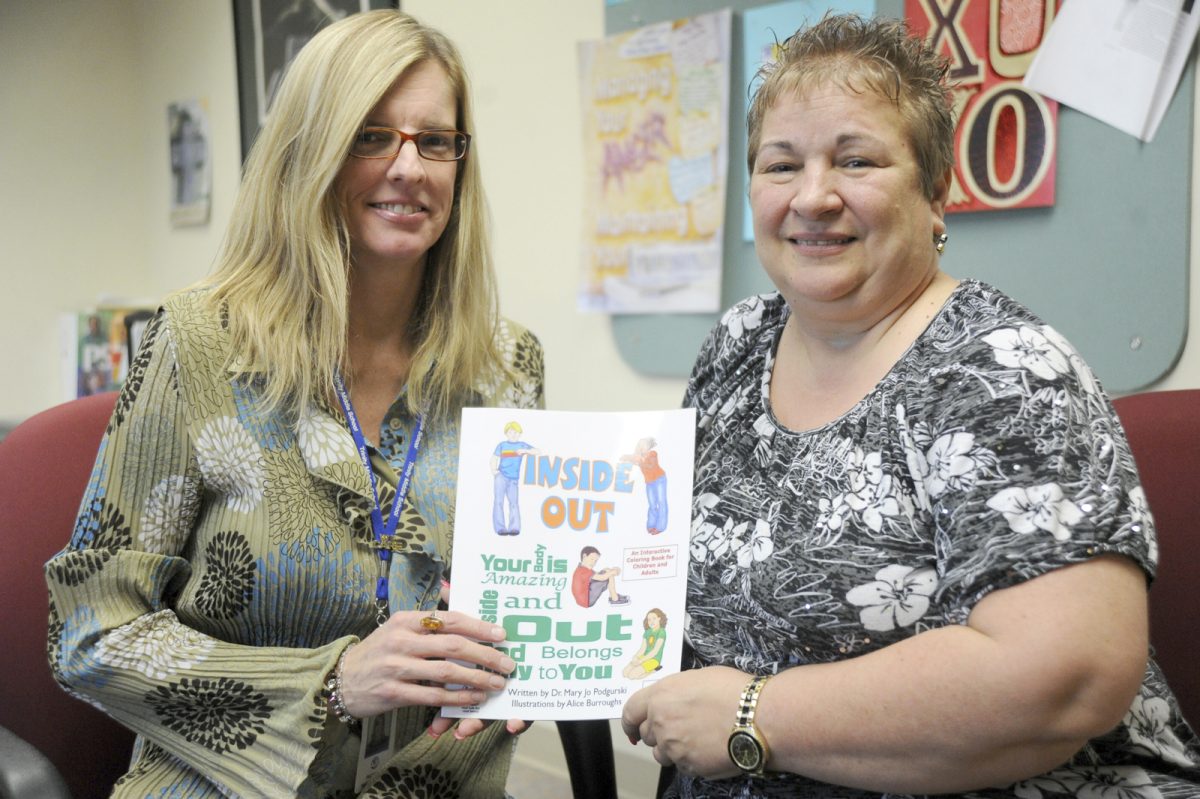
Katie Roupe / Observer-Reporter From left, Trinity South Elementary School guidance counselor Heather Watson and nurse Bea Bebout use the book “Inside Out,” a child abuse prevention program designed by Dr. Mary Jo Podgurski. The program includes an activity book for elementary school students to use.
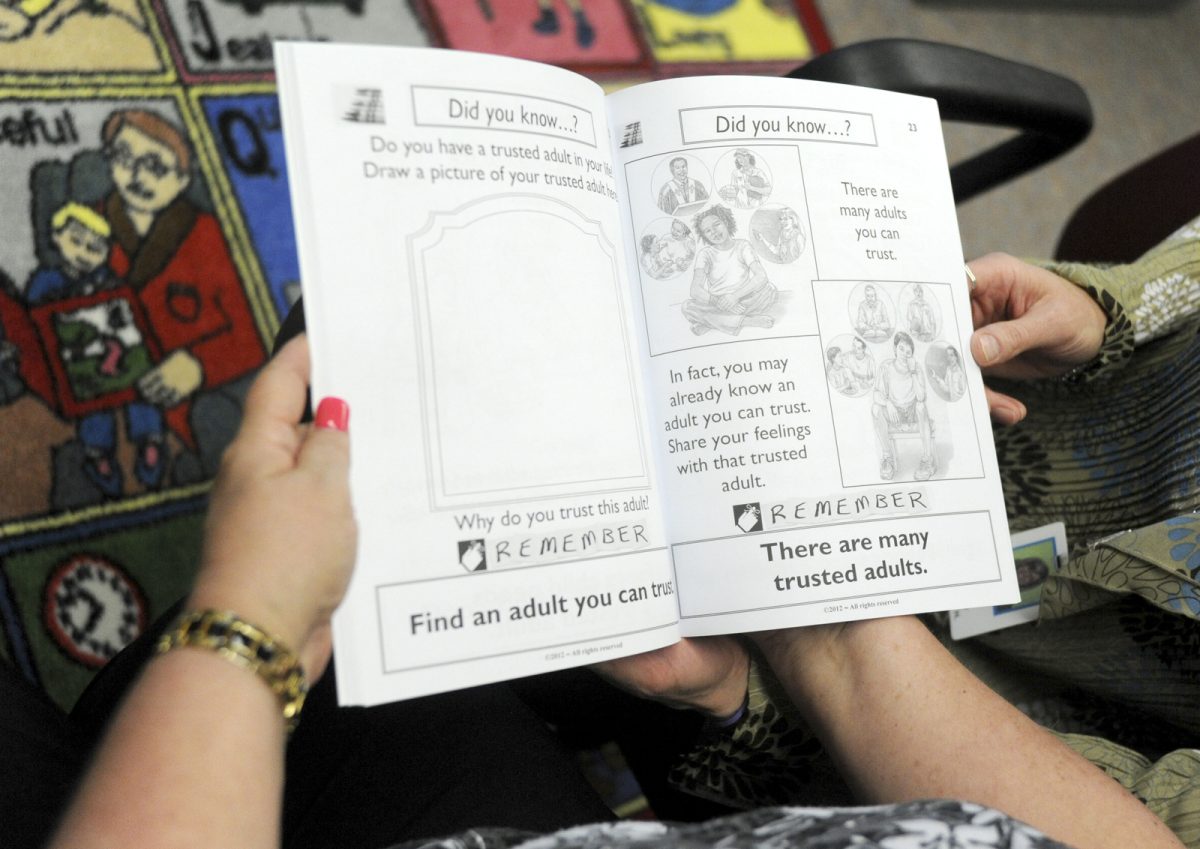
“Inside Out,” the activity book created by Dr. Mary Jo Podgurski, normalizes conversations about bodies and also helps children recognize and report sexual abuse. Students at Trinity South Elementary School have the opportunity to opt into the program.
As a school nurse in the Trinity Area School District, Bea Bebout has dealt with asthma, allergies, head lice and scraped knees.
But in the more than a decade Bebout has been a nurse, she’s also encountered children who were sexually abused.
“There are so many children who are abused. Unfortunately, you can’t always count on the adults that are in their lives to say that this was inappropriate. A lot of times the thought is, ‘We’re going to sweep this under the rug.'”
In the wake of high-profile cases like former Penn State coach Jerry Sandusky, there is an increase in the number of school districts that are introducing sexual abuse prevention programs.
Trinity Area and Washington school districts implemented “Inside Out: Your Body Is Amazing Inside and Out and Belongs Only To You,” a body-positive, empowering child abuse prevention program that provides elementary school children with ways to recognize and report sexual abuse.
Inside Out was designed by Dr. Mary Jo Podgurski, founder and director of Washington Health System Teen Outreach and Academy for Adolescent Health in Washington, who thinks other child abuse prevention programs that stress concepts like “stranger danger” and “good touch, bad touch,” or refer to body parts as “privates” miss the mark.
“An overwhelming number of children are abused by people they know; less than 7 percent of kids are hurt by strangers. Any program that gives children the feeling that it’s their responsibility to stop the predator is not right, because children don’t have that kind of power. The power is in the hands of the abuser,” said Podgurski, “and the last thing you want to do if a child is in that situation is to add guilt to that, like, ‘I shouldn’t have been alone with my stepdad.’ I want to empower them, I want them to know their body is theirs and they have ownership of self. And that’s one of the things that’s chipped away at by an abuser.”
It’s likely we all know someone who’s experienced child sexual abuse.
An estimated one in four girls and one in six boys in the United States is sexually abused, and children with disabilities are at a higher risk. Of every 100 incidents of child sexual abuse, it’s estimated 10 to 18 are reported to authorities.
Julie Fuerst, a guidance counselor at Washington School District, where 30 students participated in the program in 2013, believes the district is being proactive in addressing an uncomfortable topic.
“The Jerry Sandusky case revolved around a subject that people are generally uncomfortable with or perhaps afraid to talk about and put it out into the open. The case demanded our society’s attention and in doing so raised our awareness,” said Fuerst. “The Inside Out program provides children with the knowledge they need to protect themselves and seek help from child predators. As educational professionals it is our duty to keep our children safe even when we are not present to protect them.”
Inside Out is taught to fourth-graders in three to four sessions, and it is an opt-in program.
Dr. Roberta DiLorenzo, superintendent of Washington School District, said the Inside Out program allows students to learn about themselves physically, socially and emotionally.
“In today’s world, so much information or misinformation is accessible. We want to assure that our students are armed with the truth and accurate information,” said DiLorenzo.
That’s important when considering an estimated 34 percent of abusers are family members and 59 percent are acquaintances. Nearly 95 percent of offenders are male.
It’s an enormous problem, with no easy solution.
“I don’t know that you can prevent abuse on a child, because predators are pretty clever. But what you can give a child is the language to disclose and the ability to know that it’s OK to disclose so they know they’re not alone,” said Podgurski.
Inside Out was illustrated by local artist Alice Burroughs, whose artwork emphasizes diversity – one of Podgurski’s messages is that everyone is different and everyone is a person of worth – and includes pictures of children of different ethnicity and physical abilities.
It is being translated into Spanish by a graduate student from Hunter College, which will make it more accessible to other communities.
Podgurski, who conducted focus groups with third- and fourth-graders, their parents, adolescent and adult sexual abuse survivors and child protection services workers for Inside Out, is also working on an Inside Out program for adults with intellectual disabilities.
“This one means a lot to me,” said Podgurski of Inside Out.