

Result of legislative races may shape Wolf agenda
HARRISBURG, Pa. (AP) — Legislative candidates were waiting Tuesday night to see whether they will be heading to Harrisburg — and whether the GOP’s strong control of both chambers of the Pennsylvania General Assembly will continue.
Partial results held no surprises, but most races had not been called among the 25 Senate and 203 House districts that were up for election.
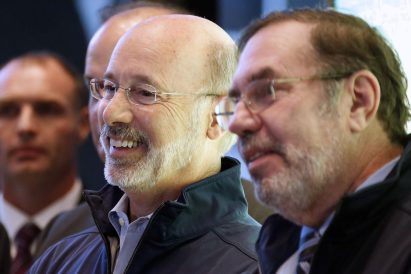
The legislative contests will do a lot to determine what will happen to Democratic Gov.-elect Tom Wolf’s agenda in the coming two years.
Democratic hopes for pick-ups hinged on several districts in the Philadelphia suburbs, a handful of open seats scattered across the state and any momentum that might have trickled down from Wolf’s victory.
A switch in control over either chamber would represent a significant upset. Republicans maintain a cushion in their current majorities in both chambers, 111-92 in the House and 27-23 in the Senate, and were able to control the redistricting process after the 2010 census that’s being used for the first time in a general election.
And in the House, one of those 92 Democratic House seats was vacant, a Philadelphia district that was moved to an overwhelmingly Republican area in York County during redistricting.
As is always the case, many voters didn’t have a real choice because they live in districts where the incumbent House member or senator has no opponent.
In the Senate, Democratic hopes for a pickup or two were centered largely on the Philadelphia suburbs, where several districts with Democratic majorities have been represented by Republicans. Republicans saw favorable voting trends — and potential openings — in the western half of the state.
Senate races to watch included an open seat outside Philadelphia held most recently by Republican Sen. Ted Erickson, a district in the Poconos that was moved east from Allegheny County and an open Democratic seat in the southwest.
House Republicans were defending more incumbent seats than Democrats and had more of the open seats to fight to maintain.
The GOP focus included seats in the perpetual election battlefield of the Philadelphia suburbs, most notably a Delaware County district that was open because of the retirement of Republican Rep. Nick Micozzie.
They also were hoping for pickups near Williamsport and northwest of Pittsburgh.
House Democratic campaign strategists said their best pickup opportunities were in the southeast and open seats in Bucks and Monroe counties.
There was also a closely watched battle in central Pennsylvania, where Republican incumbent Rep. Mike Fleck ran as a Democrat against the man who beat him in the primary. If he wins, Fleck planned to serve as a Republican.
Litigation over redistricting from the 2010 census delayed implementation of the new maps, so this was the first general election with the redrawn lines.