

Neon light still shines bright
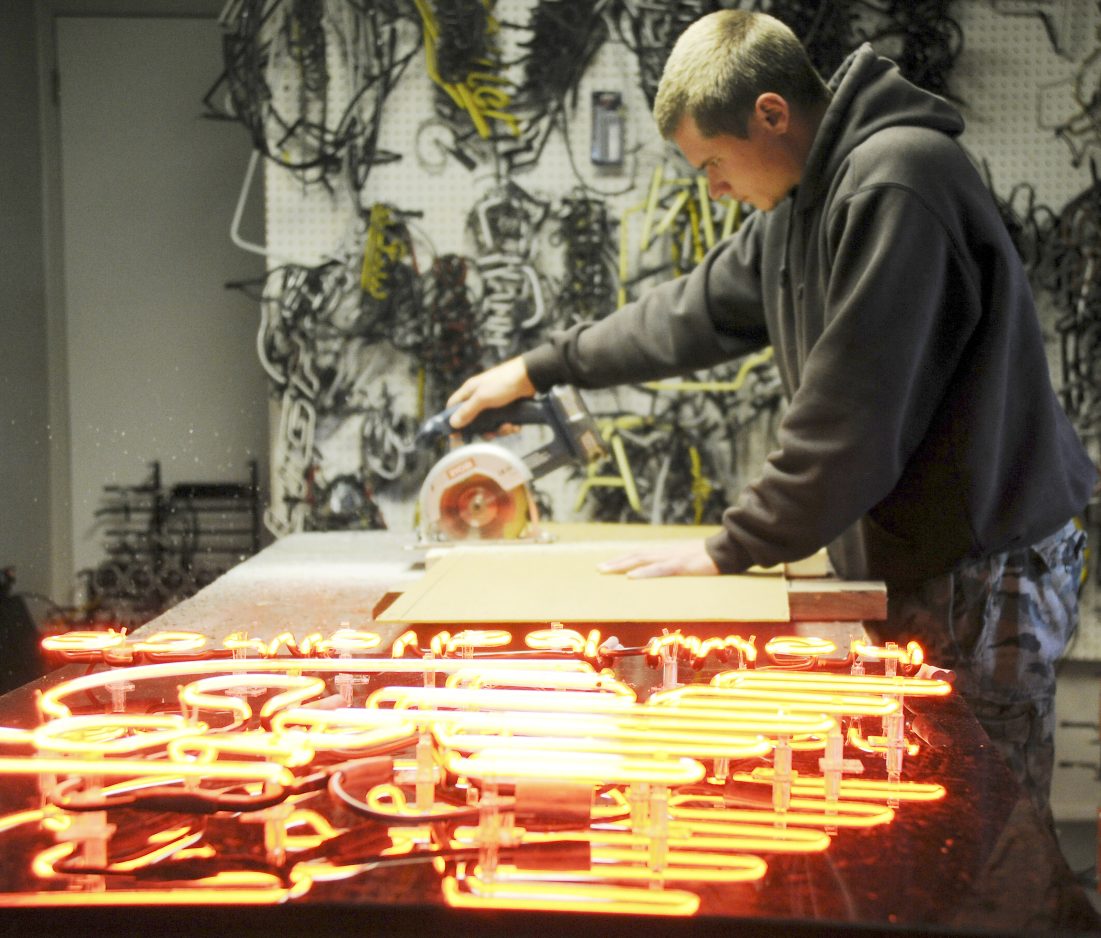
David Bates’ son, also named David, cuts plexiglass to be used as backing for a new neon light. While the Neon Doctor shop creates many new neon signs, a big part of its business is repairing lights.
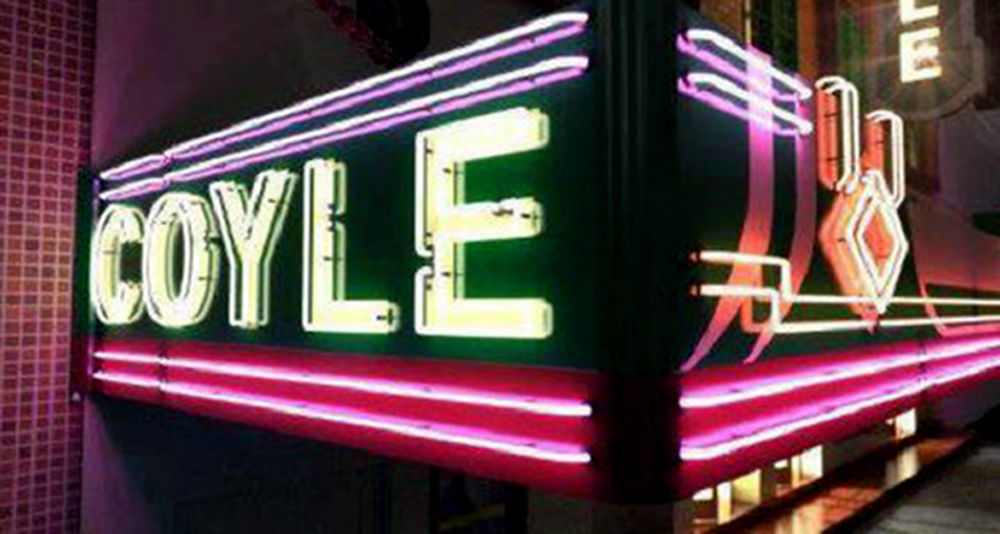
The neon marquee at the old Coyle Theater
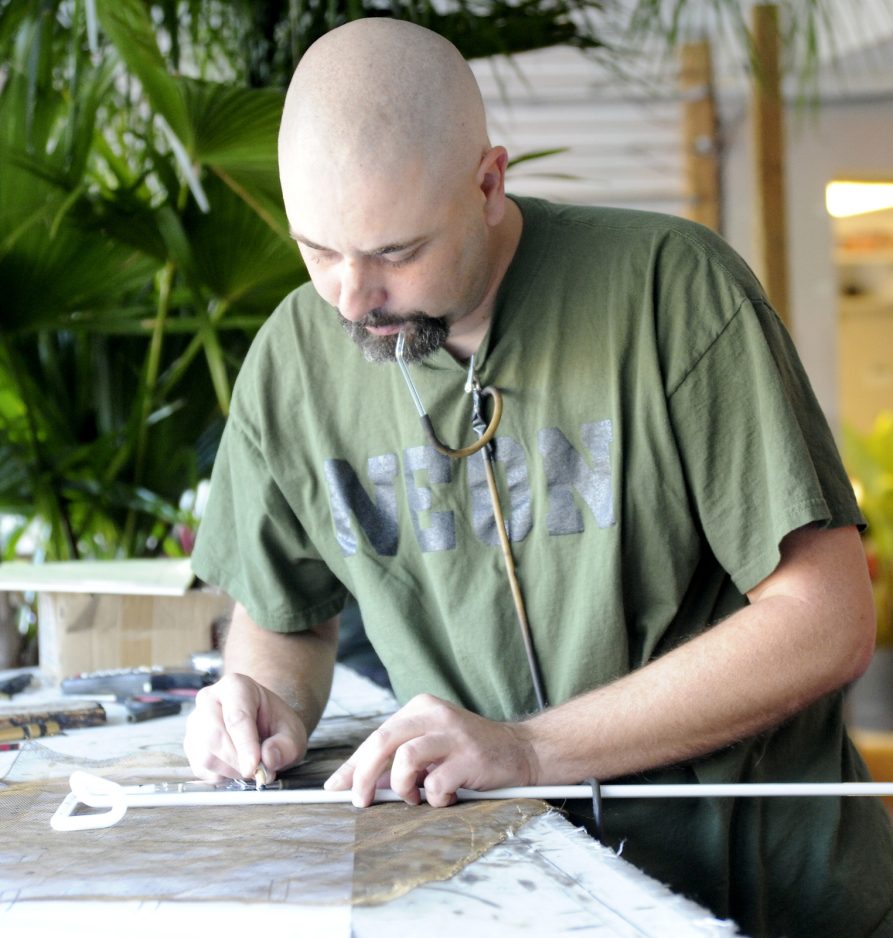
Jason Layton marks on glass where he will need to bend it while blowing and shaping the glass for a neon light.
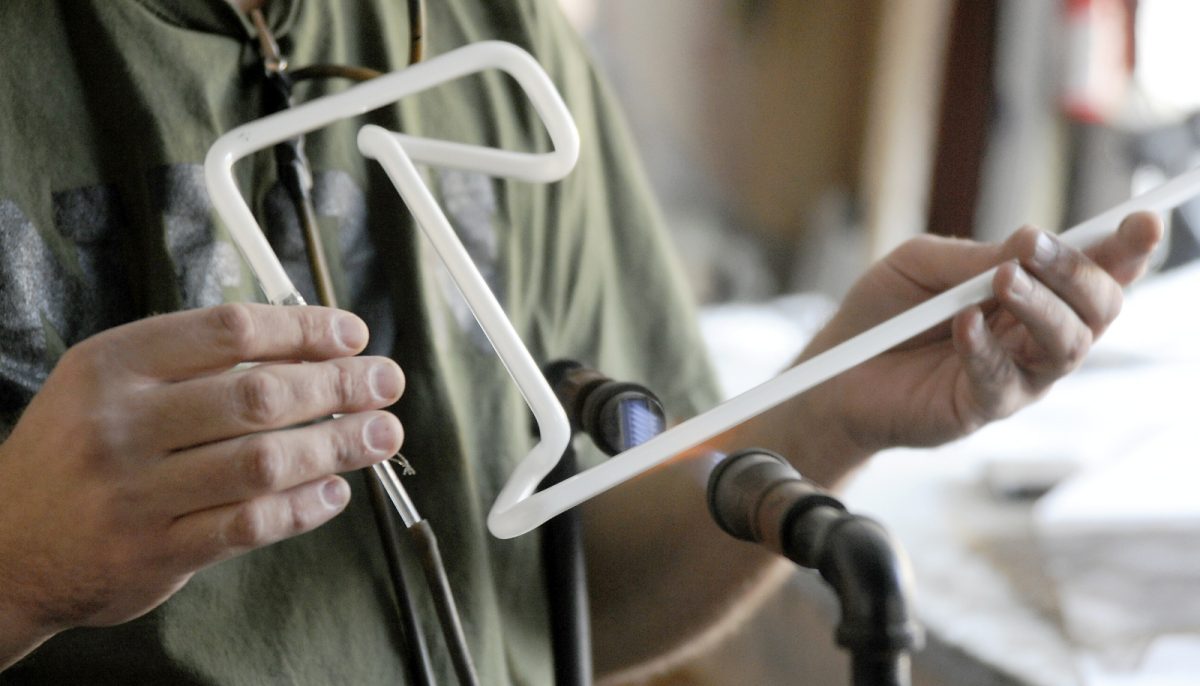
Jason Layton bends and shapes glass for neon lights. Creating a neon light includes several steps, from forming the glass, vacuuming out air, pumping in the gas, adding black paint to help the lettering stand out and then mounting the sign.
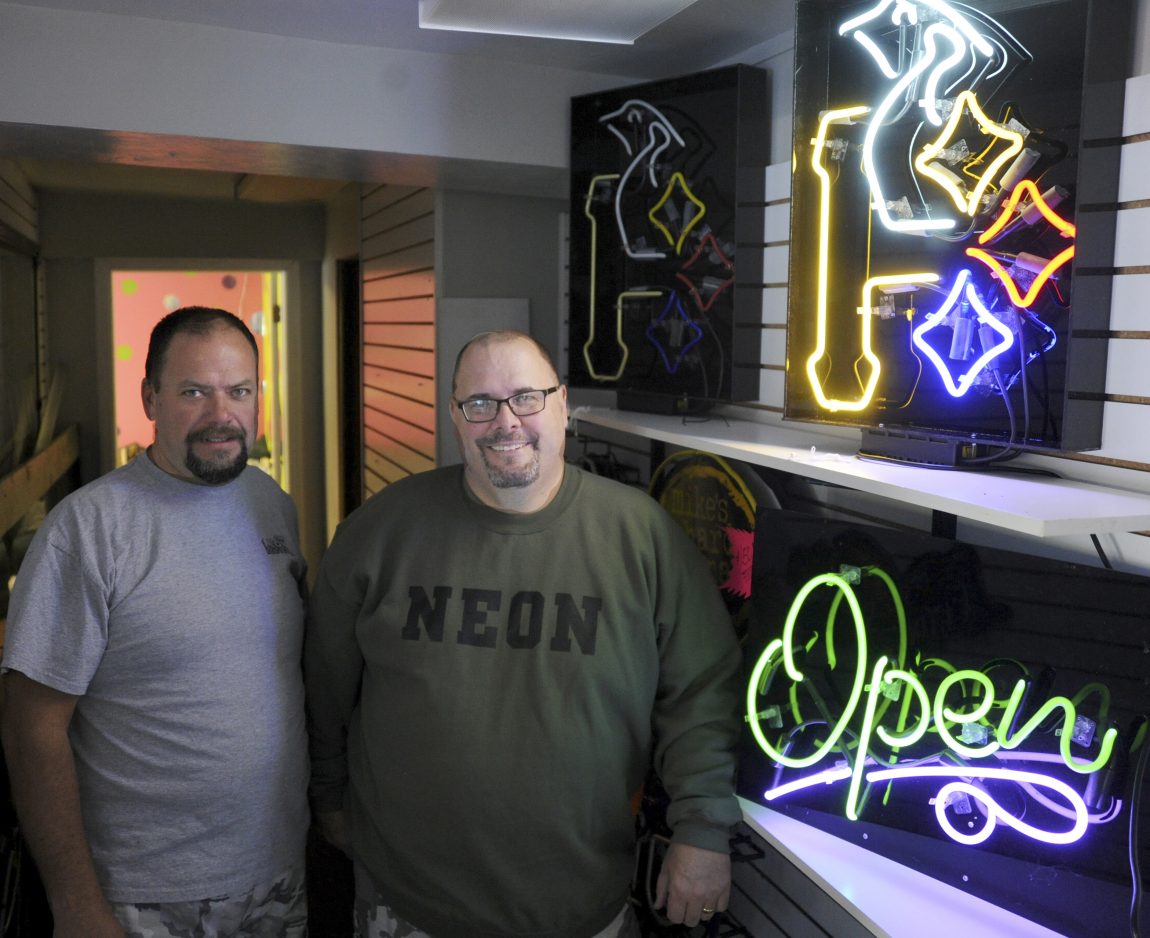
Owner David Bates and office manager Ken Schmidt run the Neon Doctor store in Pittsburgh. The store creates custom neon lights, repairs neon lights and sells refurbished lights.
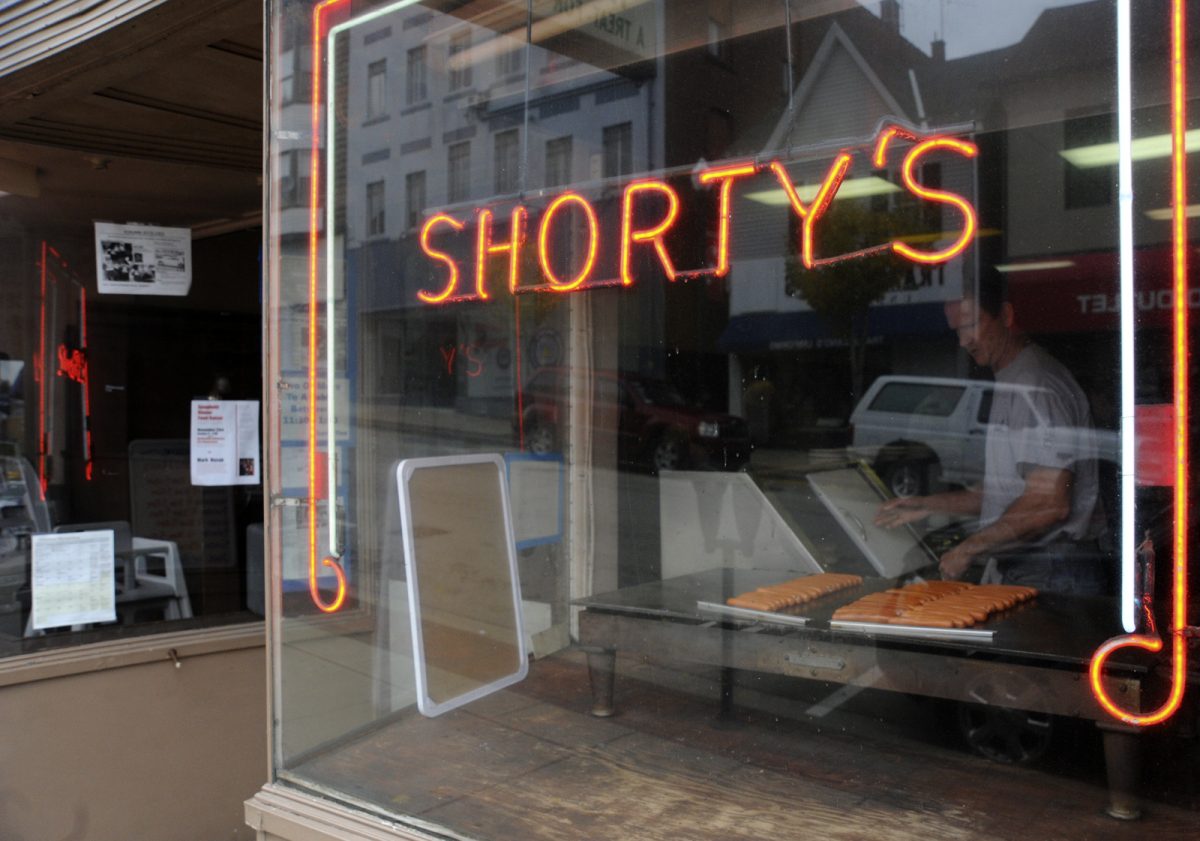
Shorty’s in downtown Washington
Observer-Reporter
Jason Layton has been a tube bender for 15 years, an old-school artisan who burns straight sticks of glass over hot flame to form neon signs.
“He’s great at intricate bending. He thrives on most things that benders don’t like,” said Ken Schmidt, office manager and layout artist for Neon Doctor in Pittsburgh, where Layton works.
There aren’t many tube benders left. Through the 1980s and some of the ’90s, accomplished neon benders worked long hours, sometimes around the clock. They were craftsmen who began as apprentices and spent years perfecting their skills.
But neon’s popularity has dropped in the past decade, as businesses switch to cheaper, more energy-efficient LED bulbs.
Schmidt isn’t writing off neon yet, though.
“People say it’s a dying art, and to a point it is. But thousands of signs are still being lit by neon. LED will never replace the brightness and the art of neon,” said Schmidt. “There are a lot of people who like the nostalgic look and won’t settle for anything else. We’re as busy as we’ve ever been.”
A brief history of neon, courtesy of Neon Doctor’s employees: The gas was discovered in 1898 by two British chemists, who named it “neon,” the Greek word for “new.”
It’s one of several gases that light up (neon turns red) when an electrical charge passes through them.
The first neon bulb was created by French engineer Georges Claude in 1902 when he sent electricity through a sealed glass tube containing neon.
Tube benders add other gases such as argon and xenon to create the familiar bright hues that neon signs emit.
Before neon, incandescent bulbs were sign makers’ favorite lighting, said Tod Swormstedt, founder of the American Sign Museum in Cincinnati, Ohio, which contains more than 4,400 artifacts, including 600 signs and a working neon shop.
Neon signs arrived in the U.S. in 1923 when a Los Angeles Packard auto dealership installed two signs that caused traffic to stop as drivers gawked at them.
By 1940, the downtowns of nearly every U.S. city were bright with neon signage, and there were 2,000 shops nationwide designing and making neon signs. H&R Signs in Washington fabricated dozens of neon signs in the city, including the black-and-white Observer-Reporter sign that hangs in front of the company’s building.
By the late 1950s, though, neon began losing ground to newer technology. It enjoyed a resurgence in the 1970s, when architects on the West Coast and in New York City incorporated it into homes and buildings as a light source, and neon artists like Rudi Stern, who ran a Soho studio called Let There Be Neon, created neon sculptures.
“If you want that exposed neon look like you have in Las Vegas and New Orleans, you have to go with neon. But basically, the market for lighting belongs to LEDs now,” said Swormstedt. “You can pay a kid $10 an hour to do LED lighting because there’s no art involved, it’s easy to install and it’s low voltage.”
According to a survey by the trade publication Signs of the Times (Swormstedt’s great-grandfather was the first editor of the family-run magazine and Swormstedt worked there until he started the museum), just 18 percent of neon signs were lit by neon in 2010, compared with 40 percent that were lit by LEDs.
Inside the windows of Shorty’s, an iconic hot dog shop in Washington, hang two neon red “Shorty’s” signs. Neon red tubes frame the windows.
“We opened the store in the early ’30s, and I’m in my 40s, and those neon signs have been there as long as I can remember,” said Steve Alexas, owner of the family-operated business. “The restaurant is the same as it was when I was a kid, and the nostalgia is something that people like about it. There are things I’d like to change and update about the place, but the lights and booths are a package deal, people love the look and we’re not supposed to change anything.”
Over the years, the tubes have broken (once during a robbery at the restaurant and, occasionally, when workers are cleaning the windows), and H&R Signs has repaired the damage.
Age and elements have taken their toll on other 20th-century neon artifacts throughout Washington County, including the neon sign that graced the Coyle Theater in Charleroi for more than half a century.
The Mid Mon Valley Cultural Trust is working to restore the theater and the neon marquee and blade out front.
The theater was built in 1891, and the art deco neon marquee and blade added in 1939.
“It’s a profound piece of architecture and it brings back memories of those big, beautiful blades that are still around and can be saved,” said Melanie Patterson, chairman of the cultural trust. “People associate those neon blades with certain areas because the signs have been around so long. They’re like landmarks. Many were taken down years ago because they were expensive and costly to repair. But they’re worth saving.”
Schmidt has worked in sign shops for 30 years and has helped build some iconic Pittsburgh signs, including the Heinz ketchup bottle that now resides in the Heinz History Museum.
Neon Doctor has crafted and repaired all sorts of neon signs: beer signs, sports signs and vintage signs. Neon Doctor’s clients include Primanti’s restaurants, Applebee’s, Arby’s and Longhorn Steakhouses, pizza shops, nail and hair salons, barber shops, car washes, car dealerships and beer distributors throughout the region.
The company also has recreated neon’s lost eras for movies and television shows.
Swormstedt thinks there will always be a market for neon.
“You’re seeing pockets around the country and in Canada where they’re trying to resurrect and restore neon signs. Saginaw, Mich., has a six-block area they call their neon district, and they’re trying to restore or bring in signs. Vancouver is doing the same thing,” said Swormstedt. “New Mexico spent public tax money restoring neon signs along Route 66. They know it brings in tourists and there is some return on your dollar.”
Neonworks, the neon sign shop operating in the museum, “is the last neon shop remaining in Cincinnati, but they’re backed up with work for collectors and businesses who want signs restored,” Swormstedt said. “There’s so much romance around neon. I know it’s an emotional connection and, I think, it s a nostalgia thing, It’s a walk down memory lane and it’s always good memories.”