

Working relationships critical for colleges and local police
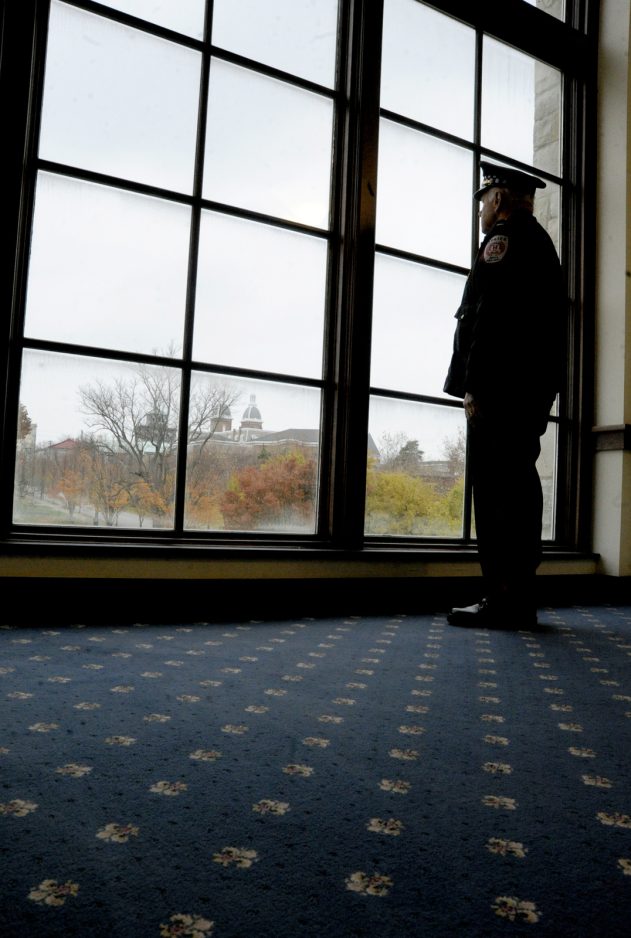
Lt. John Bell, a campus police officer, takes a moment to look out the window of one of the buildings while making his rounds on the Washington & Jefferson College campus.
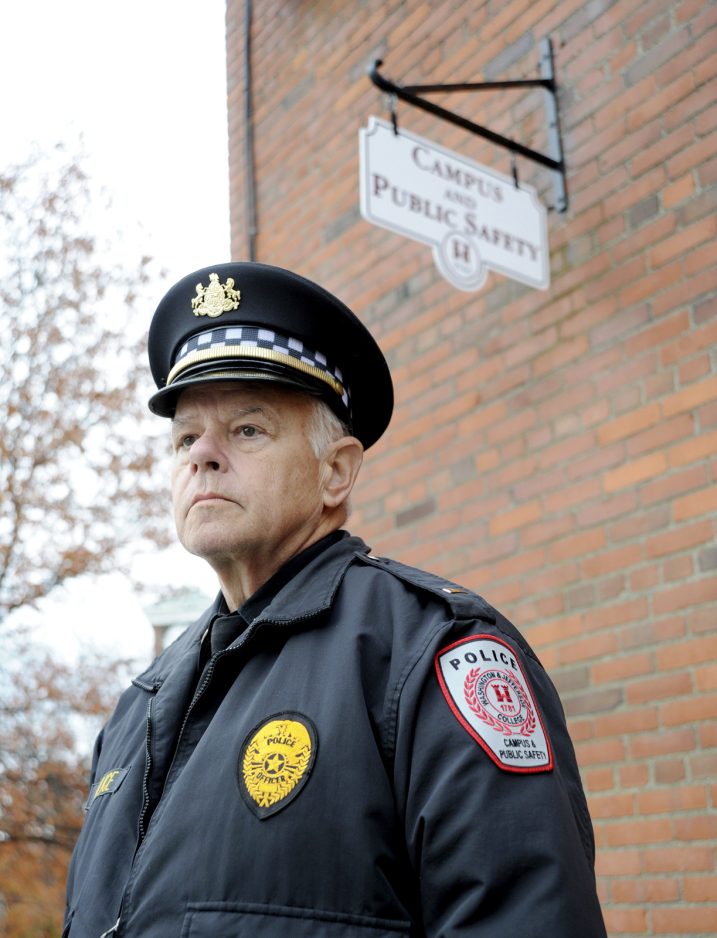
Lt. John Bell, a campus police officer, helps keep the Washington & Jefferson College campus safe. Bell and five other full-time officers make rounds of the campus to make sure everything is safe for the students.
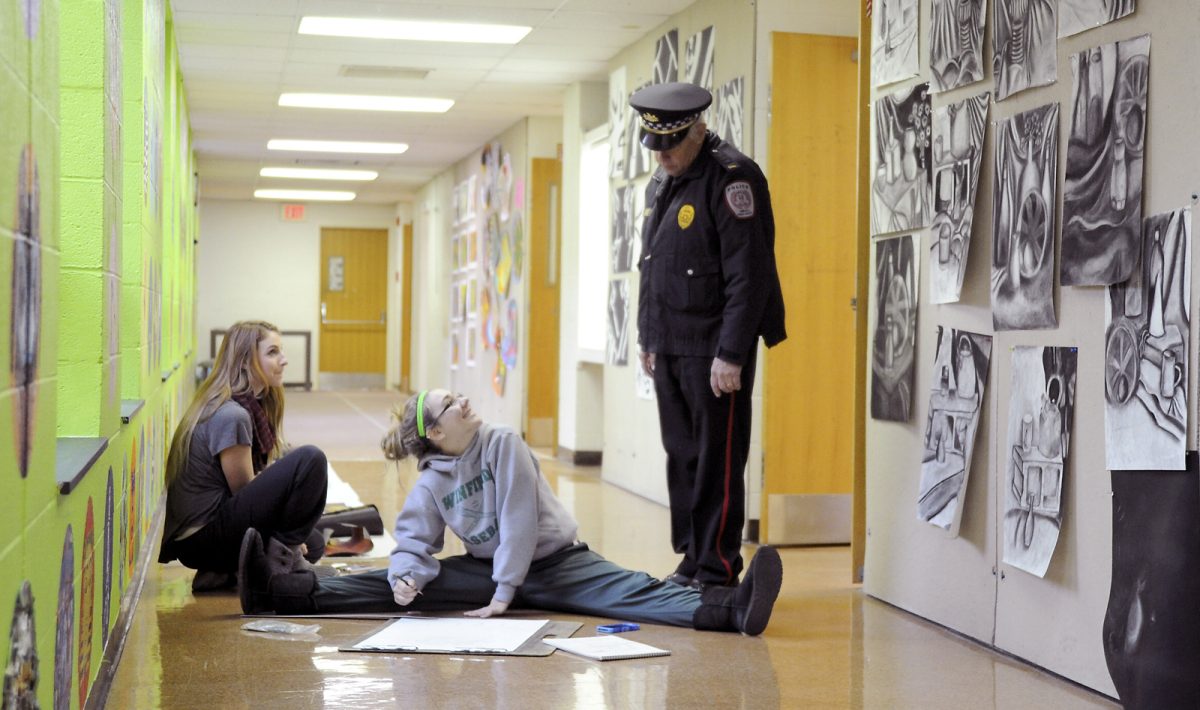
Washington & Jefferson College sophomore Nicole Benvenuto and senior Julee Catania talk to Lt. John Bell as he makes his rounds around the W&J campus.
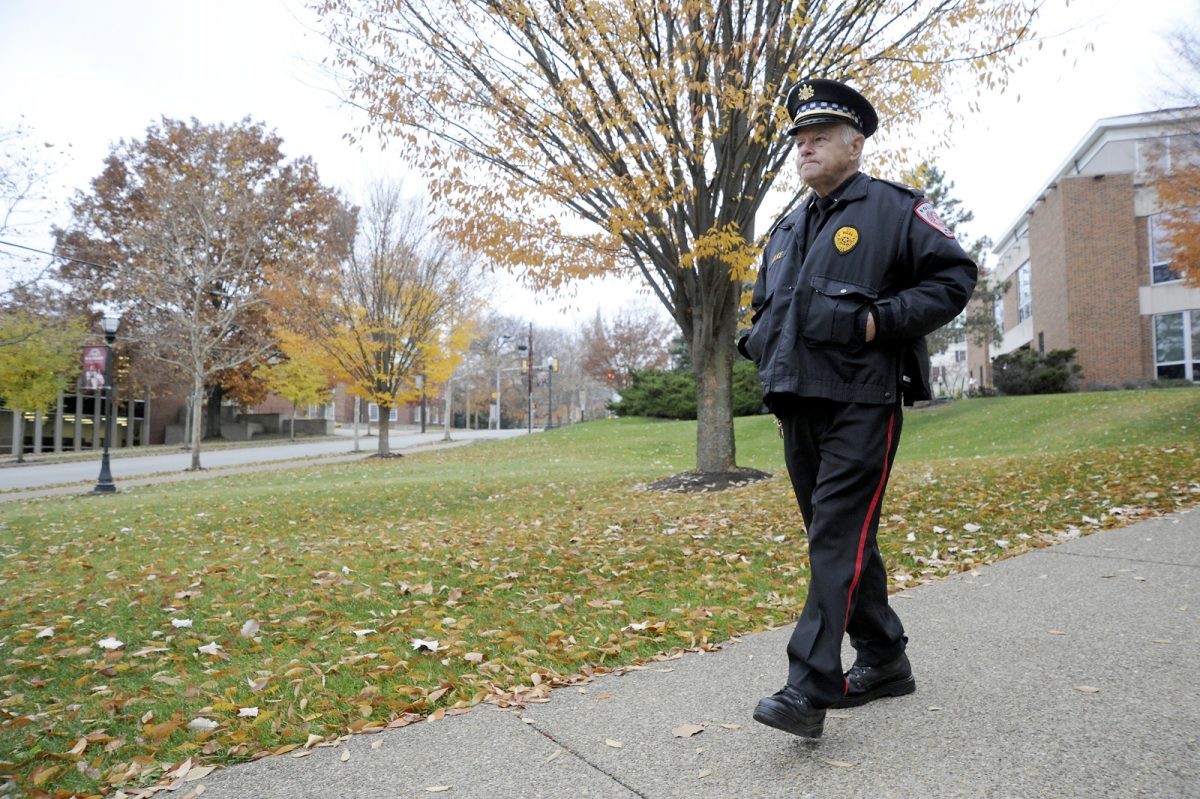
Lt. John Bell, a campus police officer, walks around the Washington & Jefferson College campus in Washington to make sure everything is secure and safe.
When six California University of Pennsylvania football players allegedly assaulted a man off campus last month, the school’s police department worked in tandem with the borough’s investigators to piece together the details of the beating and arrest the suspects.
Last Sunday, a Waynesburg University freshman was found dead in her dorm room in what authorities believe was the result of a suicide, but school officials immediately handed over the dormitory’s security video and check-in information to borough police for their investigation.
And earlier this month, two Washington & Jefferson College students reported hearing gunshots while walking off-campus near South Street in the city, prompting Washington police to brief college officials about their findings the following morning.
In each case, the institutions worked closely with their municipal police departments and forged relationships that are unmistakably linked.
“The city and W&J are intertwined,” said W&J College Public Safety Director Robert Cocco, who was hired in May. “I recognize we may need their support, and they have been very supportive of us.”
Washington police Chief Chris Luppino has known Cocco for nearly two decades, because the new director spent some time in this area searching for fugitives while working for the U.S. Marshal’s Service. There also are many retired city police officers working for W&J’s department, which includes four full-time officers that Cocco plans to boost to six, and a mix of security guards.
“So far, it’s a good relationship and only getting better,” Luppino said, adding he’d like to expand training opportunities with the college and has been encouraged by Cocco’s response.
It wasn’t always that way, Luppino said. Before the college moved to full-time officers in the early 2000s, contracted security guards often were the first people to arrive if an incident occurred on campus. Luppino said victims sometimes spoke to college employees or administrators before being interviewed by investigators.
“There’d be times when you would show up and the scene was tampered with,” Luppino said.
Changes to the federal Clery Act in the late 1990s that expanded mandatory crime statistics reporting by colleges and universities helped fostered better working relationships with municipal police departments. But when a student is a victim or suspect in a crime committed away from campus, the municipal police departments are a vital source of information for school administrators.
That was the case earlier this month when the W&J students heard gunshots while walking back to campus. The incident happened far from campus, and no one was injured, but Luppino notified college security officials about the situation.
“Of course, the college has questions,” Luppino said. “We didn’t feel like there was any danger to the students, but we wanted to share that information with them.”
Cal U. police and their counterparts in the borough have an even closer working relationship. Cal U. police Chief Edward McSheffery said his team of 18 full-time officers assisted California Borough police with off-campus calls 255 times in 2013. He noted that the borough of 6,795 people balloons during the school year with the influx of students, putting added stress on the local police department.
“They don’t ever have to reach out to us, ever,” McSheffery said. “Any time there is something that happens in the borough … we’re always offering to assist.”
That was the case with the investigation into the severe beating of a man and subsequent arrest of six Cal U. football players. California police Chief Rick Encapera reached out to the college in an attempt to locate the players suspected in the incident, and a Cal U. police detective interviewed some of the suspects.
“They monitor us, and we monitor them,” McSheffery said. “We’re there to back each other up, and sometimes we work as one unit. That’s what you have to do these days. That’s the only way you can be effective.”
The situation is different in Waynesburg, where the university does not have its own police department. However, Waynesburg Borough police Chief Robert Toth noted that the university has made donations to his department and even purchased a police car to assist with expenses.
Toth said the department also uses one of the university’s criminal justice instructors as a forensic scientist for the police department. The close relationship with the school has helped make the department familiar with students if officers are needed in town or on campus.
“We have a good rapport with them,” Toth said of the students and staff. “They know me, and I know them.”
That understanding between students and a college’s officers is critical, Cocco said, and is reassuring to parents who want to make sure their children are safe while away at school.
“They understand the campus and the students,” Cocco said of his police officers. “The way we handle things sends a message to students that we’ll take care of it swiftly.”