

To borrow or close?
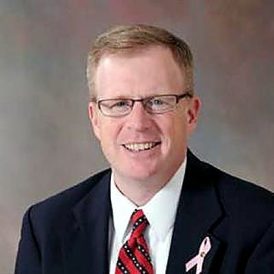
Strapped for cash, Burgettstown Area School Board members have two options if the state budget impasse continues past the half-year mark: borrow money to keep the schools open or close the doors beginning Jan. 4.
All are watching what happens – or doesn’t happen – in Harrisburg, and Dr. James M. Walsh, superintendent, who has spoken with many residents about the crisis, is encouraging Burgettstown Area taxpayers to “please use your best persuasive efforts with your legislator to resolve the differences and get us a budget. We have been able to operate this long on our local tax base.”
Neither has the district received federal funds during the state budget deadlock, Walsh said.
Burgettstown Area School District, which includes Burgettstown Borough and Hanover, Jefferson and Smith townships, has 1,168 students and employs about 176.
The district’s dire financial straits were addressed earlier this week when the board convened to reorganize.
“I had asked the board permission or approval (to speak) to banks about a tax-anticipation loan” that would keep the district open through the first two months of 2016, Walsh said Wednesday.
As the board debated, the discussion evolved into one about incurring the cost of borrowing money versus the cost of not holding classes after the holidays.
Walsh said he has not yet received proposals from bankers with specifics about interest rates on borrowing, but if no state budget for education funding is forthcoming from Harrisburg, the board is prepared to reconvene at 7 p.m. Dec. 21, in the elementary center, 100 Bavington Road, Burgettstown, to consider its options.
The Burgettstown Area district passed its own $18.2 million budget earlier this year before a state-imposed deadline. In its spending projections, it was counting on receiving more than $2.5 million by this point in the school year. A closure also would affect 33 students who rely on the district for transportation to nonpublic schools.
“None of us expected to be sitting here in December facing the possibility of running out of money,” Walsh said.
In 2003, the state House sent a budget to then-Gov. Ed Rendell on Dec. 23, just a week before the West Greene and Brownsville Area school districts threatened a shutdown.
Avella Area School District borrowed $2 million earlier this year to keep the district operating through the end of this year, and it expects to remain solvent through most of January.
Superintendent Cyril Walther said Wednesday, “We’re hoping the end of January. We would take a look at borrowing once again, which would be our first choice rather than just locking the doors. Keep programs running and payroll paid, that’s been our focus.”
Avella obtained its loan from Washington Financial with an interest rate of 1.375 percent, according to the superintendent.
Walther said the district maxed out its borrowing capacity for 2015 due to a previous bond issue for a renovation project, but with the arrival of the new year, its ability to go into debt would acquire a new lease on life.
Austerity measures the district has taken include a moratorium for teachers traveling off-site for education-related seminars, although it has continued to offer in-service training session previously scheduled within the district.
He added, “We hope the state, since it is at 163 days without a budget, passes one.”
Optimism was in the air when Avella borrowed the $2 million. “The word from the state was they hoped to have something by Thanksgiving,” Walther said. “Every time they get closer, they kind of take a tangent and it seems to get further away. The state’s kind of put us in a position that is not good.”
He views the impasse as “using the children as pawns.”
Among Washington County’s 14 school districts contacted randomly, Randy Skrinjorich, Ringgold School District director of operations and financial services, said, “We don’t plan on doing a (tax anticipation note) at this time.”
The district is able to get by with revenue from local taxes and its surplus, known in governmental circles as a “fund balance.”
Skrinjorich continued, “It’s a shame that it’s gone on this long. We’re one of the few states with a full-time legislature and they can’t get a budget done?” He pointed out that school districts are required a myriad of reports with the state Department of Education on enrollment, transportation and finance, and if a district is late, it can be penalized.
“I can’t speak on behalf of the district,” he said. “But from a personal standpoint, I’m surprised we’re not seeing any movement on the taxation of natural gas extraction, a natural resource that our state has. It’s a natural resource that is leaving our state, and why don’t they want to tax the natural gas industry, I don’t understand. They’re not going to pick up and leave. That resource is greater in Pennsylvania than anyplace else. It’s a disgrace.”