

Authority’s future uncertain
The year was 2000. Bill Clinton was president of the United States, the saga of Elián González seized the nation and the City of Washington was on the cusp of a new era.
More than $10 million was earmarked for a downtown revitalization project in a 14-block area of the city center, with utility lines to be moved underground and sidewalks replaced. The revitalization, coupled with community events, was intended to lure new businesses and tourists.
City officials created the Washington Business District Authority, tasked with promotion and maintenance of the business district.
To fund the authority – with an approximate $130,000 annual budget – property owners were charged $9 per $1,000 of their property’s assessed value.
Now, 15 years later, time is up. The authority has expired. Some of the goals officials set out to achieve occurred in the form of new sidewalks, updated storefronts, community events and new merchants.
But, as WBDA board members appealed to City Council for a renewal, the question remains: Has the authority been effective in its efforts?
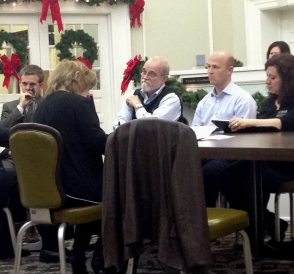
At a pubic meeting Thursday in City Hall, WBDA members were invited to provide insight.
Authority Chairman Christopher Potts named several authority successes, including expansion of the Main Street Farmers Market, support of the Whiskey Rebellion Festival, hosting the annual Christmas parade, beautification in the form of tree and flower planting and providing resources for prospective future property owners.
“We hope we’re acting the best way we can under the rules we’re given to operate,” Potts said. He and the nine-member volunteer board are all property owners or representatives.
Many members who spoke agreed there are positive steps being taken to enhance the city’s business district. But concerns about the WBDA’s duties versus the city’s duties were brought to light, with many opining the business authority should focus less on sidewalk cleanup and more on promotion.
Property owner Tripp Kline said he supports the WBDA, but “bringing business into town should be the main focus.” He questioned a lack of an up-to-date website and social media presence.
“While I support the BDA, I think their mission needs to change,” Kline said.
Property owner John Hopper agreed and asked the board to clarify the bearing the countywide property reassessment would have on member fees.
“The devil is in the details,” Hopper said. “We would like clarification.”
With the upcoming reassessment, Washington County will tax at 100 percent of market value, a significant change because the formula in place for more than 30 years has been to tax at 25 percent of the base-year value of Jan. 1, 1981.
Property owners are concerned their WBDA assessment will be based upon the new formula, increasing their contribution greatly.
“Whatever happens to the assessment, it will be revenue-neutral,” said board member William Mesler. “We’ve got to pay it, too,” he said of board members.
City council members did not take action on the issue. Mayor Brenda Davis said she wanted to discuss the renewal, but her colleagues didn’t agree. Therefore, the onus will be on the next administration, including incoming Mayor Scott Putnam, to determine the authority’s future.
“Personally, I think the BDA is a needed service in the city,” said Putnam Friday. “I need to look into more of their fee structure and what they’re doing with the money they’re collecting.”
As far as the WBDA’s duties – promotion or maintenance – Putnam sees a need for both.
But, he said, “I wish they would lean more toward marketing of the city.”
Before Thursday’s meeting, WBDA Manager Pete Stefansky said city council could extend the authority for as long as 15 years. If operations continue, the focus will be on developing available land.
“Obviously, we’re going to continue to work to retain and promote for businesses,” Stefansky said, adding that work on a new WBDA website is underway.
“The city and (Washington County) Redevelopment Authority are making positive moves in getting dilapidated buildings down. It’s not a different direction, but we have available land space that we haven’t had in the past.”