

Baltimore jury mulls police officer’s fate in man’s death
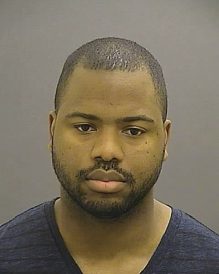
BALTIMORE – Jurors wrestled over what “evil motive” means Monday as they deliberated the fate of the first of six officers to be tried in the death of Freddie Gray, a black man whose neck was broken in a police van, fueling the “Black Lives Matter” movement.
The panel also puzzled over the meaning of “bad faith” and other terms the judge said they must use to decide whether Officer William Porter is guilty of misconduct in office, the least of the charges against him. Porter also is accused of manslaughter, assault and reckless endangerment, and faces up to about 25 years in prison if convicted of them all.
The verdict will likely set the tone for the others as well as for the city, still healing from an April riot triggered by Gray’s death that caused millions of dollars in property damage and exposed the deep divide between the police and the people of Baltimore.
Authorities sought to prevent more trouble ahead of the verdict, opening an emergency operations center Monday and urging parents to control their children. A letter Baltimore City Public Schools CEO Gregory Thornton sent home with students warned that “student walkouts, vandalism, civil disorder and any form of violence are not acceptable.”
“Whatever the verdict, we need everyone in our city to respect the judicial process,” Mayor Stephanie Rawlings-Blake said. “We need everyone visiting our city to respect Baltimore.”
Prosecutors have had to prove criminality by inaction that Porter abused his power by failing to save Gray’s life.
His defense countered that the case is based on conjecture, and there is no evidence Porter caused Gray’s death.
Porter testified Gray showed no signs of pain or distress before he arrived at the police station critically injured.
Prosecutors said this was a blatant lie.
“Freddie Gray went into the van healthy and he came out of the van dead,” prosecutor Janice Bledsoe reminded jurors.
The paddy wagon “became his casket on wheels” after Porter repeatedly denied Gray medical care and left him handcuffed and shackled but unbuckled, thus unable to keep his body from slamming into the end of the metal compartment if the van stopped suddenly, Bledsoe said.
Gray was arrested while fleeing police in his neighborhood, just seven city blocks from the station, yet police stopped the van repeatedly during a circuitous trip around West Baltimore that stretched on for 45 minutes.
“Click,” she said, and then repeated. “How long does that take, to click a seat belt and click a radio and ask for a medic? Is two, three, four seconds worth a life? It’s all it would have taken.”
Bledsoe showed jurors the unfastened seat belt from the transport wagon. “It’s got Gray’s blood on it,” she said.
“Don’t fall for that,” countered Murtha. He argued that expert witnesses disagreed on exactly when Gray’s neck was broken during his trip to the police station, and said this alone should give jurors reasonable doubt.
Gray’s death was indeed a “horrific tragedy” but “there is literally no evidence” Porter is responsible, he said. “This case is based on rush to judgment and fear. What’s an acronym for fear? False evidence appears real.”
Prosecutors said the driver, Caesar Goodson, initially stopped because Gray was acting out inside the passenger compartment. Officers then bound him more tightly at the wrists, shackled his ankles and laid him on his stomach on the floor. He stopped again and officers checked on Gray three more times during the journey.
At one point, Porter lifted Gray to a seated position, but again left him unbuckled. Prosecutors say Gray was gravely hurt by then; Porter denied this, saying Gray appeared uninjured. In any case, the van detoured again to put another prisoner in a separate compartment before Gray finally arrived at the station in critical condition.
Porter told jurors he asked Gray if he wanted to go to the hospital, but never called a medic because Gray said only “yes.” He testified that he told Goodson to take him there, because the jail would reject a prisoner even falsely claiming injury. He told investigators Gray had been kicking inside the van, and “he didn’t appear hurt in any way, shape or form.”
In his jury instructions, Baltimore Circuit Judge Barry Williams said violating police policies does not necessarily constitute negligence. He also told jurors how to determine each charge: Manslaughter means he acted in a “grossly negligent manner” and “created a high degree of risk to human life;” assault also requires a finding of gross negligence; reckless endangerment means disregarding a substantial risk of death; and misconduct requires “evil motive” and “bad faith.”
The jurors later sought clarification of “evil motive” and other terms, but the judge said could not expand on his instructions. degree of risk to human life.”
• Assault also means gross negligence.
• Reckless endangerment means disregarding a substantial risk of death.
• Misconduct requires an “evil motive, bad faith” and “not merely an error in judgment.”
While police authorities testified that officers are obligated to follow department rules, the judge also instructed jurors that merely violating a general order or police policy does not necessarily mean Porter was negligent.
Proving someone is guilty because of something he didn’t do is difficult in American jurisprudence, and more so in this case. No eyewitnesses said what happened inside the van, and no unequivocal evidence showed exactly when his neck was broken during the trip.
Prosecutors said the driver, Caesar Goodson, initially stopped because Gray was acting out inside the passenger compartment. Officers bound him more tightly at the wrists, shackled his ankles and laid him on his stomach on the floor.
The van stopped three more times as officers checked on Gray, and at one point, Porter opened the van’s doors and lifted Gray to a seated position, although still unbuckled.
Prosecutors say Gray was gravely hurt at this point; Porter denied this, saying Gray wasn’t exhibiting any symptoms and appeared uninjured. In any case, the van detoured to pick up another prisoner in a separate compartment before Gray finally arrived at the station in critical condition.
Porter told jurors he didn’t call a medic because Gray didn’t show signs of injury, pain or distress, and said only “yes” when he asked if he’d like to go to the hospital. He testified that he told Goodson to take him there, because while he still didn’t believe Gray was really hurt, he knew the jail would reject a prisoner claiming injury. He told investigators that Gray had been kicking inside the van at a previous stop, and “he didn’t appear hurt in any way, shape or form.”
Other witnesses also testified that the driver was responsible for buckling Gray to the bench. Goodson faces the most serious charge of the six officers: second-degree “depraved-heart” murder.
“Whatever the verdict, we need everyone in our city to respect the judicial process,” Rawlings-Blake said. “We need everyone visiting our city to respect Baltimore.”