

Local businessman touts e-bikes as green alternative
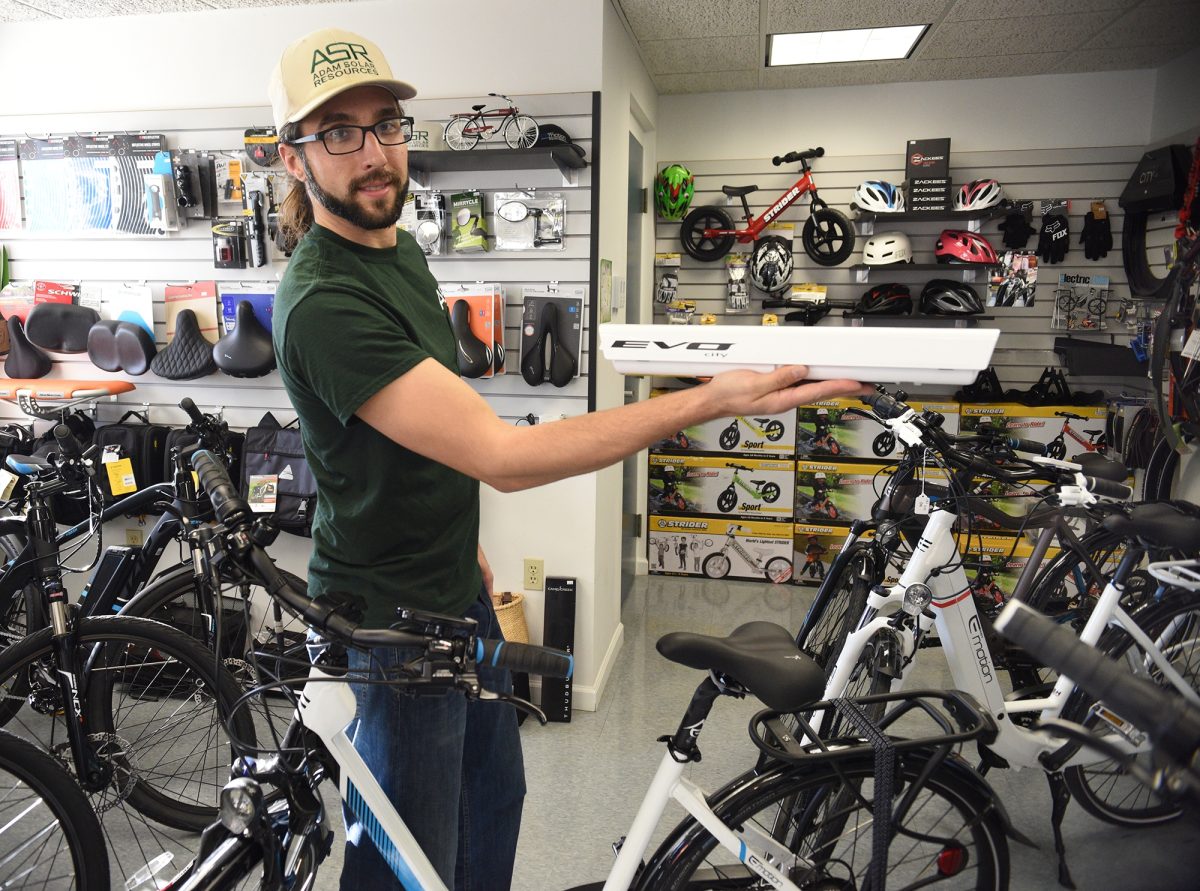
Adam Rossi, owner of Adam Solar Resources, holds the battery for an electric bike at his business in Bridgeville.
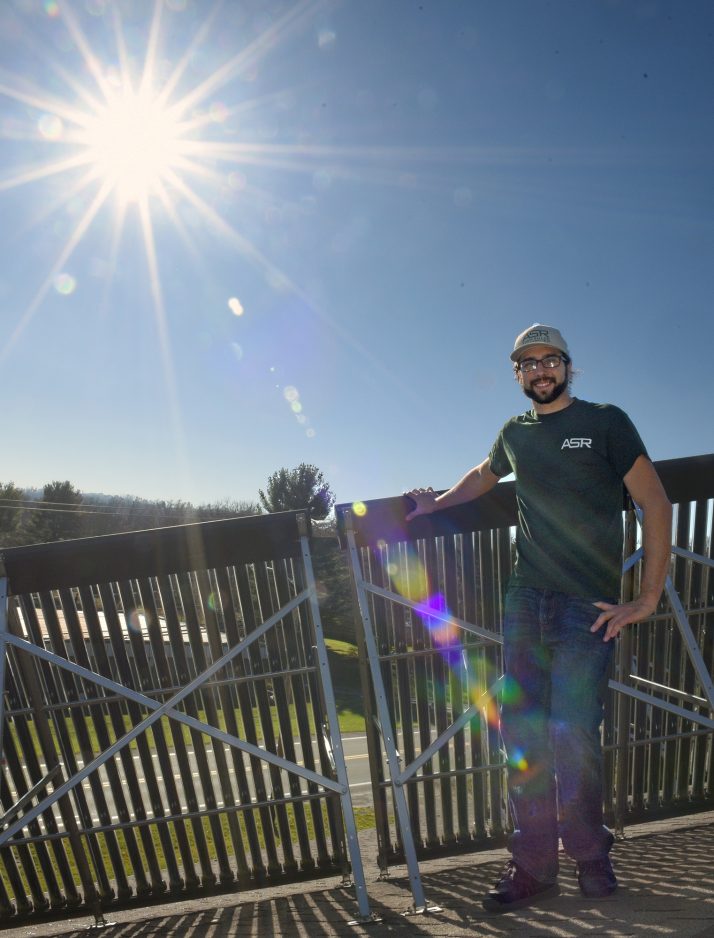
Adam Rossi stands next to solar vacuum tubes on the roof of his business in Bridgeville.
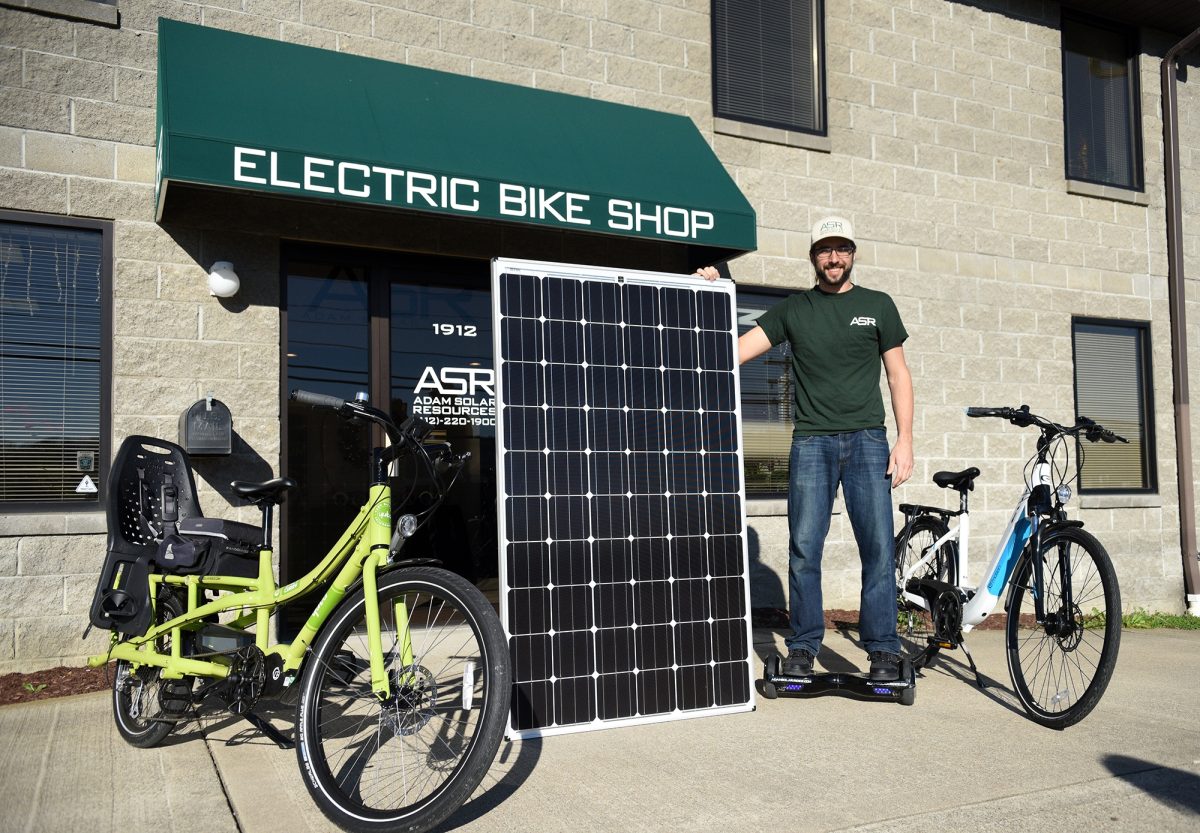
Adam Rossi, owner of Adam Solar Resources, sells many green products, including solar panels, electric bikes, electric car charging stations and hoverboards.
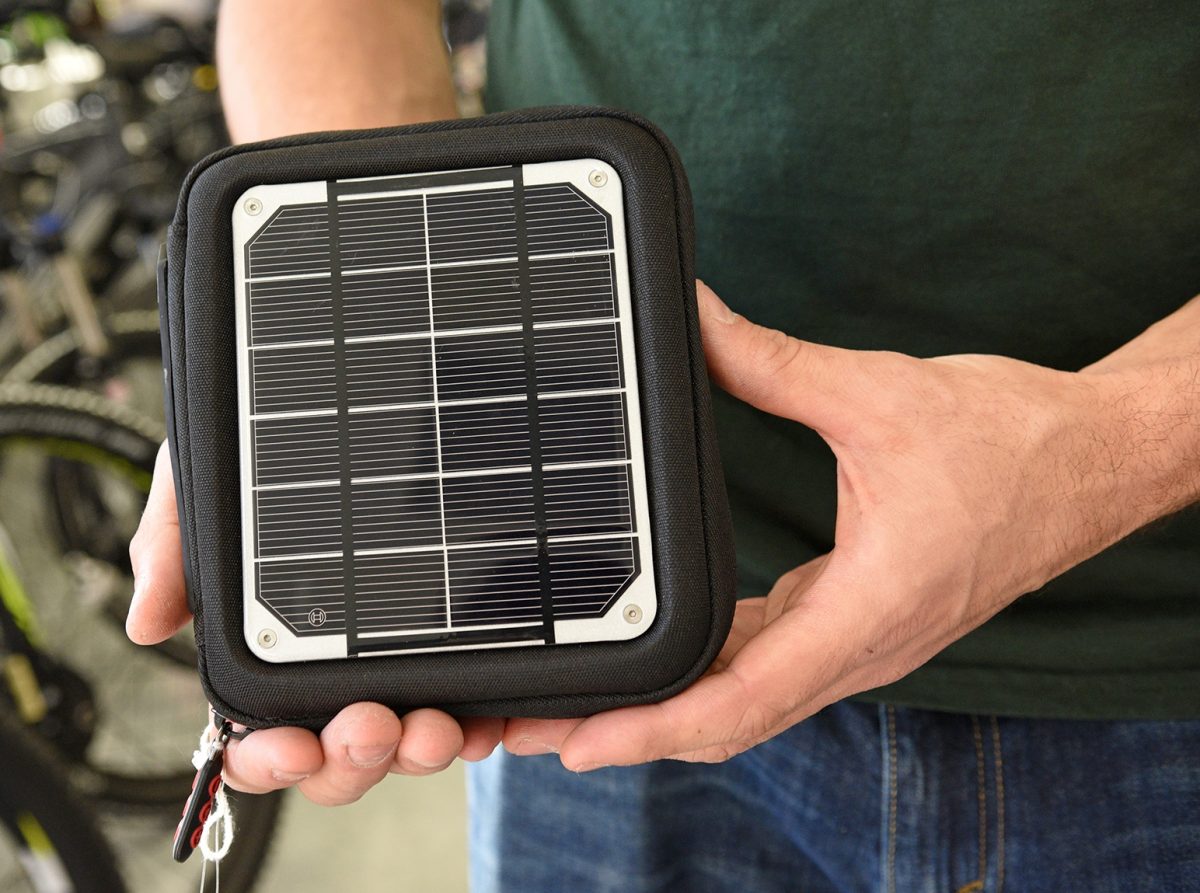
Adam Rossi holds a portable solar charger.
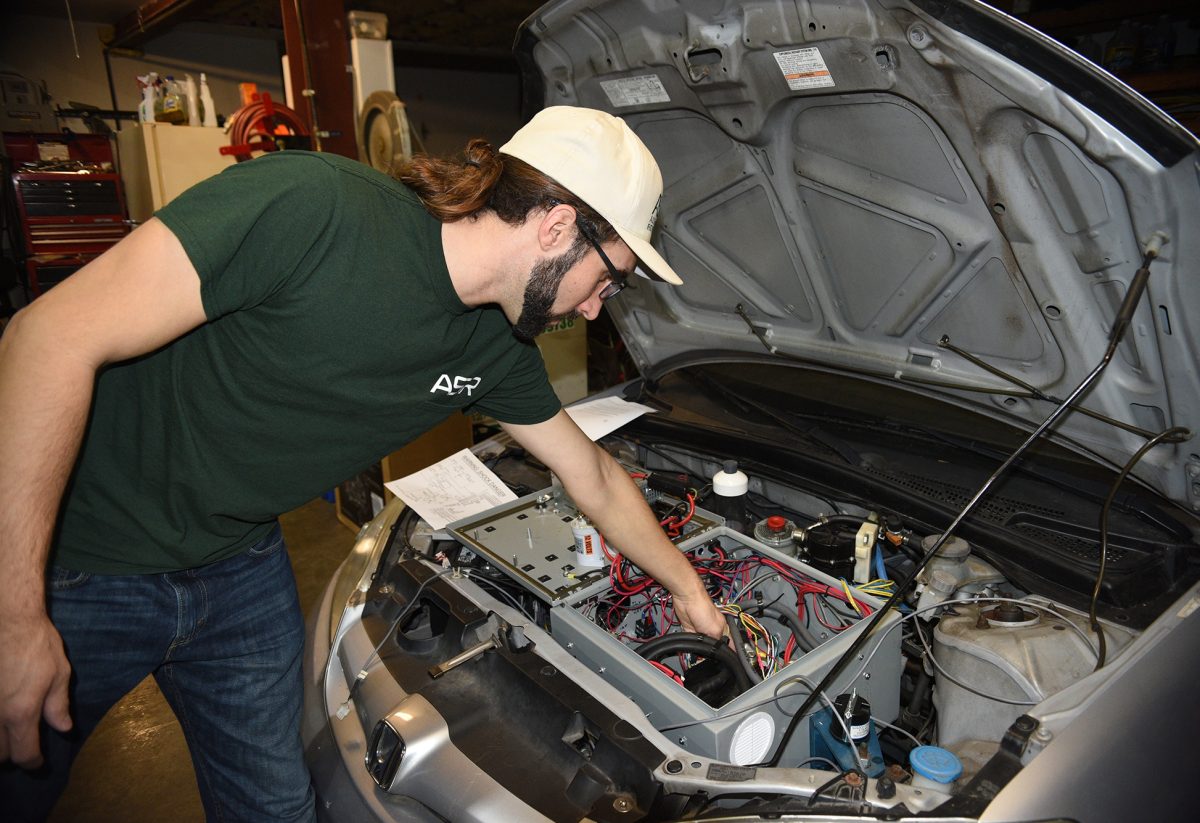
Adam Rossi takes a look under the hood of one of his electric cars.
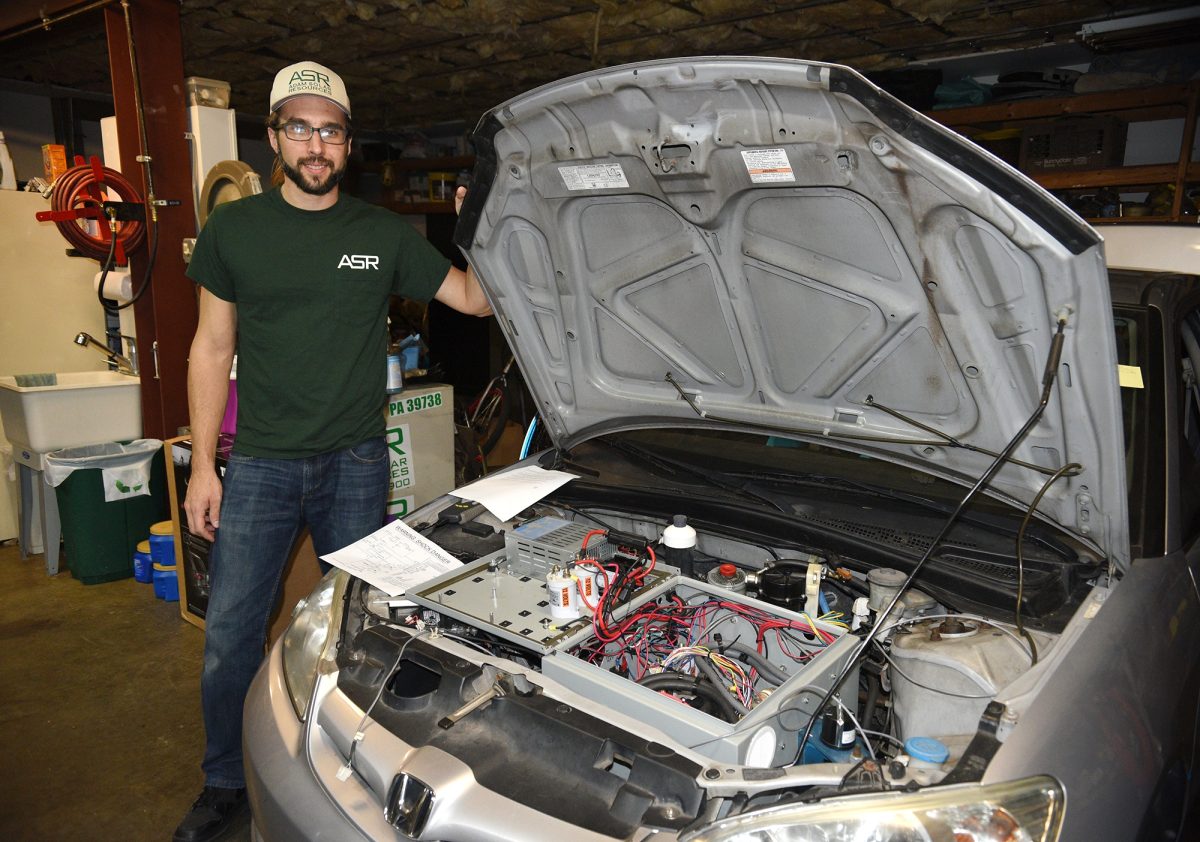
Adam Rossi takes a look under the hood of one of his electric cars.
Take a quick glance at the bicycles on display at Adam Solar Rides in Bridgeville, and they look like ordinary two-wheelers.
They’re not.
The bikes, it turns out, are electric bikes (also known as e-bikes), which are booming in popularity in Europe and China, where they’re held in high regard for their low impact on the environment.
Adam Rossi, owner of both Adam Solar Rides and Adam Solar Resources, a solar sales, design and installation company, believes that electric bikes will catch on in the United States, which lags behind other countries in e-bike sales.
“Ride more, drive less,” Rossi said. “The United States is transitioning to electric bikes slower than the rest of the world, but it’s been probably the fastest growing segment of the cycling market. It’s coming on.”
E-bikes are the latest in a line of green energy and transportation products Rossi sells.
For Rossi, a father of two boys, 3 years old and 6 months, green energy is more than a business. He feels an obligation to fight climate change by leaving a lighter carbon footprint, and he’ll do it one solar panel at a time if he has to.
“I’m a dad now. I’ve got to save the world for the kids,” said Rossi, a graduate of the University of Pittsburgh who joined his father’s business and turned it into a solar company in 2009.
Rossi bought his first e-bike in 2012 to commute to and from work, and he said that by the second day he rode it, he knew that he wanted to open an electric bike shop.
“Right now, a lot of my customers are people who are retiring and getting back into biking. That’s good, but I want it to be everybody who’s commuting to downtown,” Rossi said. “I’d like to see everybody commuting to work. This is a healthy and sustainable way to get around.”
Rossi is an authorized dealer for BH Easy Motion, a division of BH Bikes, a bicycle company that has been around since 1909, and Currie Technologies, a California-based company that began selling e-bikes in 1997.
E-bikes get between 20 to 40 miles on a 4-cent charge. An e-bike gets an equivalent of anywhere between 2,000 to 3,000 miles per gallon.
Rossi’s e-bikes, powered by a lithium battery, range in price from $2,000 to more than $5,000.
While his e-bikes business is expanding, Rossi’s primary business remains solar energy installation, and he installs solar panels for private homes and commercial buildings.
The solar panels, which produce electric power with zero emissions, cost approximately $1,000 each, which includes installation.
A 30 percent federal solar tax credit is available through Dec. 31, 2016, and Congress is set to pass a multiyear tax credit extension.
Rossi also sells golfboards and hoverboards (he considers the self-balancing scooters a child’s first electric vehicle and said he has had anywhere between three to 10 customers a day drop by the headquarters along Mayview Road to inquire or buy a hoverboard), and is exploring the sale of used electric vehicles, which get the equivalent of 200 to 300 miles per gallon.
Rossi, who drives a Nissan Leaf, has installed about a dozen electric vehicle charging stations at homes and businesses.
Sustainable energy is a driving passion for Rossi – no pun intended.
“Sustainability is the key word, being able to keep the world working, and the way to do that is to carefully use our renewable resources and be much more efficient in everything we do,” said Rossi, noting that one solar panel will make enough energy in a year for 1,000 electric miles in an EV in Pittsburgh. “While the climate talks were going on, my social media feed was all about what was happening in Paris, but I don’t think nearly enough people are paying attention. People tend to consume with no regard for what they’re using or why. I want them to see that if an electric vehicle gets the equivalent of 100 to 200 miles per gallon versus a gas vehicle that gets 20 miles per gallon, can you see how much more sustainable the first vehicle is, especially if you’re fueling up from solar panels on your roof? We need to make people realize that the sustainable way is the cool way, the fun way, the better way. Cool people drive electric cars.”
And ride e-bikes.
About 32 million electric bikes were sold in China in 2013, followed by Europe, where approximately 1.4 million e-bikes were purchased.
In the United States, sales reached about 185,000 that year. Experts predict that retailers will sell more than 400,000 e-bikes in the United States in 2016, and that within 20 years, that number could reach 2 million.
In November 2014, e-bike supporters got good news when Pennsylvania legislators passed Act 154 of the state vehicle code, which allows riders of pedal-assist electric bikes to drive their vehicles on the streets. It also does not call for electric bicycle owners to have insurance for or register their bikes, as motor vehicles are required to do.
In Pennsylvania, e-bikes cannot travel faster than 20 miles per hour by motor power alone, and they must be equipped with functional pedals and a motor of 750 watts or less.
Rossi also noted that while older Americans are riding e-bikes, people with physical conditions that make riding a traditional bike difficult can use e-bikes, which can ride up the steepest hills with the same amount of effort as pedaling on flat ground.
Rossi said he will continue to search for ways to grow his businesses in an environmentally friendly way.
“I mean, it really is a matter of the fate of humanity,” said Rossi. “I think that if you put up a Kardashian story right next to a climate change story, more people are going to click the Kardashian story. But there are so many people who are keyed in to climate change and who do care, and their voices are getting louder, to some degree. At the (climate) talks, everyone was excited and agreeing about what we need to do, but on the other hand, it’s just words on paper that need transferred into action. And that’s why we need solar panels and electric bikes.”