

Governor halts executions
HARRISBURG – Newly elected Gov. Tom Wolf imposed a moratorium on the death penalty in the state Friday, calling the current system of capital punishment “error-prone, expensive and anything but infallible.”
Wolf said the moratorium will remain in effect at least until he receives a report from a legislative commission that has been studying the topic for about four years.
“If we are to continue to administer the death penalty, we just take further steps to ensure that defendants have appropriate counsel at every stage of their prosecution, that the sentence is applied fairly and proportionally, and that we eliminate the risk of executing an innocent,” Wolf said in a memorandum announcing the policy.
The Pennsylvania District Attorneys Association said Wolf had no authority to impose the moratorium, calling it a misuse of the concept of a reprieve.
“He has rejected the decisions of juries that wrestled with the facts and the law before unanimously imposing the death penalty, disregarded a long line of decisions made by Pennsylvania and federal judges, ignored the will of the Legislature and, ultimately, turned his back on the silenced victims of cold-blooded killers,” the association said in a written statement.
An association spokeswoman said legal action in response was likely, and possible options were already being discussed at a meeting Friday of the group’s executive committee in Pittsburgh.
Pennsylvania’s death row, which has been shrinking, now houses 183 men and three women, but the state executed only three people since the U.S. Supreme Court restored the death penalty in 1976 – the last one in 1999. All three voluntarily gave up their appeals.
Three people from Washington and Greene counties are currently awaiting execution on death row.
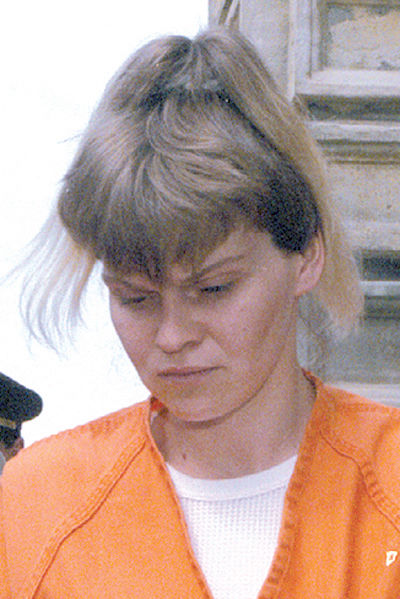
• Michelle Tharp, 45, of Burgettstown, was sentenced in 2000 to death row after a Washington jury found her guilty of the starvation death of her 7-year-old daughter, Tausha Lee Lanham.
Tharp and her boyfriend, Douglas Bittinger Sr., now 42, were charged in Tausha’s death a few days after they falsely reported the child had been abducted from a mall in Steubenville, Ohio, April 18, 1998, when she actually died in bed at their home. Tharp refused to call 911 because she was afraid Children and Youth Services would take away her other children.
The couple placed the child’s body in a car seat and ran errands with the other children in the car. At one of their stops, they purchased trash bags in Ohio and dumped Tausha’s body along a road in Follansbee, W.Va.
In September, the state Supreme Court ordered Tharp be resentenced in the case because her public defender did not present evidence of her mental state at the trial. The case has been returned to Washington County Court. A new hearing date has not yet been set.
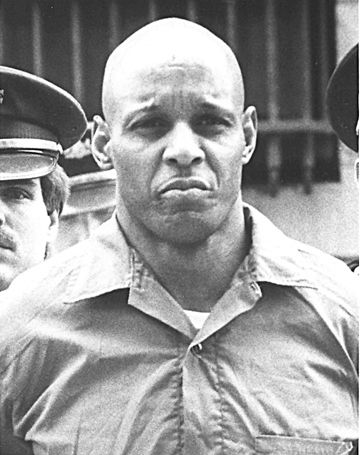
• Roland Steele, 67, formerly of McKees Rocks and Canonsburg, was sentenced to death row in 1986 after he was convicted by a Washington jury of three counts of first-degree murder for the deaths of 88-year-old Lucille Horner, 86-year-old Minnie Warrick and 85-year-old Sarah Knutz.
The women were leaving a charity luncheon at the former Club Internationale, Millcraft Center, in Washington June 21, 1985, when witnesses said they met Steele. Witnesses saw him talking with Horner and later driving her car.
The women’s bodies, minus their jewelry, were found the next day under a pile of old tires and brush in the Cecil Township coal mine village National Two, where Steele once lived. Karate-style blows were determined to have caused their deaths.
After a series of appeals, Steele was scheduled to die by lethal injection June 18, 2009. A federal judge, however, issued an indefinite stay of execution so Steele could seek federal review of his conviction and death sentence. His case is currently under appeal in the U.S. Court of Appeals for the Third Circuit.
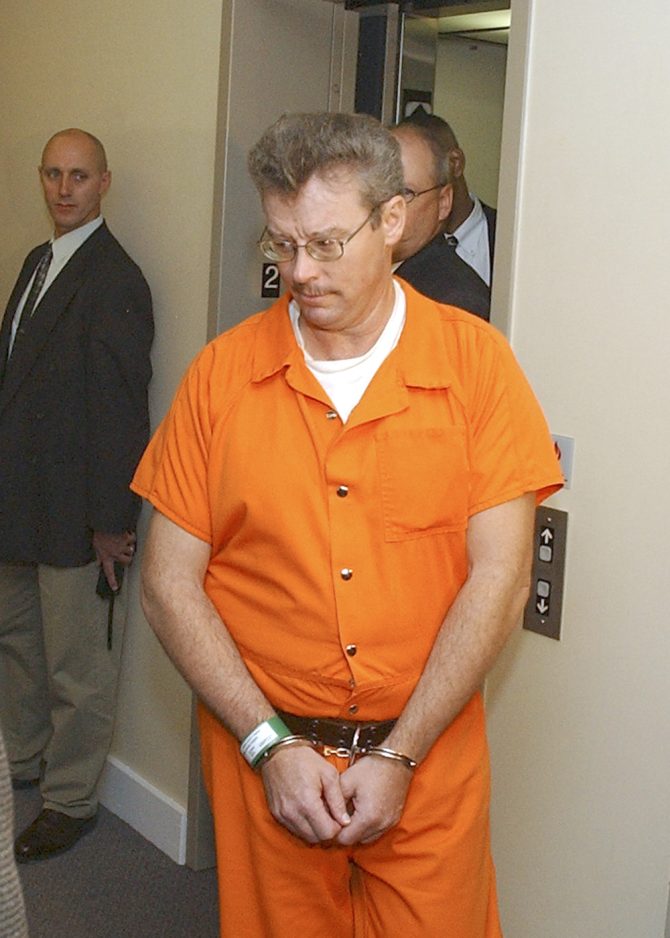
• Jeffrey Robert Martin, 57, of New Geneva, was sentenced to death row by a Greene County jury in January 2008 for the rape and murder of Gabrielle Bechen, 12, of Greensboro, on June 13, 2006, after she left her home to visit a nearby horse farm where he worked as a farmhand. Martin used a backhoe to dig a grave, where he placed her body, and hid her all-terrain vehicle and belongings elsewhere on the farm.
On Sept. 24, the state Supreme Court affirmed the verdict and death sentence for Martin. It denied the application for reargument in a two-sentence order issued Dec. 18.
Two additional people were placed on death row and later removed.
• William “Tippy” Wallace Jr., 60, was convicted by a Somerset County jury in 1985 of first-degree murder and was sentenced to death in the 1979 robbery at Carl’s Cleaners in Canonsburg.
Wallace shot and killed owner, Carl Luisi, and a 15-year-old clerk, Tina Spalla. He was sentenced to death in the Spalla case and was convicted of second-degree murder for Luisi and sentenced to life in prison.
After a series of appeals, a federal judge ordered Wallace be retried only in the Spalla case. The district attorney’s office does not intend to seek the death penalty again.
• Thomas Jeffrey Gorby, 55, formerly of Eighty Four, was found guilty in a jury trial in 1989 of stabbing Drayton Sphar, 38, of East Washington, 14 times in a vehicle parked outside Somerset Inn in Somerset Township. Gorby also was convicted of robbing Sphar of a large amount of cash.
The state Supreme Court decided in June 2006 Gorby must have a new sentencing hearing because his attorney at the time of his trial in Washington County did not raise mitigating circumstances about his mental health that could have given him a sentence of life in prison, instead of the death penalty. He was resentenced to life in prison.
Washington County District Attorney Gene Vittone said there are two pending death penalty cases in Washington County. Both are expected to head to trial this year. While Vittone could not comment on the pending cases, he said he intends to enforce the law.
“We need to know how this will play out in practice,” he said. “The best place for this to be discussed is the Legislature. Hopefully, (Wolf) will do that sometime in the future so we can collaboratively decide how we will proceed with the death penalty.”
Washington County Common Pleas Judge John DiSalle agreed. He said it will be interesting to see how “the Legislature reacts to the governor’s memorandum and whether they will consider revising the current death penalty or repealing it.
“There is a constant debate if the death penalty is worth the expense and time involved, if it really acts as a deterrent,” he said. “We haven’t executed anyone since the ’90s.”
The reasons for the state’s lack of executions have long been debated in Pennsylvania legal circles. Some attributed it to opposition to the death penalty among judges on the 3rd U.S. Circuit Court of Appeals or to aggressive tactics by lawyers who defend people facing execution.
Others say the number of stayed or overturned death sentences demonstrates there are flaws in how those cases are handled, particularly when it comes to providing adequate representation at trial.
Wolf, a Democrat, had promised a death penalty moratorium during his fall campaign against his predecessor, Republican Gov. Tom Corbett.
Wolf said Friday that the state’s current system “diverts resources from the judicial system and forces the families and loved ones of victims to relive their tragedies each time a new round of warrants and appeals commences. The only certainty in the current system is that the process will be drawn out, expensive and painful for all involved.”