

Grant’s retreat
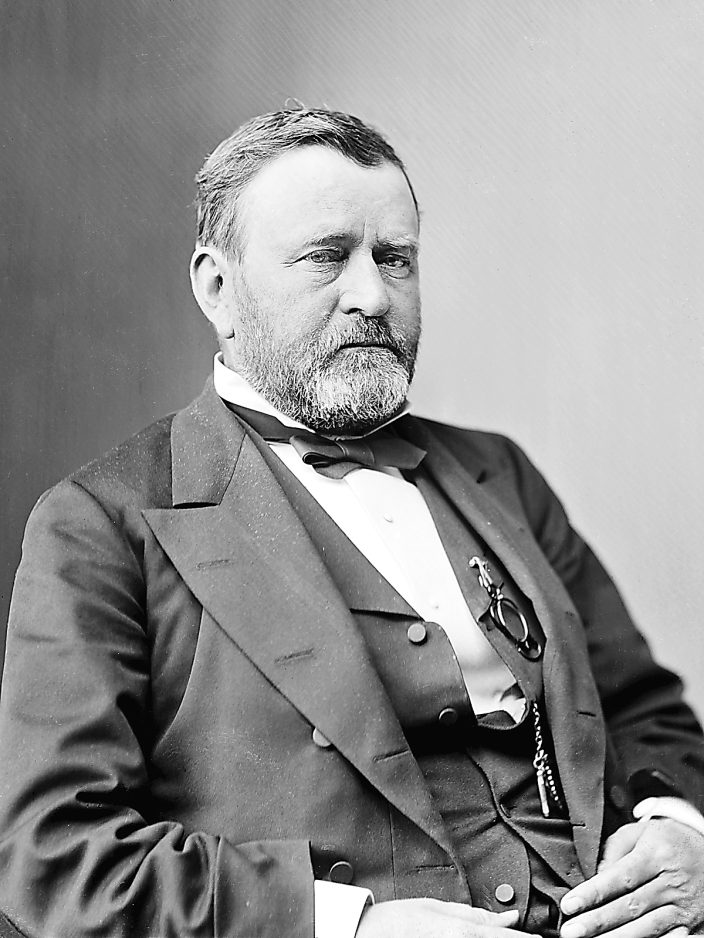
Ulysses S. Grant
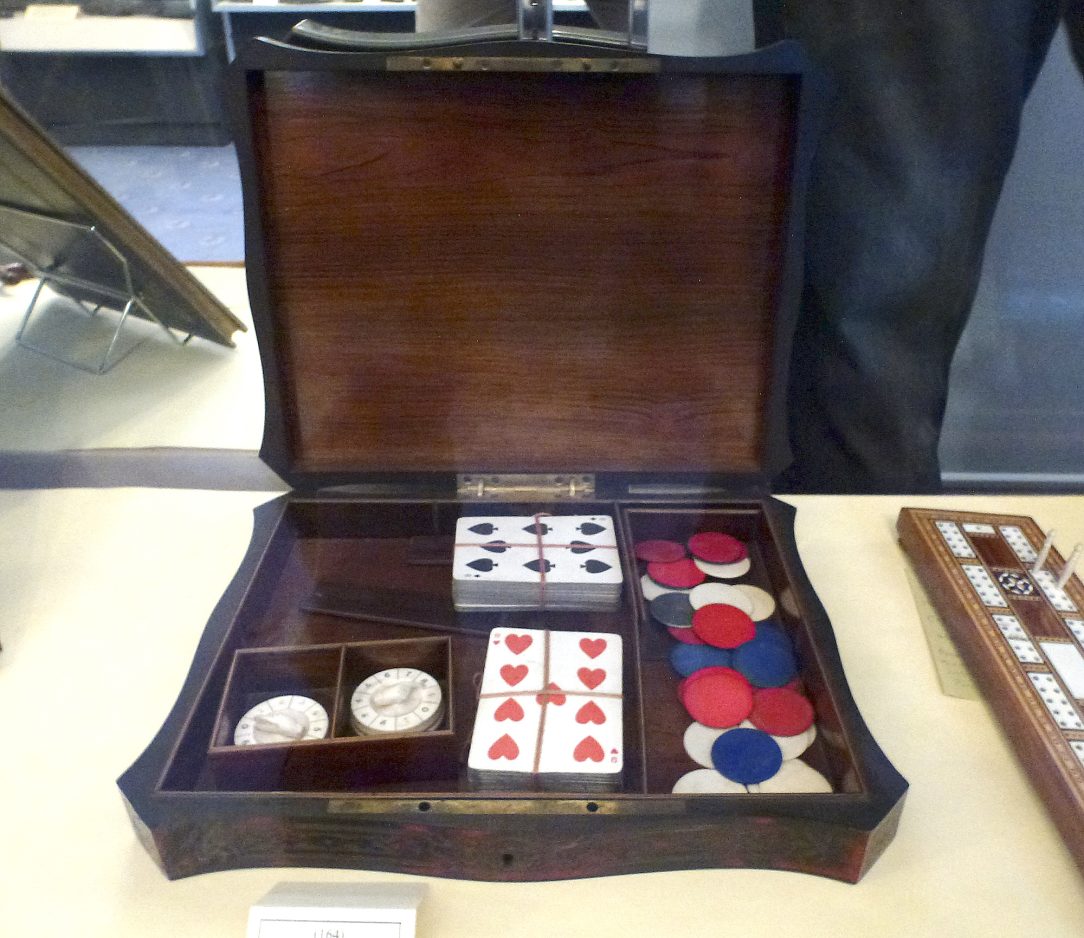
President Ulysses S. Grant’s card set and cribbage board are on display in the LeMoyne House in Washington.
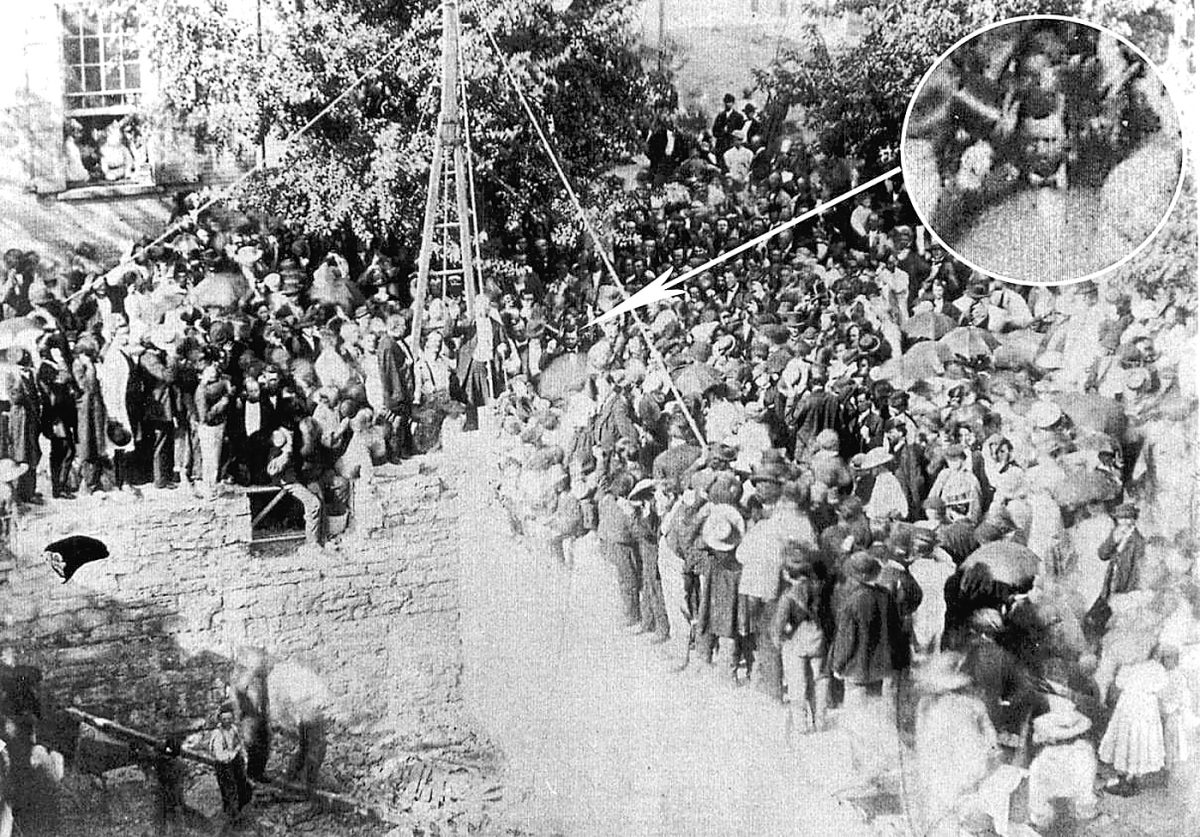
President Ulysses S. Grant lays the cornerstone of Town Hall in Washington on Sept. 18, 1869.
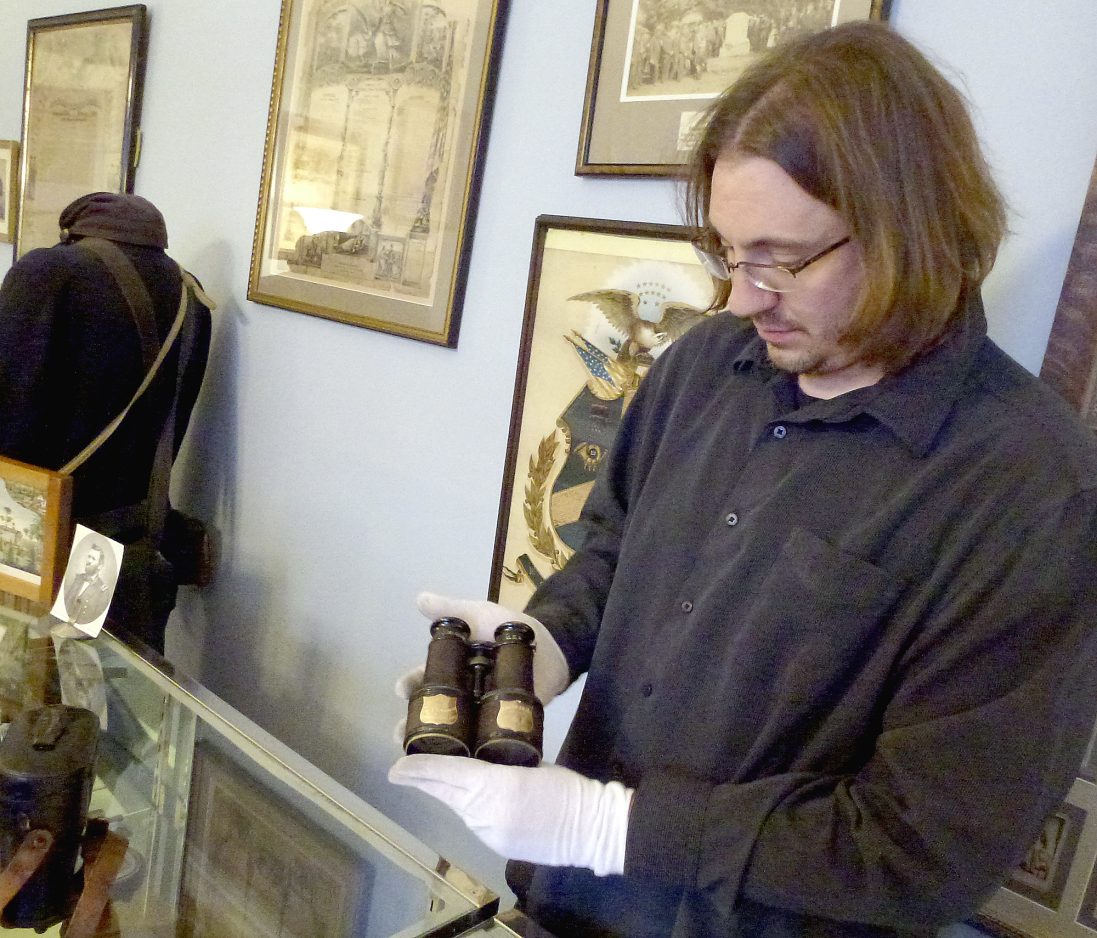
Clay Kilgore, executive director of Washington County Historical Society, displays the field glasses Ulysses S. Grant carried at Appomattox.
President Ulysses S. Grant visited “Little Washington” frequently enough that many local residents no longer got excited when they noticed the Civil War hero and the 18th U.S. president walking down the street, a local historian said.
Grant, who moved into the White House in 1869, had befriended his wife’s cousin and her husband who lived in Washington, and he often visited the couple’s home in the then-remote town in Southwestern Pennsylvania bearing the name of the first U.S. president.
“He was comfortable here,” said Clay Kilgore, executive director of Washington County Historical Society. “It was so commonplace to see him that people would pass him by, say, ‘Hello Mr. President,’ and keep going,” Kilgore said.
It’s a story told in a file in the society’s archives that was donated to its museum by the estate of William Wrenshaw Smith, who was related to Grant by marriage. Smith’s wife, Emma Willard McKennan, was a first cousin to first lady Julia Dent Grant.
Smith, a local merchant and graduate of Washington College, was Grant’s volunteer aide-de-camp during the Civil War. Grant, as commanding general of the Union Army, had given Smith a pass to cross any line to reach him during battle. The society’s LeMoyne House museum on East Maiden Street in Washington also has that pass in its collection of items Grant gave to the Smith family.
Washington also provided a place where Grant could retreat from the national press during his presidency, which was marked by scandal, including the collapse of the U.S. gold market, known as the infamous Black Friday of Sept. 24, 1869.
Two scoundrels who owned the Erie Railroad, Jay Gould and Jim Fisk, had a plan to purchase a lot of gold and then drive up its value by convincing Grant to stop selling the nation’s gold supply. They enlisted Grant’s brother-in-law, Abel Rathbone Corbin, to help sell the plan to the president.
Corbin talked Grant into naming Gen. Daniel Butterfield assistant U.S. treasurer, and Butterfield was planning to let Gould and Fisk know when U.S. gold was going to be placed on the market so they could sell their supply early at high prices. Grant found out about the scheme, and he opted to quickly sell $4 million worth of U.S. gold.
Wall Street panicked as a result of Grant’s decision to sell the gold. The price of it collapsed that week, and many investors were ruined, according to a PBS online story, “Black Friday, September 24, 1869.”
Grant escaped the pressures of Wall Street by deciding to visit the Smiths shortly before the government gold was sold, and he also agreed while he was in Washington to lay the cornerstone of a Town Hall under construction near where the present-day Washington County Jail stands at 100 W. Cherry Ave.
He accepted the Sept. 17, 1869, invitation from the burgesses and councilmen in Washington to perform the honor, and did so the following day.
“It will afford me pleasure to comply with this request; enhanced pleasure because your county and city were named in express honor of the Father of our Country,” Grant’s official papers state.
One of his visits to Washington resulted in a second scandal involving the president at the Washington Female Seminary, Kilgore said.
The Grants and Smiths had accepted an invitation to a dinner party there one night.
“They had a wonderful time. There was a show and dancing,” Kilgore said.
The next evening Grant and William Smith returned to the seminary without their wives, Kilgore said.
“The following day three girls were reprimanded for their inappropriate behavior and Grant was not welcome back there without his wife,” he said.