

Random acts of kindness spread goodwill
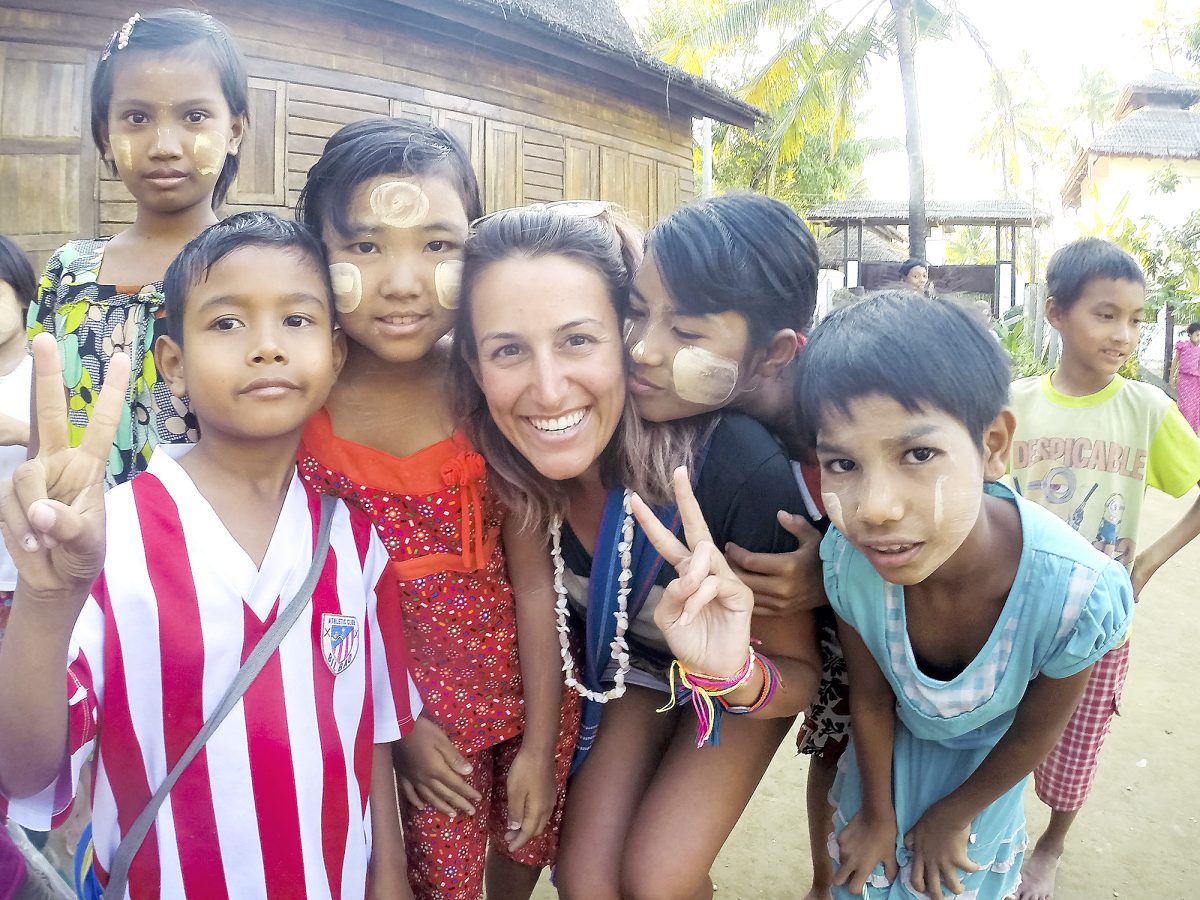
Amber Miller, 28, helped to create RAKlife, a nonprofit organization whose members travel the world to perform random acts of kindness for strangers. Miller, a 2004 graduate of Trinity High School, traveled to Myanmar to help at a monastic orphanage. Most of the children came from conflict areas along the borders with China and Thailand, and escaped being forced into becoming child soldiers, Miller said.
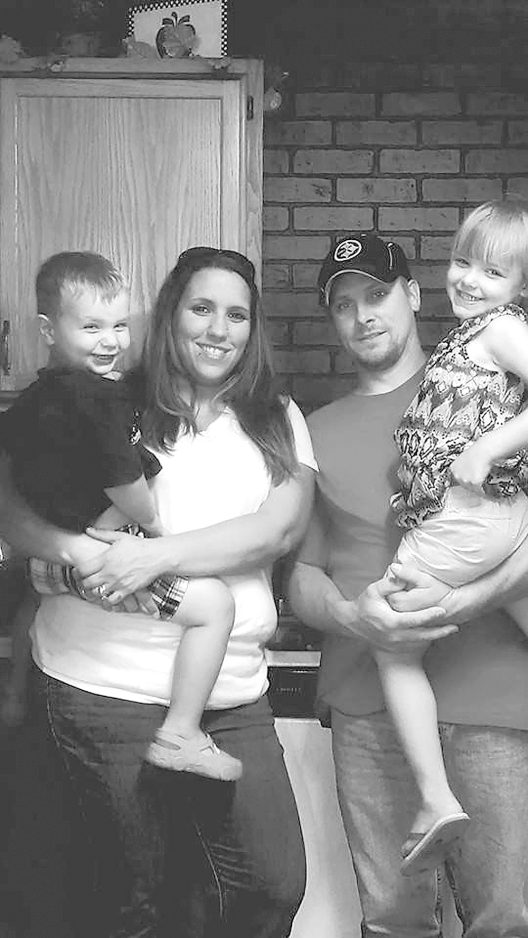
Danielle and Will Robison, of Uniontown, hold their children, Malayna and Brenan.
Laura Foley didn’t get a chance to thank the person in front of her in the drive-through line at Starbucks in Canonsburg.
Foley, of Canonsburg, ordered four frappuccinos – for herself and three tweens in the back seat. But when she went to pay, the barista didn’t take her money.
“She told me that the person ahead of me picked up my tab. Now, every time I go to Starbucks, I buy for the person behind me,” said Foley.
A similar thing happens regularly at Hills Restaurant in Monongahela. Once a week, Bill Hefner and his daughter, Angelina, stop by. His daughter chooses a table, and Hefner pays the bill for the unsuspecting customers’ breakfasts.
“I always love hearing about what table was chosen,” said Melissa Stuyvesant, a friend of Hefner’s who shared his good deed on Facebook.
There’s a growing movement of people doing nice things for strangers in the hopes that it makes for a kinder society, said Amber Miller, 28, who helped to create RAKlife and is a 2004 graduate of Trinity High School.
Miller and a group of like-minded friends started RAKlife in 2014 to help the less fortunate by traveling around the world performing random acts of kindness.
RAKlife believes in the goodness of mankind, Miller said, and the inherent desire of people to help one another.
Last week was Random Acts of Kindness Week, and Miller, who lives in Costa Mesa, Calif., participated anonymously in RAK activities, including handing out flowers to women on Valentine’s Day and writing encouraging messages on the sidewalks around her neighborhood using sidewalk chalk.
Doing something good for someone without the expectation of getting anything in return is powerful, Miller said.
“I noticed how fulfilling my life became when I began doing things for other people,” said Miller. “It changed my heart.”
Random acts of kindness are a positive way for people to connect with each other, said Dr. Beth Bennett, psychology professor at Washington & Jefferson College.
“Helping makes us feel good, and when we’re in a good mood, we feel positive about ourselves and the world around us, and we want to pass it along to others,” said Bennett. “Sometimes we’re in a bad mood, so we help others as a way to make us feel better about ourselves. If we’re in a lousy mood and not having such a good day, we think, ‘I’m going to brighten someone’s day and that will brighten mine.'”
All parties – the giver, the receiver, and even the waitress who tells customers that Hefner picked up their breakfast bill or the cashier who tells someone the person in front of them at McDonald’s paid for their lunch – benefit from random acts of kindness, said Rueben Brock, professor of psychology at California University of Pennsylvania.
“What you’re really talking about is altruism, and everyone gets something out of an altruistic act,” he said. “If you’re at Starbucks and someone buys you a coffee, you feel good about the world, the guy who buys it for you gets a positive feeling, and the guy behind the counter has the satisfaction of seeing something good happen. It only costs $4, and everybody’s happy.”
Can all of these acts of kindness make a difference?
Yes, according to Bennett.
“It could have a powerful ripple effect,” said Bennett. “People are inclined to reciprocate by paying it forward. They’re more likely to do something nice for someone else. They’re aware of how good it made them feel that someone did something nice. It lets you know there are good people in the world. The news is so bad these days that something as simple as having someone do something like pay for your coffee restores your faith in humanity and inspires you to reciprocate. If a number of people are more willing to be helpful in a community, it builds a stronger community.”
Acts of goodness often are inspired by a crisis.
Danielle Robison’s husband, Will, 34, of Uniontown, suffered congestive heart failure seven months ago and is awaiting a heart transplant.
Doctors believe Robison, an ironworker, contracted a virus that caused the heart failure. He is attached to a left ventricular assist device, a mechanical pump that takes blood from a lower chamber of the heart and helps pump it to the body and vital organs.
The couple have two children, Malayna, 5, and Brenan, 3.
“Out of the blue one day after New Year’s, a lady knocks at my door asking for Will, and I told her to come on in. She was from Brownsville United Methodist Church in Fayette County and said someone had gone through troubled times and had come out of it OK and wanted to pay it forward,” recalled Robison. “She presented us with $1,000 from an anonymous person who wanted to help someone in need, and they decided that they would help us. We were so surprised, happy and shocked. We have no clue who that person is, but we are so very thankful for them.”
The notion of doing something nice for a stranger appeals to Denise Walter Neel’s sister, Janie.
“My sister Janie is constantly showing and sharing kindness, from always having toys in her car to give to children she sees to seeing someone in need while we are eating out. She will, as she walks by, leave money on their table and say, ‘I think you dropped this,’ so they wont be embarrassed. The list goes on and on,” Neel wrote to the Observer-Reporter.
The good deeds we do for each other don’t have to be expensive to matter, says Miller. Write an encouraging message on a post-it note and place in a public restroom. Or clean the snow off the windshield of a vehicle parked next to yours. Shovel a stranger’s driveway.
“We’re putting simple ideas out there that anyone can do to grow the community,” said Miller. “We have a vision to change the world in whatever way we can. We might not make a huge difference in the world in the long run, but we’re going to try.”