

Greek campaign begins amid crisis
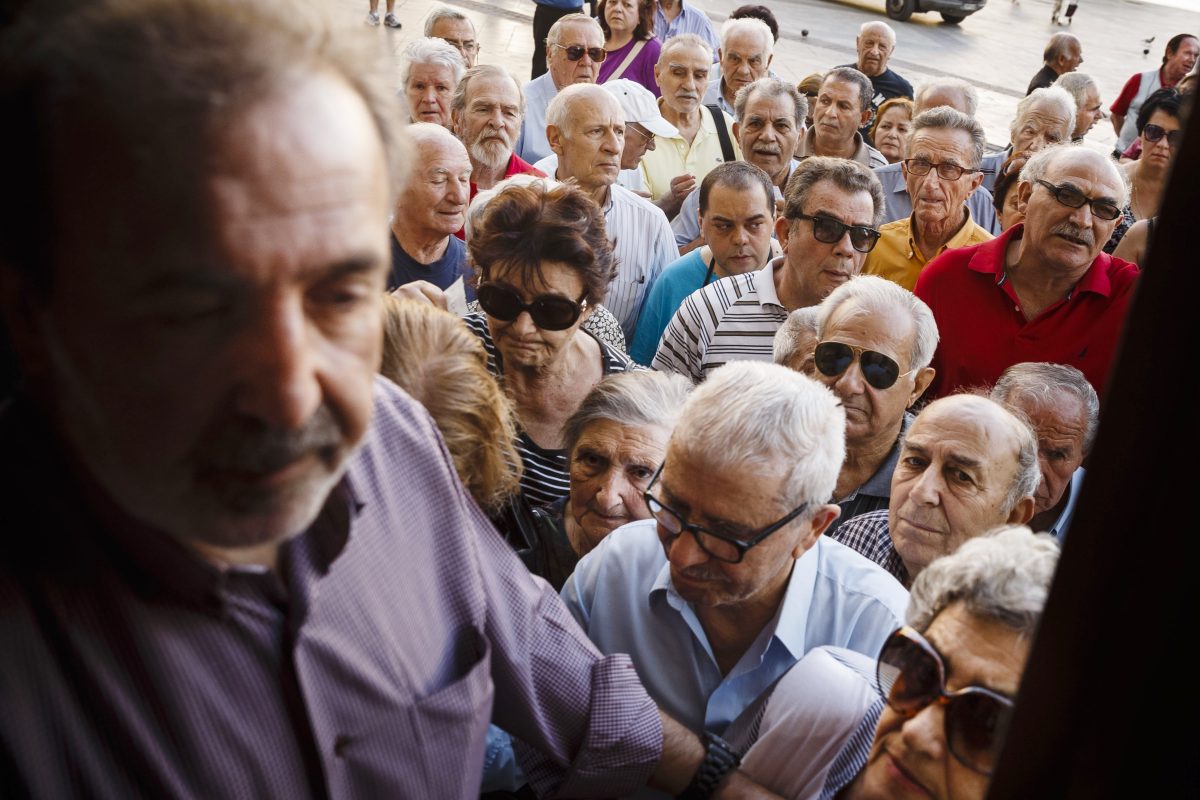
Pensioners wait to be allowed into the National Bank of Greece Thursday to withdraw a maximum of 120 euros for the week. Greece braced for more chaos on the streets outside its mostly shuttered banks Thursday, as Athens and its creditors halted talks on resolving the country’s deepening financial crisis until a referendum this weekend.
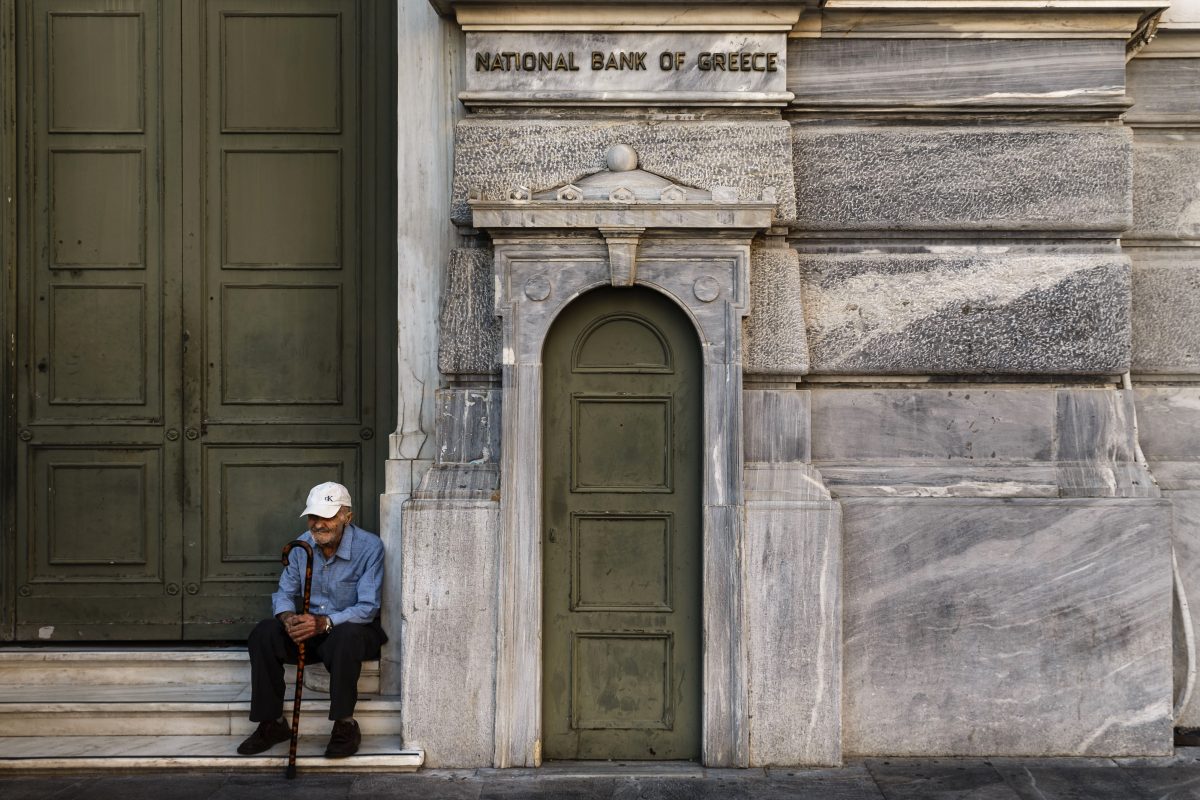
An elderly man waits to be allowed into a bank in Athens.
ATHENS, Greece – The battle for Greek votes entered full swing Thursday ahead of a crucial weekend referendum that could decide whether the country falls out of the euro. For Greeks, particularly the elderly, the daily struggle to get cash ground on in the face of uncertainty.
Greece’s rescue lenders halted negotiations on a new financial aid program until after the vote on whether to accept reforms the creditors proposed last week in exchange for bailout loans.
That Greece will now need a third international bailout is a near certainty. The International Monetary Fund, one of the country’s creditors in its two bailouts so far, said Thursday the country needs debt relief and $56 billion in new financing from October through 2018.
The analysis was made before Greece defaulted on IMF loans Tuesday and closed its banks Monday. The outlook is worse now.
Debt relief has been one of the main demands of Prime Minister Alexis Tsipras’ government, but it met with strenuous resistance in negotiations with Greece’s creditors who, apart from the IMF, are other eurozone countries and the European Central Bank.
But Tsipras also was adamant he does not want any more bailouts involving just loans – rather a different “growth pact” with Europe that will allow the economy to emerge from a depression.
Tsipras called the referendum for Sunday advocating voters reject creditor’s proposals, saying it would put the country in a stronger negotiating position.
The idea was dismissed by the head of the eurozone finance ministers’ group, Jeroen Dijsselbloem.
“That suggestion is simply wrong,” Dijsselbloem told lawmakers in the Netherlands.
European officials and the Greek opposition warned a “no” outcome Sunday could be tantamount to a decision to leave the euro.
“The consequences are not the same if it’s a yes or no,” French President Francois Hollande said.
“If it’s the yes, even if it’s on the basis of proposals that have already expired, negotiations can resume and I imagine be quickly concluded,” he said during a visit to Cotonou, Benin. “We are in something of an unknown. It’s up to the Greeks to respond.”
Until then, the country remains in limbo, with banks shut and strict cash withdrawal limits imposed.
For a second day, crowds of elderly Greeks, some struggling with walking sticks or being held up by others, thronged the few banks opened to help pensioners without debit or credit cards withdraw at least some money.
The banks closed Monday to prevent remaining funds fleeing after Tsipras announced he was calling the referendum.
Greeks are now restricted to a daily withdrawals of 60 euros.
Pensioners without bank cards are being allowed to withdraw a maximum 120 euros for the week from open bank branches.
“All I know is that that we are all going crazy here,” said Anisia Kaklamanou, among those waiting to get into a bank in central Athens. “And I don’t know what to do on Sunday: vote “yes”, vote “no”. I don’t know. All I know is that I have 120 euros to get by until whenever the banks open.”
The question on Sunday’s ballot is whether voters accept or reject a reform proposal made by creditors during negotiations last week.
But that particular proposal is no longer on the table. It was amended later in the week and has now been rendered moot by the fact that Greece’s international bailout expired Tuesday. The same day, the country also became the first developed nation to miss a debt repayment to the International Monetary Fund.
The country is now seeking a different deal with its European creditors. But European officials said they cannot negotiate until after Sunday’s vote.
Dijsselbloem said it will be “incredibly difficult” to build a new bailout package for Greece if the country votes “no.”
Some European officials said the Greek referendum amounts to a vote on whether to stay in the euro. The Greek government said that argument is merely an attempt to terrorize the people into voting in favor of destructive austerity policies.
Many Greeks said they will be casting their ballots to end the budget cuts and tax increases imposed in return for bailout loans from other eurozone countries and the IMF.
“We’ve been going through this crisis over the last five years and we had nothing to eat, our pensions and our wages have been slashed and some made a profit off us,” said pensioner Koula Makri in a bank queue.
She said Tsipras took too long to shut down the banks. “I’m in total agreement with (banks) closing. The queues are nothing next to all the suicides, the soup kitchens and the homeless on the streets of Athens.”
French Finance Minister Michel Sapin said Europe remains committed to avoiding “catastrophe” for Greece and keeping it in the eurozone.
“The exit of Greece from the eurozone is not desirable, nor envisaged,” Sapin said on France’s iTele television Thursday.
If voters reject international bailout terms in Sunday’s vote, then “we are entering in an unknown zone, an economic slide,” Sapin warned.
Business associations and the country’s largest labor union have urged the government to cancel the referendum, while two private citizens have appealed to the Council of State, the country’s highest court, to rule the vote unconstitutional.