

Racing ‘colors’ represent a family tradition at The Meadows
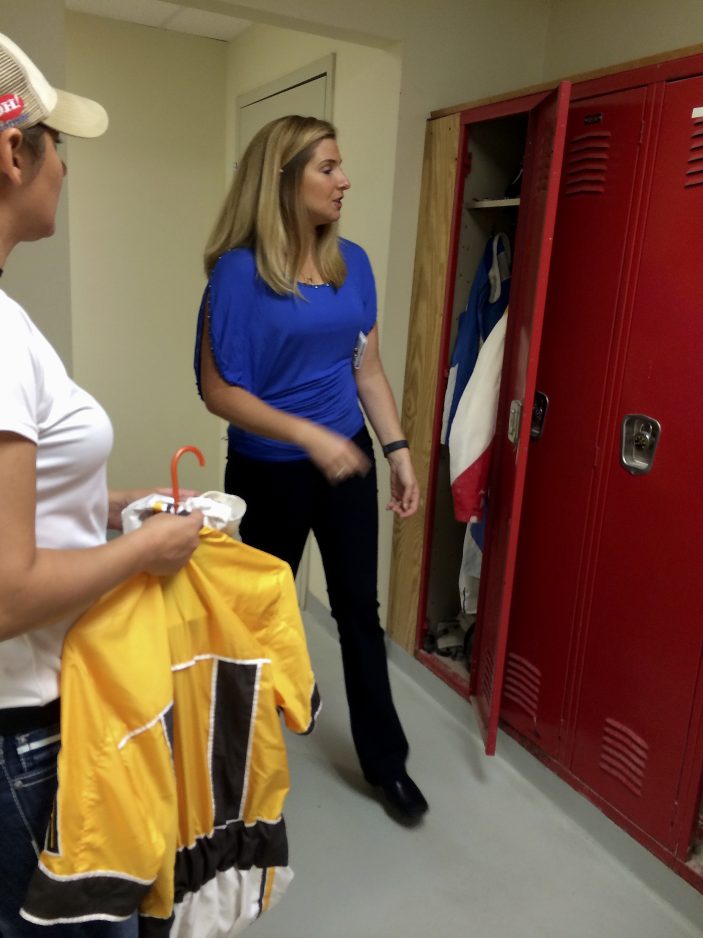
Driver Ashley Hall holds a racing jumpsuit as Heather Wilder, public relations and marketing director for The Meadows Standardbred Owners Association, passes by women's lockers.
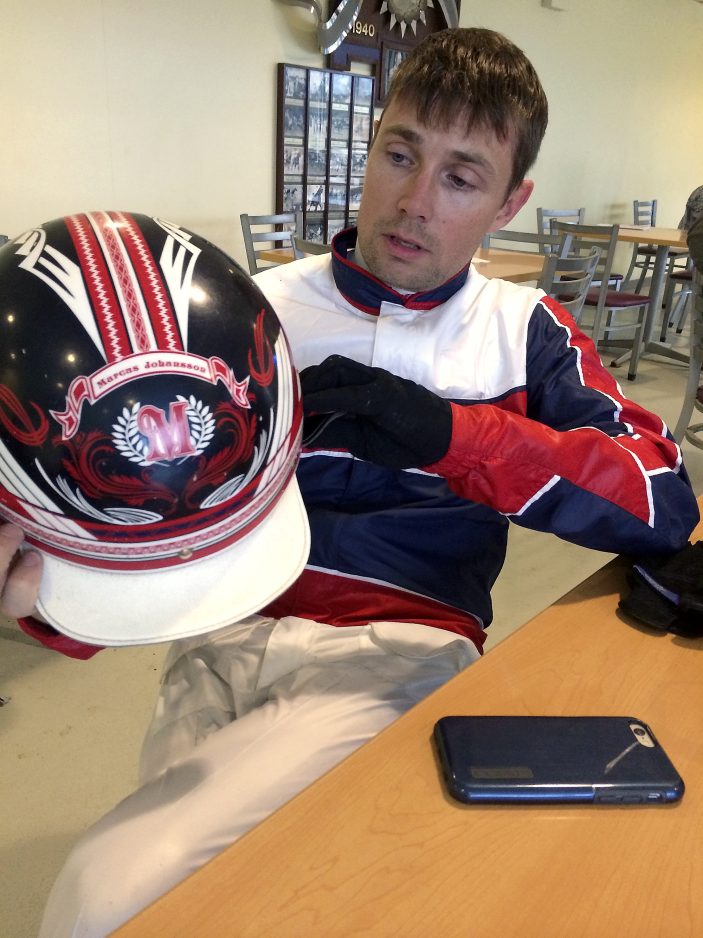
Marcus Johansson shows his custom-decorated helmet. Johansson said that in his native Sweden, drivers’ attire reflects corporate sponsorship.
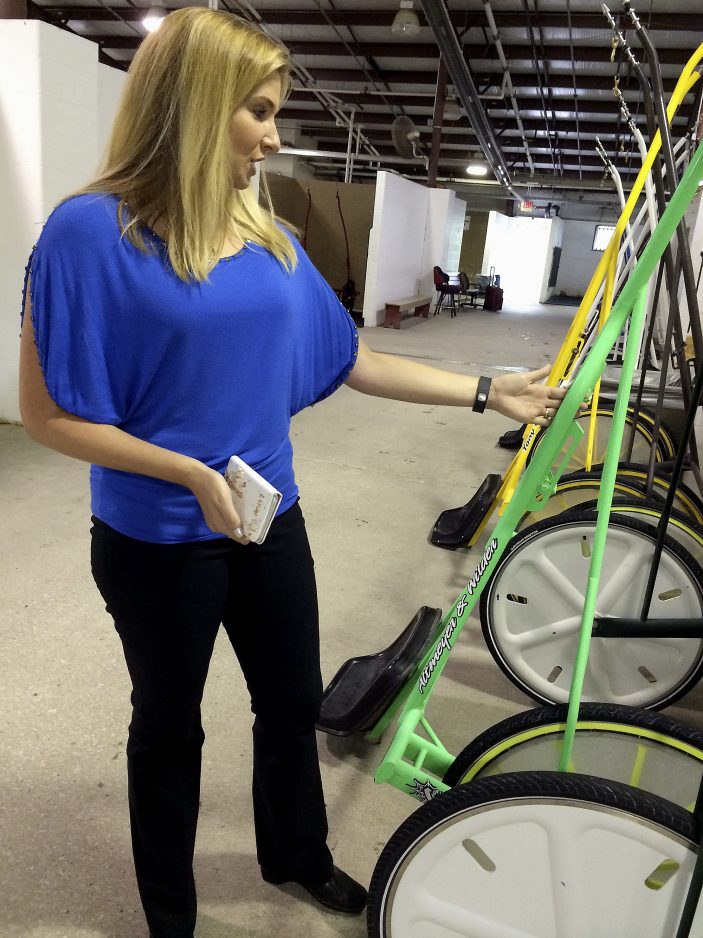
Heather Wilder, public relations and marketing director for The Meadows Standardbred Owners Association, said drivers prefer the term “racing bike” to “sulky.” Neon colors, another form of personalization, stand out against the limestone racetrack.
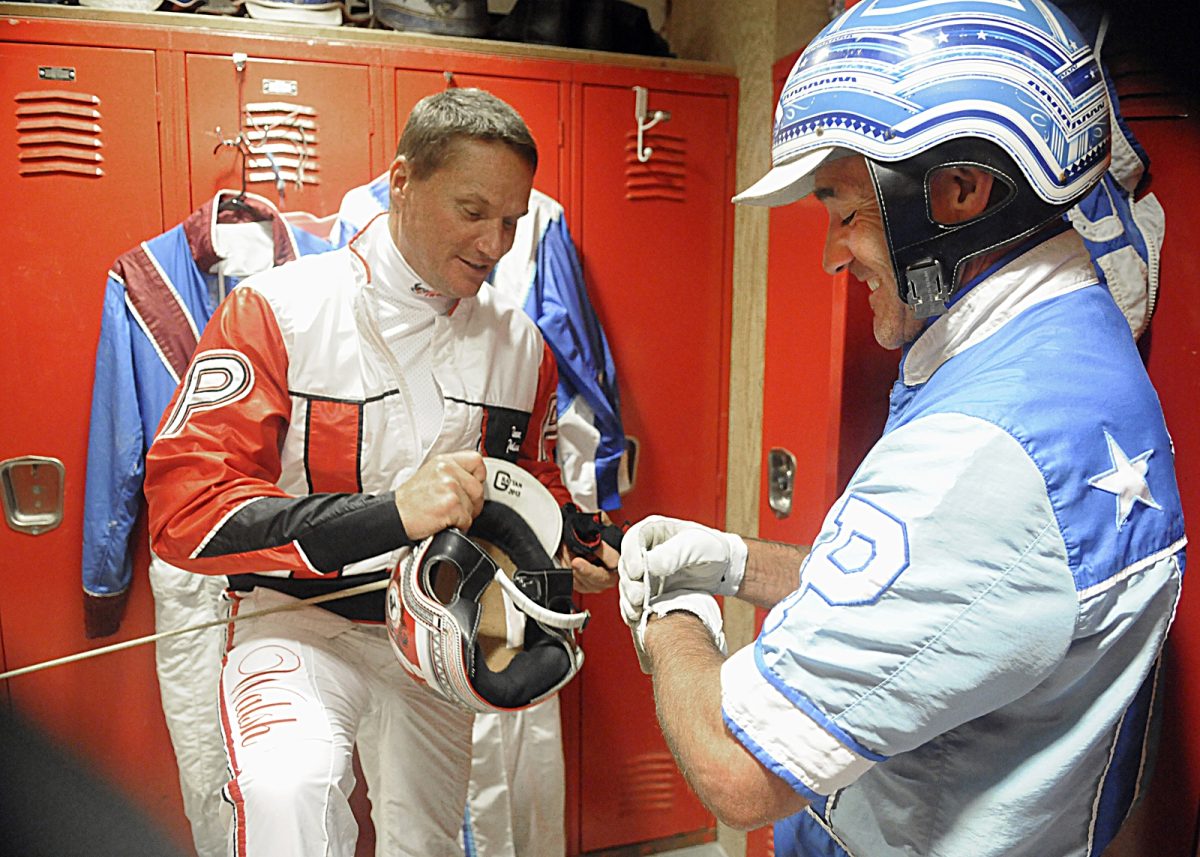
Drivers Dave Palone, left, and Jim Pantaleano joke while getting ready to race recently at The Meadows.
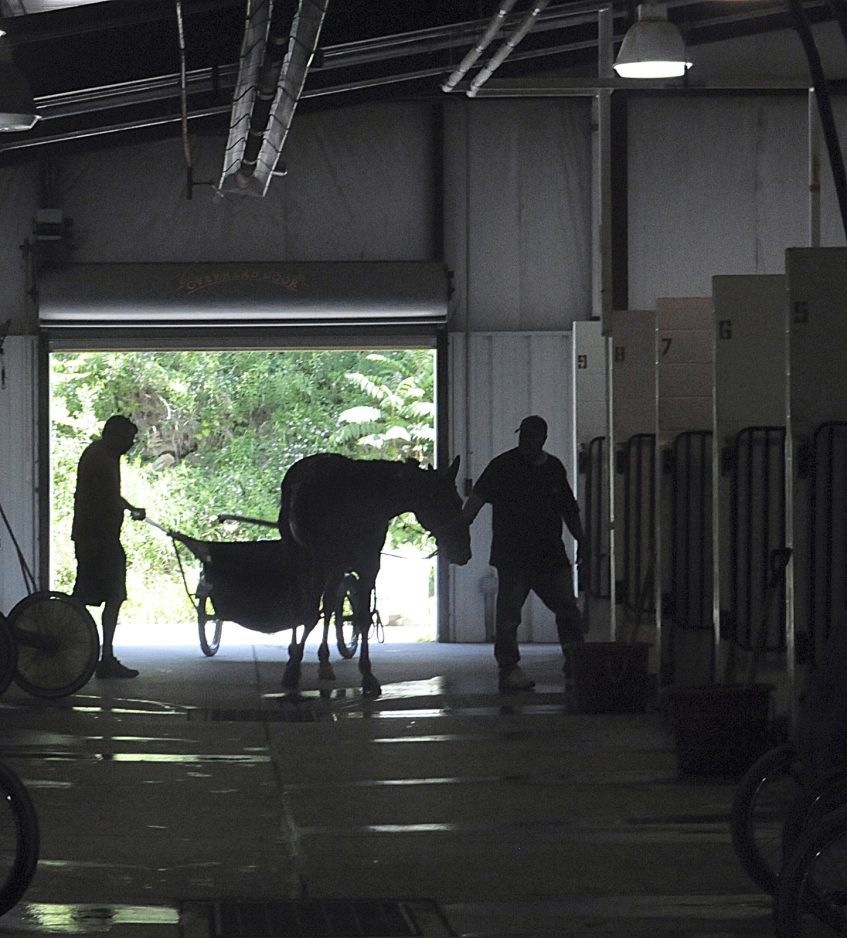
Trainers and drivers with their horses move quickly back and forth prior to races at The Meadows.
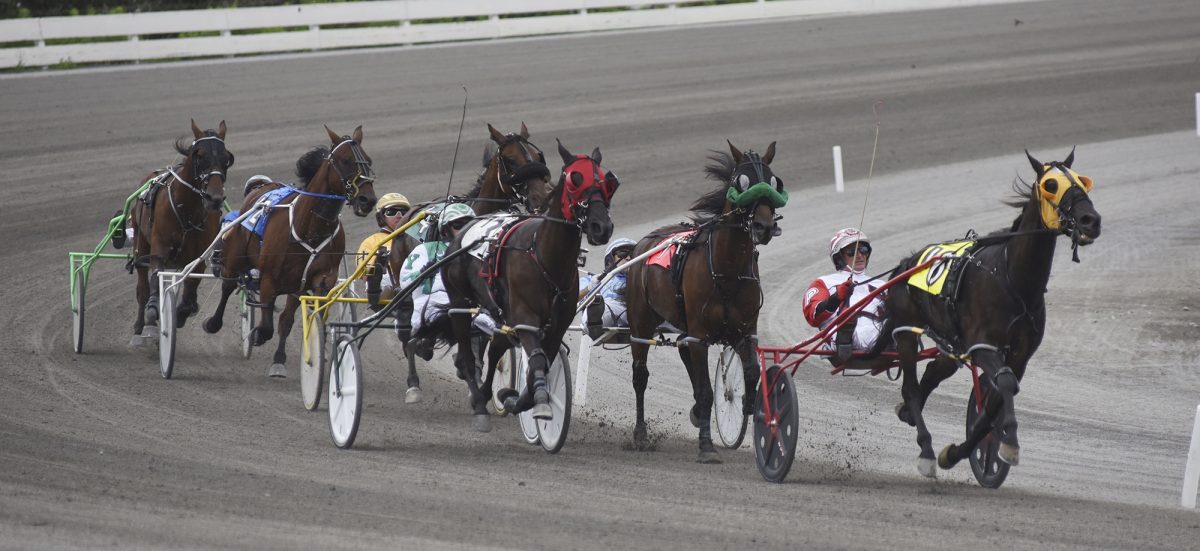
Good Citations, in front with driver Dave Palone, leads a charge down the homestretch during a recent race at The Meadows in North Strabane Township.
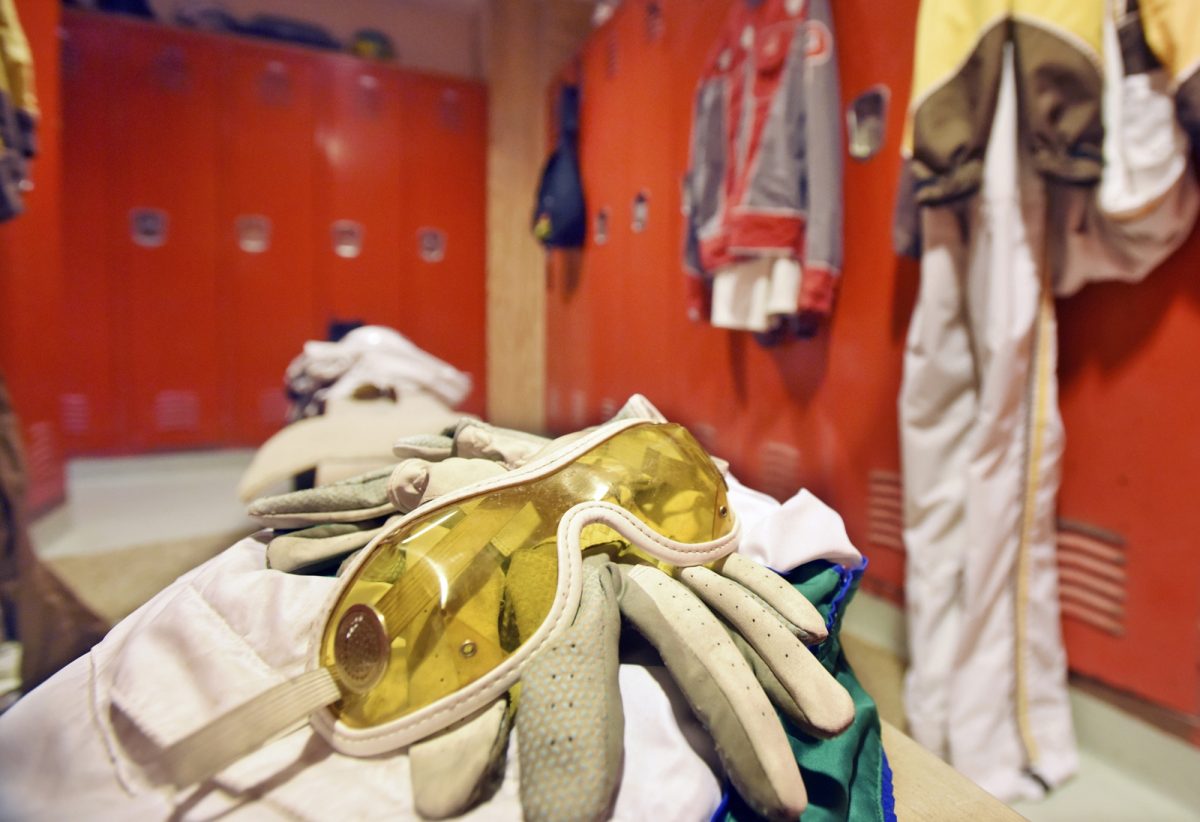
A driver’s goggles, gloves and uniform are ready for race time in the locker room at The Meadows.
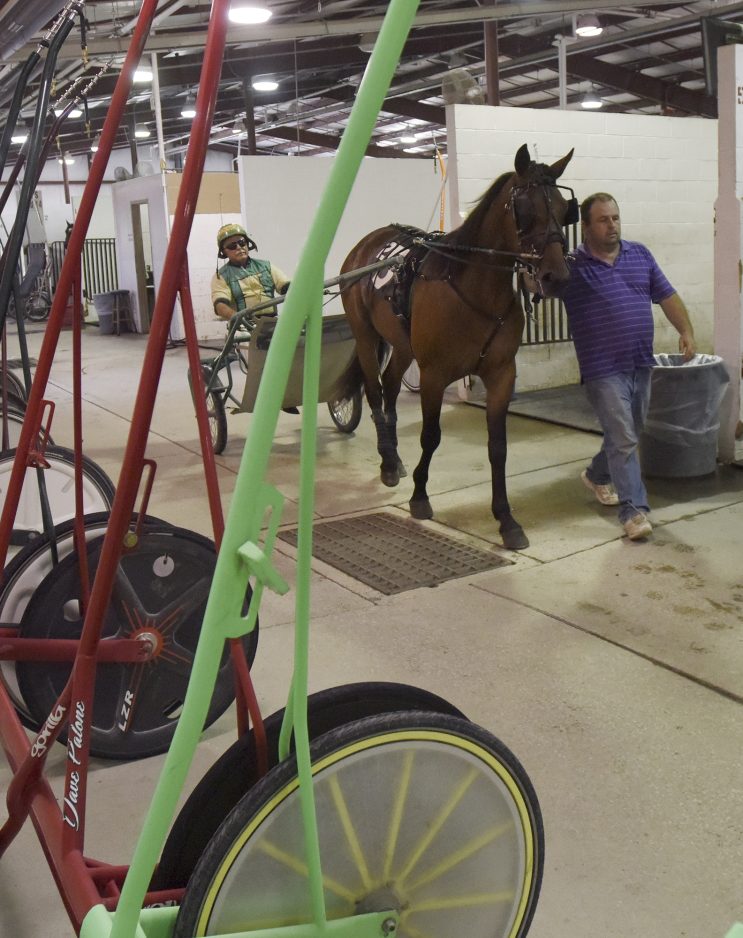
Trainer Ricky Stamm, right, leads driver Rick Beinhauer on Ridgeway Springs out to the track at The Meadows Racetrack July 14.
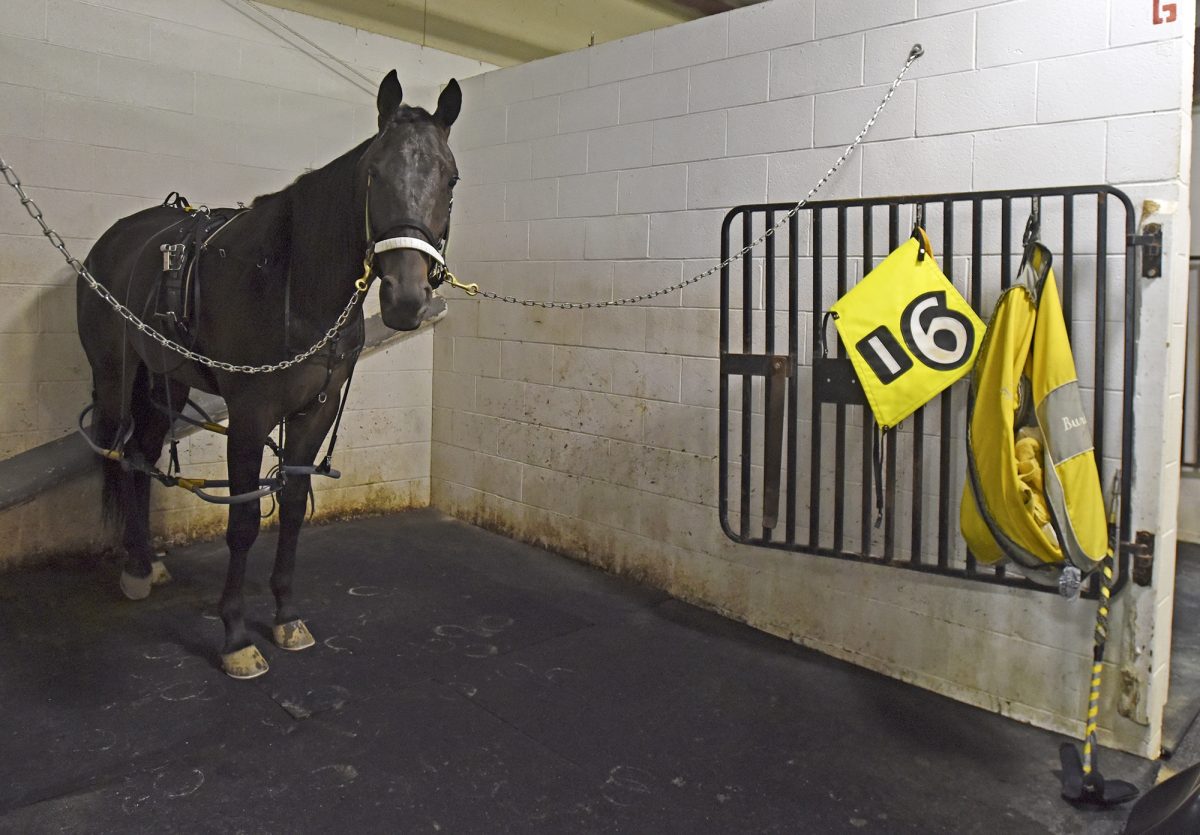
A horse waits in his stall prior to race time at The Meadows.
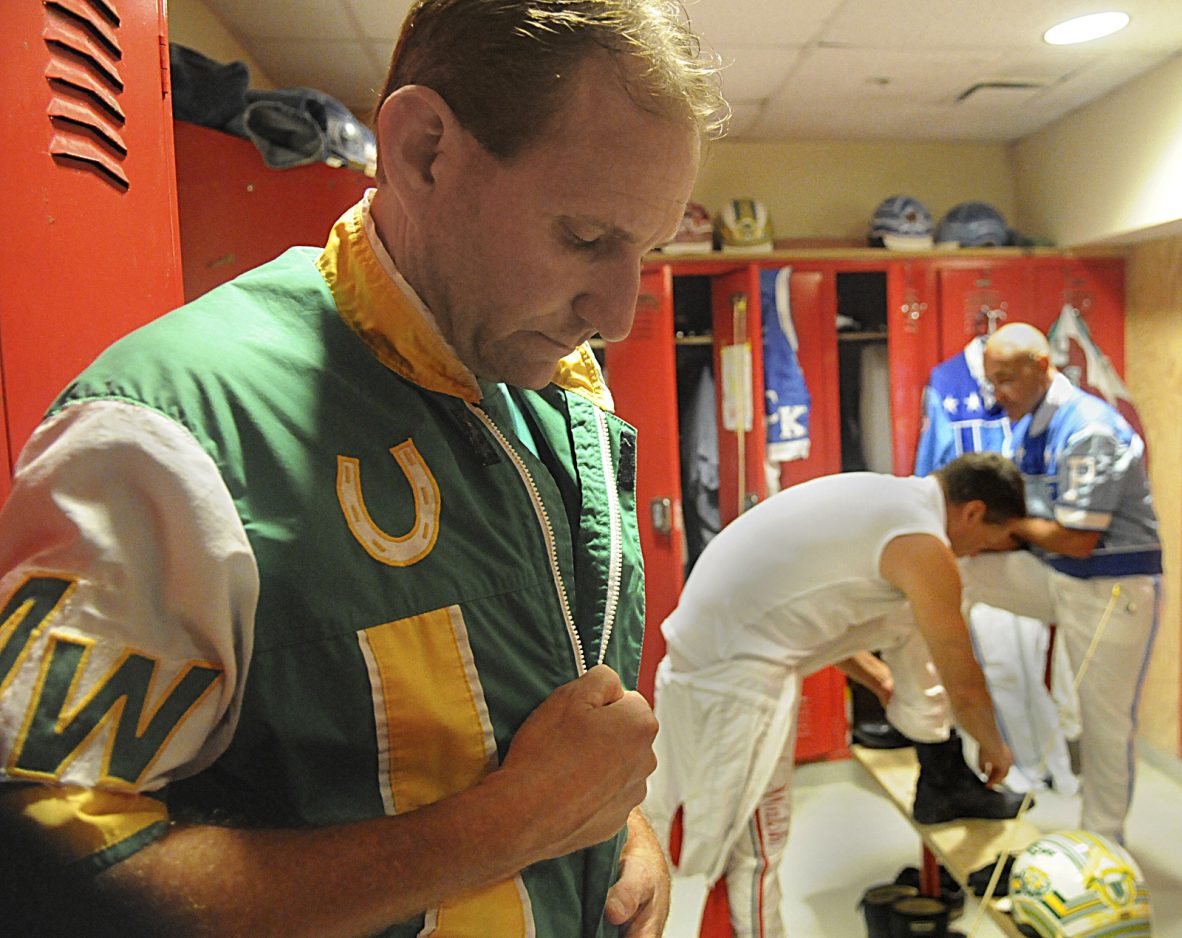
Drivers dress for their races in the locker room prior to a race at The Meadows. From left are Mike Wilder, Dave Palone and Jim Pantaleano.
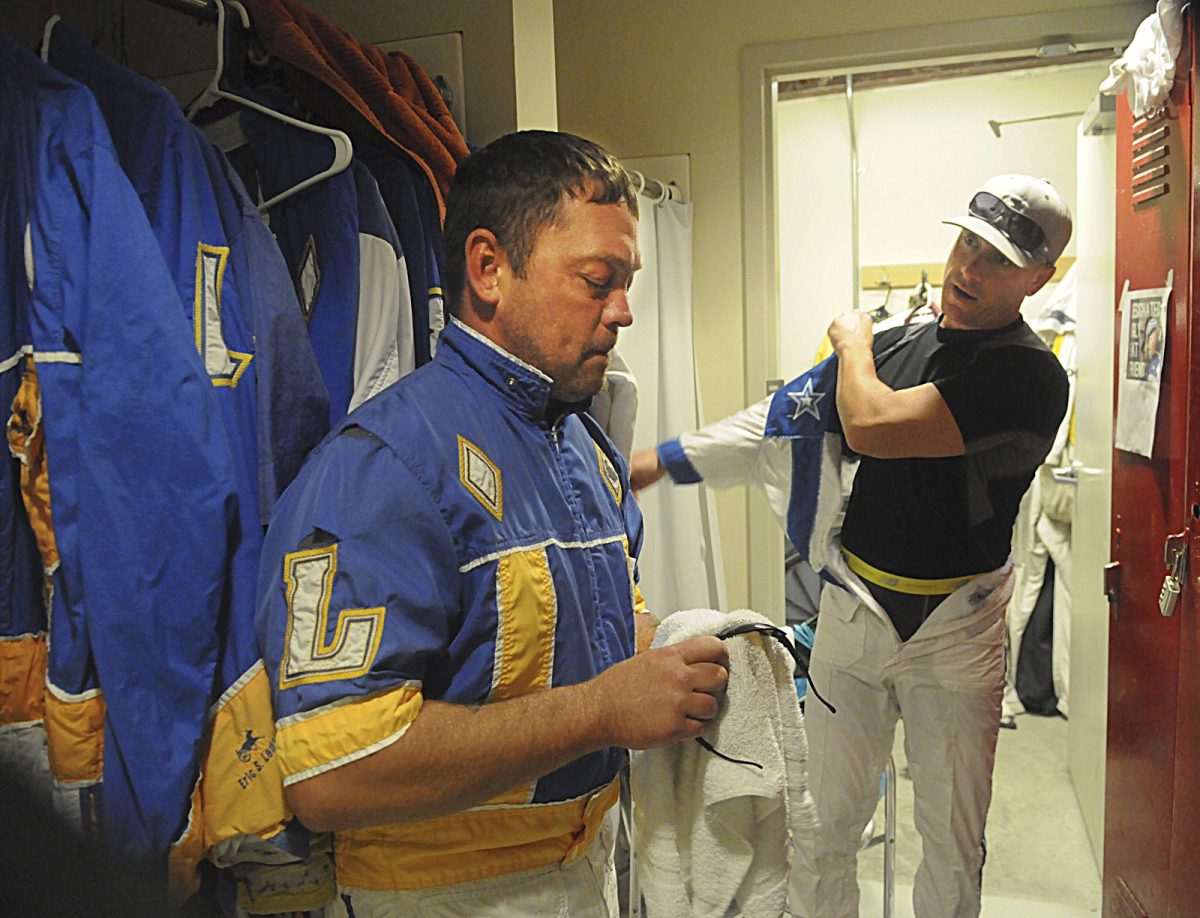
Drivers Eric Ledford, left, and Eric Godell suit up prior to a race at The Meadows.
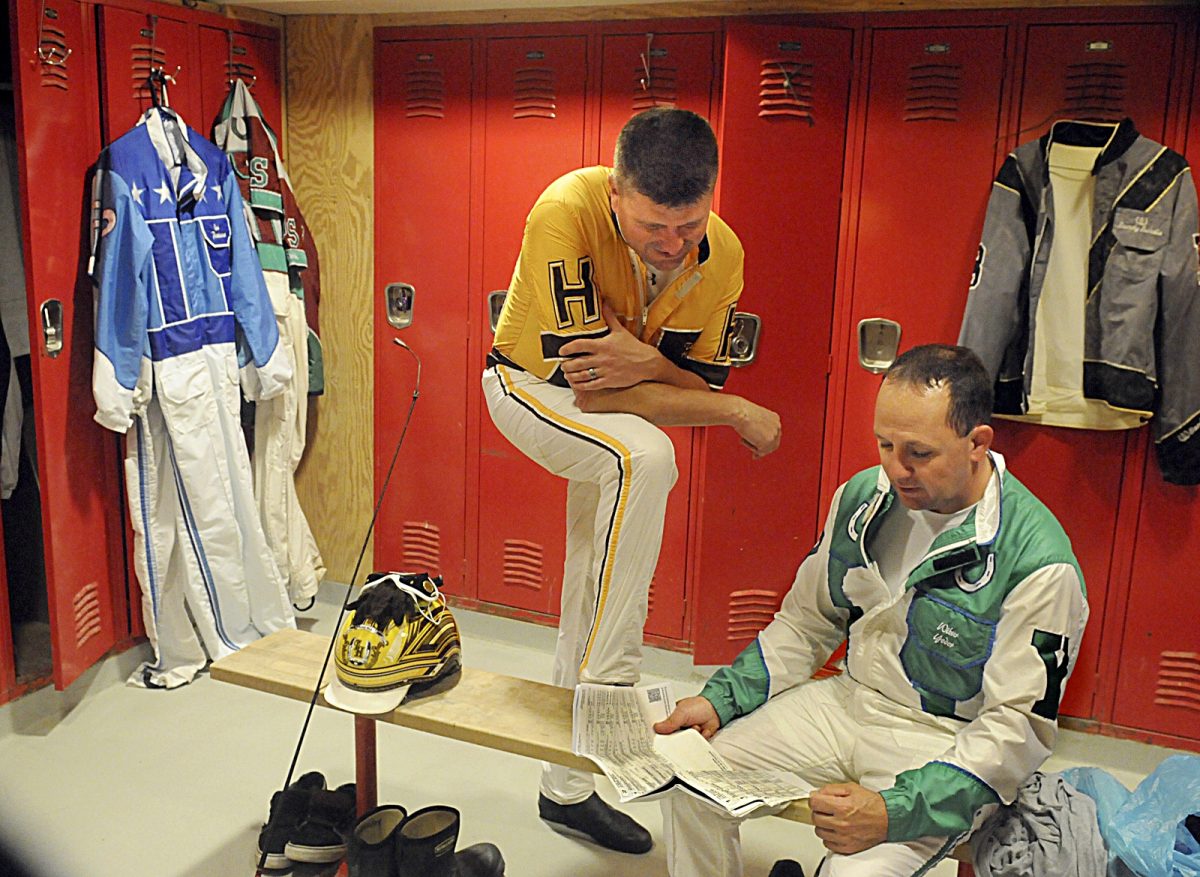
Drivers Tony Hall, left, and Wilbur Yoder look over the race program before a race at The Meadows.
Millions of people tuned in last month to watch a turquoise-and-gold, polka-dot-clad Victor Espinoza ride Ahmed Zayat’s American Pharoah across the finish line to the first Triple Crown victory in 37 years.
Seated behind their standardbred horses, harness racing drivers may not be attired quite as flamboyantly as the jockeys who don different silks representing each owner of the thoroughbreds. But tradition is evident in racing apparel at The Meadows every time the horses trot to the finish line and, of course, at the premier event of the racing year at The Meadows Racetrack and Casino – the Adios – which is scheduled for Saturday.
The race bears the name of Delvin Miller’s famous horse, Adios, a life-sized sculpture of whom stands year-round at the track entrance as a reminder of the competition. Post time for the afternoon of racing is 12:20 p.m., with the 49th annual Adios Pace for the Orchids beginning at around 4 p.m.
Unlike those involved with flat racing, harness racing drivers don’t use the term “silks.” They call their race-day outfits “colors.” And as to the single-seat, two-wheeled vehicle on which they’re seated, the drivers seldom call it a sulky. They prefer the term “race bike,” and when the vehicles shine as bright as neon, they stand out against a gray limestone track.
Along with having a winning trotter, a driver who also wants to create a splash on the track registers racing colors with the U.S. Trotting Association and wear the same colors each time he or she races.
“One of the proudest moments for a young driver is when they get their first set of colors,” said Heather Wilder, public relations and marketing director for The Meadows Standardbred Owners Association. Wearing colors demonstrates that “new guys are safe to go out and worthy of public wager on them.”
Marcus Miller earlier this month was waiting in a barn at The Meadows for post time looking as sharp as could be in red, black and white. Asked to recall the first time he wore his racing colors, he said wore the orange of his Uncle Andy’s “because they fit.” So much for sentimentality.
When Wilder called harness racing a family sport, she doesn’t have to look very far. She grew up around horses, and her photograph appears in local author Patricia Easton’s book, “Stable Girl.” Her husband, Mike, is a driver who wears gold, green and white. The MW initials on his sleeves look a little like lightning bolts and gold stripes on his jacket point to gold horseshoes.
Before recent races at the track, Heather Wilder introduced a racing couple, Tony Hall, a third-generation driver, who has his gold and brown jumpsuits tailor-made. Brown is the family’s color, and he added the gold. Ashley Hall, Tony’s wife, wears the same colors as those of her husband.
“There are a lot of family pass-downs,” said Scott Zeron, 26, who was wearing blue, red and white. “The designs are pretty similar.”
He spoke briefly about his acquaintance with the sport. “I was like, 12 years old before I was even going to the races,” he said. At age 16 he won a race “and I loved it,” he said.
Yannick Gingras of Sorel, Quebec, didn’t race until he was 18 and moved to the United States. “My dad has the same color,” he said. “I took a little darker green.”
Brian Brown, a man with a colorful last name, doesn’t wear that color. His colors are white and maroon. Brown has raced for the past four winters in Florida, where he hasn’t needed his winter gear, which, despite its name, is a surprisingly lightweight jacket. Summer racing colors feature short sleeves, and spring and fall suits have long sleeves, and drivers can also choose rain suits.
“I’ve raced in Northfield in the winter,” Brown said of the park near Cleveland. “I would compare it to a ski suit for snowmobiling. In the last few years they’ve really come along and they’re pretty nice – light and flexible.” Brown’s son, Beau, personalized his maroon and white colors with black piping and a letter B on his sleeve.
In the paddock room before that day’s racing began, Jim Campbell, a trainer whose brother is a Hall of Fame driver, said he was born in London, Ont. Because of that, on his racing attire, he “had maple leaves years ago,” he said. “But I changed my citizenship in 2004.” Along with that, he switched to stars.
Marcus Johansson said in his native Sweden, where he raced for three years in the 1990s, drivers change colors when they change sponsors.
“In Sweden, they get huge money,” Johansson commented as he waited for the 6:55 p.m. Friday post time.
His custom-designed helmet is made by Grattan of Canada, which has been in business since 1989. Its website lists Dave Palone, Driver of the Year award winner in 2008 and 2009, among those who have worn custom-painted helmets by Gord Mason. Palone, a Rices Landing native, had 15,000 victories and $104 million in purses when he was inducted into the Harness Racing Hall of Fame in 2010.
“There are no two the same,” Wilder said of the Grattan helmets.
Aaron Merriman, an Ohioan, wears cardinal red, gold and white. “They’re identical to my father’s. He’s still racing. I added black,” he said. “I just did it on my own. It’s just a little accent, that’s all.” He said his favorite colors are blue and pink, but those hues haven’t found their way onto his race-day apparel.
Bill Bercury, a Boston native and trainer at The Meadows, arrived in Pittsburgh in 1969, the same year that Chuck Noll moved here for his first-ever head coaching job with the Steelers. What did Bercury choose as his colors? White, black and gold.
“Winning a horse race is just as much fun as winning a football game,” Bercury said.
He summed up the appeal of the sport, and it all has to do with speed: “My horse is faster than your horse. Do you want to bet?”