

Au naturel
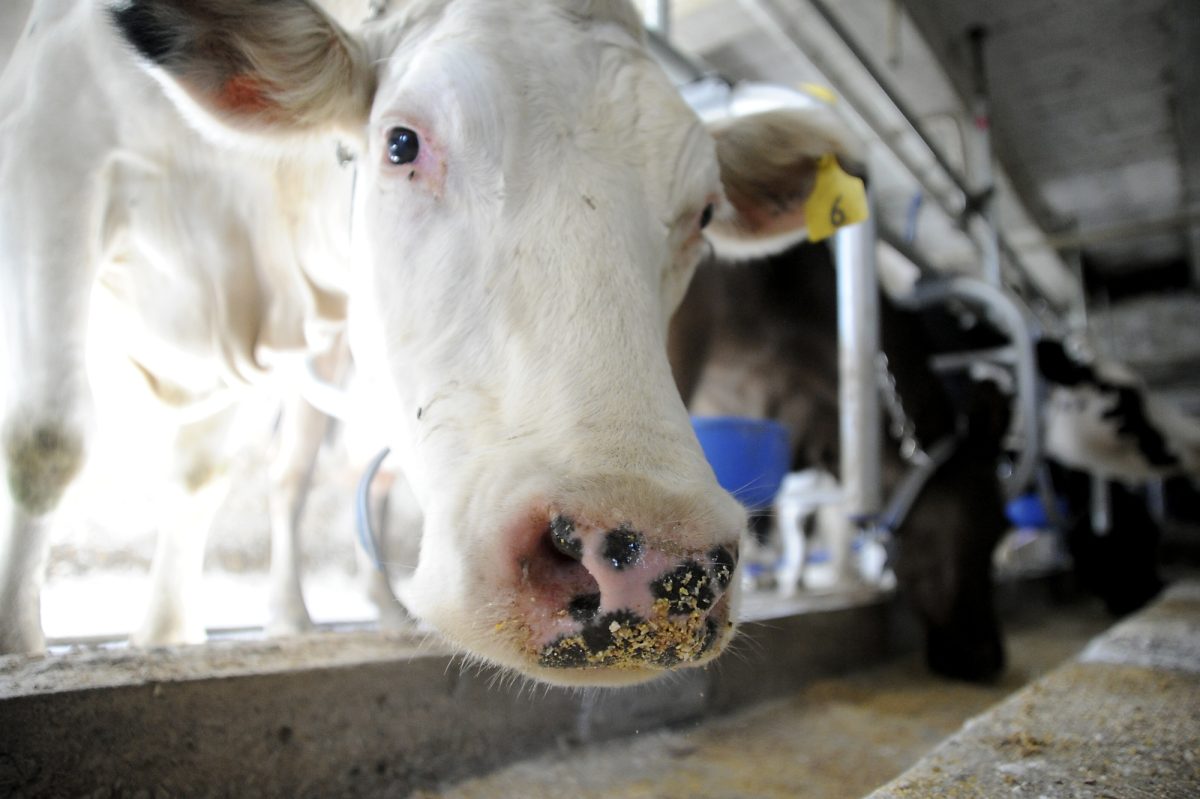
A cow munches on grain while being milked at the Martin farm.
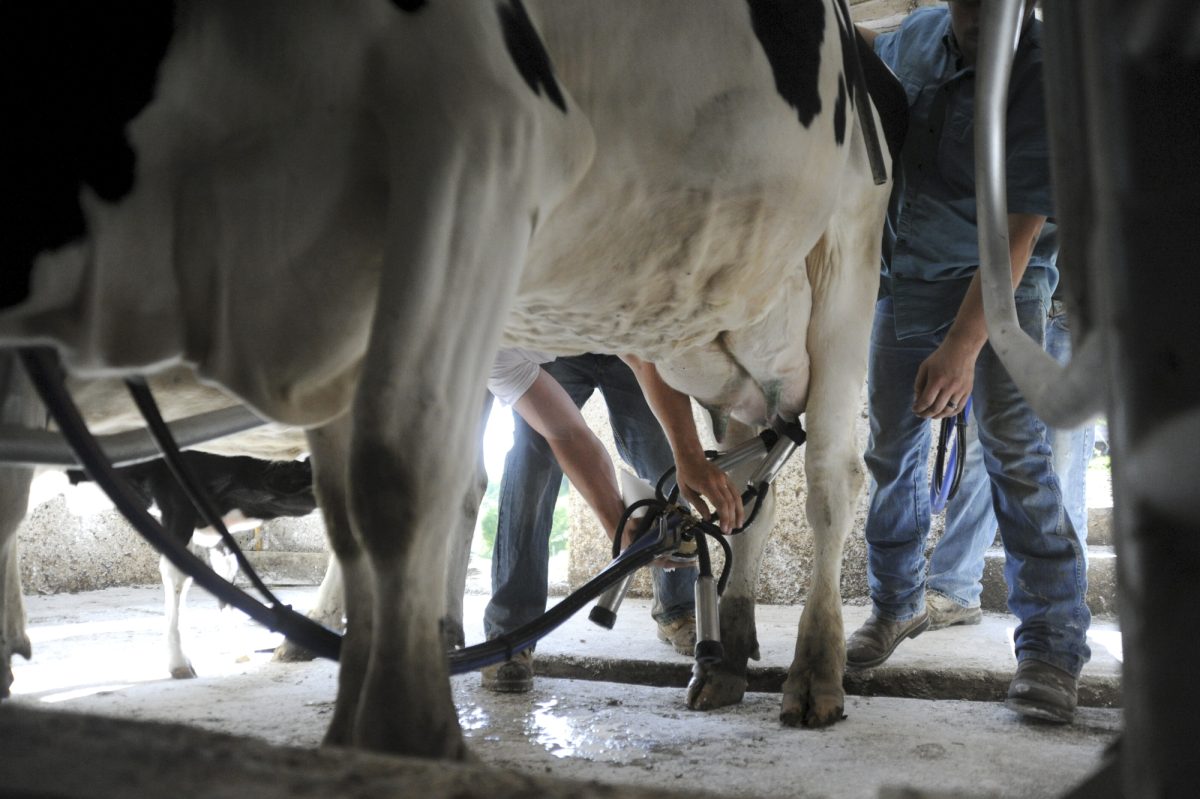
Milking equipment is hooked up to a cow’s udders at the Martin farm. The cows graze during the morning and then are milked in the late afternoon.
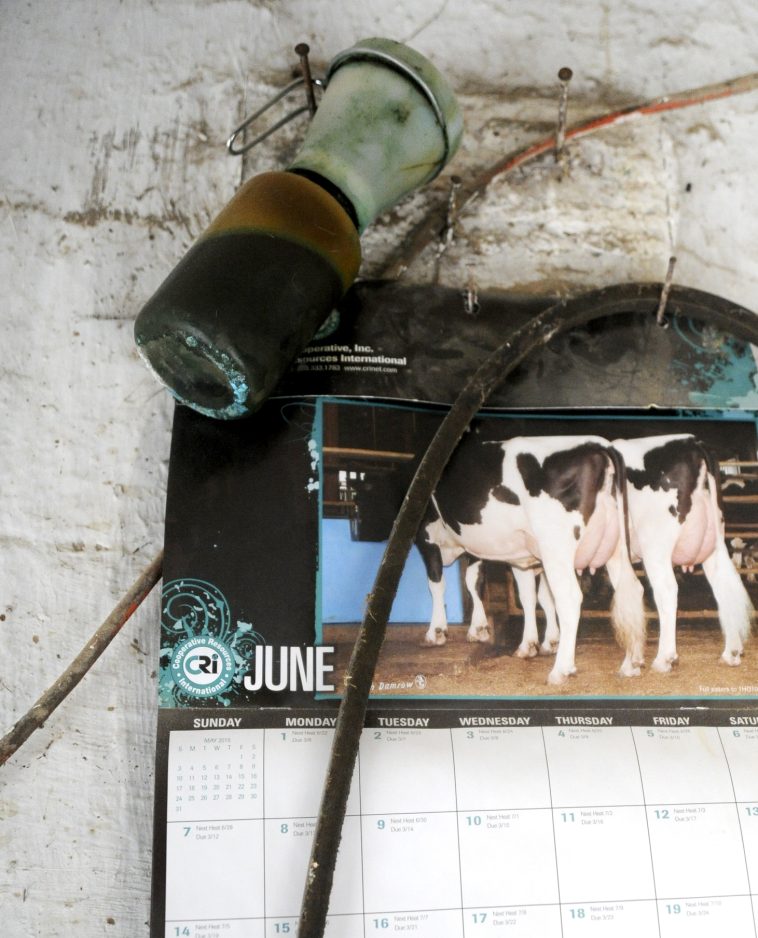
The Martin farm has started the several-year process to become an organic farm.
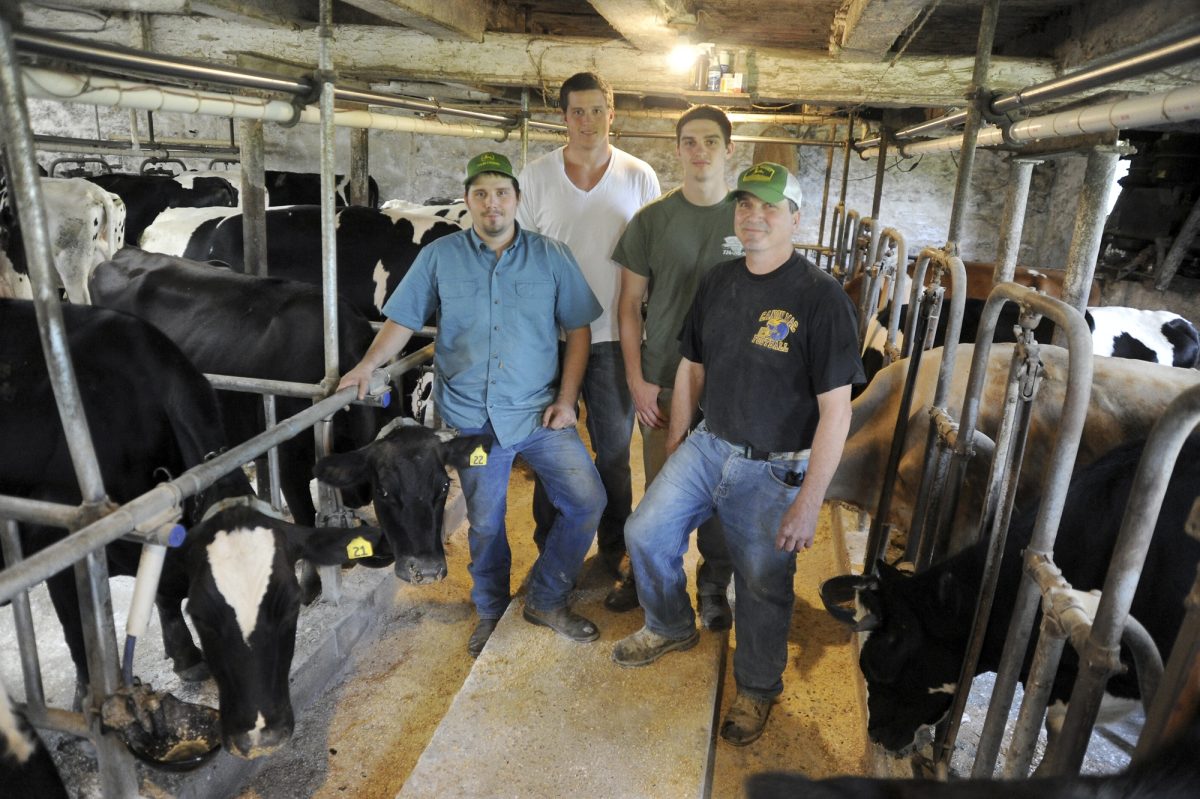
From left, Andrew, Michael, Jacob and Ed Martin help run the Martin farm near Canonsburg.
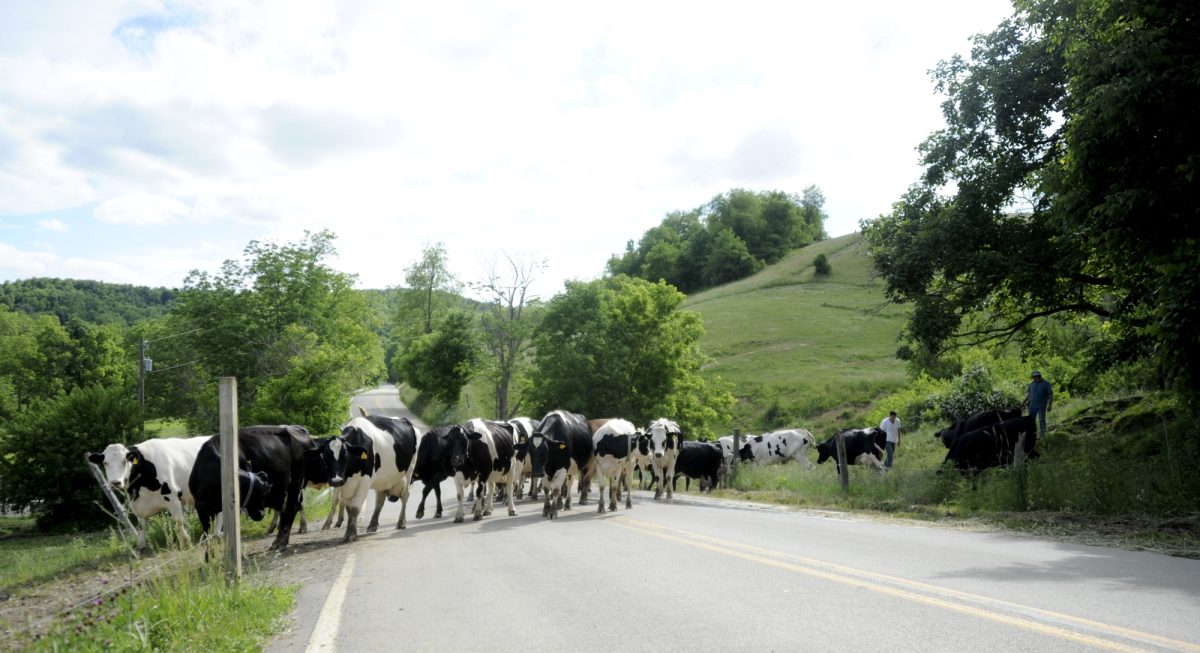
The cows at the Martin farm cross the road to get milked after grazing in a field.
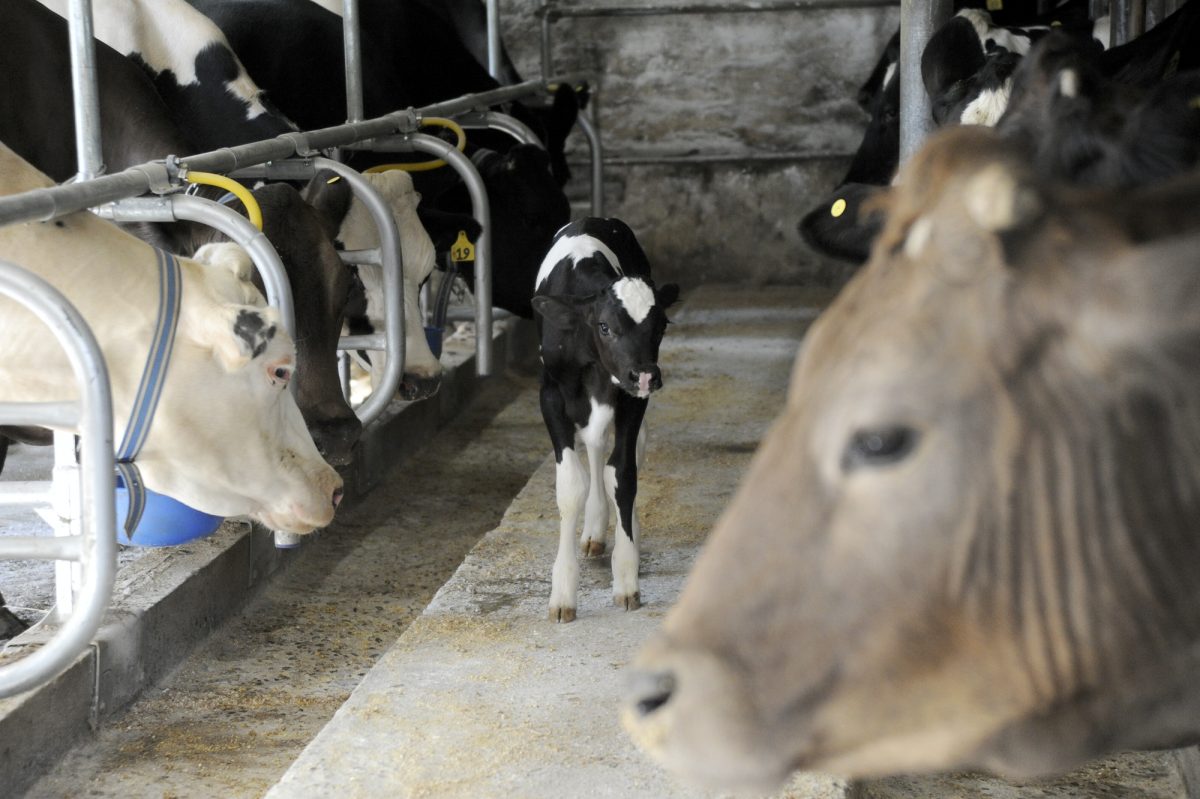
A calf checks out its surroundings as the cows get milked on the Martin farm.
For Ed and Holly Martin, owners of Martin Family Dairy Farm in North Strabane Township, farming is a family business.
The 180-acre dairy farm has been owned and operated by Ed Martin’s family for 86 years. Martin has worked all his life on the farm and loves dairy farming, but he had considered raising beef instead of selling milk.
Instead, he is switching from conventional to organic dairy farming.
Why?
Because organic dairy farmers can bring in double every month what a conventional farmer makes per gallon of milk. And the price of organic milk is more stable than regular milk, which fluctuates.
“We’re a small dairy, and for us to continue to be in business and continue the dairy started by my grandfather in 1929, this is the only option we have,” said Martin.
Pennsylvania ranks sixth in the country in the number of organic dairy cows, and according to the Organic Trade Association, Americans spent $5.46 billion on organic dairy products in 2014.
The supply of organic milk has not been able to keep up with the demand, said Brandi Hunter-Davenport of the state Department of Agriculture.
“There is a need for more organic dairy farmers,” she wrote in an email.
The retail cost of organic milk is about twice as much as conventional milk, but Martin said the consumer gets milk that has been certified as organic and meets all federal regulations.
Martin and his three sons, who run the farm alongside him, milk 26 cows (black-and-white Holsteins, tan-colored Jerseys and Holstein-Jersey crosses) two times a day, 365 days a year, and raise corn on the farm.
His son Michael, who holds a degree in environmental science from Waynesburg University, suggested that the family consider converting to organic.
So they contacted Wisconsin-based Organic Valley, the largest organic farming co-op in the United States with more than 1,800 farmer members (most of them dairy producers). The co-op is helping to guide the family through the transition.
In order to be a certified organic dairy, the fields have to be organic for three years and the herd must undergo a one-year transition, which often is combined with the field transition.
Other requirements: The cows can’t be given hormones or antibiotics.
And for at least three months a year, the cows have to eat in a pasture and they can’t feed on anything grown from genetically modified seeds that have been sprayed with pesticides and synthetic fertilizers.
Holly Martin, Ed’s wife, who works as the chief operating officer and psychologist at a substance abuse treatment center, said organic farming better fits the family’s agricultural philosophy of doing something beneficial for people and for the earth. She believes it creates more nutritious milk and is better for the cows.
“People are paying more attention to where their food is coming from and what’s in it,” said Holly Martin. “You see fads come and go, but I don’t think organic is a fad. People are realizing that many of the chemicals in our food and milk aren’t good for you and are making the decision to choose organic. “
Martin said his biggest concern about organic farming is preventing his cows from getting sick because organic farmers can’t give their animals antibiotics.
“Not that we use a lot of antibiotics anyway, but cows will get pneumonia at times and we can’t use antibiotics for any type of sickness,” said Martin. “Technically, we can treat the cows because we won’t let them die, but if we use any antibiotic on a cow, she has to be sold. She can’t return to the milk herd.”
The cows also can’t be treated with chemical-based fly control spray, and flies are a nuisance to cows during the summer months.
“Flies are pretty nasty on cattle, and that’s going to be a big battle for us to solve that problem,” said Martin.
And it’s expensive to produce organic milk. Organic feed costs nearly twice as much as regular feed.
But the Martins believe the hard work and expense is worth it.
Martin said that after 21 years of running the dairy farm, he was ready for a change.
“I like the challenge,” said Martin, who took over the farm from his father, Joseph, in 1994, and has extensively researched how to run an organic dairy farm. “It takes more work, but I don’t mind that. It’s farming more like my grandfather used to farm. Instead of spraying corn, we’ll cultivate corn. This gives me something to keep me fresh. “
Martin has enjoyed going through the process with his sons, who plan to live on the farm as fourth-generation farmers.
Jacob is an environmental science major at Waynesburg University, and Andrew attended the vocational-agriculture program at Fort Cherry High School. Andrew’s wife, Kelly, a veterinarian technician, also works on the farm.
Holly Martin said the only way to make the farm sustainable and profitable is for all of the boys to help with the business.
The Martins are well into the first year of the organic transition, and plan to enter a contract with Organic Valley, which will come every other day to haul the milk to a processing plant in Virginia to package it and to convert some of the milk into cheese, butter and other dairy products.
“This will keep us farming,” said Andrew Martin. “It’s the way of the future. I love dairy farming. I’m proud to say I’m a dairy farmer. It’s what I’ve wanted to do since I was 2 years old.”