

Britain: Evidence suggests Russian Metrojet downed by bomb
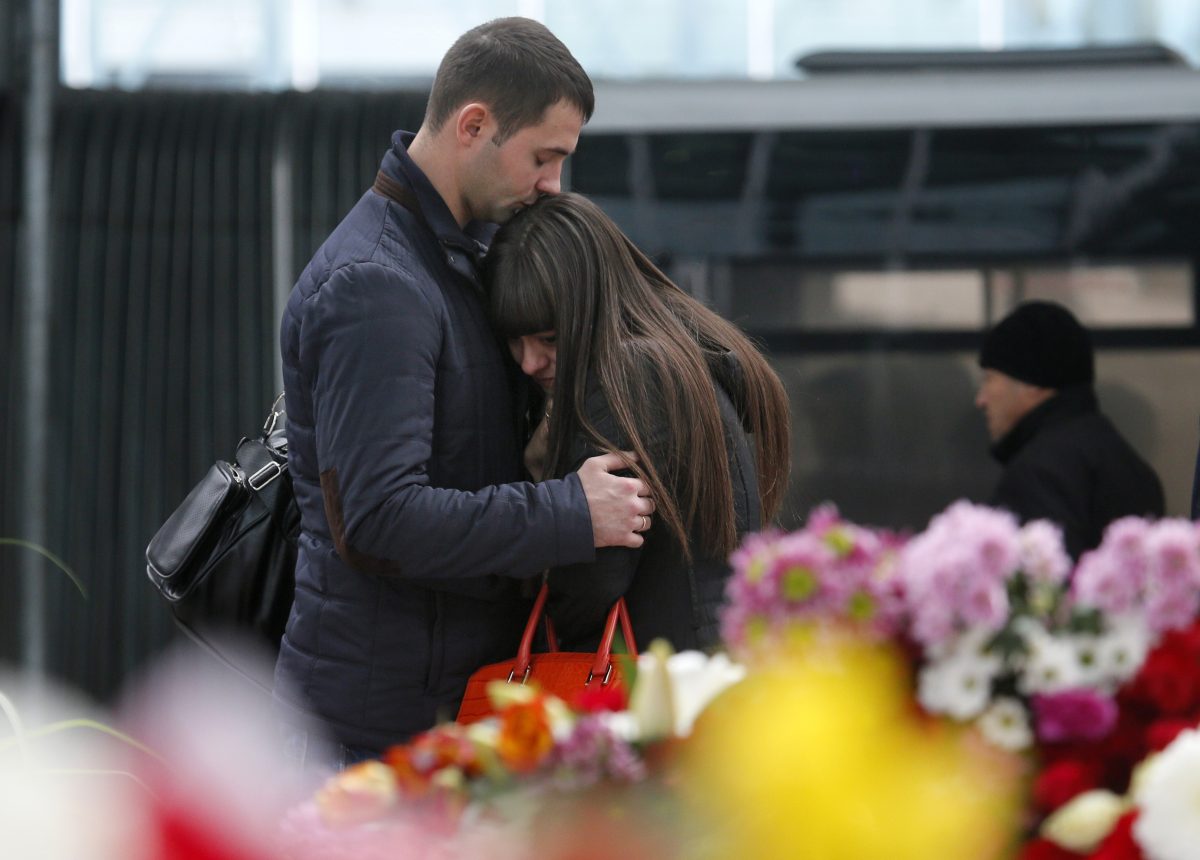
A couple stands next to flowers and toys at an entrance of Pulkovo airport outside St. Petersburg, Russia, during a day of national mourning for the victims of Saturday’s plane crash over Egypt on Wednesday.
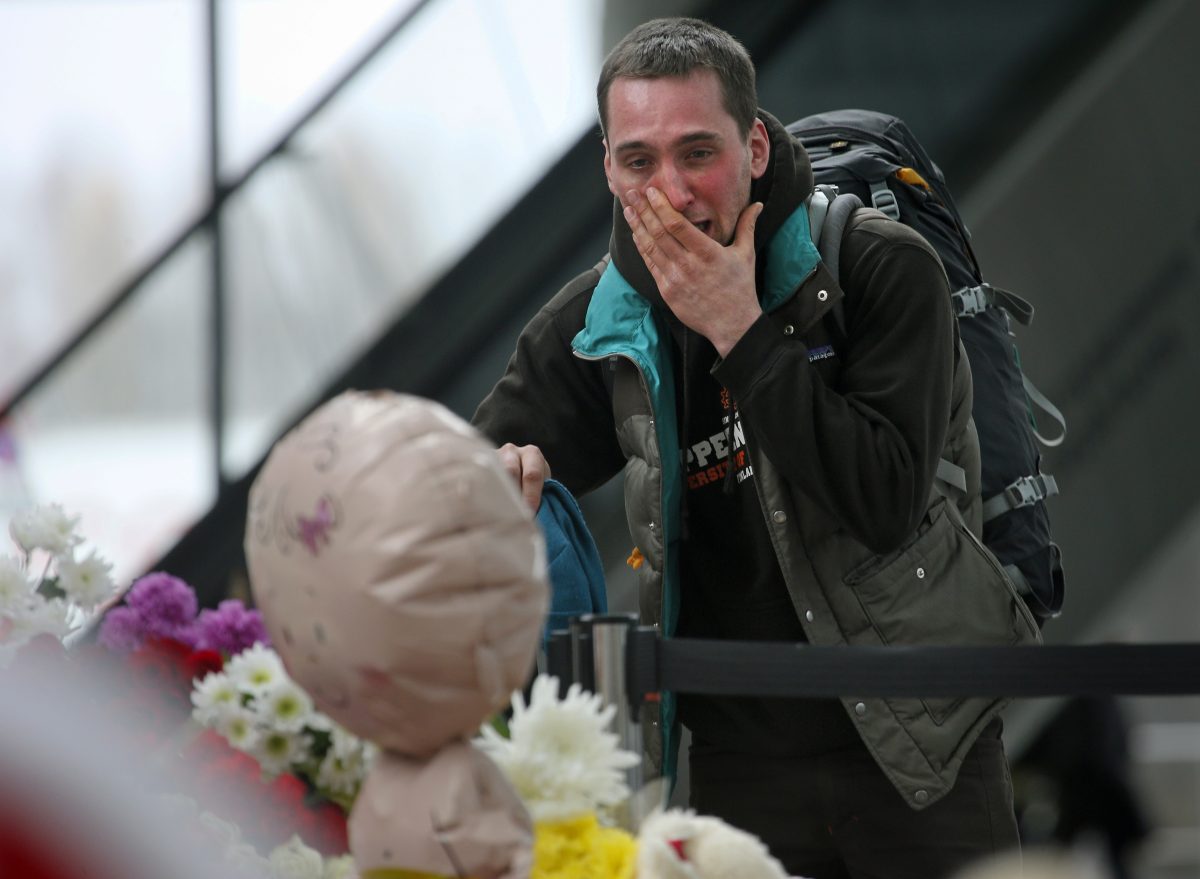
A man reacts as he stands next to flowers and toys at an entrance of Pulkovo airport outside St. Petersburg, Russia during a day of national mourning for the victims of Saturday’s plane crash over Egypt on Wednesday.
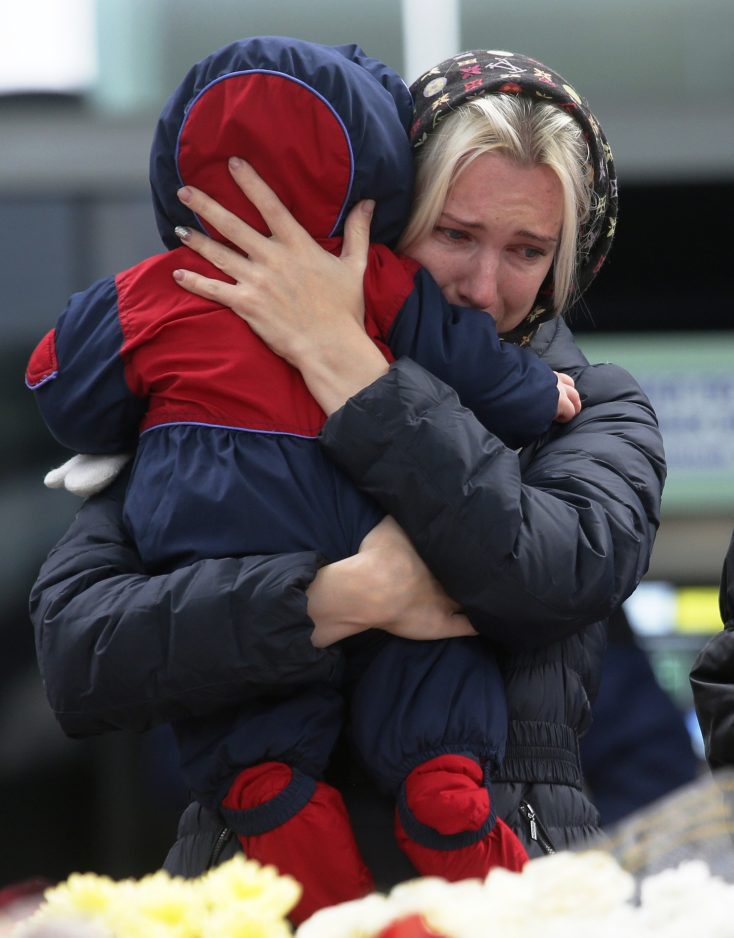
A woman with her baby reacts as she stands near to floral tributes for the victims of a plane crash, at an entrance of Pulkovo airport outside St. Petersburg, Russia, Wednesday.
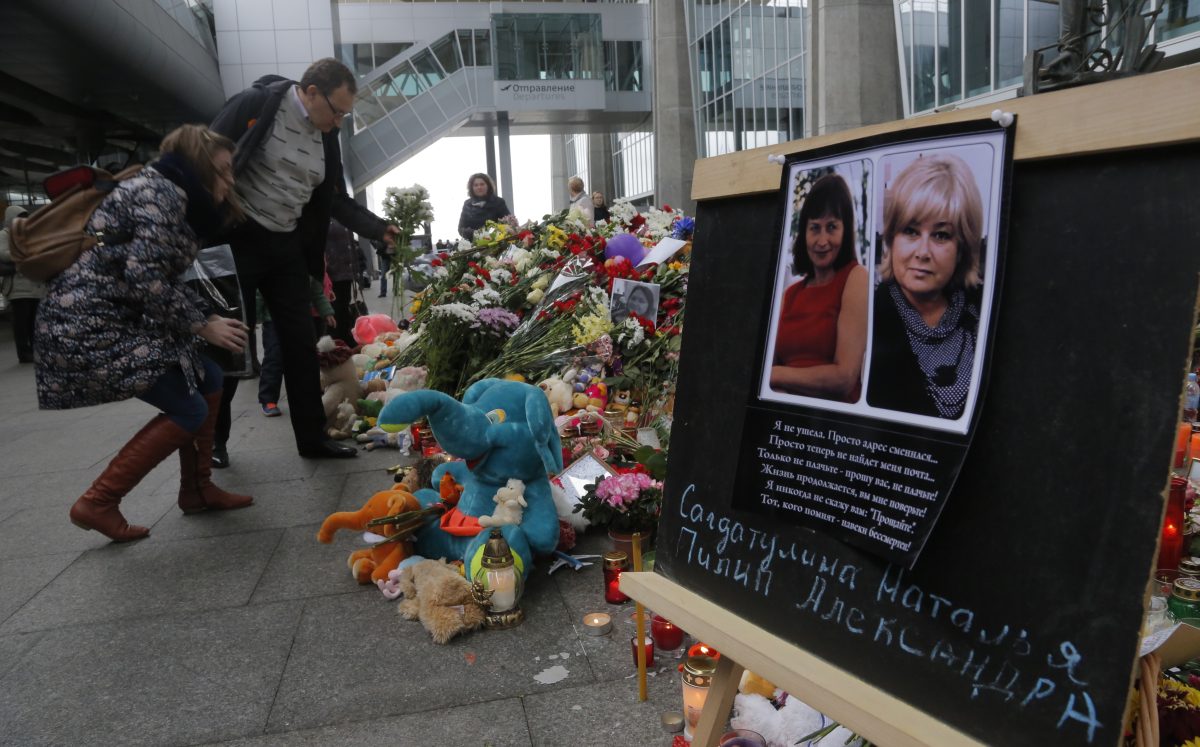
Portraits of two plane crash victims Natalia Soldatulina and Alexandra Pilip are placed near flowers and toys at an entrance of Pulkovo airport outside St. Petersburg, Russia, Wednesday.
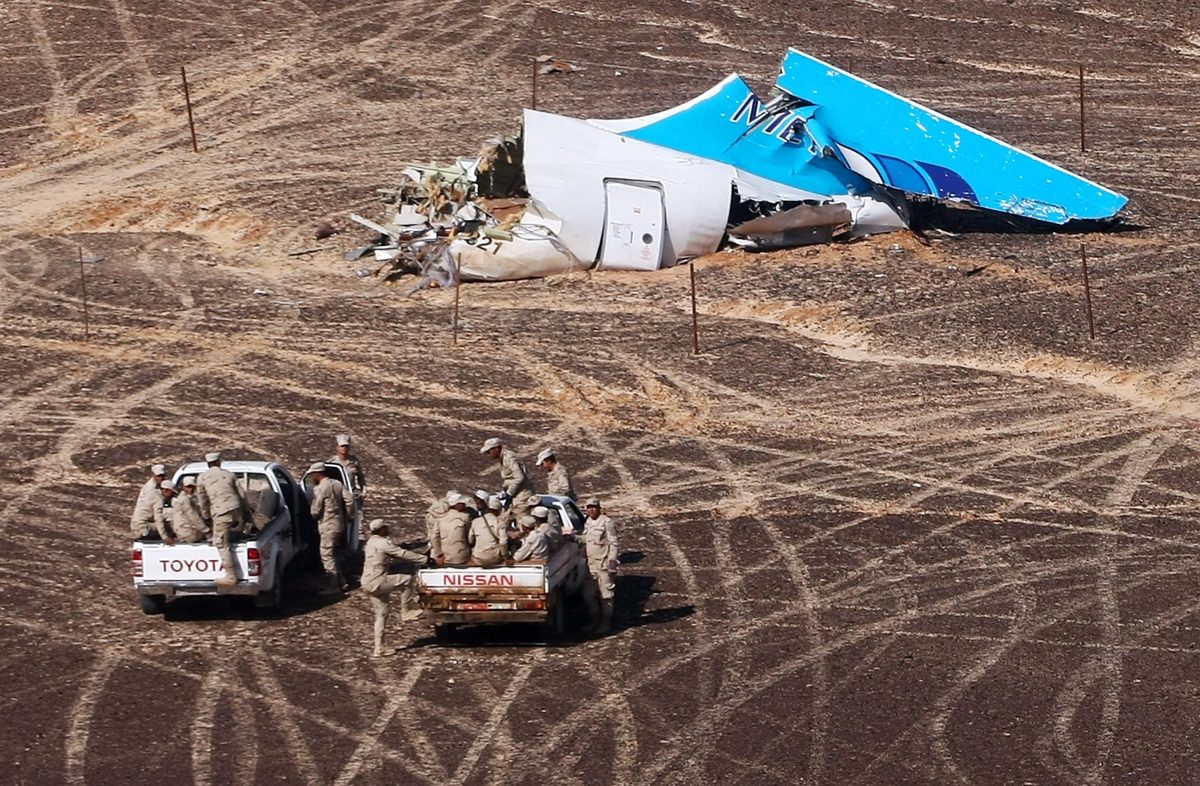
In this photo made available Monday, and provided by Russian Emergency Situations Ministry, Egyptian Military on cars approach a plane’s tail at the wreckage of a passenger jet bound for St. Petersburg in Russia that crashed in Hassana, Egypt, Sunday.
LONDON – Evidence suggests a Russian jet that crashed over Egypt’s Sinai desert may have been brought down by a bomb, the British government said Wednesday, suspending flights to and from the Sinai Peninsula as a precaution.
Prime Minister David Cameron’s office said British aviation experts were travelling to the Sinai tourist resort of Sharm el-Sheikh, where the flight that crashed Saturday originated, to assess security before British flights there would be allowed to leave.
No British flights were flying to the resort on Wednesday, but several were scheduled to depart.
Cameron’s Downing St. office said in a statement that it could not say “categorically” why the Russian jet had crashed.
“But as more information has come to light, we have become concerned that the plane may well have been brought down by an explosive device,” it said.
The British government’s crisis committee was meeting Wednesday to review the situation. Downing St. said Cameron had discussed the issue of security at the Sharm el-Sheikh airport with Egyptian President Abdel-Fattah el-Sissi, who flew to Britain on Wednesday for an official visit.
El-Sissi insisted Tuesday that the security situation in the Sinai Peninsula was under “full control” and that claims by the Islamic State group that it downed the plane were “propaganda” aimed at damaging Egypt’s image.
British Transport Secretary Patrick McLoughlin said the British experts would “ensure the right security measures are in place for flights.”
“It is when that review is completed that we will allow the flights that are there tonight to depart,” he said.
The Metrojet Airbus A321-200 carrying mostly Russian vacationers from Sharm el-Sheikh back to Russia’s second-largest city of St. Petersburg crashed over the Sinai early Saturday, killing all 224 people on board.
Russian officials say the plane broke up in the air 23 minutes after takeoff after reaching an altitude of 31,000 feet.
Douglas Barrie, military aerospace expert with the International Institute for Strategic Studies in London, said it was too soon to say for sure the cause of the crash but the “general suspicion” that an explosive device was involved has been mounting. He said the British government’s decision made sense.
“It’s a political decision to err on the side of caution if it has been deemed possible that an explosive device was involved and there are concerns about the levels of security at the airport involved,” he said.
The plane crash site, 44 miles south of the city of el-Arish, lies in the northern Sinai, where Egyptian security forces have for years battled local Islamic militants.
On the ground, rescue teams in Egypt were combing the Sinai desert for more remains and parts of the plane’s fuselage Wednesday, as grief-stricken Russian families in St. Petersburg faced an agonizing wait to bury their loved ones.
Russian and Egyptian rescue workers expanded their search area in the Sinai to 15 square miles. The Russian state television channel Rossiya-24 reported the plane’s tail was found 3 miles away from the rest of the wreckage.
Russians were seen sobbing in grief Wednesday at the unruly pile of flowers, photos and stuffed animals at the entrance to St. Petersburg’s Pulkovo Airport.
Only one body has been released to a Russian family for burial so far. Relatives have identified 33 bodies and the paperwork is nearly finished on 22 of those, meaning the families should get the bodies shortly, Igor Albin, deputy governor of St. Petersburg, said in a televised conference call.
Metrojet, the plane’s owner, and Russian authorities offered conflicting theories of what happened. Metrojet officials have insisted the crash was due to an “external impact,” not a technical malfunction or pilot error. Russian officials have said it’s too early to jump to that conclusion.
Two U.S. officials told the Associated Press on Tuesday that U.S. satellite imagery detected heat around the jet just before it went down.
The infrared activity could mean many things, however, including a bomb blast or an engine on the plane exploding due to a malfunction. One of the officials who spoke condition of anonymity because they weren’t authorized to discuss the information publicly said a missile striking the Metrojet was ruled out, because neither a missile launch nor an engine burn had been detected.
Several airlines, including Lufthansa and Air France, stopped flying over Sinai after the crash, but British carriers had kept to their schedules.
Britain did not change its travel advice for Egypt, which advises against all but essential travel to Sinai — where Islamist militants have mounted gun and bomb attacks — but makes an exception for Sharm el-Sheikh.
Almost 1 million Britons visit Egypt each year, many to Sharm el-Sheikh. The resort is also enormously popular with Russians.